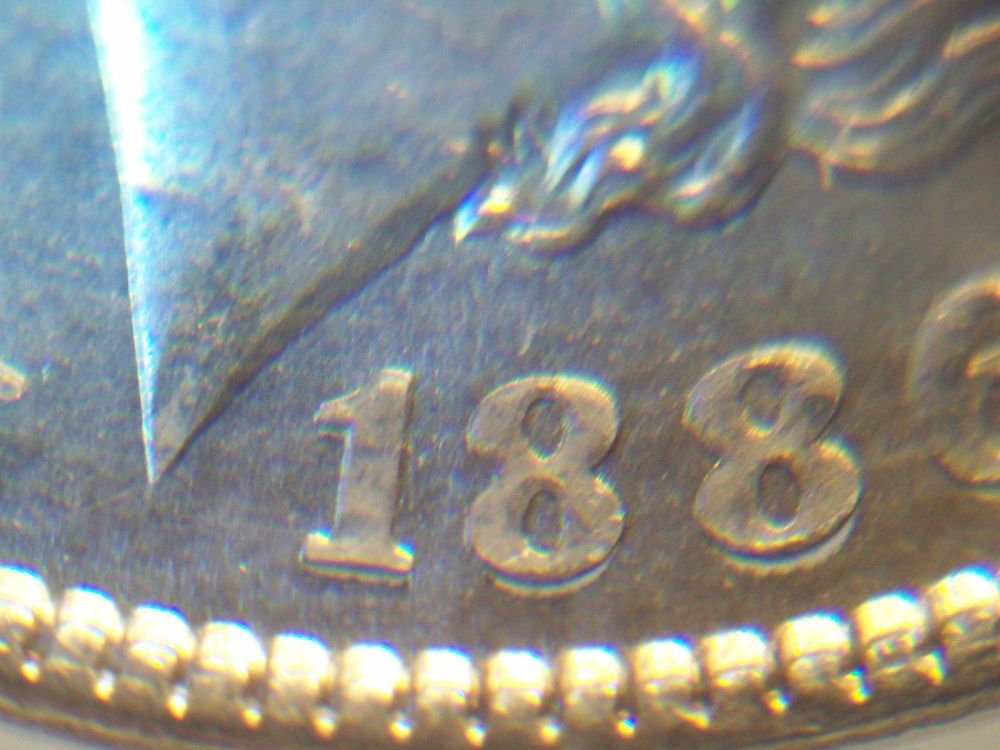
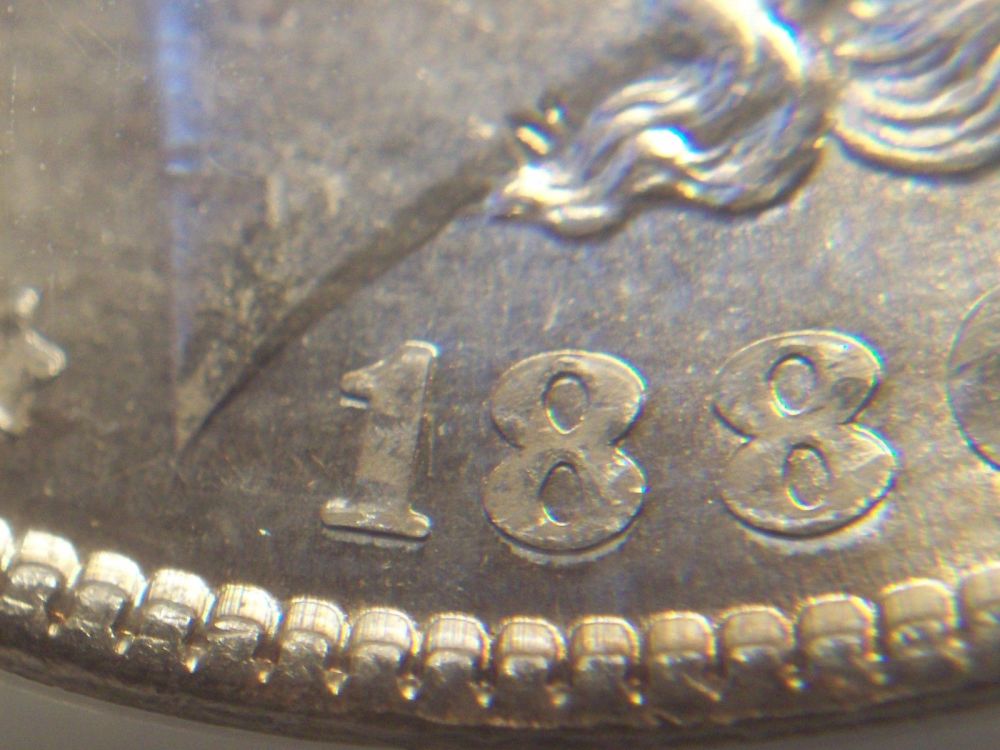
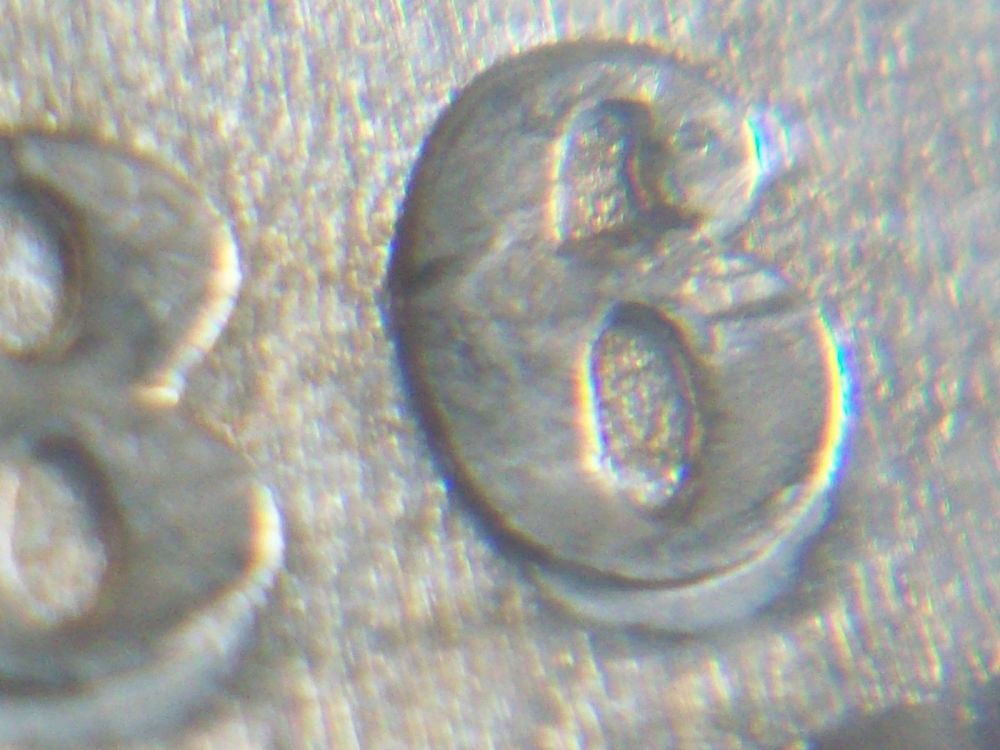
That's toning pullaway around the digits. The process of a strike is not homogenous in terms of pressure on the planchet, but varies according to what type of field/device the metal is flowing thru. At the periphery, the pressure around the outside of the letters/numbers is so different that the metal actually accquires a different level of hardness, making it more resistant to the normal patina process which every silver coin undergoes.
So what you see are areas which didn't age as the rest of the surface did. This is fairly common with
Morgan dollars, although more characteristic of early 1880's San Francisco issues than others. Given the overall quality of those latter, I have always believed this toning pullaway to be characteristic of pretty good Mint work so I expect to see them strongly-struck.
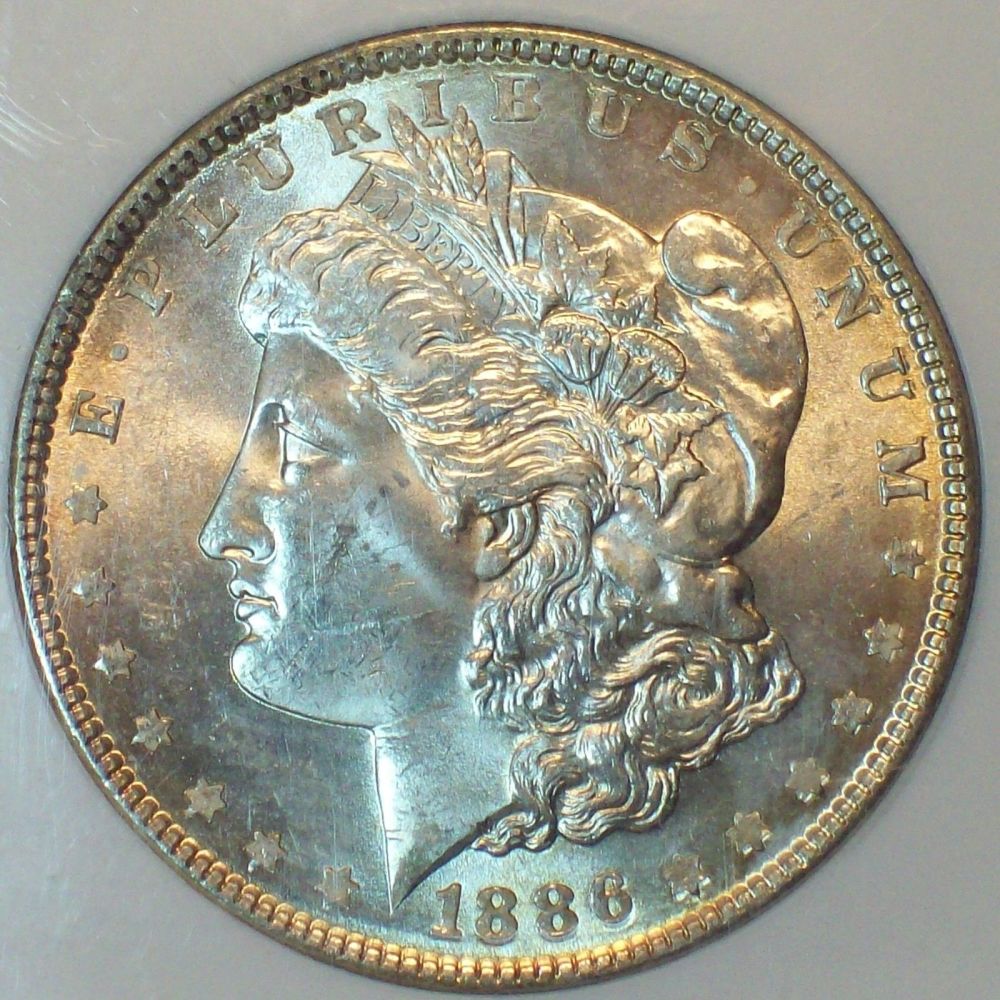
Yours, which certainly appears Mint State to me, is not at all well-struck. The cotton bolls and hair above the ear and forehead are quite weak, in fact. This seems anomalous in view of what I just said.
Or is it?
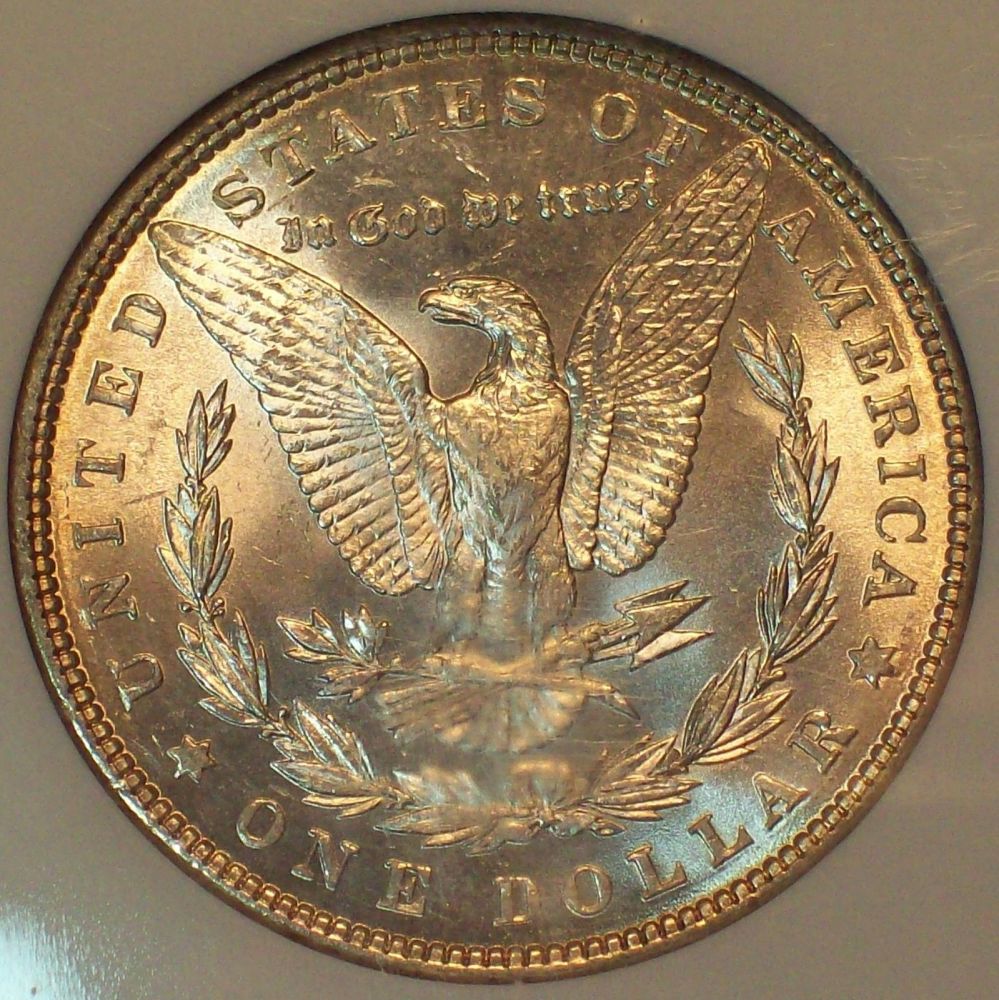
Have a look at the periphery above PLURIBUS UNUM. The fuzziness and apparent roughness you see there is a good sign of a very old die. Other subtle things hint to me that the die has had a very long life, although I don't want to quantify them because individually they could mean other things. If you study enough thousand of these, they start speaking to you on a more subconscious level.
So I see a kind of impressive coin here. It was struck by a *really* old die, yet they were still coaxing strikes of such quality as to demonstrate pullaway toning. Fascinating.











 Posted 08/04/2015 3:12 pm