| Author |
 Replies: 10 / Views: 1,861 Replies: 10 / Views: 1,861 |
|
|
Valued Member
United States
50 Posts |
First I have to say that this is one of the nicest bunch of people on a forum that I've ever seen. I have read hundreds of posts from many, including newbies like myself, and everyone is so polite and willing to help. Thanks for a pleasant community! So, I have a few nickels that I thought I would throw out to you folks for some evaluation. The 45S has a strange color on the back which looks like rust. I have no idea what this is and I'm guessing nothing special. The 60D's date is attached to the rim with extra material. The 43P looks like it's peeling. Ideas? 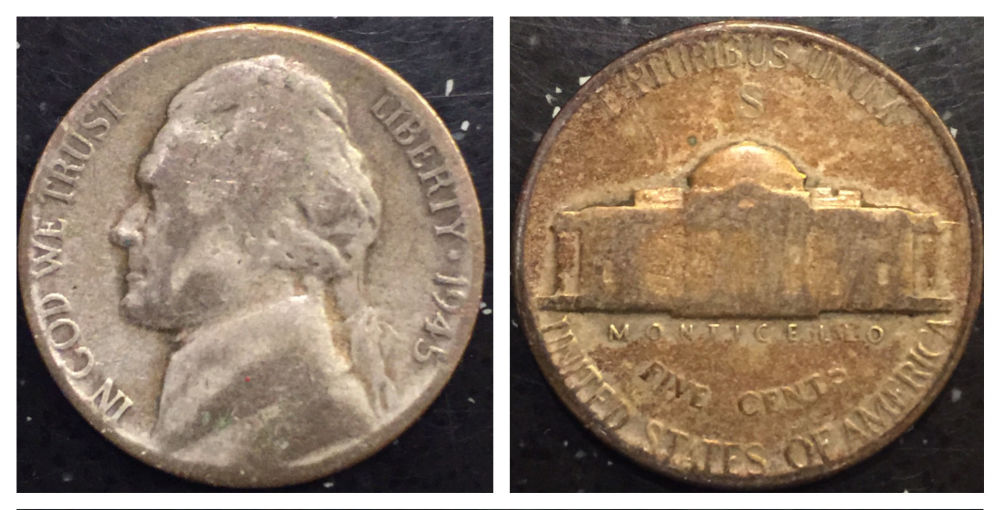 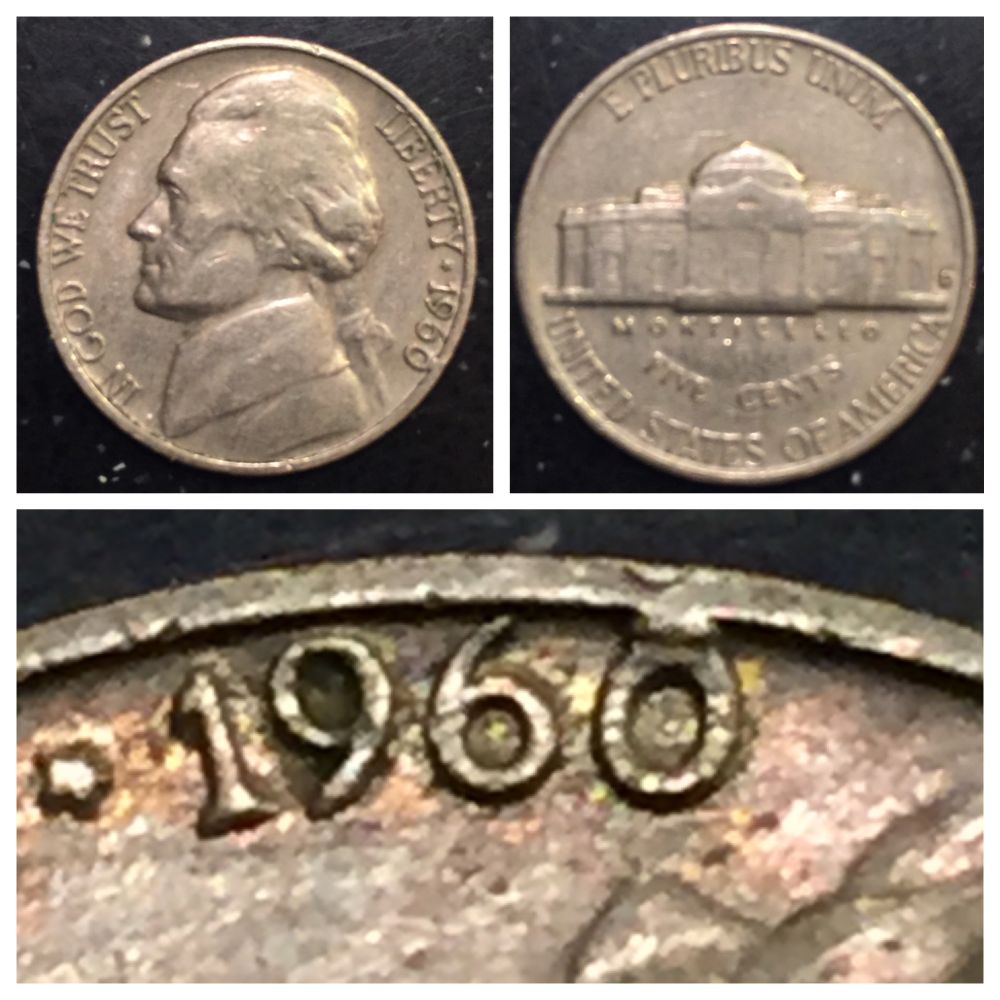 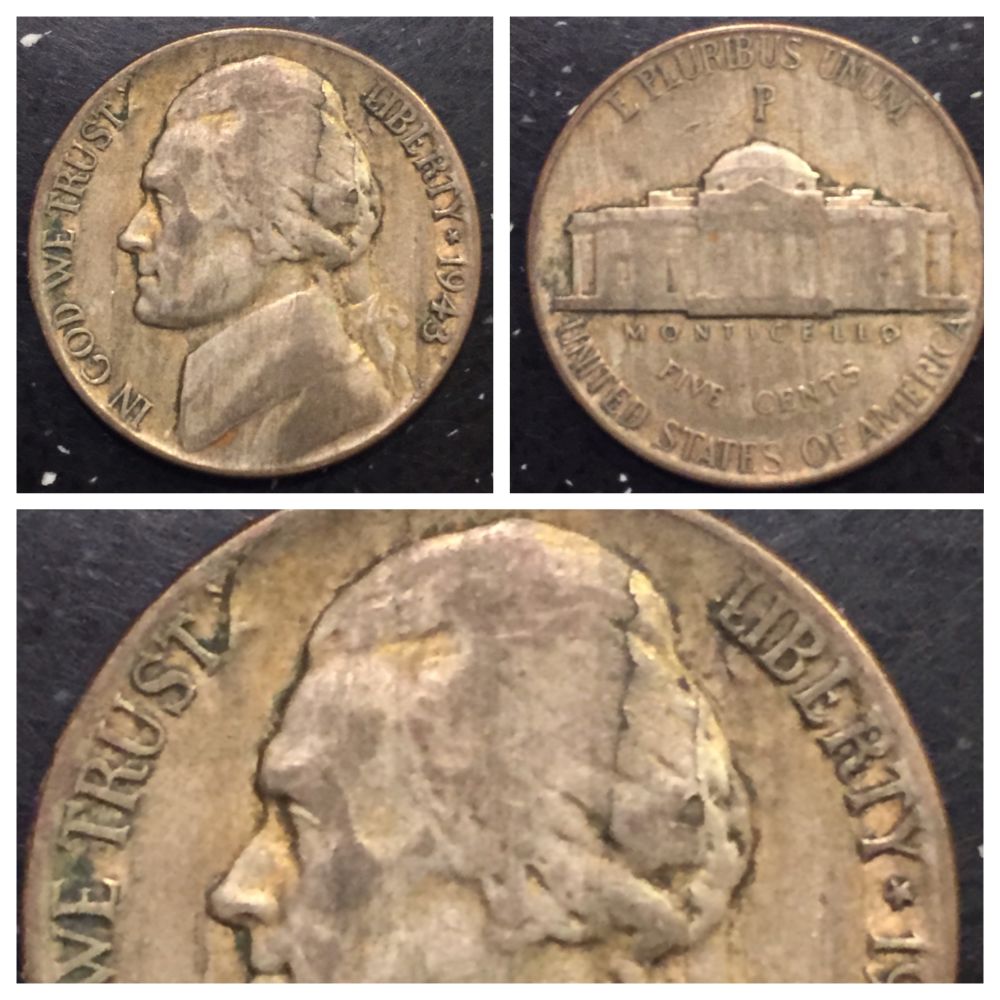 |
|
|
|
Pillar of the Community
United States
917 Posts |
You are right on the 45S it's toned on one side is all. Nice silver nickel though. The 60D could be a die chip. Really hard to tell from my phone.Check the D for doubling while yo are looking at them. The 43 would be called a lamination. Again my phone is making it difficult to see but I can't decide if it is a lamination or just dirty.
|
|
Pillar of the Community
United States
536 Posts |
1. Likely not rust, just toning. War Nickels tend to tone quite a bit more than plain nickels. 2. Looks like a die chip to me. Interesting minor error. 3. Lamination error. (You can see the streaks running across the coin. Usually comes from the metal not being mixed well before cutting the planchets, if I recall correctly.) |
|
Pillar of the Community
United States
6130 Posts |
Some nice coins right there! Your 1960 is a known variety, called a "bar nickel". It was caused by a defect in the die and seems to catalog in the $2-5 range. War Nickels frequently take on a grey/black tone due to the metal composition: 56% copper, 35% silver, and 9% manganese. Manganese is responsible for both the greyish color of the 42-45 nickels, as well as the horrid tone that modern Sacagawea and Presidential dollars take on. It can be alloyed with copper to give the same conductive signature as cupronickel, which was the main driving force behind its use in both the nickels and dollars (the vending machine lobby had a large hand in the composition change legislature). Additionally, War Nickels were made with the assumption that they would be pulled from circulation on the conclusion of the war, which is why they bear such large mintmarks. Poor mixing of the metals within the War Nickel planchets led to frequent "streaks" and lamination errors, both of which can be easily seen on your '43 nickel. Edited by Finn235
08/27/2015 11:23 am
|
|
Pillar of the Community
United States
4932 Posts |
1. Book toning. 2. 1960 D Bar zero nickel, one of my favorite errors to collect considering I'm working on a roll of them and now have about 10... 3. Lamination error, VERY common on War Nickels. Maybe 1/5 War Nickels have a lamination issue, probably due to the mixture of metals. |
|
Bedrock of the Community
 United States
12936 Posts |
Nice nickels!  and hope you share some more with us! |
|
Valued Member
 United States
50 Posts |
Thanks for all the info!
What is book toning?
|
|
Pillar of the Community
United States
6130 Posts |
Lots of collectors purchase albums to display their coins and show/track their progress toward completing a full set. Cheap albums are not made from acid-free paper or cardboard, and can react with the coin, especially silver or bronze coins. Drew is probably right--the 45 looks like it was in a book for a number of years, then liberated and spent when the original owner found a better replacement or noticed the toning and wrote the coin off as ruined.
|
|
Pillar of the Community
United States
4932 Posts |
Finn, thank you for explaining.
|
|
Pillar of the Community
United States
2244 Posts |
I love finding pre-1976 nickels, especially War Nickels. |
|
Valued Member
United States
50 Posts |
Yes, thanks Finn. Makes sense.
|
| |
Replies: 10 / Views: 1,861 |
|







 Posted 08/27/2015 09:42 am


