| Author |
 Replies: 31 / Views: 4,692 Replies: 31 / Views: 4,692 |
|
|
|
Valued Member
 United States
165 Posts |
The interesting this is, during a visit to my dealer today I found out that this coin has three or more "companions": an 1891-O Seated Liberty dime, a illegible-date Washington quarter, and a hopelessly bent, corroded, and perhaps partially melted Stone Mountain Half-Dollar were all in the junk silver box. I picked up the dime, but left the quarter and half-dollar behind. While the latter might have been interesting if I could see something on it, it was so blackened, bent, and corroded that the only way I could even identify what half-dollar issue it was was by pinpointing the characteristic eagle (the only visible part of the whole coin). Despite these new appearances, a discussion with my dealer hinted that even more coins of a similar condition were brought in by the seller. I assume that for coins of such disparate time periods to exhibit almost identical damage, they must have been part of someone's collection (since they wouldn't have circulated concurrently, or been dug up in the same area). However, what horrible accident could have affected them in this way? Could a fire do the kind of damage these two coins exhibit? 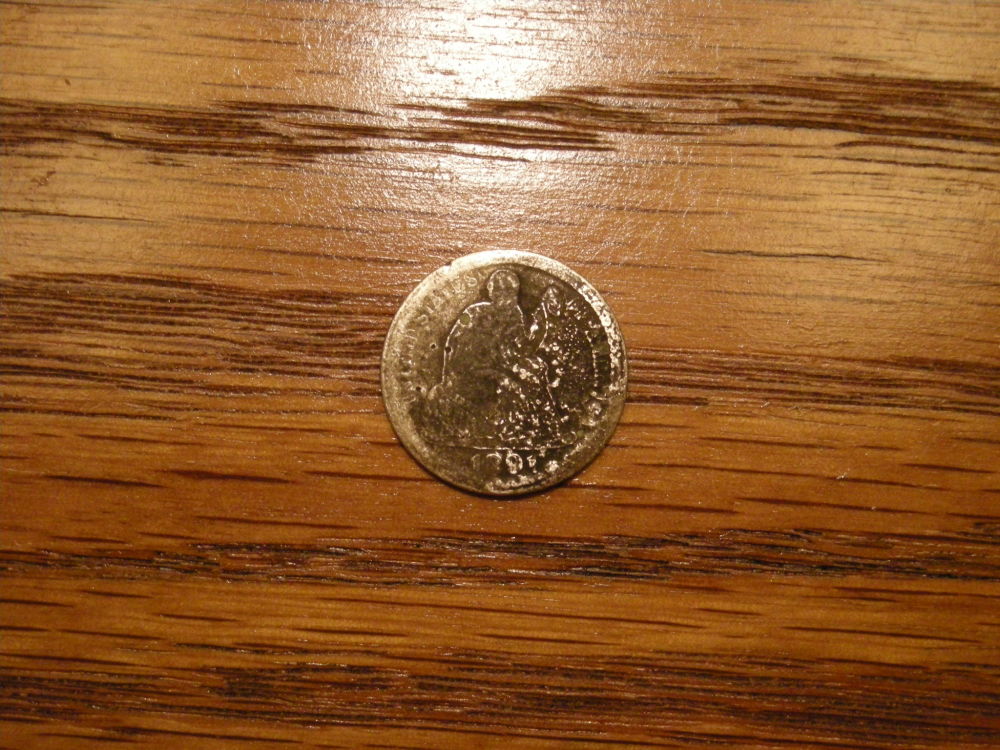 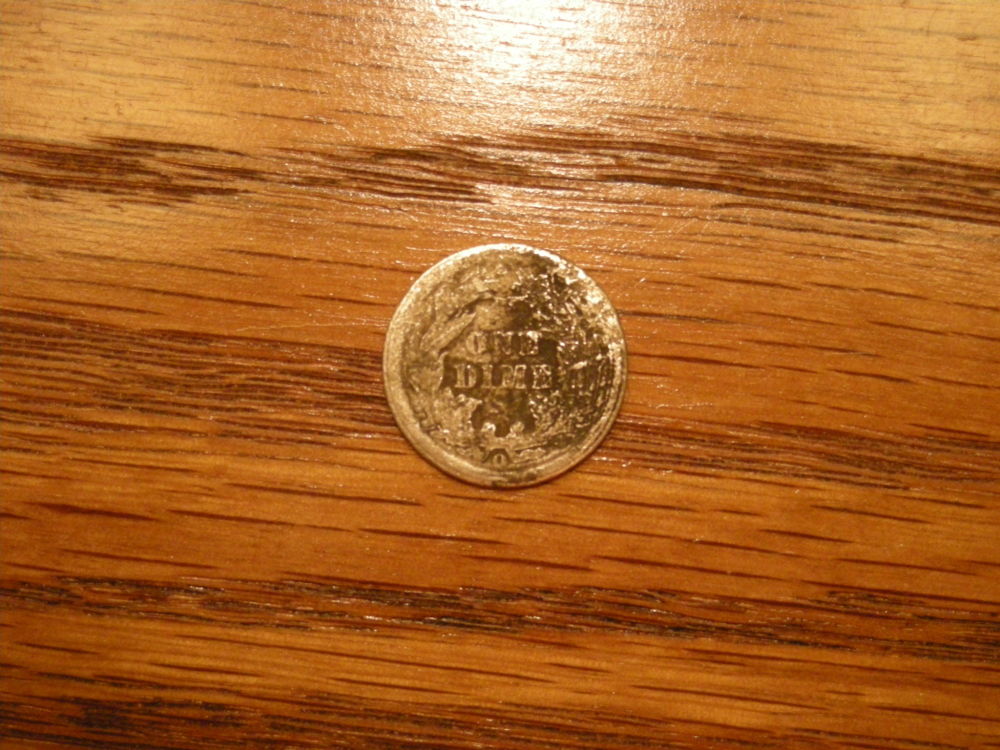 Edited by Earendil
09/26/2015 08:11 am
|
|
Rest in Peace
United States
18456 Posts |
 Wow those are some pretty beat up coins. If they could only talk.  Bobby, thanks for the help, smilies are back in action. Edited by T-BOP
09/25/2015 7:34 pm
|
|
Pillar of the Community
United States
6370 Posts |
|
|
Bedrock of the Community
Australia
21792 Posts |
Have to be weighed to get ASW.
|
|
Bedrock of the Community
United States
12057 Posts |
Severe ED probably corrosion from burial in a high salt environment, either on a beach, near the ocean, or in the ocean but in soil. The unusual pitting makes me suspect the coin was pressed up against wood. It was not conserved when removed, so the atmosphere reacted with the vulnerable metal and further ate it up.
Member ANA - EAC - TNA - SSDC - CCT #890 "Most of the things worth doing in the world had been declared impossible before they were done." -- Louis D. Brandeis |
|
Pillar of the Community
United States
8534 Posts |
Look like dug coins to me too.
Oregon coin geek.....*** GO BEAVS ! ! ! ***
|
|
Moderator
 United States
56855 Posts |
If the coin was "ate up" by salt water or acid of some sort wouldn't it weigh less than normal? The first coin the OP posted was near normal weight so the metal is all still there just moved around similar to a parking lot find. John1  |
|
Valued Member
United States
165 Posts |
Quote:
Have to be weighed to get ASW. While I have not yet weighed the dime, the quarter's weight is actually right on target (6.23 grams versus a standard weight of 6.22 grams)! Judging by the looks of the coin, I had thought it would weigh drastically less. Quote:
Severe ED probably corrosion from burial in a high salt environment, either on a beach, near the ocean, or in the ocean but in soil. The unusual pitting makes me suspect the coin was pressed up against wood. It was not conserved when removed, so the atmosphere reacted with the vulnerable metal and further ate it up. That's what I thought as well: salt-water damage or exposure, or possibly the effects of a fire. But the question is, where would at least four massively different coins--spread out across at least 100 years--have successively circulated, and then gradually been dropped or lost? The affected coins include the following (at least; there might be more): an 1891 Seated Liberty dime, an 1853 Seated Liberty quarter, a Washington quarter, and a Stone Mountain Half-Dollar. As someone else mentioned, what's truly odd is that the quarter, at least, does not appear to have suffered any weight loss. I'll check out the dime later and see how much it comes out to. Quote:
If the coin was "ate up" by salt water or acid of some sort wouldn't it weigh less than normal? The first coin the OP posted was near normal weight so the metal is all still there just moved around similar to a parking lot find.
John1 Yes, it definitely should, since the metal would start leaching away or breaking down. The quarter was actually a tiny fraction overweight (6.23 grams versus 6.22), but I still have to see how much the dime weighs. I mentioned this to someone else, but whatever affected this coin affected at least three other ones, all of which are quite different from each other: an 1891 Seated Liberty dime, an 1853 Seated Liberty quarter, a Washington quarter, and a Stone Mountain Half-Dollar. They all exhibit nearly identical damage, which means that whatever accident or mishap affected the quarter and dime had to have impacted the rest of them too. Edited by Earendil
09/26/2015 08:22 am
|
|
Bedrock of the Community
United States
17884 Posts |
|
|
Pillar of the Community
United States
8534 Posts |
Long ago fire and then metal detected.
Oregon coin geek.....*** GO BEAVS ! ! ! ***
|
|
Bedrock of the Community
United States
20753 Posts |
|
|
Valued Member
United States
294 Posts |
Send it to PCGS, and after it comes back send it to CAC.
|
|
Valued Member
United States
123 Posts |
I like how you can just barely see the seated liberty!
|
|
Pillar of the Community
United States
2243 Posts |
I can tell the dime is an 1853, not sure if it's an O or not.
|
|
Pillar of the Community
United States
4932 Posts |
Thq - you'd work perfect in an environment in which animals are euthanized...
|
| |
Replies: 31 / Views: 4,692 |







 First Page


 Posted 09/25/2015 7:32 pm





