I'll concur with dsfreeworld's opinion and add some opinion/information.
The pick-up points for grading as published back in the 50s were designed to let collectors get a quick grade opinion based on wear patterns as understood by numismatists of the era, when pocket change was still a common place to find older coins. Out of necessity they did not focus much on areas such as eye appeal, or on the difference between a weak strike and circulation wear. Nowadays we know that on some series there are strike patterns that cause weakness in certain areas of the coin (Hair above ear/eagle's breast on Morgans, shield/face on Lib
Seated coins, head on Standing Lib quarters, bands on Mercs & Roseys, bell lines on Franklins) but this was not yet fully understood or appreciated by hobbyist collectors of the era unless they were focused on a certain series.
The
Red Book may say something like "Fine: All letters of LIBERTY must be at least weakly visible" -- but it does not qualify that this applies to an average die strike on an average-date, average-mint-mark coin from that series. This isn't really a bad thing, but it causes issues when we attempt to interpret that as applying to every date/MM in that series. Add in other complexities such as die stages, rusting, MADs, planchet flaws, etc. and you can see why they have to keep it simple. For the hobbyist collector with a passing interest in a series of coins, that's more than enough.
By the time you get down to numismatist-level analysis of a given coin series, such as, say,
Morgan dollars or Coronet large cents, you've now got a grading "flowchart" that fills a couple of pages, and you're looking at strike weakness and die states on a single-date, single-mint-mark level. Someone who has made an extensive study of
Morgan dollars can tell you why that LDS O-mint Morgan with the clash marks and the chatter "looks" XF45 but came back in a MS62 holder, in much the same way an EAC'er can look at a large cent that "looks" like an easy
Red Book XF45 to a beginning collector, but to them, it's a net grade of VF30 sharpness with quite a few nicks and slight porosity in areas.
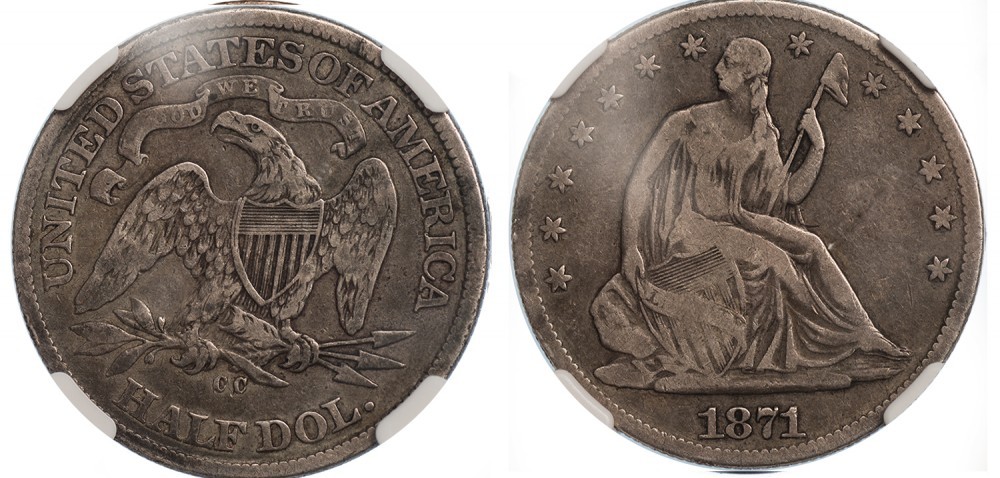
This is one of the reasons why top TPGs have grades that diverge from the Red Book/ANA standards of years ago: they are very familiar with strikes, planchets, dies, and variation by mintmark and date, and they can (most of the time) recognize the difference between a weakly-struck Fine-12 Liberty Seated CC Half Dollar and a fully-struck VG-8 Liberty Seated S mint Half Dollar. As a collector, this allows you to also learn these "quirks" of whatever series catches your interest, so that you can recognize "special" coins such as finding that one FSB 1945 Philly
Mercury dime hidden among the 2,000 raw BU/UNC/MS non-FSB coins for sale, or knowing that the "VF" key date Coin X people are ignoring is really a VLDS/TDS or weakly struck AU worth thousands more.
Member
ANA - EAC - TNA - SSDC - CCT #890
"Most of the things worth doing in the world had been declared impossible before they were done." -- Louis D. Brandeis






 Posted 11/05/2015 06:50 am





