| Author |
 Replies: 11 / Views: 3,212 Replies: 11 / Views: 3,212 |
|
|
Pillar of the Community
2087 Posts |
I have just run into an interesting problem with two new acquisitions. Collectible but low grade Netherlands type Ducats. My problem is this: each coin could either be struck in Russia (for use in Poland) or the Netherlands. Based on Mintage numbers it is highly likely both are Russian. The coins have different Privy marks but that hasn't helped as I have found conflicting information in the references I could find. Does any one know how to identify where they are from. The 1840 example has a dot after the "8" ( looks like a black mark in the photo) which is not present on the 1849 strike.  Edited by austrokiwi
12/15/2015 10:37 am
|
|
|
|
Pillar of the Community
Australia
7096 Posts |
I only have one of these , Mine was minted in Holland and looks very different to your two coins. 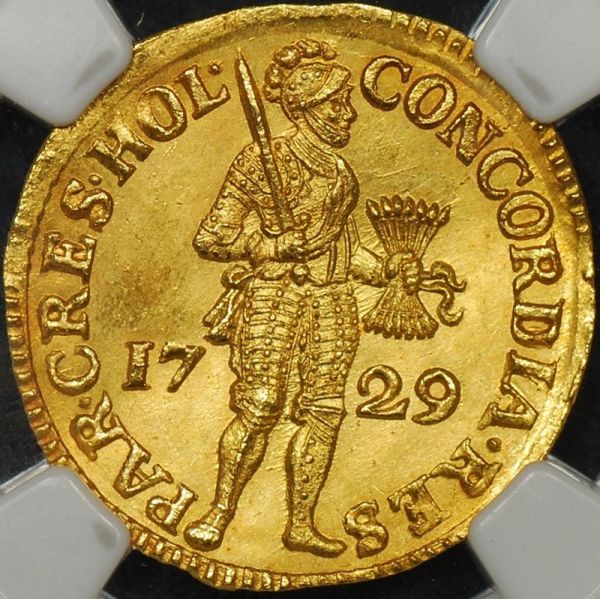 |
|
Pillar of the Community
 2087 Posts |
The Netherlands still strikes ducats today. They have evolved over time yours is an earlier type. there are even earlier types that are closer in design to the Hungarian ducats.
|
|
Pillar of the Community
United States
1674 Posts |
Hi Ian, I have the diagnostics from a specialty book scanned and saved in my emails. Message me your email and I'll forward it to you.
Edited by Numismat
12/16/2015 02:04 am
|
|
Pillar of the Community
2087 Posts |
thank you for those. I am stunned the 1949 is a genuine Dutch strike ( I will have to check but the mintage for that year was about 13000)
|
|
Valued Member
Netherlands
74 Posts |
The 1840 one is a Russian one: the mint master from Utrecht had passed away, therefore in 1840 Dutch ducats got a new mint master mark (a lily). The Russians apparently weren't aware of this, they kept minting with the old mint master mark (torch). Therefore all 1840 ducats with a torch are Russian.
The only literature I'm aware of is an article in Muntkoerier in the '90s and an article in Jaarboek voor munt- en penningkunde from the '50s. In the former they mention the most Obvious difference: Dutch ducats have the L from BELGII more or less above the G in LEGEM, whereas for Russian ones the L is between the G and E.
Having said that, my impression is that even Dutch auction houses don't seem to be very aware of this difference, and the Dutch ducats, though rare, don't seem to go for higher prices than the Russian ones.
@trout1105: that's a very nice ducat. I guess that one is from the VOC ship(wreck) 't Vliegent Hart?
|
|
Pillar of the Community
Australia
3839 Posts |
Uzdenikov has a reference about the Russian struck Dutch ducats. Let me see if I can find the book somewhere. There is a page full of diagnostics from memory...
My partial coin collection http://www.omnicoin.com/collection/gxseriesMy numismatics articles and collection: http://www.gxseries.com/numis/numis_index.htmRegularly updated at least once a month. |
|
Pillar of the Community
United States
1962 Posts |
Coming from a Spanish reales-era perspective, my exposure to these is usually limited to the wreck dates of 1711 (De Liefde), 1724 (Akerendam), and 1729 (Vliegenthart).
qxy, you seem somewhat knowledgeable on these... For those (3) dates, I know it is generally held that most/all of the mintage for least some Dutch mints in those (3) years was contained on those ships, respectively. Can you elaborate on/confirm/dispute that?
Also, related to that, what do you make of this 1729 out of Latvia (where the Dutch silver/gold trade coinage generally surfaces from old hoards)? I can't recall seeing any other 1729 ducats that weren't specifically pedigreed as Vliegenthart or appeared to probably be so:
www.ebay.com/itm/Antique-Netherlands-1729-Gold-Coin-Ducat-3-48gr-diam-23mm-good-condition-/201479253047
With that bit of reddish tone on the center of the reverse, I suppose this could indeed just be a Vliegenthart piece that made its way to the Baltics in recent times.
|
|
Valued Member
Netherlands
74 Posts |
realeswatcher, as far as I know there are a few year/mint combinations that are only known from those shipwrecks. Unfortunately I'm at the moment away from home for a little while, so I'm not able to look up in my books exactly which ones that would be. I know that there are some that show up regularly on auctions, but are not mentioned in Delmonte, still the most used reference for Dutch provincial coins. When they're not mentioned there, you can be pretty certain that they are only from those ships. Some however might already be mentioned in Delmonte, but the (vast) majority from these coins offered nowadays would be from those ships. Especially from the Akerendam and Vliegent Hart lots of ducats have been recovered.
When VOC ships were sent out, they normally carried lots of coins with them, both for use in the colonies and for trade. The gold trade coinage consisted mostly of ducats (which didn't really circulate in the Netherlands itself). These could be ordered at any of the Dutch mints, but most came from the Utrecht and Holland mints. These probably could offer the best prices, since they were closest to the harbours and therefore would have the lowest transport costs (both for getting the gold and silver, and for transporting the coins). Since ducats weren't minted for local circulation, but just on order for mainly the VOC, it wasn't uncommon for all mintage from a single year and mint to end up on a single ship.
You will find regularly 1729 ducats on Dutch auctions which aren't attributed to 't Vliegent Hart, but considering their generally good condition (pretty much no wear) it's a safe assumption they came from that ship. Similarly the one you mention: considering the condition I would guess it's also a Vliegent Hart piece. However, since there are so many of those these are amongst the cheapest years of the ducats. Most other years are way harder to find in good condition.
@gxseries: if you can find that page, I'd be very interested to receive a scan!
|
|
Pillar of the Community
2087 Posts |
An update I am backtracking on the 49 attribution. The Author of "gold Ducats of the Netherlands emailed me and gave me specific identification features for Russian struck 1849 ducats( apparently they struck them right up to 1867) Given that new info the 49 seems to be Russian..... it seems to me a lot of research has to be done before any one can accurately attribute Russian strikes. For me this is the fun part of collecting....unraveling the puzzle
|
|
Pillar of the Community
2087 Posts |
Here is the quick identification for Russian struck 1849 ducats look at the hand holding the arrows; if the thumb (barely visible on my coin) covers all the arrows its dutch if it only covers 5 arrows then its Russian; like mine: 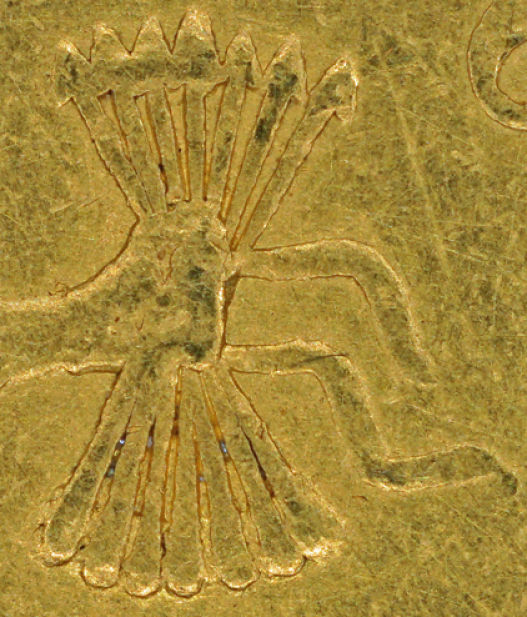 |
|
Pillar of the Community
Australia
7096 Posts |
Quote:
@trout1105: that's a very nice ducat. I guess that one is from the VOC ship(wreck) 't Vliegent Hart? I have no idea where this came from it could well be a coin from the Vliegent Hart. It is graded MS65 by NGC and is one of the five top of the pops coins  Edited by trout1105
12/20/2015 11:45 am
|
| |
Replies: 11 / Views: 3,212 |
|







 Posted 12/15/2015 1:34 pm





