| Author |
 Replies: 10 / Views: 3,926 Replies: 10 / Views: 3,926 |
|
|
Valued Member
Greece
80 Posts |
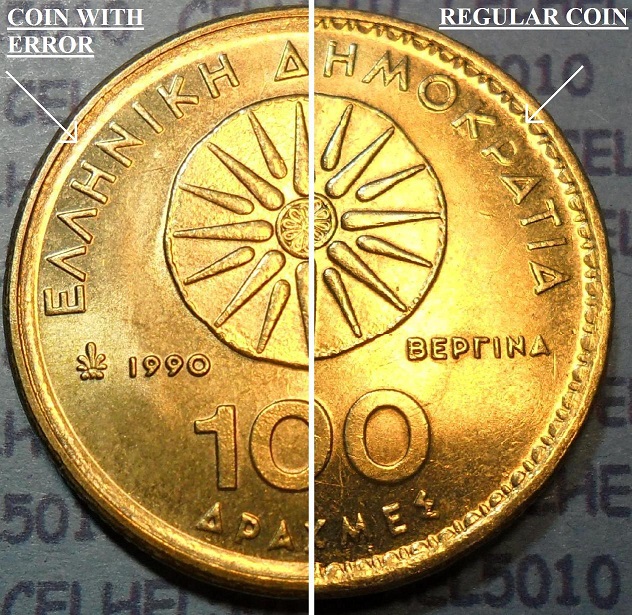
1990, Greece - Macedonia, (Greek for 3,000 years). Alexander the Great 100 Drachmai An Additional *Full Rim* Under the Pearls Decoration, on Both Sides 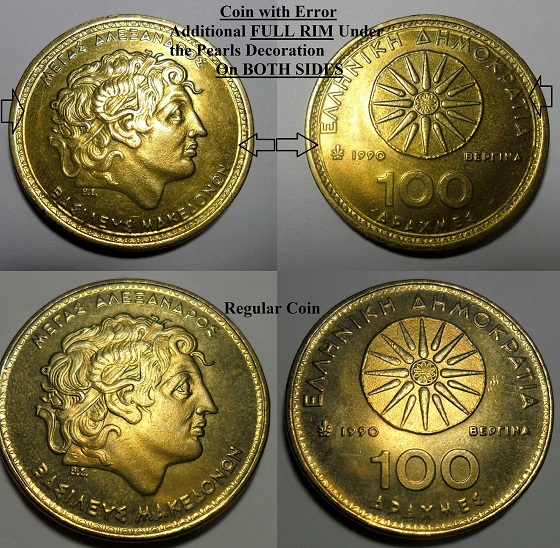 |
|
|
|
Pillar of the Community
United States
4963 Posts |
I am not sure how that could have happened at the mint.
|
|
Pillar of the Community
Russian Federation
5186 Posts |
Looks like Die Deterioration to me, personally. I've seen similar looking "rims" on recent Russian 1 and 2 ruble coins (though they aren't usually quite as even). |
|
Pillar of the Community
United States
4963 Posts |
Yes, that's probably what it is.
|
|
Bedrock of the Community
Australia
21792 Posts |
I don't think it is an error.
Although I do not know this series, in my opinion,
it is a die variety.
|
|
Valued Member
 Greece
80 Posts |
Another nice die chip error 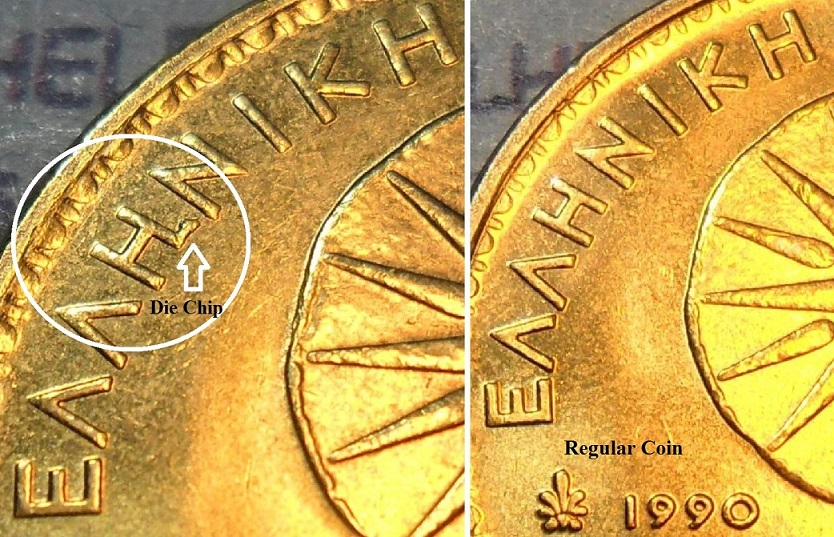 |
|
Valued Member
Greece
80 Posts |
|
|
Valued Member
Greece
80 Posts |
Greek drachma with a die chip-dot on the date 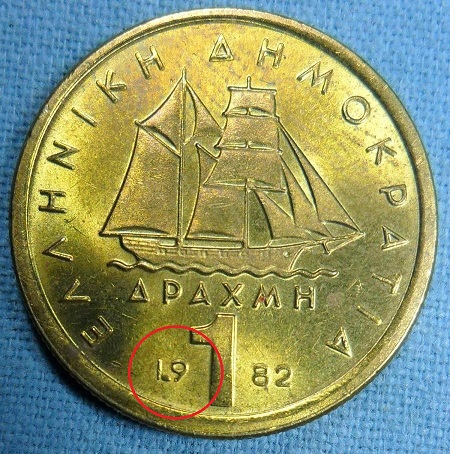 |
|
Pillar of the Community
United States
4963 Posts |
The die chips are nice, but the middle coin WA simply struck by excessively worn dies.
|
|
Valued Member
Greece
80 Posts |
worn dies?
For the pearls decoration only?!
|
|
Pillar of the Community
Canada
2533 Posts |
Dies wear faster on the outer edges. I've seen older Canadian coins (it was nickels I think, can't remember exactly) with denticles that look like yours, has that melted-into-the-fields look. I think your first coin also is a product of Die Deterioration on the obverse, but I'm not sure about the other side. It may just be damage from a coin rolling machine. |
| |
Replies: 10 / Views: 3,926 |
|










 Posted 12/31/2015 4:58 pm