| Author |
 Replies: 14 / Views: 1,704 Replies: 14 / Views: 1,704 |
|
|
Bedrock of the Community
United States
10065 Posts |
The following picture is from http://www.ebay.com/itm/131697810285From what I understand, MD is when the die shifts when hitting the metal to make the coin. So how does the die shift this far in some areas and not the whole profile? Also assuming this is MD since it looks flat and shelf like to me. 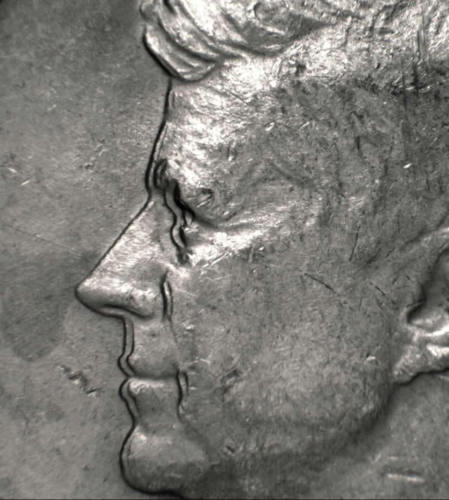 |
|
|
|
Pillar of the Community
United States
3656 Posts |
|
|
Bedrock of the Community
 United States
10065 Posts |
Here is a graphic coop ( I believe) posted before (credit on bottom right of pic), and was the basis for me thinking this was MD. Am I missing something? I would appreciate knowing.   How much squash could a Sasquatch squash if a Sasquatch would squash squash? Download and read: Grading the graders Costly TPG ineptitude and No FG Kennedy halveshttps://ln5.sync.com/dl/7ca91bdd0/w...i3b-rbj9fir2 |
|
Pillar of the Community
United States
3656 Posts |
I am still learning, so this is my beginners opinion, but this is a good way for me to put all my reading to the test. I don't see any doubling on the nose like you see on the example of the MD. and on the chin it seems to stick out more and looks to be more rounded just the the genuine DDO. The experts will tell us. |
|
Bedrock of the Community
United States
10065 Posts |
Until I came up against a 64 DDR quarter, I thought I had the DDO vs MD nailed down pretty well for myself. I had been roll searching and looked at literally thousands of halves in trying to learn. But the typical pics of the 64 DDR have some very flat, shelf like looking characteristics that look DDO: https://goccf.com/t/239753scroll down at least halfway on the page and locate the comparison pic I posted of an MD half and the DDR quarter pics. This is why I am wondering about the half in this thread. Thanks for your opinions. How much squash could a Sasquatch squash if a Sasquatch would squash squash? Download and read: Grading the graders Costly TPG ineptitude and No FG Kennedy halveshttps://ln5.sync.com/dl/7ca91bdd0/w...i3b-rbj9fir2 |
|
Pillar of the Community
United States
3644 Posts |
It's tough here but I do believe this is MD-hopefully coop will be along to tell for sure and explain your question about how it can only effect the center that's a good question but it looks flat and shelf like to me with no clear seperation also don't see the proper doubling on the eye.(didn't realize the example and original pics are different years,sorry-I still think it's md but who knows I'm interested now as well)
Edited by Slamnbass
01/18/2016 01:53 am
|
|
Pillar of the Community
United States
6478 Posts |
Certainly MD. The devices are severely reduced. The nose and forehead which are not effected are probably the lowest relief on the coin. As the die was only slightly above the field, the die shifted, causing MD to the Higher relief parts of the coin still inside the die. I believe that is correct.
|
|
Bedrock of the Community
United States
10065 Posts |
@SSK - this is a very good explanation and I bel;eive you are correct.  I looked again at the picture closely and noted the higher relief forehead area has a very small amount of MD in front of it that I did not notice before. It looks as if the die rotated counterclockwise so the MD at the high relief bottom parts of the effigy were most effected and that of the top higher points is small. I did not notice this until you mentioned what you did.  . Now I am kicking myself for not seeing it - I missed it totally  (don't tell anyone I used to teach physics  ) Edited by Earle42
01/18/2016 11:09 am
|
|
Pillar of the Community
United States
2752 Posts |
The lead-off coin is a classic example of Machine Doubling (push doubling subtype). The marginal shelving is unmistakable. In this case the obverse (hammer) die bounced up after reaching the lowest point of its downstroke, lurched to the right, and landed lightly on the newly-struck design. Machine Doubling can involve even larger lateral shifts. See this entry: http://www.error-ref.com/?s=machine+doublingError coin writer and researcher.
|
|
Bedrock of the Community
United States
10065 Posts |
@mikediamond are you saying there was no rotation to the die on its bounce when you say it "moved right?" If so, how did the doubling at the top of the effigy turn out so slight w.r.t. the wide doubling at the bottom? BTW Thanks for the great link. |
|
Pillar of the Community
United States
3656 Posts |
Thanks Mike, I have been on your site many times. Such great information but, hard to learn and remember it all.
|
|
Pillar of the Community
United States
2752 Posts |
Error coin writer and researcher.
|
|
Bedrock of the Community
United States
10065 Posts |
@Mike Great article ... again thanks. And I agree with Coincents - there is a lot of info on your site to absorb and keep. OK - so in the case of the initial coin posted, the entire die shifted right with no rotation. So variance in width of the shelf doubling along the length of the effigy is from what? Looking at the forehead doubling, the shelf is thin compared to the shelf of the lips area. This is what made me mistakenly think the die also rotated. In fact, now that I look at the pic again, the chin's shelf is also thin compared to the lips. So from top to bottom vertically along the effigy we have thin shelf, wide shelf, thin shelf. I was thinking this would be due to the relief being higher in the thin areas, but then I notice the eye and cheekbones are even higher and yet they have wide shelves again. How much squash could a Sasquatch squash if a Sasquatch would squash squash? Download and read: Grading the graders Costly TPG ineptitude and No FG Kennedy halveshttps://ln5.sync.com/dl/7ca91bdd0/w...i3b-rbj9fir2 |
|
Bedrock of the Community
United States
62064 Posts |
One way to tell the difference is that the MD starts on the outside outline of the bust. On a doubled die it is not on the edge of the bust. It is a bit more inward. On the 1955 doubled die you can see devices affected on the bust: 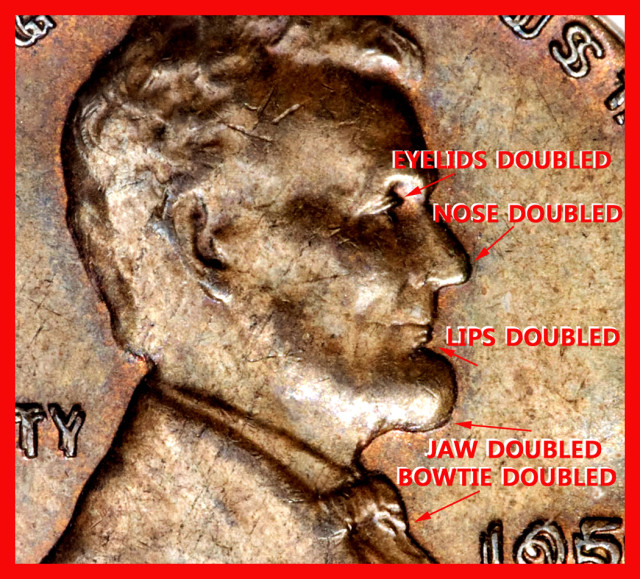 Again note; the hub doubling does not show on the outline of the bust, but inside the bust design. On the 1984 DDO double ear example you can see doubling inside the bust. 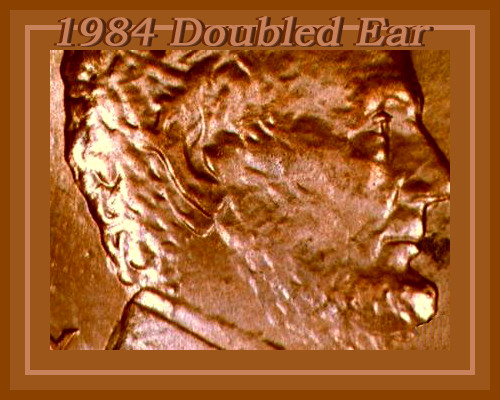 Not just ear is doubled, but under the beard as well. So if the area is question is the outside edge of the bust, then it is usually machine damage during the strike. If the area affected is not on the outside edge of the bust, then it might be hub doubling. Keeping this in mind will help for your determination of a doubled die or machine damaged coins. |
|
Pillar of the Community
United States
3644 Posts |
Great explanations,thanks-coop what you described is one of the main differences I was noticing when I was looking at these examples last night
|
| |
Replies: 14 / Views: 1,704 |
|










 Posted 01/17/2016 10:40 pm


