| Author |
 Replies: 25 / Views: 8,318 Replies: 25 / Views: 8,318 |
|
|
|
Pillar of the Community
 Australia
7096 Posts |
Quote:
i was talking about the redidue-ish looking areas behind George and in front of his crown. That is a "Milk spot" type issue and nothing short of "Dipping" can fix that and I am not a fan of dipping or cleaning a coin in any way which is what "conservation" really refers to. |
|
Pillar of the Community
Australia
852 Posts |
So if a coin struck with a circulation die on a proof flan is "prooflike" according to the slabbers then how do they grade circulation strikes with dies formerly used to strike proofs?  I've seen a few choice raw Geo V coins described as from proof dies in dealers catalogues so it must have been common. Also what about pre decimals struck with chrome dies. They look very similar to pre decimal proofs (except the edge beading isn't proof quality) as the proofs were also struck with chrome dies. Would PCGS slab them as "Proof Like"? |
|
Pillar of the Community
Australia
7096 Posts |
Quote:
Also what about pre decimals struck with chrome dies. They look very similar to pre decimal proofs (except the edge beading isn't proof quality) as the proofs were also struck with chrome dies. Would PCGS slab them as "Proof Like"? That my friend is a rather good question as these chrome die coins are a very different looking coin to the run of the mill circulation strike coin of the same year  |
|
Valued Member
Australia
56 Posts |
How did this one go with reconsideration?
|
|
Pillar of the Community
Australia
7096 Posts |
Quote:
How did this one go with reconsideration? Wow I must have forgotten to update this thread when I got the results a couple of Months ago, Thanks for the heads up  I came back in the original holder as MS63. They called it Proof Like on the slab but wouldn't give it a PL designation |
|
Pillar of the Community
Australia
1333 Posts |
@trout it was given a proof like due to the fact that this coin proofed, which there are 400, is said to have steak marks when tilted at a 45 degree angle due the brush used on the proof die. You can take a look at this https://coinworks.com.au/Mystery-of...Florin-~4159 |
|
Valued Member
269 Posts |
I have no idea how to grade a 1927 Canberra florin. I was browsing ebay today and seen this PCGS MS64 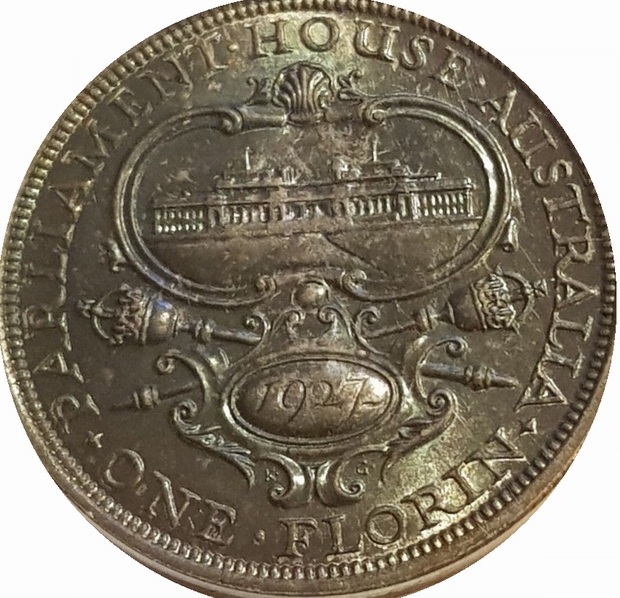 Given a half dozen guesses - I wouldn't have said 64. Beats me .. |
|
Pillar of the Community
Australia
852 Posts |
I can see it as 64. It isn't that high a grade for a Canberra and the coin is fairly nice overall. Plus might some of those scratches be on the slab?
|
|
Valued Member
269 Posts |
It's tricky because the usual florin markers are absent and with this coin there's a big variance in strike quality. Strike quality is a key determining factor in grading. [NGC and PCGS make this fact crystal clear on their websites] If that coin has only one or barely two steps visible, it's reasonable to assume that it's a low quality strike and that should be reflected in grade. The problem is - it's not. I look at the obvious - overall condition and check the sceptre for wear, as it is the highest point on the coin's reverse. 1927 Canberra florins (proofs aside) are not easy to find with 3 steps and a perfect sceptre. The coin below was given a very high grade even though I see only 2 steps and possibly some wear on the sceptre. 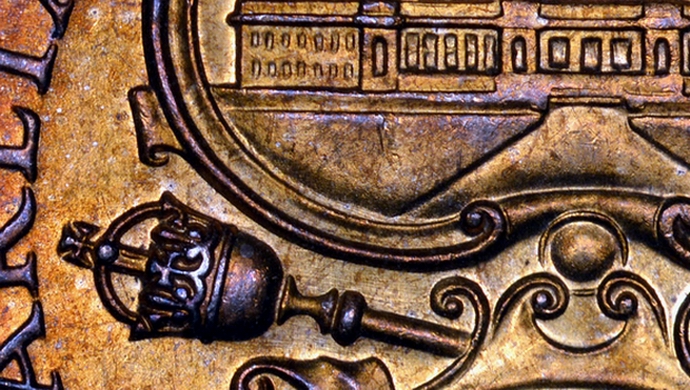 Edited by CoinOS
03/22/2018 09:01 am
|
|
Pillar of the Community
4628 Posts |
Gorgeous - I was saying 62 or 63 as there are dings and marks. But the detail is stunning. My EF coin can not compare, and I think THAT is beautiful.
|
| |
Replies: 25 / Views: 8,318 |





 First Page


 Posted 03/07/2016 12:52 am


