| Author |
 Replies: 30 / Views: 6,354 Replies: 30 / Views: 6,354 |
|
Valued Member
United States
484 Posts |
What's best? EVO or acetone? 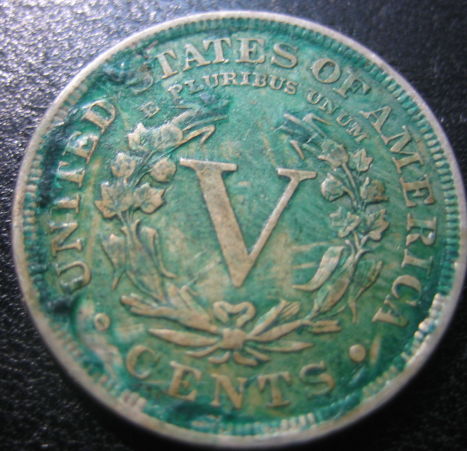 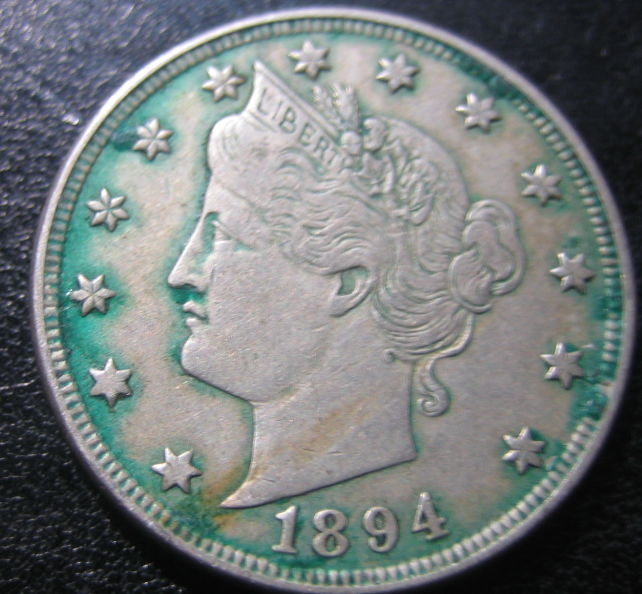 |
|
|
|
Valued Member
United States
311 Posts |
|
|
Pillar of the Community
United States
604 Posts |
Personally I would start with a long soak in acetone. Then I would take a Q-tip dipped in acetone and "roll" it across the surface to remove the stubborn residue. From the looks of things, you will have to repeat this process a few times. I can't promise it will all come off but I bet I will improve significantly.
|
|
Rest in Peace
United States
4078 Posts |
 Acetone |
|
Pillar of the Community
United States
613 Posts |
 of course. Hope it ends well for Lady L. |
|
Pillar of the Community
 United States
3098 Posts |
Acetone would be my first step.
You can also try hydrogen peroxide as well.
I've found the Q-Tip suggestion works very well. You can see what's coming off the coin by what's on the Q-Tip.
Good luck!
Paul Bulgerin
|
|
Rest in Peace
United States
18456 Posts |
Tread lightly my friend ,That's a real nice semi-key you have . I would give it a long soak in Acetone . The Q-tip treatment sounds good , it's a circulated coin anyway.  |
|
Rest in Peace
United States
17900 Posts |
The acetone baths are the best idea for removing some of the gunk. I'd be careful with the Q-tip method so you don't SCRUB the remaining natural 'skin' off of the surface. If you are careful you can use a wooden toothpick to move some of the larger gunk off too. But again, be careful that the wood doesn't actually touch the coin.
This is a nice coin so I hope the acetone works well. I'd love to see a photo or two of the results.
|
|
Bedrock of the Community
United States
20030 Posts |
Looks to be PVC damage, chances are high the surfaces have been etched by the hydrochloric acid component in the residue.
Agree with others, a long soak in acetone as a first step. Be sure to use a sealed, glass container with a tight-fitting lid. As bad as this is, I would soak for a few days and change out the acetone everyday.
NEVER use olive oil on a coin!
PS - Conservation is the correct term. If you clean this coin, it will have more than 90% of it's value lost. Whatever you do, DO NOT clean it!
Lincoln Cent Lover!VERDI-CARE™ INVENTOR https://verdi.care/
Edited by BadThad
03/10/2016 3:25 pm
|
|
Bedrock of the Community
Australia
21789 Posts |
That sort of thin green patina on an ancient Roman sestertius would increase it's value!
As most know this coin is composed of an alloy of copper and nickle.
Hydrated nickel chloride NiCl2, is green.
and the copper hydroxycarbonates Cu2(OH)2 CO3 and (Cu3(OH)2 CO3)2 that are found in verdigris are green as well.
There is no pitting due to corrosion on this coin, so verdigris should not be a problem.
These salts are all inorganic, and acetone will not remove them.
In short, don't bother to clean this coin, just enjoy it!
Edited by sel_69l
03/10/2016 5:33 pm
|
|
Valued Member
Canada
160 Posts |
I've had spectacular results with plain acetone on coins just like this. Looks to be PVC damage to me as well.
|
|
Rest in Peace
United States
18456 Posts |
sel_691 , I can't see leaving this coin alone. If it were mine I would go with Bad Thad's method . Just sayin !  |
|
Bedrock of the Community
United States
94367 Posts |
Hey BadThad - what's the problem with olive oil? I have been using it for 20 years with remarkable results.
|
|
Bedrock of the Community
United States
12437 Posts |
Quote:
That sort of thin green patina on an ancient Roman sestertius would increase it's value Except for the fact that it is not a patina at all, it is old PVC residue. |
|
Bedrock of the Community
United States
11951 Posts |
I have worked on a lot of coins ... Many just like this.
But I am sure some members here have worked on even more
than I have. I feel BadThad is one of those members that speaks
from experience.
Acetone is something worth a try. I have soaked coins like this
for weeks with good results. And with out doing any damage to
the surface of the coin. I would expect some of the green gunk
will try to stick into the smaller details of the coin. That is where
Q-tip method might help.
I feel this might not be a coin that will be a quick fix. Try the acetone,
see how it works. If if does not get it all, let it sit a couple days before
trying the same method again.
Not a expert, but I feel it might be PVC.
|
|
Bedrock of the Community
United States
20030 Posts |
Quote:
That sort of thin green patina on an ancient Roman sestertius would increase it's value!
Except this is NOT a patina, it appears to be PVC plasticizer residue which will destroy the coin with time. On on modern coin, it GREATLY reduces the value. Quote:
There is no pitting due to corrosion on this coin, so verdigris should not be a problem. How can you assertively say there is no pitting when you cannot see the surfaces? I'm willing to bet there are pits under the thick residue areas. Quote:
These salts are all inorganic, and acetone will not remove them. This is true, verdigris inorganic salts are not soluble in organic solvents. However, the acetate salts are slightly soluble. Edited by BadThad
03/11/2016 2:47 pm
|
| |
Replies: 30 / Views: 6,354 |








 Posted 03/10/2016 2:23 pm


