| Author |
 Replies: 17 / Views: 5,110 Replies: 17 / Views: 5,110 |
|
Pillar of the Community
United States
5362 Posts |
|
|
|
|
Pillar of the Community
United States
1316 Posts |
 I have a lot to learn here, so very much looking forward the responses. Based on the usual suspects like weight and denticals seem OK. I don't know the nuances of the dies well enough yet to know if there is something blatantly wrong in the design / fonts. If it was my money being spent, I would pass on them all for the corrosion / scratches, although the chop marks might make me momentarily think twice. |
|
Valued Member
146 Posts |
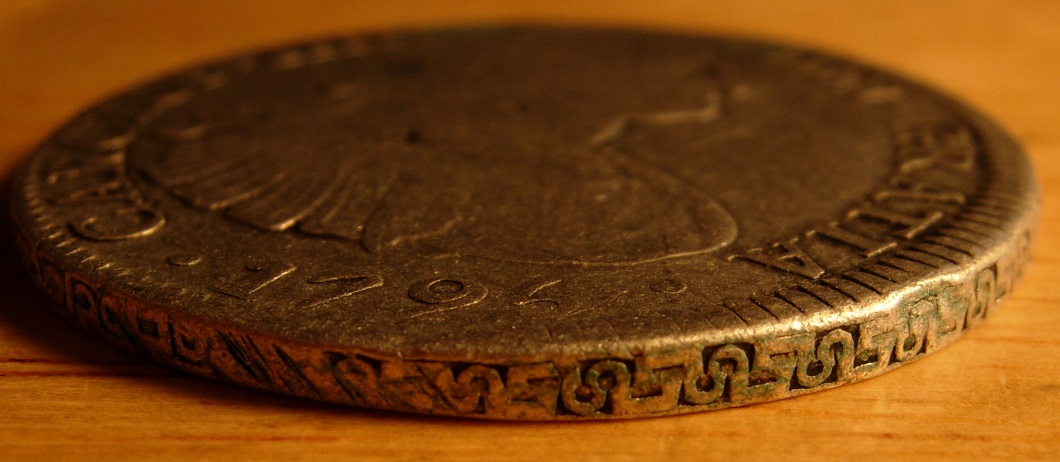
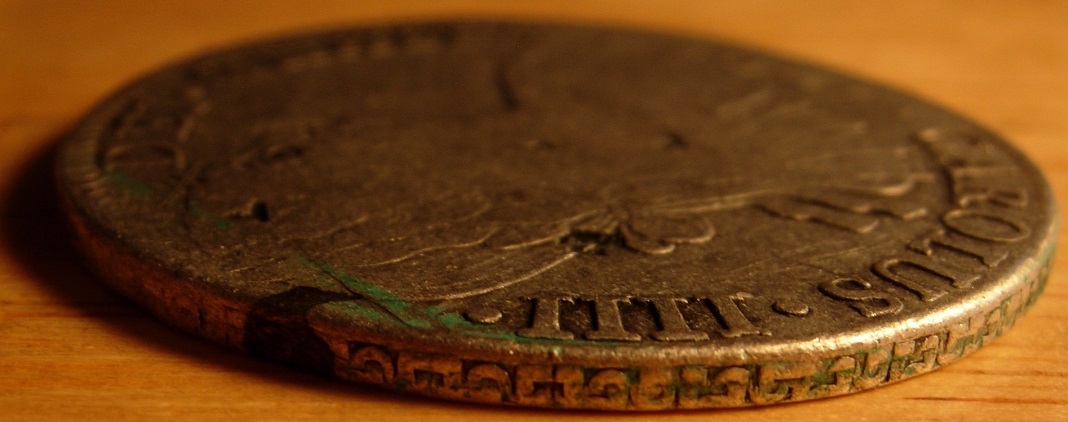
I've never seen an edge like that. It does not look like it was put on twice as the original edge is not flattened by the new one.
Bob, YOU ARE the expert here so you are teasing us right?
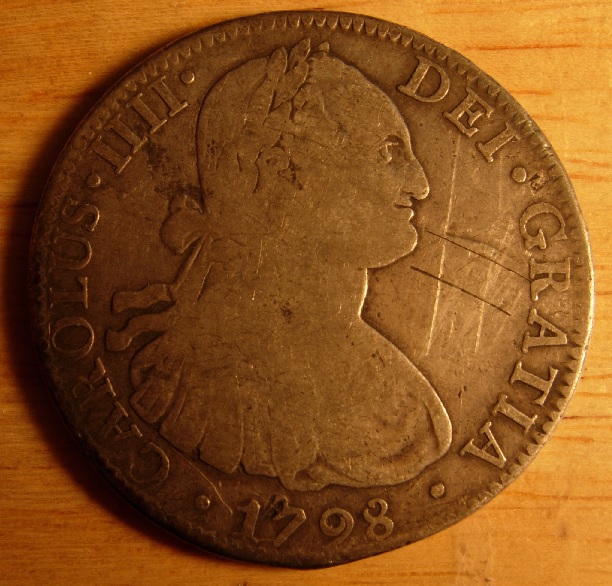
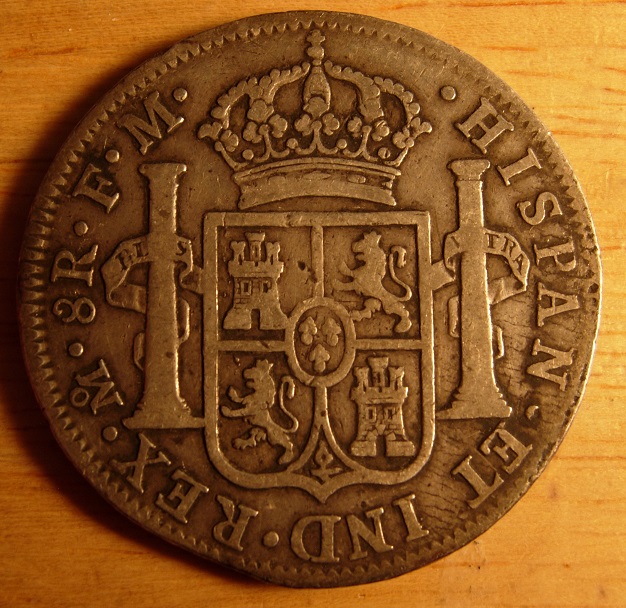
The '98 looks OK.
|
|
Pillar of the Community
 United States
5362 Posts |
A little more background is in order here, because I am being just a bit tricky.
Also I should note that the wear and chop marks are all above suspicion in this case. The two with chops apparently did circulate in China.
The person that wanted me to authenticate the three has used my services before. He is a dealer - part of a partnership of several dealers. One of the partners, not as familiar with my background has been suspicious of my authentication. This was a test for m as well.
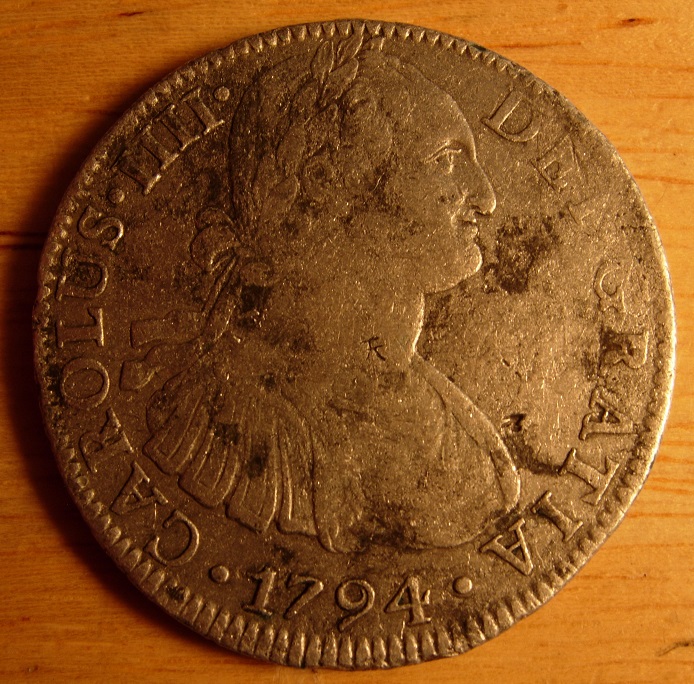
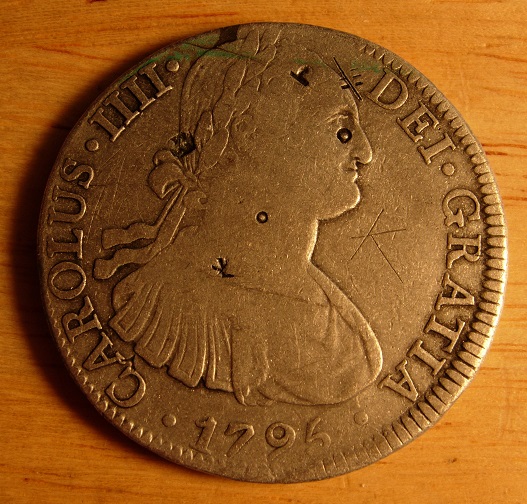
The three coins contain one very obvious counterfeit - the 1795 with the extremely odd edge. By the way I can not understand how that edge was made and I have examined it under all types of magnification and lighting. It makes no sense.
The other two were selected as being above all doubt genuine, in their opinion. So when I said all three were types made for the China trade they were very sure I WAS WRONG.
So I gave them one challenge - have the coins tested with XRF to determine the actual alloy to see if all three had the correct silver content and to see if there was an appropriate gold trace in the silver. They did the tests and used a different party to test the coins. Tests were done on multiple locations and averaged. The accuracy level of the XRF instrument was 100ppm.
Here are the results:
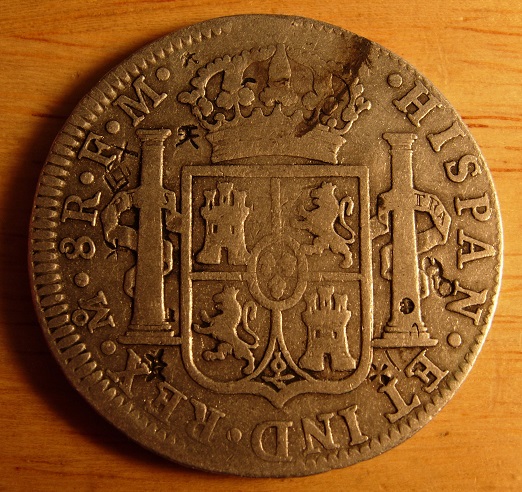
The counterfeit 1795 Mo FM - 95% silver no gold at all.
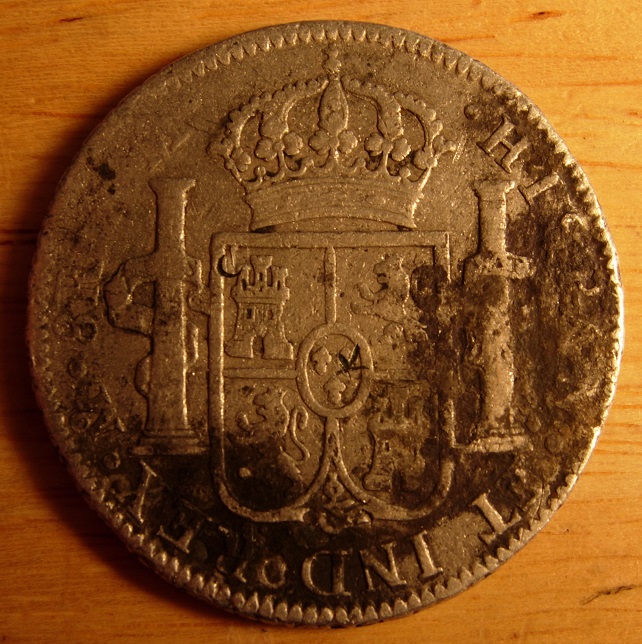
The 1794 Mo FM - 87% silver NO GOLD AT ALL.
The 1798 Mo FM - 95.3% silver NO GOLD AT ALL.
Can anyone explain the results? Why is the silver high on two coins and low on the other?
|
|
Pillar of the Community
United States
1156 Posts |
Quote:
Why is the silver high on two coins and low on the other? My guess is that the high% was produced in a time and place when silver was cheap, Comstock era USA, for instance. The low% would have come from a different time or location, perhaps one of the European countries that you have mentioned as issuers of these Type IIs. What was the response from the partners? I hope they are true believers in XRF and the existence of Type IIs, now. Edited by jgenn
04/20/2016 9:30 pm
|
|
Pillar of the Community
Canada
3692 Posts |
Bob, I'm not so familiar with these coins, so I ask: In mint-state, or VF and higher, would the monarch's face be higher than the surrounding legend? Everytime I see a coin with faded details except for the legend I get suspicious. Silver content... mintmaster error? A bad one too! Maybe, if your theory is correct about China trade, the coins were given a higher purity to compete with other world coins like the US Trade dollar? To my recollection the US Trade dollar had a high amount of silver weight and still flopped, no? Third coin, are those some sort of die impressions on the 4 to 5 o'clock region? Last two coins look very coppery. |
|
Pillar of the Community
United States
5362 Posts |
The higher than normal silver readings are due in part to surface enrichment of the silver copper alloy. On coins that have been worn significantly by circulation, extended handling by ungloved hands and possible storage under damp or acidic conditions, the copper in the alloy at the surface is often depleted leaving the silver content behind. This enrichment is typically in the 3% range based on numerous XRF tests.
The process of surface enrichment actually begins during the manufacture of the coin itself. At several steps during the process of manufacture the silver is treated with a bath of heated acid to remove dirt, oil and toning that develops with repeated annealing. This surface enrichment is seen on the surface of MS silver coins from the historic period of these coins. An additional percentage of surface enrichment is also the result of the strike. The exact mechanism is open to some uncertainty but the fact that the silver flows under the pressure of the strike is believed to be the primary cause of the effect. This microscopic layer wears away quickly followed by the slightly deeper layer of enrichment due to pickling. However, after a more extended period, it is replaced by the accumulated enrichment due to wear and the environmental depletion of copper.
So there is theoretically a time after the luster wore away that an XRF test should have revealed a result much nearer the correct alloy. Then over time the silver would enrich again. It would make an interesting graph but it would be very difficult to create an experiment to prove it.
The two coins that tested at 95% show a higher than expected surface enrichment suggesting that the coins may have been sterling silver to begin with not 907 fine. That would indicate an origin in the UK. The use of sterling silver (925 fine) might be justified if the counterfeiters did not have the capability of altering the alloy. The cost of the excess of silver would be covered by the margin of profit paid in China and was actually less than shipping costs.
The coin that tests as 87% silver is clearly a slightly "short" alloy. It would likely have begun as an 850 fine alloy. That alloy is right where I believe a counterfeiter would set his target alloy in the 1860s. I base this on a belief that counterfeiters making coins for the China trade would have known that their product would be tested for Specific Gravity when it got to China. They also knew the limits of that testing. In 1835 the Chinese were first introduced to the concept of testing using SG. This was done by the British because they were receiving low alloy silver coins in payment for opium. The scales the Chinese would have used to screen incoming coins in large numbers would have been more utilitarian types of the kind described by Riddell. The balance would have been able to detect a shortage of just about 10% of silver in the alloy but anything less would not be questioned. I would pick 5% low as a safe alloy because an operating tolerance could be accommodated while at the same time making the average example undetectable. It also adds 5.56% to the profit margin.
So yes, I placed all three examples in Class 2 - Contemporary Circulating Silver Counterfeits.
The owners are now more accepting of my concept of authentication in part because they also have seen test results from other 8Rs which were authenticated by me as genuine. In all cases that I have had tested after authentication (dozens) the alloy contains at minimum 0.2% gold. The highest gold content to date comes from a test of an 1838 Guanajuato 8R - 3.8% gold.
One necessary disclaimer - my record is not perfect. There are still some coins (about 10% of the total) that test right at regal alloy levels which I still believe are not genuine because of surface characteristics. In this case, however, the three coins did not disappoint.
The justification for a sub-class of counterfeit coins that test as if regal is that; silver refined before 1850 would (must) have been used to create the made for China coins that were actually manufactured before 1850. That of course is a no-brainer. These coins would out of necessity have the same trace contamination of gold as regal coins. This sub-group can ONLY be identified by visual clues seen on the surfaces of the coin.
The one remaining problem is that the owners still have difficulty seeing what I do when I am looking at these coins. I believe this is simply due to my very narrow focus on a single type of coins which has literally covered decades.
So to sum up:
Coins supposedly made in Mexico before 1850 that have a gold content under 100 ppm are with no doubt at all counterfeits.
Coins that actually do have a gold content over 100 ppm may still be counterfeits. (Odds that I currently see as about 10 to 1 with the 1 being a counterfeit).
Coins that have gold content are therefore only provisionally acceptable as genuine and should still be confirmed through visual clues.
|
|
Pillar of the Community
United States
5362 Posts |
Libertad The 8Rs were made to allow them to stack. The portrait side was convex while the shield side was concave. A high grade 8R will spin on center when placed face down on a flat surface. This accounts for strike weakness at the center of the shield side and a tendency for the ear to wear off quickly. Because the planchets were upset by the application of the colonial edge design the dentils were raised above the level of the top of the letters protecting them for a time from wear. So the look that makes you suspicious is actually normal for this series (the ones struck at Mexico City at least). The Chinese preferred the Portrait 8R of Mexico for a much simpler reason than the actual silver content - the Buddha headed figure with thick hair ribbons was believed to be good fortune by inland shippers and it drove the higher market price for the coins. This was coupled with a belief that only Mexico City produced coins of reliable alloy. So the two things the Trade dollar was missing was the Fat guy and the Mo mint mark. The mint master of Mexico City was never proven to have shorted (or added) to the alloy. It was of all the colonial Spanish mints the one most trusted by US mint officials. The dollar was modeled on the 8R. Are you referring to the reverse of the coin that has lamination surface cracks near the 4 o'clock position? If so those are micro-cracks that are seen on both counterfeit and genuine coins. They are most prevalent on class 2 coins and are one of the visual clues (of 20 total) I use to profile a suspicious coin. They occur when a rolled silver strip is laminated. If the lamination is done under too much tension or after the surface has been work hardened very fine cracks appear at the surface. These usually do not show until the coin tones or gets dirty. The last two of the coins are in fact coppery looking. That is actually proof of the depletion of copper at the surface. Every time the coin is handled more of the green verdigris rubs off. The copper is simply more reactive than the silver is.
Edited by swamperbob
04/21/2016 11:39 pm
|
|
Moderator
 United States
34546 Posts |
Very informative. Thanks for another lesson.
"If you climb a good tree, you get a push."
-----Ghanaian proverb
"The danger we all now face is distinguishing between what is authentic and what is performed."
-----King Adz
|
|
Pillar of the Community
United States
1761 Posts |
When I was at EDAX and Spectro I once cut a 1964 Kennedy half dollar in half in the laboratory. The central core and surface silver values were identical. Although one coin only it may SUGGEST? silver surface enrichment may take some time to occur on the surface creating these slightly elevated silver values. Here is the "CLASSIC" article: http://www.bsaxton.com/stuff/silverenrich.pdfSince we can never cut our coins in half - obviously we also see some interesting other changes within the coin as well on the surface. I remember one time reading an article that before I presented the L.Beck article to my U.S. Colonial counterparts some speculation was made on a sterling silver Massachusetts Silver CCC was introduced at 95% sterling silver. Seriously? It was later corrected although even at this point few if any have been trace gold tested - it appears there more interested in historical pedigrees and doubling strike phenomena than trace gold results <BG>. Tough to say as I have seen over a hundred 95% Ag regals tested in the lab showing more at this level than occurring at 90-92%. So 95% is more common than 90-92% IMO. I am sure someone like M.Keech with his XRF gun can confirm this now - although he keeps his results private at Mexican Coin Company. Whatever ... I recently received a 1813 Cast Chihuahua 8R weighing ONLY 22.5 grams and it looks PERFECT. The ring is a little off (i.e., not a very high Ag tone) - my last discovery was that some 1811's come regal edged and some are Plain Edge. I get a feeling this may be another SIGNIFICANT anomaly for these very interesting WOI sub-series. We shall see what XRF has to say on this peculiar UNDERWEIGHT ... 1813 is near the end of emission for these types Mr. Boppel? John Lorenzo Numismatist United States Edited by colonialjohn
04/22/2016 09:09 am
|
|
Pillar of the Community
United States
5362 Posts |
The large number of 8 reales that test 95% gives me hope that someday the realization will occur even to the most stubborn unbelievers that massive numbers of Counterfeit silver dollars were made in the UK to pay off part of their balance of payments deficit to China in the time period before the Opium Wars.
The simple facts are that the UK (through the British East India Company) needed as much as 50,000,000 dollars annually to pay their deficit to China. The premium over actual silver value of the Mexican Portrait 8R was between 16 and 25% on average. That fact provided a clear incentive for the manufacture of silver counterfeits. How much of the payment was made in the preferred Bustman Dollars is unknown, however, to say it did not take place, flies in the face of mounting evidence.
It is only recently that historians came to grips with the actual causes of the Opium Wars. It was less about Chinese restrictions on Free Trade and had much more to do with money - lots of money. The British Government over the objections of notables like Gladstone directly caused the addiction of millions of Chinese people to opium to pay for the UK's addiction to tea, silk and Chinese porcelain.
It is small wonder that the government of China dislikes and distrusts the "west". I also wonder if the Chinese do not see flooding the "west" with counterfeit goods as a form of long overdo repayment.
Edited by swamperbob
04/22/2016 1:41 pm
|
|
Pillar of the Community
Canada
3692 Posts |
You could have just said depletion gilding. Cool! :D Makes sense. A coin that thick would need lots of annealing.
I am too familiar with the way noble metals will crack under pressure (through a rolling mill). With sheets that long and thick it doesn't make sense to fuse them back to shape. I wouldn't be surprised if the most cracks appeared in the years when the mintages were high to keep up with demand. Metals have to be rolled incrementally, so I'm thinking that they must've cranked the machines to "save time" on production. Shortcuts never work the way you want them to.
Traces of gold? Did the Spanish empire really plunder so much that they had leftover gold? Lol. It's funny when I hear that Spain tries to repatriate sunken ships full of stolen gold.
I did not know that they stacked. That is awesome!
Lol retribution. What a dumb concept. To punish the living for the wicked deeds of the dead is just backwards.
Marcy Playground has a song called Poppies. Amazing song worth a few thousand listens.
A fountain of information you are Bobby Boy!
Edited by Libertad
04/22/2016 8:33 pm
|
|
Pillar of the Community
United States
5362 Posts |
Libertad You made the comment: Quote:
Traces of gold? Did the Spanish empire really plunder so much that they had leftover gold? Lol. It's funny when I hear that Spain tries to repatriate sunken ships full of stolen gold. The simple fact is that the technology needed to part small traces (0.2%) of gold from silver did not exist in 1800. The contamination of all native silver ores found in Mexico with gold is very well known. Museums have used gold content to identify Mexican native silver for about 3 decades. In the period right around 1800 the bulk of the silver used at the Mexico City mint (minimum of 60%) came from the Valenciana mine in Guanajuato. This mine was noted for very high gold contamination. There are very recent records (ca 2000) of core borings taken at the site by the current owners of the mine. These borings reflect a very high gold contamination level in all of the XRF results. The refining technique employed for the silver that was produced at the Valenciana was mercury amalgamation (patio process). This produced a mix of several metals present in the ore. (Notable as not included in the output is Platinum which does not amalgamate with Mercury.) When melted silver and gold form a solution. Gold is fully soluble with silver and silver is fully soluble with gold. This is not the case with most metals which mix but are not actually soluble. Parting methods used to separate a trace of gold from silver involved cupellation (fire reduction) in a process that amounts to gravity separation of silver and gold. Even though a large part of the gold could be extracted in this manner not all of the gold could be removed from the silver. Depending on availability of fuels and time - parting was an expensive undertaking and the gold trace left behind by the authorities of colonial Spain was based not on purity of the silver but on the costs of removal versus the value of the gold recovered. If you check methods used to remove silver from gold, you will find that this could be accomplished using nitric acid to establish gold that was actually far purer than "pure" silver used for coins (99.5 to 99.3% pure). The method developed at the Comstock Lode refineries (the introduction of chlorine gas to the silver and gold solution) was the first method that could produce gold that exceeded 99.9 fine. That technical development occurred in the 1870's.
|
|
Pillar of the Community
Canada
3692 Posts |
Bob, is there a book that I can read about all this? Did you learn on your own or did somebody teach you all this? Fascinating stuff!
|
|
Pillar of the Community
United States
5362 Posts |
Libertad The first discussions on the subject came in my readings about Museum Authentications of period silverware from Mexico. These were found in a book that that I purchased and read while working on my first book. The book is by Craddock called "Scientific Authentication: Copies, Fakes and Forgeries". It is an expensive book but worth it in my opinion. That book spoke about the gold trace specifically and how it was used to authenticate Mexican Silver found in museums. This left me with 3 questions:
(1) Why did the numismatic community reject XRF testing?
(2) How much of a Trace of gold is present?
(3) Why was that trace of gold not removed?
The answers to those questions came from other sources.
Question 2 was by far the most difficult to answer. Because it required me to first prove that the Mexican silver veins were all contaminated with gold. In the process I discovered that the uplift of the Mexican mountains and the silver vein intrusion were part of a single geological event which occurred millions of years ago. I also discovered that the uplifts and intrusions in South America were different events (two of them - which is why Bolivia and Peru have different silver impurities). These two events occurred in different geologic time periods. Next I needed to prove when purity of silver moved from 99% to 99.999% fine. This required study of the history of mining and refining as well as chemistry. This line of investigation ran right into question 3 - why couldn't the trace be removed. This confluence of the questions became so great that numbers 2 and 3 were answered simultaneously by the same sources.
The use of gold in museum authentication dates back to before 1995. So in their circles, this is really OLD news. I did some research to see why numismatists in the US did not adopt the XRF as readily as the museum authenticators and found that in the 1980s and early 1990s that there was a fairly concerted effort to use XRF but which ended up discredit XRF testing in the minds of the US numismatic community. I read many old papers done at that time (1980-1990 time frame many of which I found on line) and basically the information concluded that for ancient coins the metal was often too mixed to provide a conclusive test for age and origin. There had also been early hope that XRF would be a magic bullet that could prove which specific mine the ore came from. Add that mindset (nearly impossible goals) to the fact that at the time XRF testing was in its infancy), the results were assays of very high level (never better than 0.1%) and that the results were far more iffy than today and you have the basis of rejection (See Ron Jenkins, "X-Ray Fluorescence Spectrometry" second edition for the development of the art from 1989 to 1999 and Shugar and Mass "Studies in Archaeological Sciences - Handheld XRF for Art and Archaeology" 2012 for an even more updated look). The old arguments (still being used by many numismatists) no longer are valid. This is especially true if you can set up a valid test for a component in the metal that varies in a known manner over a known period of time. In this case gold contamination of silver in Mexican silver refined before 1870. This test which is very accurate for that limited situation is by no means a universal answer. Other tests (the Museum approach) must be used for silver originating in other countries at different time periods.
Questions two and three took more time to answer, I have read at the very minimum 20 volumes on early mining technology, refining and the history of mining focusing on the techniques used and the expected results during the period from 1550 to 1850. No single book lays out the whole case but many give great clues and statistics which can when taken together create a picture specifically applicable to my test range.
To do the same research you should start with Agricola's "De Re Metallica". This was the handbook for mining and refining from the mid 1500s until the late 1700s. It was translated by Herbert C. Hoover (who was a mining engineer before he became President of the US.) A second book by Hoover "Principles of Mining" provides the economic theory behind mining from the 1890s. This matches well with the economic theory in place in British operated mines in Mexico from 1770 to 1821. For historical background I read Randall's "Real del Monte", Howe's, "The Mining Guide of New Spain and Tribunal General 1770-1821", Lynch's "Mining in World History" and Brown's "A History of Mining in Latin America". I also read several other less technical works that gave a more general look at what was happening in Mexico.
Other background works which I also read were Gore's "The Art of Electrolytic Separation of Metals" (1894), Kirsch's "Mining Capitalism" (2014), Sumner's "Geophysics, Geologic Structures and Tectonics" for a summary of the geology behind the silver seams in Mexico. "Metallurgy in Numismatics" (1980) by the Royal Numismatic Society has some applicable but dated examples of early reactions to scientific testing of alloy's in the UK which were far in advance of US reactions. I also read Tylecote's "History of Metallurgy" second edition (2002) to get the basis of a timeline on silver refining. I also searched the articles at Science Direct on line for papers like Guerra's "Analysis of trace elements in gold by SR-XRF", Harris' "Scattering from Impurities in Copper, Silver and Gold-Based Alloys". I found many technical mining reports by owners of the old silver mines showing recent XRF tests done on core samples drilled into remaining rock around the former mines. These tests all date to after 2000 and were used to try to reopen many of the old claims including La Valenciana.
Anyone who wants a more complete reading list - just ask. I also found that books on Silver ware, electroplating and history of technology were helpful providing supportive details.
|
|
Pillar of the Community
United States
829 Posts |
Fascinating edge there. It looks as though either one of the edge dies slipped while the piece was being upset, or it was recastainginated for some reason.
|
| |
Replies: 17 / Views: 5,110 |










 Posted 04/20/2016 10:15 am


