| Author |
 Replies: 97 / Views: 18,578 Replies: 97 / Views: 18,578 |
|
|
|
Pillar of the Community
United States
5362 Posts |
spruett001 By SG I am referring to Specific Gravity. The OP's coin should be tested with XRF to avoid any possible damage. That test I can not control. The owner of the magnetic versions would have to undertake those tests.
While copper and nickel are essentially the same density - silver is not. The coin to be genuine must contain 50% silver by Peruvian law. Anything else (lower silver content) makes the coin fraudulent - even if made at the mint in Lima it could not be encapsulated as genuine.
There are absolutely no reports, discovered so far that claim the Lima mint produced fraudulent coins with deficient silver content at that time. No US mint reports issued cautionary statements about Peruvian coins being fraudulent either.
So I will test the coin to see if it yields an appropriate density. That would prove the coin I have in hand is some form of counterfeit. I would propose that there is little chance that the coin was made as a "for circulation" forgery ca 1935, since there are no reports of such a counterfeit in any reference I have. It is far more likely that it would be a numismatic forgery made recently. It makes more sense financially.
The very existence of a high quality forgery of a Peruvian Sol dated 1934 calls into question the statements that numismatic forgeries of this series of Sols are unheard of.
I am trying to prove my initial contention that it is possible for a numismatic forger to be producing fake 1933 Sols for the numismatic market. Until that is established the possibility of a genuine magnetic Sol remains open.
|
|
Pillar of the Community
United States
1962 Posts |
I'm curious how all these postulated 1933 modern fakes have dispersed to such a wide variety of (seemingly legitimate) ebay selling sources... yet we haven't noticed any quantity of them (or surrounding dates) before from the usual Chinese sellers. Below is the 1933 example in a Heritage 1 Sol group from back in 2007. This auction contained a number of group lots from Bolivia, Peru, etc... the type of material that would have come from a long-term accumulation. Even ignoring that, though, 2007 is pretty well-insulated from a time where you'd have high-execution fakes of such an obscure issue. https://coins.ha.com/itm/peru/world...ption-071515What do we think of the surfaces of this piece? Shown after that is an ebay piece which I daresay beyond any reasonable doubt must be genuine... same pebbly surfaces (only linked the obv as the rev pic is blurry). Doesn't necessarily prove anything about any UNC/high grade ones out there... but the surfaces of these (2) examples clearly display that odd texture, so for me, that has to be counted as a feature which can present on genuine specimens, as made. 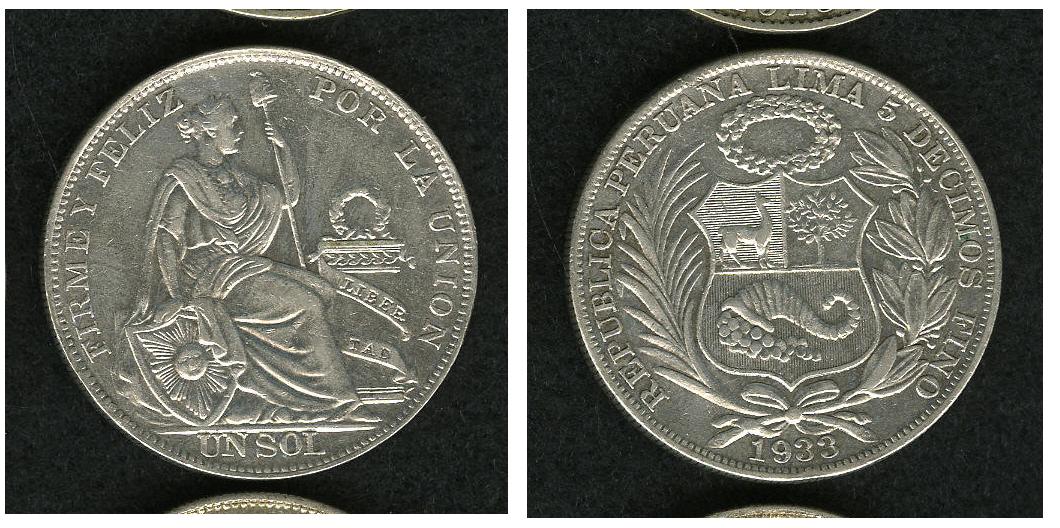 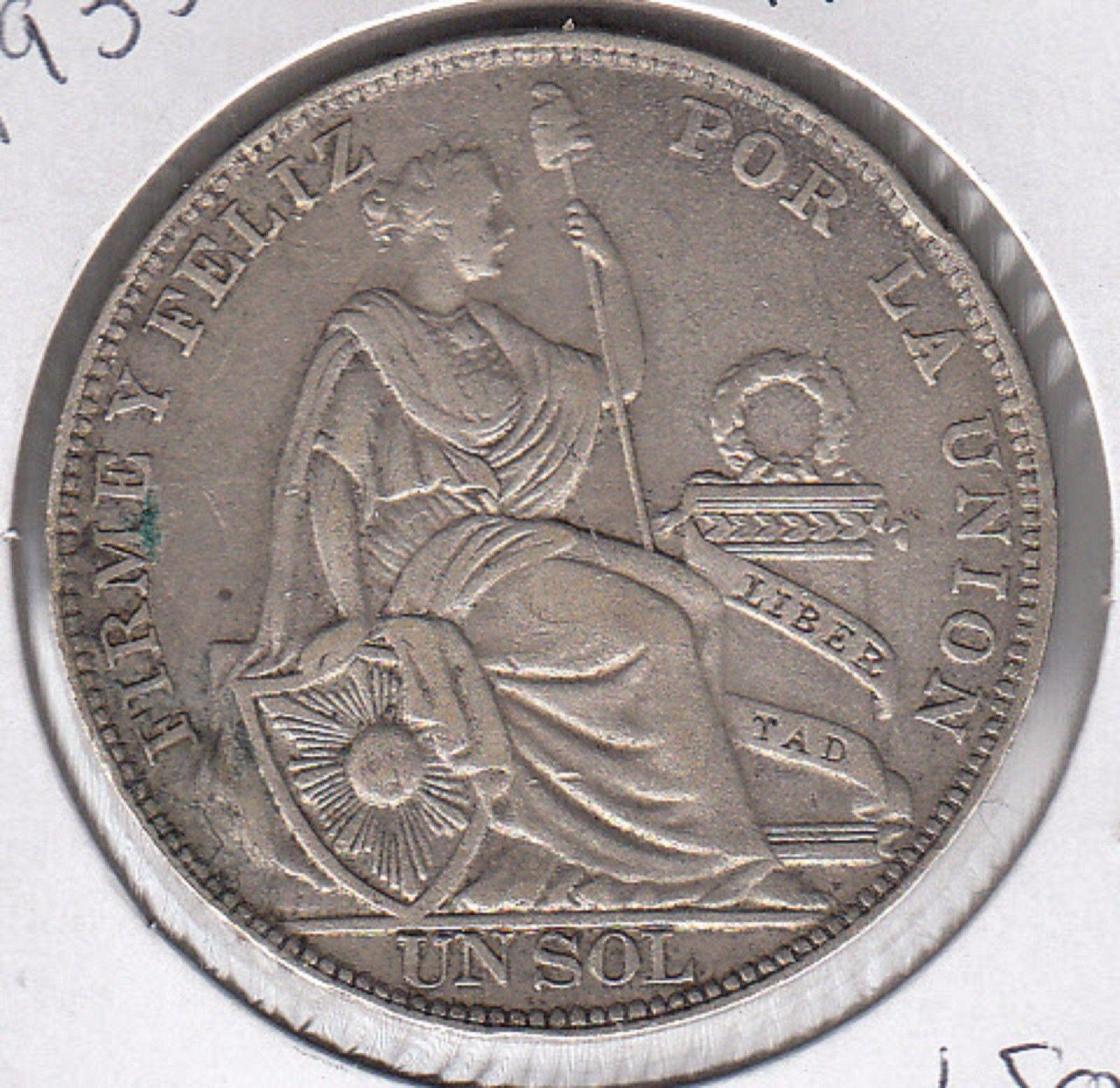 |
|
Pillar of the Community
United States
5362 Posts |
So far I have been unable to charge the battery for my camera so the pictures will have to wait a bit. I have completed the physical tests and visual tests. The coin is NOT silver. The SG is correct for a copper nickel alloy. SG = 9.88. A 500 fine silver alloy would be about 9.64. So the coin is not "genuine". The dealer was correct. That much is now established. Quote:
Conclusion: No. 1 High quality counterfeit/forgeries do exist of sols made in the 1930s. The coin weighs 25.0 grams which is actually perfect. It is an EF-AU coin which has minimal luster and almost no genuine wear. The diameter is 37.1 mm which is almost identical to the other example I own. (I was able to locate a 1923 for size and density comparison that I have owned for at least 15 or 20 years - it cost me $2.76. The 1923 has a density of 9.63 a weight of 24.9 grams and a diameter of 37.0 - rounded up.) The 1923 coin was made at Philadelphia and it is not be debased. It is slightly more worn than the 1934. The 1934 coin is also very slightly thicker than the 1923 example and the reed count does not match the 1923 collar from Philadelphia. Perhaps an expert in this series can comment on reed counts and in which years they were used at the Lima mint. So until I can take photos or until the magnetic examples can be XRF or SG tested, I see little alternative but to maintain that magnetic Sols are not genuine. I would personally label every one a "Suspect". Not enough to prove anything to NGC yet - but I will discuss the situation with them at the FUN Show. I will also bring a magnet and check dealer inventories for a magnet copy. |
|
Pillar of the Community
United States
5362 Posts |
realswatcher I really don't believe we are dealing with a Chinese forgery at all. I have never seen the Chinese use this particular forgery technique. It is however somewhat similar to the technology that was used on the Micro-O Morgan dollar Counterfeits. Perhaps these coins originated in the US in the 1930s which is the suspected date for the Morgan coins as well.
Edited by swamperbob
12/19/2016 9:13 pm
|
|
Valued Member
Uruguay
217 Posts |
Quote:
...The SG is correct for a copper nickel alloy. SG = 9.88.... Swamperbob, is not the SG of a copper-nickel alloy nearest to 8.9 ? I think a SG > 9 indicates a Silver alloy...or Lead, or other metal with more density than Copper or Nickel. Quote:
..A 500 fine silver alloy would be about 9.64... I totally agree in that. |
|
Pillar of the Community
United States
5362 Posts |
|
|
Pillar of the Community
United States
645 Posts |
A pair from 1934. Top 25.2g magnetic(neo and fridge), bottom 25.1 non-magnetic. Same diameter and thickness.   Reeding top on left, bottom on right.  Edited by DCH
12/19/2016 11:44 pm
|
|
Pillar of the Community
United States
645 Posts |
Edited by DCH
12/19/2016 11:42 pm
|
|
Valued Member
Uruguay
217 Posts |
|
|
Pillar of the Community
United States
5362 Posts |
The old battery finally took a charge and here are the pictures. First the Counterfeit Coin with an SG of 8.88. This means NO SILVER content. All copper and nickel. 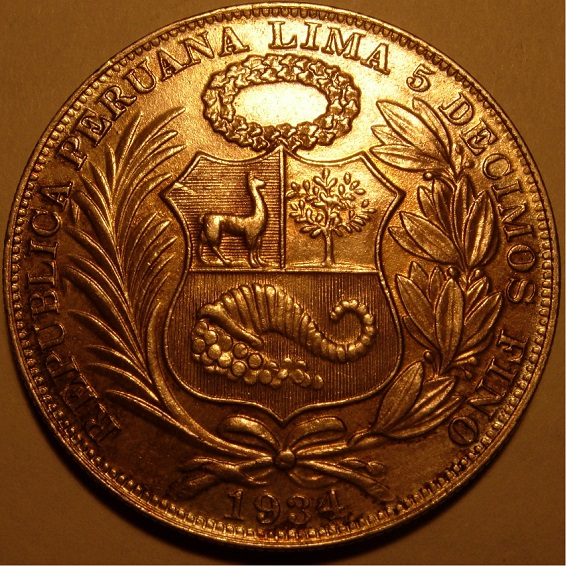 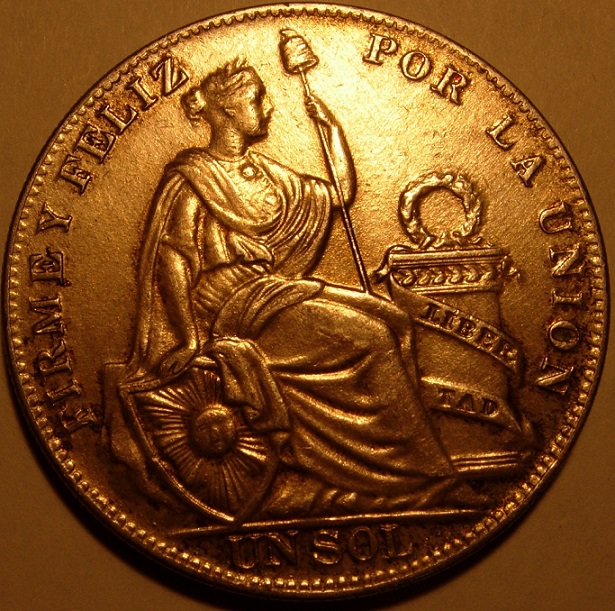 The next picture shows both coins on edge side by side. The coin with silver dated 1923 is on the bottom and the fake is on top. On the left side I added yellow lines every 5 reeds to show that the fake has fewer reeds than the silver version. Of course the 1923 was made in Philadelphia. The picture on the right shows the same view and I believe the difference in thickness is readily apparent. 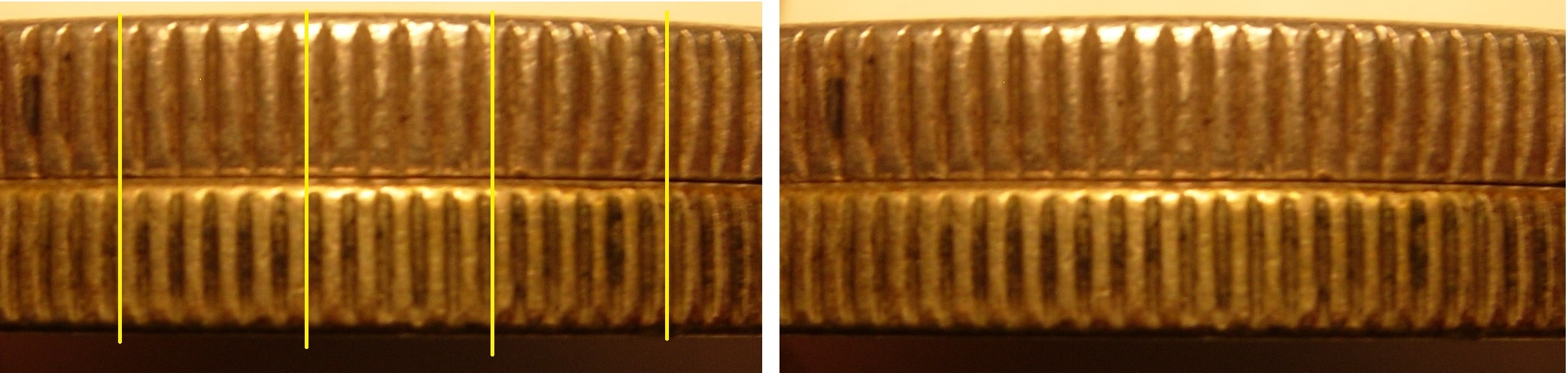 Finally on the fake coin there is in my opinion a likely clue in the first three of the date. The arrow shows a notch in the three punch. This might be damage on a specific coin that was used as a host to make the fake dies. It may be a genuine chipped punch used to make the working hub. If it is a hub chip than all working dies will show a chipped 3. That might be worth checking. 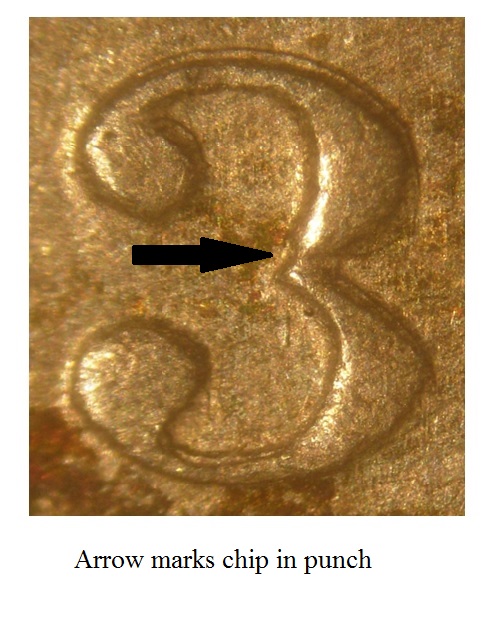 In doing the photos I did notice a few anomalies very tiny that appear on other fakes. Still looks like a micro-O up close. |
|
Pillar of the Community
United States
5362 Posts |
The pictures in my post are taken under incandescent light hence the bad color. The coin is actually a very nice silver grey.
Now I have a comment for people who routinely use rare earth magnets instead of ferromagnetic magnets in coin authentication. If the rare earth magnet is so powerful that it detects the presence of 10% or 20% nickel - what actual value does it have?
A ferromagnetic magnet (common magnet) needs 56% nickel to react in a nickel-copper alloy. In a 50% silver alloy ferromagnetism is impossible. So the common magnet gives a Yes or NO decision. The rare earth magnet stirs up uncertainty.
So my question is do these "magnetic coins" actually respond to a common magnet? Why not use a common magnet and do specific gravity. That test can not be messed up.
|
|
Pillar of the Community
United States
5362 Posts |
Battery is dead again. However, now that I see the detailed pictures above, I have a couple comments.
First - The P on the fake is identical with breaks in the loop at the same places.
Second - The E has a damaged upper serif on the middle arm.
Third - The F has a nearly missing upper serif on the middle arm.
Fourth - The Fake and the 1933 are both strike doubled in the same fashion.
Fifth - The first 3 in the date on the fake has what appears to be the same notch as the 1933.
Too bad the 1933 is already encapsulated. It can not be tested for SG or ferro-magnetism.
|
|
Bedrock of the Community
United States
12477 Posts |
For some reason I'm very interested in this topic.  Through all of the tests I'm still left wondering about the consistency of the Lima mint or whomever they contracted to aid in the minting of this coin. I have a couple quotes, one from Peru itself, that left everything in question for me: Quote:
"The Reserve Bank of Peru was founded in 1922 and issued its first bills in the same year. In 1931 the Reserve Bank became the Central Reserve Bank of Peru (BCRP), as it is known to this day. The organization of the BCRP was shaped after the recommendations made by the Kemmerer Mission (U.S.) to confront the economic problems caused by the Great Depression of 1929." Quote:
"In theory, a foreign coinage
issue manufactured by the U.S. Mint could involve
four or more parties:
-The client country wanting the issue
-The mint that designed and produced the
dies for coinage
-The mint that manufactured the coin
planchets
-The U.S. Mint that actually minted the issue.
-The mint or central bank that distributes the
minted coinage into the economy" After that, I can't be certain who actually made these coins, who made the planchets or dies or who minted them and whether or not multiple suppliers were involved with different standards. With everything going on in this period, I don't see a <50% silver coin being a hands-down fake. That said, I know that there are many out there with way more knowledge than I about these tests and history. In Memory of Crazyb0 12-26-1951 to 7-27-2020
In Memory of Tootallious 3-31-1964 to 4-15-2020
In Memory of T-BOP 10-12-1949 to 1-19-2024
|
|
New Member
United States
7 Posts |
I've been away for a while. I'll take pictures of my 1933 Sol's (with my IPhone) and I will try using a fridge magnet instead of a neo-magnet and see what my results are. With all of the magnetic Sol's that are popping up here, this is getting more and more interesting. I agree with spruett001 that there are many possibilities as to why this can be occurring.
I appreciate Swamperbob's effort on this. His 1934 sol is a very obvious fake with the poor reeding, cast looking appearance and other poor details. None of my certified coins or raw Sol's look like a cast fake like that 1934.
Edited by ShadyDave
12/20/2016 10:52 am
|
|
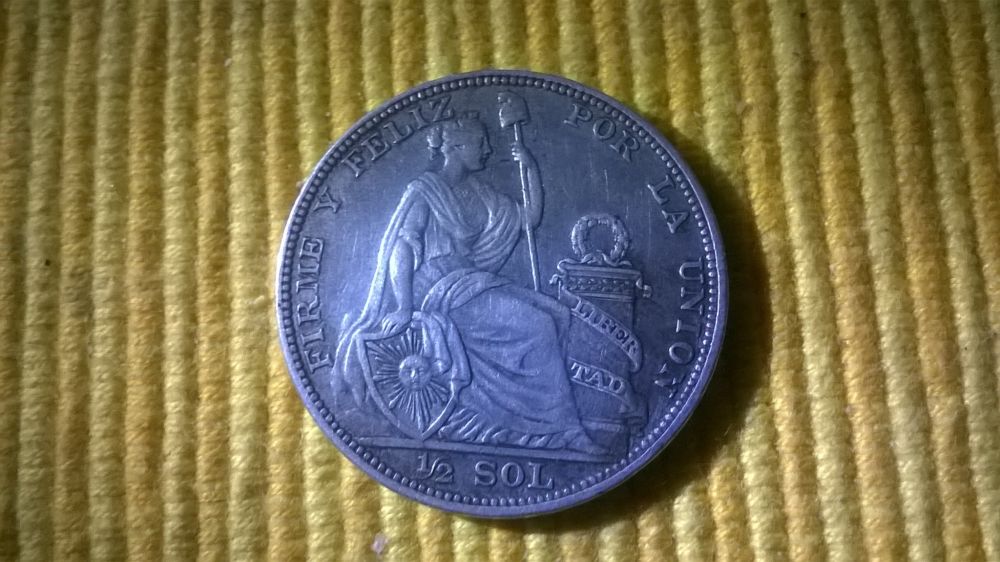
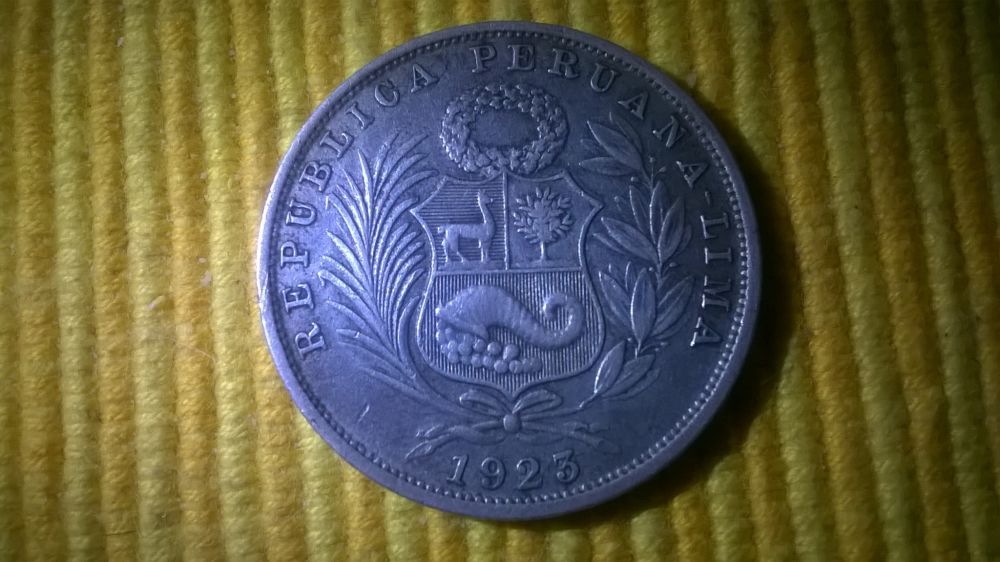
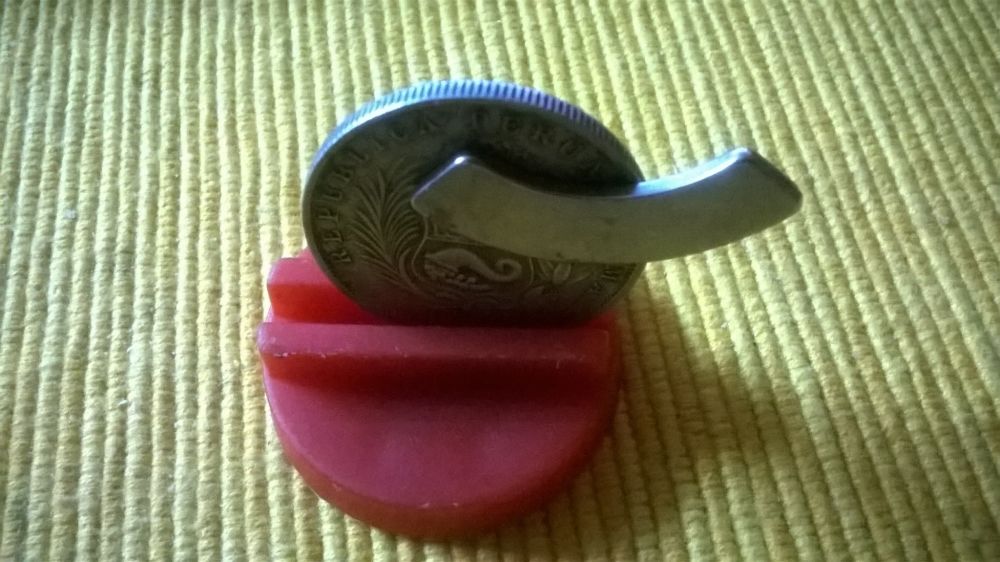
Valued Member
Romania
86 Posts |
I have two 1/2 sol în my collection. 1915 & 1926. Same dimensions 30 x 2.2 mm. 1915 = 12.48g,1926 = 12.30g. Both not attracted by fridge magnets, but 1926 one is attracted by a stronger magnet (not neodyne, the magnet is too old for this).
I think they go with this topic. Please advise if I should place pictures here or open a different topic.
Edited by bogdanjovi
12/20/2016 12:50 pm
|
| |
Replies: 97 / Views: 18,578 |






 First Page
 Previous Page


 Posted 12/19/2016 5:52 pm