| Author |
 Replies: 97 / Views: 18,433 Replies: 97 / Views: 18,433 |
|
New Member
United States
1 Posts |
Hello; Thank you for the opportunity to post my question. I purchased a 1933 silver crown to add to my collection of Peruvian soles and weighed it to be about 25.2 grams. My crowns are around 25 grams with a range of +/- .1 gram. It was already out of the normal range. Afterwards, I took a magnet and the coin was attracted to the magnet. This has really set off alarm bells since I have never had a silver crown coin do this before. I have one other silver crown from 1934 of .500 fineness and it doesn't attract the magnet. My question is would this coin be a modern fake, a fake of the era or would the government of Peru placed a ferromagnetic alloy into the coin. Any help on this subject would be appreciated. I have added pictures. Please forgive their poor quality, they were taken on my cell phone. 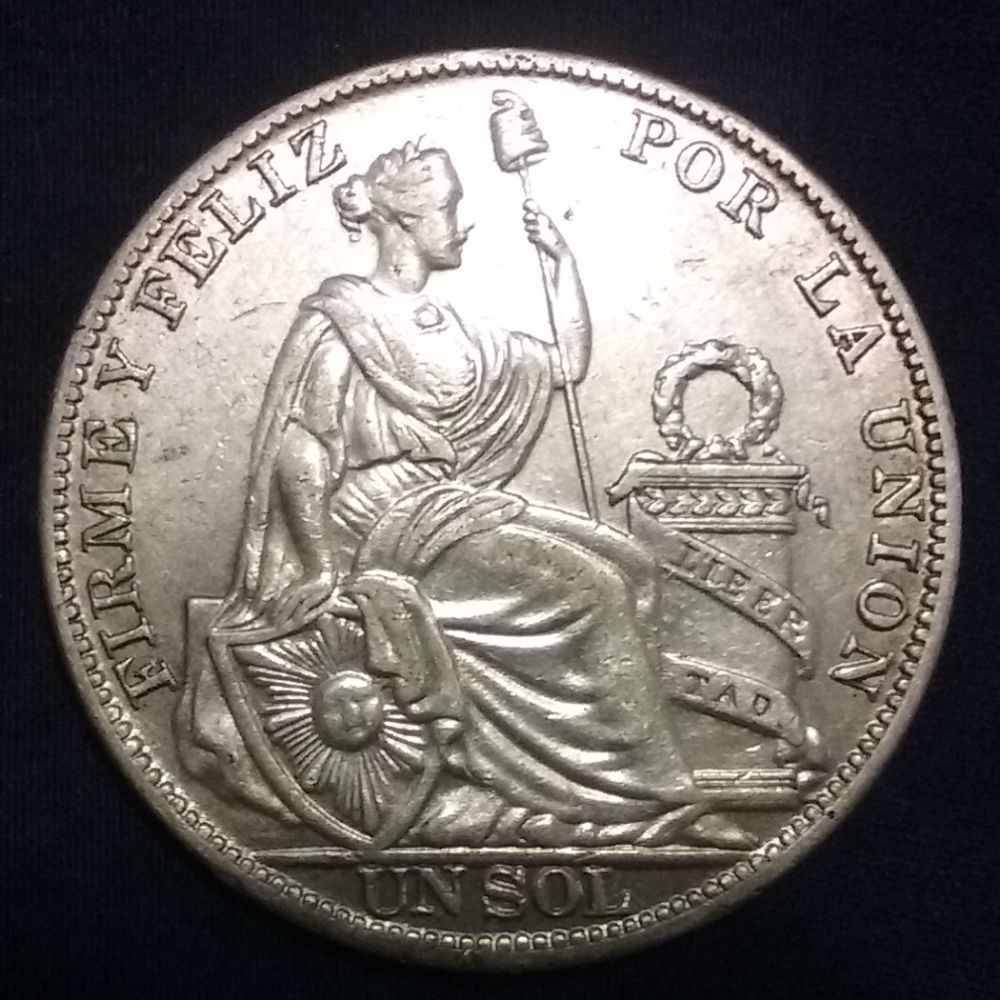 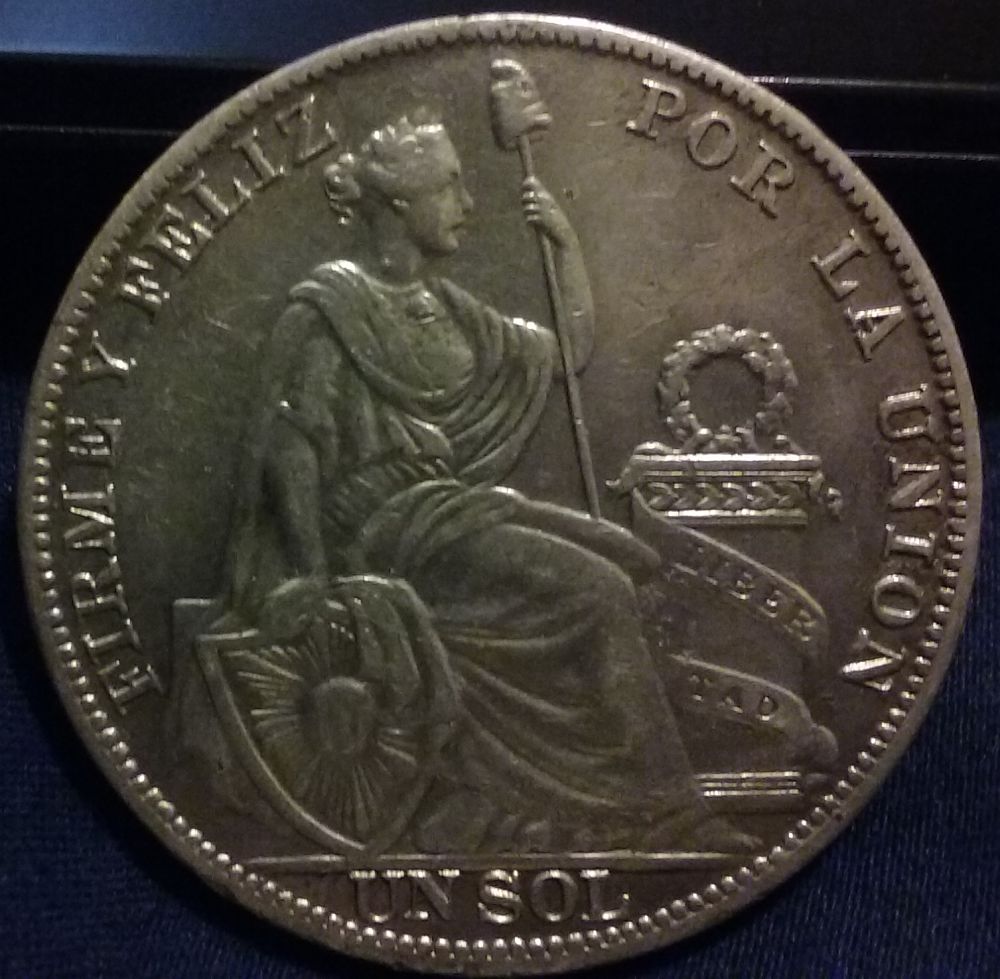 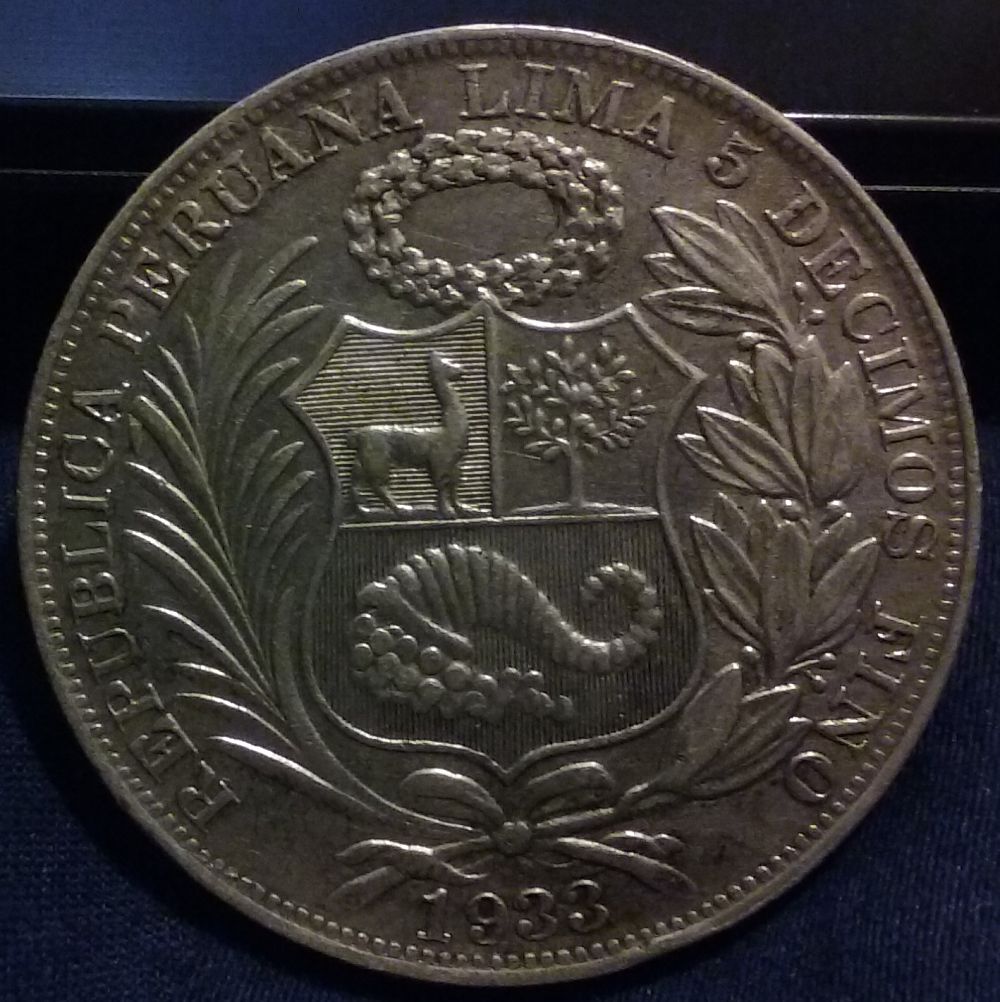 |
|
|
|
Pillar of the Community
Canada
5287 Posts |
Unquestionably a fake. There is no reason the Peruvian Govt would have used a ferromagnetic alloy. For the same reason I doubt that it is a contemporary fake. The quality of the design is too good. Counterfeiters would have not used such a hard alloy with their likely primitive equipment.
|
|
Pillar of the Community
United States
992 Posts |
Totally bogus coin. You have been robbed, literally. You have your photos to use in the future as a reference, return it to the vendor and demand a refund.
No legitimate coin dealer would market these.
|
|
New Member
United States
7 Posts |
oriole and paxbrit are 100% incorrect here. I created an account to respond to this post. I collect Peru Sol's and I own many 1933 Peru Sol's. They can be magnetic. Peru was not a premier mint and many of the blanks they used were made with a variety of metals making up the other 50% of the 1923-1935 peru sols...which are .50 silver, so there can and IS definitely ferromagnetic alloys mixed in with these coins.
Both my PCGS and NGC certified 1933 sols(which I had certified myself) are magnetic with a neodymium magnet through the slab. If you need picture evidence, I'll be happy to post proof...
|
|
Pillar of the Community
Canada
5287 Posts |
Well, Shadydave, this is fascinating information. I would not have guessed this. I have many of this type and will check. I would like to check the composition if I had the right equipment.
Just how magnetic are they? A little or a lot?
|
|
Pillar of the Community
United States
1346 Posts |
|
|
Valued Member
Uruguay
217 Posts |
 ShadyDave and thanks to share this information with us. Interesting, I have 1 Sol 1934 coin which is not magnetic at all. But I performed the magnet test with another Peruvian coin I have (1/2 Sol 1923) and It is slightly magnetic.   The only magnetic metal that can amalgamate well with silver I believe is Nickel, in large proportions (0.500) would give magnetic properties to the alloy. In addition, it has a density similar to copper, which makes it a good candidate to replace It, or mix with It. Edited by cara
11/25/2016 8:34 pm
|
|
Bedrock of the Community
United States
11951 Posts |
I too think this is very interesting, and will be checking some of my
Peruvian coins.
ShadyDave .. what's is your opinion on the coin posted here.
|
|
Pillar of the Community
United States
5362 Posts |
I agree that only nickel would provide significant magnetic characteristics when alloyed with silver. How much is a bit iffy. reyzaguirr I would like to explore a little further 2 things that you said; Quote:
1. I took a magnet and the coin was attracted to the magnet.
2. weighed it to be about 25.2 grams First, was the magnet you used a "standard" iron magnet - a weak type or was it one of the neodymium magnets - very strong magnet. There is a huge difference. Most metals show some trace of magnetism and we should not confuse a response to a neodymium magnet with a response to a weak magnet (like a refrigerator magnet). Care must be taken with this point because in 99% of cases a coin that responds to a weak magnet is a fake. Second, the fact that the weight of a 20th century silver coin could be 0.2 grams overweight is a stretch - even for a very poor mint. I have to ask just how bad was Peru in 1933? I believe that the US produced several denominations for Peru in that general period of time at Philadelphia and San Francisco. I guess in summary - I do not trust that this coin is anything but a complete fake. There were (according to Krause) only 5,000 copies of the 1933 Sol minted. So to consider this genuine - I would be forced to accept that a magnetic - overweight - rarity is genuine. Personally I doubt that. |
|
Pillar of the Community
United States
1346 Posts |
The details look amazingly crisp on the subject coin. If not genuine, is it a contemporary counterfeit or a reproduction for the collector market?
|
|
Bedrock of the Community
United States
11951 Posts |
Very good points SwamperBob.
Most times when I am checking suspect fake coins, with what the shop
calls a rare earth magnet.
Many of the fake ones jump right off the counter and stick hard to the magnet.
But then sometimes I use the magnet to pull Canadian coins out of
large groups of foreign coins we purchase. I have no idea how much
nickel is needed to be magnetic... but U.S. Nickels that are 25% nickel
75% copper do not stick.
I did not look up ..or know .. that the 1933 Sol was low mintage ...
Knowing that now .. I would be very suspect that that OPs coin
as fake.
|
|
Pillar of the Community
United States
1346 Posts |
How much was 1 Sol worth in US dollars at the time. Was it a significant amount to warrant such clear dies to warrant their creation if cast to defraud the monetary system?
Can someone with photoshop take this image and an image of a similar coin and superimpose to see if details vary?
Has any consideration been given to an errant planchet among a quantity of the correct planchets? Other coins cast on different planchets are well documented.
|
|
Pillar of the Community
United States
5362 Posts |
999fine You ask several good questions which point to the heart of the matter. The first one: Quote:
The details look amazingly crisp on the subject coin. If not genuine, is it a contemporary counterfeit or a reproduction for the collector market? I would re-state the question as when would making this coin make sense financially? The coin is of course a faithful copy of a genuine coin. So first I would look closely to see if the last digit of the date was altered. If the coin is altered to make a profit by fraud - that is numismatic forgery and you can have the coin melted for the silver content. If there is no trace of alteration of the date, then I suspect the coin is a recently made Numismatic Forgery because in 1933 there was no monetary profit margin in making a 50% silver coin. Now if the coin is NOT 50% silver and is instead nickel then if could be either a monetary counterfeit or a modern forgery. The only problem is that even in 1933 the date would have attracted undue attention and because of that it far less likely to have been successful as a monetary issue. In 1933 I suspect but have not come up with absolute proof that these coins were manufactured in the US. A run of 5000 coins suggests a single die pair is most likely. No proof just supposition awaiting proof. A close look at the dies reveals ragged edges on many letters. A looks that for me classifies the coin as a copy. Had this coin been referred to the CWG I would have voted Fake and asked to have the auction stopped until some further verification was made possible. You also said: Quote:
Other coins cast on different planchets are well documented.
That is not a correct statement. Struck on off metal planchets is a possibility but the 1933 Sol was never cast. To prove a switch you need to find the alternative coin that the was intended to be struck on the planchet at the same mint at the same time. Or at minimum you need to match the alloy of the metal stock to an actual coin type. Postulating such a rarity is of course possible but it violates Occam's Razor which states that when you have competing hypotheses the one with the fewest assumptions is likely correct.
|
|
CCF Master Historian of Commemorative Coins
 United States
12524 Posts |
Quote:
In 1933 I suspect but have not come up with absolute proof that these coins were manufactured in the US. A run of 5000 coins suggests a single die pair is most likely. No proof just supposition awaiting proof. Neither of the references that I own lists any 1933 Peruvian Sols as being produced by any branch of the US Mint. Per the Mint's records, it produced Sols in 1923, '24, '25 and '26 but not in 1933. In fact, no coins of any denomination for Peru are listed in USM records for 1933. Collecting history one coin or medal at a time! (c) commems. All rights reserved.
|
|
Pillar of the Community
United States
1346 Posts |
swamperbob: good point about the planchet substitution, one which eluded me at the time.
|
|
Pillar of the Community
United States
5362 Posts |
commems I was hoping someone had a reference that would list US mint production by year by country. If the coin was not produced in the US then local mint standards would prevail.
I am not aware of any shoddy dies being used at Peru in the 1930s.
reyzaguirr What type of magnet did you use? That point was never settled.
ShadyDave Is the mintage listed in Krause accurate? A mintage of 5,000 coins for any normally circulating coin from any country in the world seems as though it should be far more valuable. Are collectors of Peruvian coins rarer than the coins themselves?
You also offered to post pictures of other 1933 Sol coins for comparison. That might be useful to determine if more than one die pair was used to make the 1933 issue.
|
| |
Replies: 97 / Views: 18,433 |








 Posted 05/07/2016 6:53 pm


