| Author |
 Replies: 17 / Views: 3,340 Replies: 17 / Views: 3,340 |
|
Pillar of the Community
United States
4883 Posts |
Did this ever happen to you? You see a coin that you know isn't really worth anything (and never will be). You couldn't fit it in with what you collect with a crowbar. But it's just so darned interesting you can't go home without it. Here's my latest such, a 1975 Tonga 20 Seniti. The full frontal obverse portrait is atypical, and the beehive motif on the reverse is also eyecatching. 75K were struck for this year, a pretty small issue by modern standards. I haven't yet been able to determine where they might've been made (I'm thinking most likely the Kingdom of Tonga has been contracting with a mint somewhere else for the production of its coinage). 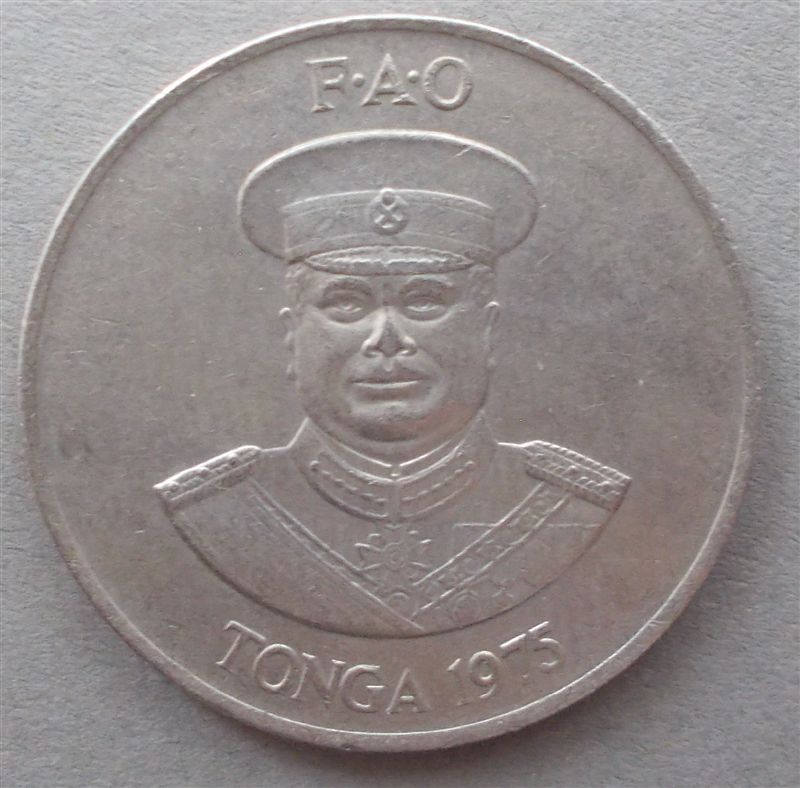 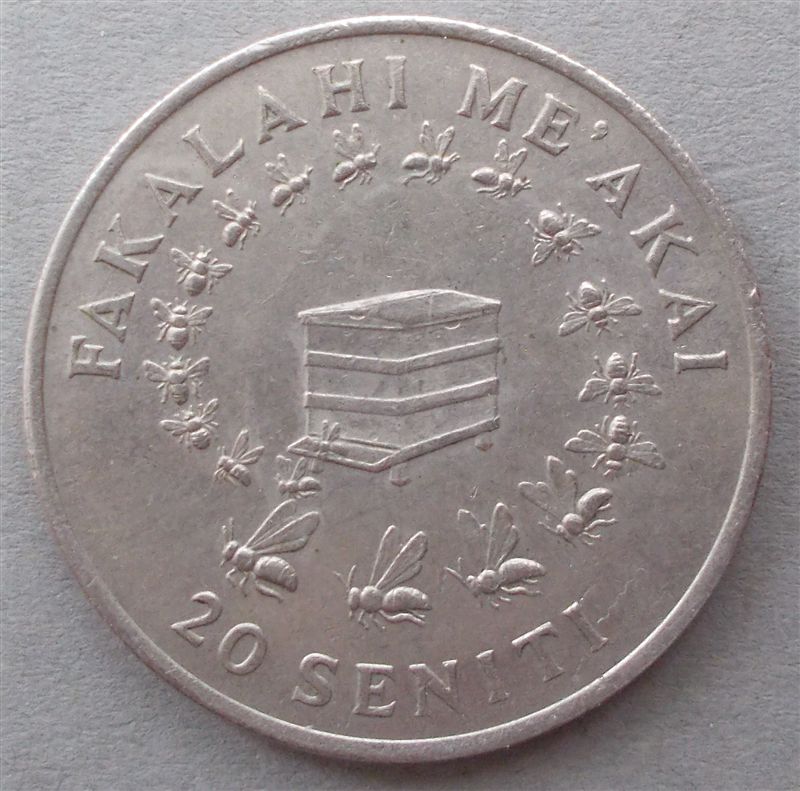 Colligo ergo sum
|
|
|
|
Bedrock of the Community
Australia
21789 Posts |
I have a British and British Commonwealth collection of over 150 pieces, based on the British silver florin which was originally issued in 1848.
--------------------------------------------------------------------------------------------------------------------------------------
The module for these was eventually settled on at 28.5mm diameter, 11.31 grammes, starting with the Jubilee issue of 1887.
The copper nickel florin in 1946 had exactly the same module, as were the Ten Pence coins after decimalisation until their module was reduced in 1982.
British, British Commonwealth Irish Fiji and South African forins have been made from .925 silver, .900 silver, .800 silver, .750 silver and .500 silver. They have also been made from copper nickel and brass.
20 Cent denominations as per the Tongan coin pictured, are also made from copper nickel. They were also issued in 50 unit denomination for some other British Commonwealth countries and ex Commonwealth countries.
All of the coins issued after 1887 have the module of 28.5mm diameter, and and a weight of 11.31 grammes, and my collection is based on this module. Australia continues to issue in copper nickel, and silver collector coins on this module.
Edited by sel_69l
06/02/2016 7:36 pm
|
|
Pillar of the Community
United States
4212 Posts |
I always just figgered it was the REM that minted for them.
|
|
Bedrock of the Community
Australia
21789 Posts |
Do not be deceived by low mintages necessarily lead to higher demand due to scarcity.
There are many issues of countries with tiny populations that only have a tiny requirement for issued coins. In this sort of case, a tiny issue size does not lead to high numismatic value.
|
|
Pillar of the Community
 United States
4883 Posts |
Quote:
The module for these was eventually settled on at 28.5mm diameter, 11.31 grammes... Those are in fact precisely the specifications for this copper-nickel issue. Colligo ergo sum
Edited by Lucky Cuss
06/02/2016 10:01 pm
|
|
Moderator
 Australia
16982 Posts |
Tonga has never had its own mint. Tonga in the 1970s would most likely have used the British Royal Mint for circulating coinage production. These days, they would contract out to whichever mint is cheapest. Don't say "infinitely" when you mean "very"; otherwise, you'll have no word left when you want to talk about something really infinite. - C. S. Lewis
|
|
Valued Member
Poland
392 Posts |
Great coin, I love these bees from the reverse  I must add this coin to my wish list  |
|
Bedrock of the Community
United States
10065 Posts |
Really like the REV on this one. Thanks for sharing this. I'll have to look for one.
|
|
Pillar of the Community
United Kingdom
1324 Posts |
|
|
Pillar of the Community
United States
6130 Posts |
|
|
Bedrock of the Community
Australia
21789 Posts |
Although in copper nickel,
hardly useful as a circulating coin.
|
|
Valued Member
United States
136 Posts |
The bee design on these tonga coins are quite popular the 50 seniti issue from the same year has an interesting spiral type fish design. When I have one of these in stock they usually go pretty quick...
|
|
Pillar of the Community
United States
4883 Posts |
Quote:
I'll have to look for one. I did an ebay search this morning. Plenty of 1975 dated Tonga coinage to be had, but for whatever reason not a single one in this 20 seniti denomination. Colligo ergo sum
|
|
Pillar of the Community
United Kingdom
1324 Posts |
The 5 Seniti has 5 hens,
The 10 Seniti 10 cows,
The 20 Seniti has 20 bees,
The 50 Seniti has 50 fishes,
The Pa'anga has 100 palm trees....
Kinda neat :)
|
|
Pillar of the Community
Canada
695 Posts |
Neat coin. I have one of these in my bee-theme collection (about 20 ~ 25 world coins).
It's hard to find a full-face frontal portrait done well on a coin. This one works.
|
|
Pillar of the Community
Russian Federation
5186 Posts |
Quote:
The 5 Seniti has 5 hens,
The 10 Seniti 10 cows,
The 20 Seniti has 20 bees,
The 50 Seniti has 50 fishes,
The Pa'anga has 100 palm trees....
Kinda neat :) In addition, the 1 seniti has 1 sow, and the 2 seniti has 2 watermelons. (Unfortunately the 2 pa'anga does not have 200 of anything.) Another fun numeric factoid about these series: the 50 seniti coin is type number 10000 on Numista. (And the 20 seniti in the OP is number 9999.) |
| |
Replies: 17 / Views: 3,340 |







 Posted 06/02/2016 7:49 pm





