| Author |
 Replies: 29 / Views: 4,325 Replies: 29 / Views: 4,325 |
|
Pillar of the Community

United States
4051 Posts |
"The Zone System can be used in digital photography just as in film photography; Adams (1981, xiii) himself anticipated the digital image. As with color reversal film, the normal procedure is to expose for the highlights and process for the shadows." Wikipedia, Zone System https://en.wikipedia.org/wiki/Zone_...om_processes |
|
|
|
Pillar of the Community
2087 Posts |
In non macro photography I use the zone system. It works best/easiest in B/W. With color you also have to extend the zone system to included the dominant primary colors in the scene
|
|
Pillar of the Community
United States
949 Posts |
The wikipedia article starts with reference to what it calls "visualization." Back in the day the term of choice was "previsualization" and it meant having the cultivated ability to "see" in the imagination how the desired image should turn out before the shot is taken. The Zone System assisted the analysis of what steps to take to get to that result. Hence the mantra "Good photographs are made not taken."
For effective use of the Zone system, it is helpful, in some situations essential, that the photographer has complete control over all settings. Adams was mainly working with view cameras as he explored the potentialities of the zones. Everything about making an image with a view camera is manual mode operation, including the development of the final print. With access to darkroom techniques such as dodging and burning, the photographer has complete control over how a print will turn out on a particular grade of paper, in a continuous tone medium of varying degrees of fineness.
I am not sure that kind of control still exists in digital photography, but I do know that the kinds of digital cameras that allow for the most control do not sell for less than $1K and typically come in the $3-4K range without a lens. Similarly, the tools that allow for the most image manipulation after the shot has been taken are higher end pic edit tools like Photoshop and its cloud companion Lightroom.
Learning curve? Yeah, like the Matterhorn when going to paper. Something else when going to transparencies, or the digital equivalent of screen reproduction.
|
|
Pillar of the Community
 United States
4051 Posts |
You guys are over-complicating it. Adams exposed so that he didn't blow out highlights, then processed to retrieve shadow detail and preserve contrast. He also took advantage of lens flare to bring shadow levels up within the camera system, choosing lenses with different amounts of flare to achieve the goals. This made shadow detail easier to retrieve. All of these things are achievable on global level using simple histogram tools such as those within DPP. Masking requires more sophisticated tools, but are really not advised for coins anyway. I've tried many of the masking techniques that Adams used (and many more) that are available in Lightroom and other tools, but their application tends to make a coin appear un-natural (ie not like it does in-hand). Simpler global levels adjustments preserve the overall "look" of the coin while enhancing global details.
|
|
Pillar of the Community
2087 Posts |
Quote:
You guys are over-complicating it. Adams exposed so that he didn't blow out highlights ?! Does this this have anything to do with the zone system? From What you are stating here I understand you are only recommending using the method Adams used for taking the photograph, which is only a minuscule part of the zone system. Ansell Adam's Zone system, as far as I understand it, relates to how to produce a a landscape negative in film/glass plate photography. ( although others have extended it to Portraiture). It can be used as a guide in Digital photography but the system was focused on producing high quality Black and white negatives with great tonality....the rest was done in the dark room. As far as "exposing for the highlights" its extremely good advice but it doesn't seem overly necessary to apply the substantive part of Ansell Adams zone system to Coin photography. I would add the in Camera light meters operate in a manner that is not suitable to the zone system as envisaged by adams. Narrow angle meters are much more appropriate than the centered weighted meters typical of Mirror-less and DSLR cameras. The more I think about it the more complicated the Zone system seems in relationship to coin photography. I think a much simpler approach is required, meaning the Zone system unnecessarily complicates the process Edited by austrokiwi
06/28/2016 08:40 am
|
|
Pillar of the Community
United States
4051 Posts |
I am dismayed by your selective editing.
|
|
Pillar of the Community
United States
949 Posts |
Adams himself said that the negative is the musical score, but the print is the performance of that score. His system was meant to improve the appearance of prints, starting with the negative.
To what do these parts correspond in the digital world where the image is made, manipulated, and shown without benefit of an estar base or various grades of paper? That is not a rhetorical question. I think you have given some thought to that, but I am not getting it.
|
|
Pillar of the Community
United States
4051 Posts |
In the digital world, the RAW format image is the equivalent of the negative. It is the direct product of exposure of the optical image on the sensor, just as it would be if the sensor were replaced by film.
In the film world, there is some flexibility in film characteristics (more in black and white, less in color), but there is much less flexibility in the digital world. Digital sensors are designed to be as linear as possible for exposure over a wide dynamic range of light levels. Adams' statement about exposing for highlights is his way of saying that with digital, as it is with color film, the photographer has little creative control over the taking process except to ensure the highlights are preserved.
Proper exposure creates what I call "good raw material" that can be used to generate the final image. This is Adams' "musical score".
Post-processing (including the RAW demosaicing process) is the digital equivalent of printing in film. From this perspective, the digital photographer has many, many more tools available than do film photographers. Many digital tools have analogs in film, but some do not (and vice versa). Post-processing gives the digital photographer much flexibility in final image composition and rendering. As long as the raw material / musical score is solid, the photographer (as "performer") can create something beautiful.
Of course for coins, the range of post-processing is limited such that the final image best represents the in-hand look of the coin. Within those parameters, there is a lot of flexibility.
Edited by rmpsrpms
06/28/2016 10:10 pm
|
|
Pillar of the Community
2087 Posts |
Quote:
I am dismayed by your selective editing. To clarify I am really not sure the zone system as I have read and applied it really applies to photographing coins. Please show us on a coin where the different zones are, and how you would adjust the exposure using Adam's zone system. For now I just don't see it applying and as you stated, it over complicates the process of photographing coins. If all you were ever referring to was that one single statement, "expose for the highlights and process for the shadows", then I don't believe that it is appropriate to call it the zone system? I believe that one statement predates Adams. What was/is special about the Zone system is it gave people a very effective and systematic technique for exposing for the highlights in Landscape photography. Edited by austrokiwi
06/29/2016 6:12 pm
|
|
Pillar of the Community
United States
4051 Posts |
Well, at least you are not editing out something I said, and then complaining that I didn't say it!
I'm not sure what to say about zones on a coin photo. Every zone is, of course, represented.
When you say "exposing for the highlights", I assume you mean exposing the print?
|
|
Valued Member
United States
441 Posts |
Quote:
"The Zone System can be used in digital photography just as in film photography; Adams (1981, xiii) himself anticipated the digital image. As with color reversal film, the normal procedure is to expose for the highlights and process for the shadows." Well, this clarifies for me a hunch I have been having while trying to maintain balance between detail and contrast. Just haven't been able to usefully apply it. Now I think I see. |
|
Pillar of the Community
United States
949 Posts |
Quote:
Of course for coins, the range of post-processing is limited such that the final image best represents the in-hand look of the coin. Ray, you have made reference to this ideal in this thread and in several other places, and it appears to serve as a benchmark for the photos you make. Would you be willing to comment on the model proposed by Gerald Hoberman in The Art of Coins and their Photography, (Spink and Abrams: New York, 1982) in which he observes in his discussion of setting up a shot and its lighting, "The ideal is to produce a photograph which does not require any background treatment." (p.339) and "The object should be to illuminate the coin with maximum visual impact, to reproduce it accurately, and to accentuate its beauty." (p.340)? He continues with additional comments along that line, but never makes reference to the "in the hand" ideal. I am wondering if he and you are looking at the function of the final image differently; i.e. that he is looking for an "artsy" rendering and you are looking for something that will minimize trouble in the marketplace. If we allow that the function of coin photos may vary, some to inspire and some to inform, and recognize that these overlap in many ways, is Hoberman's ideal "old school?" At bottom, what is the prime purpose of the "in the hand" benchmark? Edited by lrbguy
07/01/2016 10:44 am
|
|
Pillar of the Community
United States
4051 Posts |
I'm glad you referenced the Hoberman book. It's been a while since I opened it and it's always a pleasant read. Hoberman is definitely old-school, but not for the reasons of his composition goals. He was of course working with film, so had to make the very best of the original exposure, since with film it is a lot of work to correct mistakes or extend composition into the printing process. Getting the background "right" in taking meant a lot less work required later.
All my references to the "in-hand look" are actually somewhat tongue-in-cheek political correctness. If you look back at my writings over the years, you will find that references to this elusive (actually, impossible) ideal are a pet peeve of mine. I've mellowed over the years and with much therapy am OK with the term, always knowing that folks who use it really don't know what it means or how to achieve it. I've written long diatribes in the past against the term, with explanations as to why it is a false idol, but it is so ingrained in folks that I have given up trying to change them. Bottom line, don't look to me to defend it.
Contact me for photographic equipment or visit my home page at: http://macrocoins.com |
|
Pillar of the Community
2087 Posts |
I have not reedited anything of what you have said and Find the accusation highly offensive. I gained the impression you have a completely different understanding of what the zone system is to what I have been taught and applied. I repeat please show us on a coin what you mean. At the moment it still comes across as incredibly wrong. ( A simple picture will serve to avoid further confusion) To help you to understand what I am asking instead and to avoid any further paranoia on your part here is a( much) reduced image I produced using an adaption of Ansell Zone System. I have added lines to highlight how I broke the picture down in my mind using the zone system... while I was setting up the shot. It was taken last year and was very rushed as I only had a window of 30 minutes in which to compose and take the shots necessary to produce the image. I used Ansell's (adapted) system to ensure I captured the sunlight hitting the buildings while maintaining the sky and foreground in the "depressing grey" of that day. Those zones, for once, matched the composition I was trying for. Final print is 40 X 15 inches. It was created from a stitch of three shifted shots. It took multiple attempts to get the right set of three. I have to add that I was I was worn out by the time the light had gone ( but very happy as I was sure I had got what I wanted) For me there is no need to use the Ansell system for coins....For the simple reason its heaps easier just to adjust the lighting so the coin is illuminated the way you want it to be. 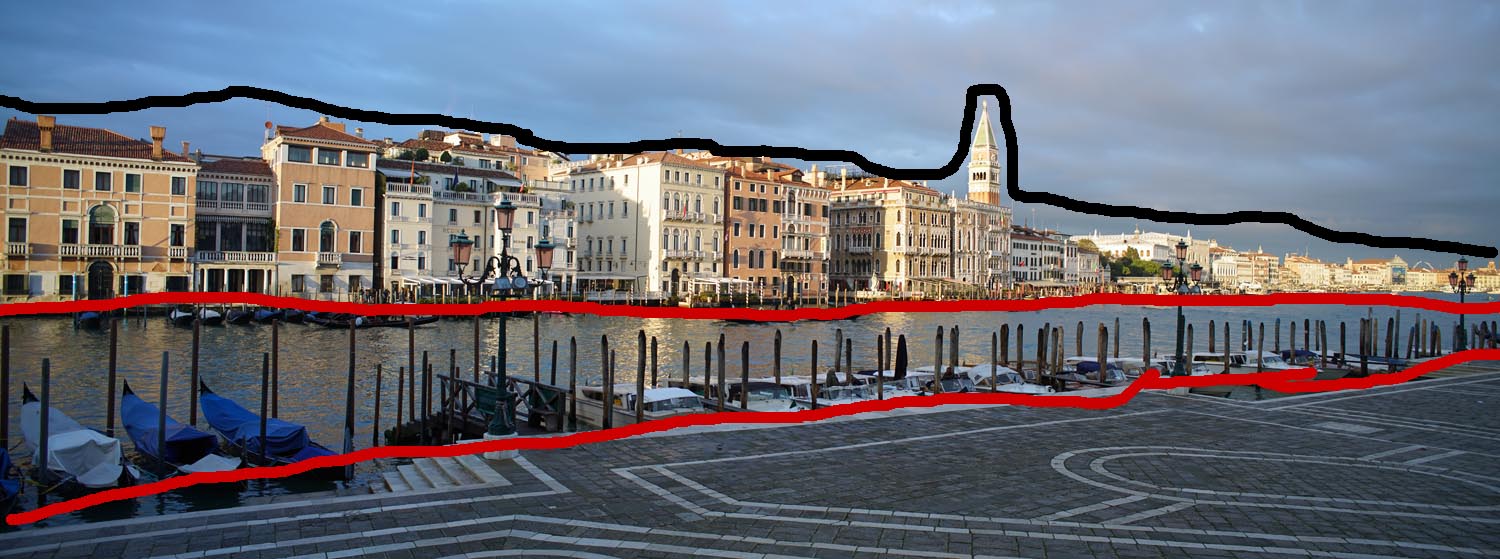 Same image without the lines ..please note the image is copyrighted 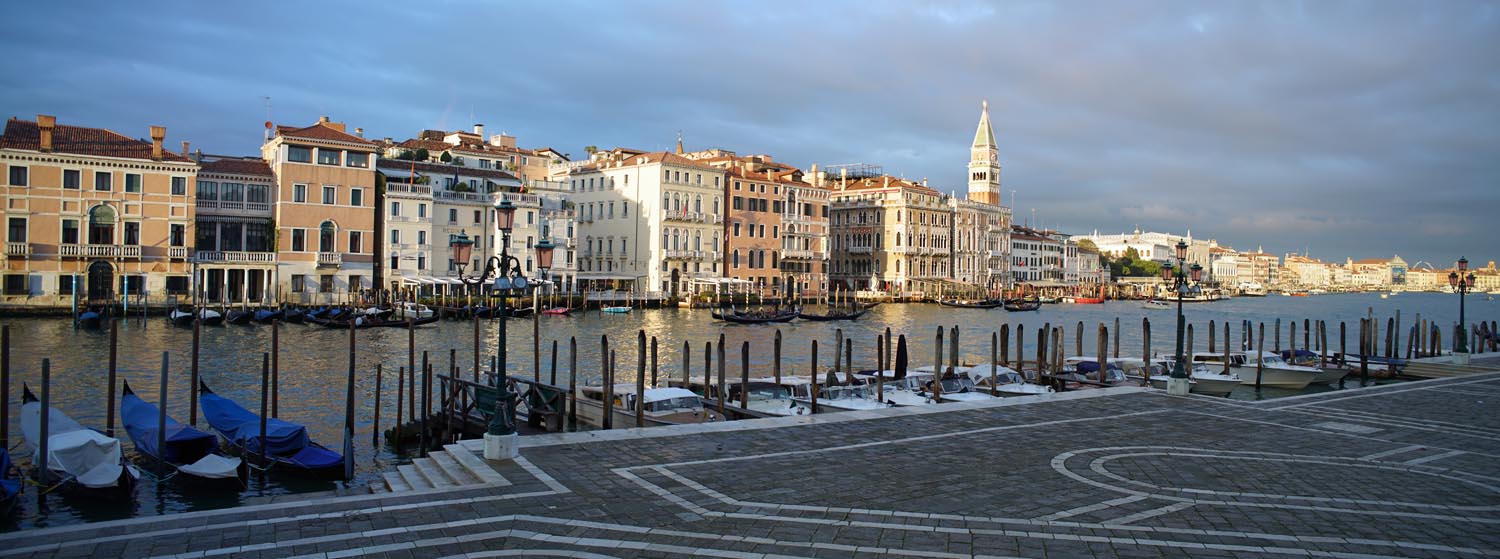 Edited by austrokiwi
07/01/2016 3:16 pm
|
|
Pillar of the Community
United States
949 Posts |
Quote:
reduced image I produced using an adaption of Ansell Zone System. austrokiwi; I thought I was following you but this raised some question in my mind about the system you have been working with. The Zone System to which Ray referred, and I, was created by Ansel Adams, but was never called the Ansell Zone System. Moreover, it was created for black & white photography, and its principles were initially explained by Adams in terms of that alone. Are you possibly referring to a later adaptation to color photography by someone else? |
|
Pillar of the Community
United States
4051 Posts |
Quote:
I have not reedited anything of what you have said and Find the accusation highly offensive. Here's what I said, with the part you selectively edited in italics: "Adams exposed so that he didn't blow out highlights , then processed to retrieve shadow detail and preserve contrast" You quoted only the part about taking, leaving out the part about processing, which is perfectly fine, but you then complained I was only recommending using the part about taking. Are we good now? Quote:
If all you were ever referring to was that one single statement, "expose for the highlights and process for the shadows", then I don't believe that it is appropriate to call it the zone system? I really was just referring to the single statement, which of course is not the entire scope of the Zone System, just a small part that I thought was interesting and could be applied to the way I do coin photography and recommend to others. |
| |
Replies: 29 / Views: 4,325 |










 Posted 06/27/2016 11:19 am


