| Author |
 Replies: 17 / Views: 2,990 Replies: 17 / Views: 2,990 |
|
Valued Member
United States
403 Posts |
I've got a mystery but couldn't find the solution in the archives. I hope someone can help. CRHing long ago I came across a roll of uncirculated 1968 LMCs. These I transferred into a Whitman plastic tube and put away in a cool, dry and dark place. Tonight after 45+ years I looked at the cents and noticed many exhibited a milky residue. The first one pictured looks like a cape on Abe. 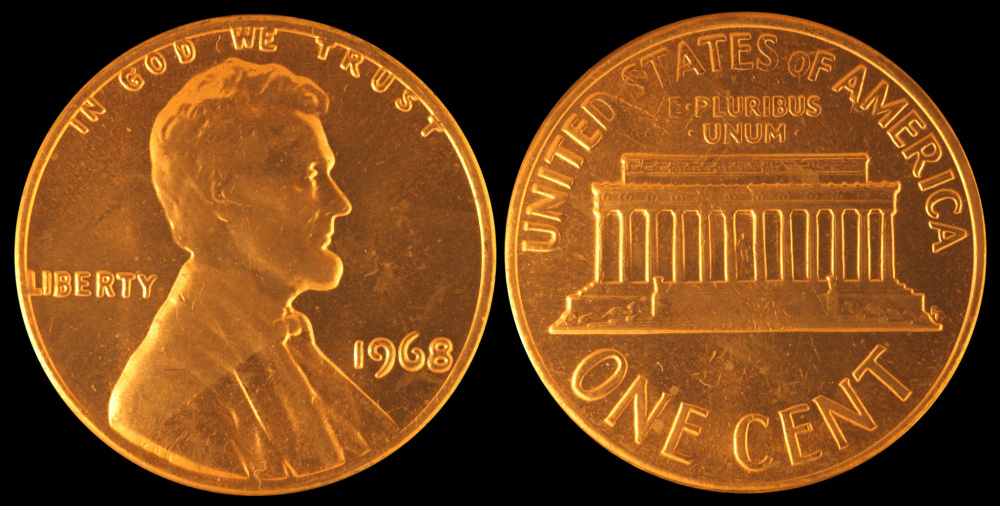 Here's another cent from the same tube, where Abe appears to be breathing, with a stream cascading out of the memorial. 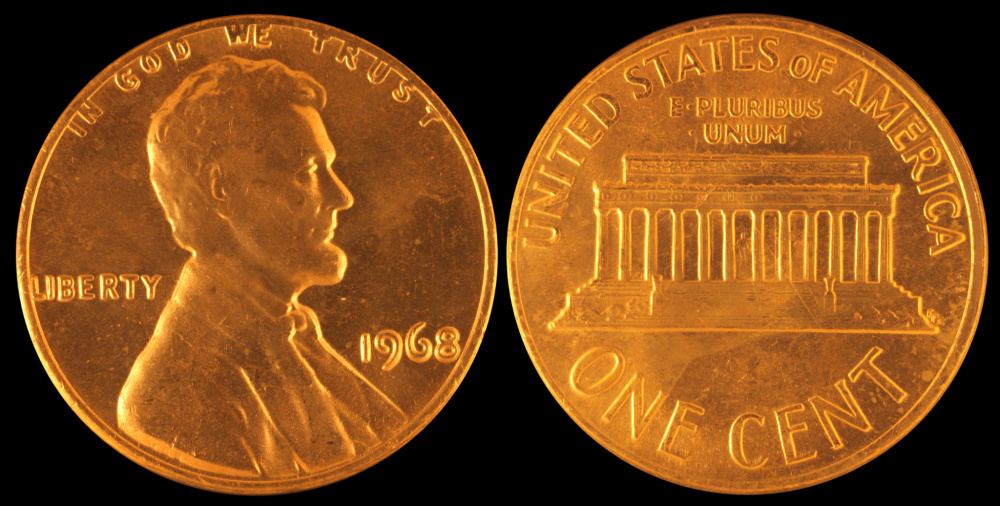 I thought the residue might be PVC so I gave the coins a long soak in acetone, but the milky areas were unaffected. Does anyone have insights? All opinions are definitely welcome! *** Moved by Staff to a more appropriate forum. *** |
|
|
|
Rest in Peace
United States
18456 Posts |
Whitman tubes shouldn't contain PVC . how many cents from that tube had that milky look ? Also did any of the coins have black spots on them ? Just thoughts; was it a new tube or old one ? I'm stabbing because I've never seen this before .  |
|
Valued Member
 United States
403 Posts |
Thanks kindly for the reply. To answer your questions, all the cents from the tube have milky areas and black spots that vary widely in position, distribution and severity. The type of illumination makes a significant difference in which are exposed. The tube was new, but now shows a stack of concentric milky residues (coin width) along its length. Here's another cent from the tube. 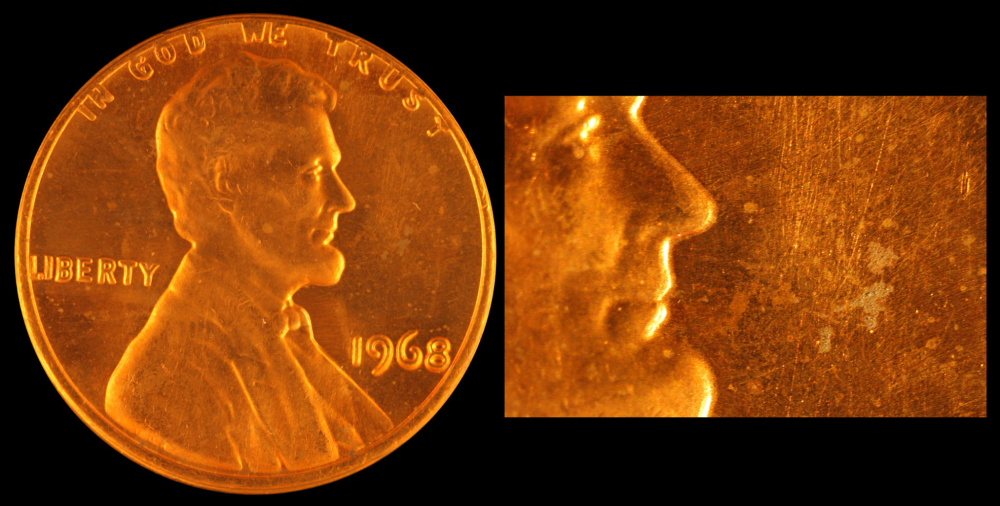 The coin looks nice in (gloved) hand, and there's some pleasing toning in room light that doesn't translate here, but like most things, the closer one looks the more flaws are exposed. There are a few milky areas seen in the left image (to the left of the date and around LIBERTY). The right image shows carbon spots as well as hairline fractures on which very small spots are forming. |
|
Rest in Peace
United States
18456 Posts |
If those Lincolns had no problems when you put them into the tube then it sounds like an environmental Issue with either the tube or how you transferred the coins into the tube . Did you use clean cotton gloves ? If not maybe something on your hands caused the problem ? Or could have been an issue with the paper wrapper that they were in before you got it . whatever you do , DON'T try to clean them , you might get rid of the milky substance but never the black oxidation spots ,also known as carbon Spots .
|
|
Bedrock of the Community
United States
20064 Posts |
Appears to be a light coat of carbonate verdigris, acetone and organic solvents will have no effect. I've removed this type of residue many times with VC in just seconds. Apply a drop of VC, let it stand a few seconds, dab off with a soft, microfiber cloth and rinse with distilled water.
Lincoln Cent Lover!VERDI-CARE™ INVENTOR https://verdi.care/
Edited by BadThad
07/10/2016 12:46 pm
|
|
Bedrock of the Community
United States
94367 Posts |
Sounds like a lot of work unless they're really gemmy examples.
|
|
Bedrock of the Community
 United States
12935 Posts |
Those "hairline fractures" on that second cent you posted look like scratches from where someone tried to rub off the barnacles.
|
|
Valued Member
United States
403 Posts |
I really appreciate your responses. I "sacrificed" the last cent shown to BadThad's suggested treatment of VC+H2O; the pat-dry was done by blowing the wet coin into a ShamWow with a Hurricane air gun. Here is the result. 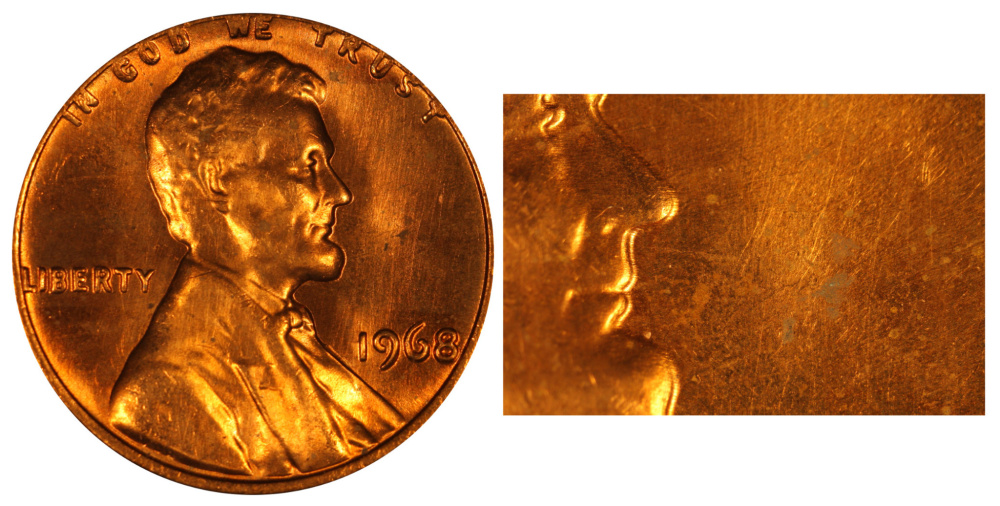 The treatment removed much of the milky residue; vestiges may be surface damage. Some of the carbon spots were reduced. The provenance of those hairlines is a mystery, although now they can be seen more clearly extending across the front field. The coin looks better. I'll cherry pick the best and preserve and store them in 2x2s. I admit the most likely cause of the pox on these coins was me forty-some years ago when I made the transfer to the tube. I was careful but probably not careful enough and didn't appreciate what the decades would bring. A clean environment was not prepared. No gloves. As far as I know, the coins could have been exposed to traces of grease  , spittle  and halitosis  .  |
|
Bedrock of the Community
United States
20064 Posts |
Those are not "hairlines", they are die polish lines common to this era.
Glad the conservation was successful!
EDIT - Suggest you keep those rolls in freezer, ziplock bags and maybe toss a desiccant pack in there. The verdigris film is forming due to exposure - which means the rolls are not adequately protected.
Lincoln Cent Lover!VERDI-CARE™ INVENTOR https://verdi.care/
Edited by BadThad
07/11/2016 08:54 am
|
|
Valued Member
United States
403 Posts |
Thanks for the great help and advice BadThad. Now I need a safe-freezer combo.  |
|
Bedrock of the Community
United States
20064 Posts |
Lincoln Cent Lover!VERDI-CARE™ INVENTOR https://verdi.care/
|
|
Rest in Peace
United States
18456 Posts |
Thad , What's with the freezer storage ? I never heard of that . wouldn't the extreme temperature change do more harm to the coins in the roll ? also would you put no problem OBW rolls in the freezer too ? |
|
Valued Member
United States
403 Posts |
I think my best option is to remove my good stuff from my small safe. inherited from my great aunt and treasured, it's a circa 1872 Boudoir safe complete with wood interior and crushed red velvet. The interior is cool, dry and dark, but there's a smelly smell that smells smelly. The safe has halitosis not me! |
|
Bedrock of the Community
United States
20064 Posts |
Quote:
Thad , What's with the freezer storage ?  Not an actual freezer, freezer-type BAGS. They are thicker and heavier than regular ziplocks. |
|
Moderator
 United States
197800 Posts |
Quote:
...there's a smelly smell that smells smelly. Laughter aside, probably not a good thing for the coins then. I think the freezer bags will help. To quote BadThad, "Mo' Layers, Mo' Better!"  |
|
Valued Member
United States
403 Posts |
As a follow-on, thank you all again for your comments. I have taken BadThad's advice and put my coin rolls, mint containers, and other good stuff in freezer-style bags within the safe. In each bag, besides a small desiccant pack to protect from moisture I've included an odor-adsorbing packet (activated charcoal) to protect from the smelly smell. My wife has started to use this technology as well for food items that tend to go "off" in the freezer and elsewhere. I now sleep better at night knowing we're protected!
|
| |
Replies: 17 / Views: 2,990 |







 Posted 07/10/2016 09:48 am


