Given the number of questionable errors seen in Canadian Auction Houses lately, I thought this might be a good one for everything to think about.
Photos (because ebay listings do not last forever)
"Discovery follows discovery, each both raising and answering questions, each ending a long search, and each providing the new instruments for a new search." -- J. Robert Oppenheimer
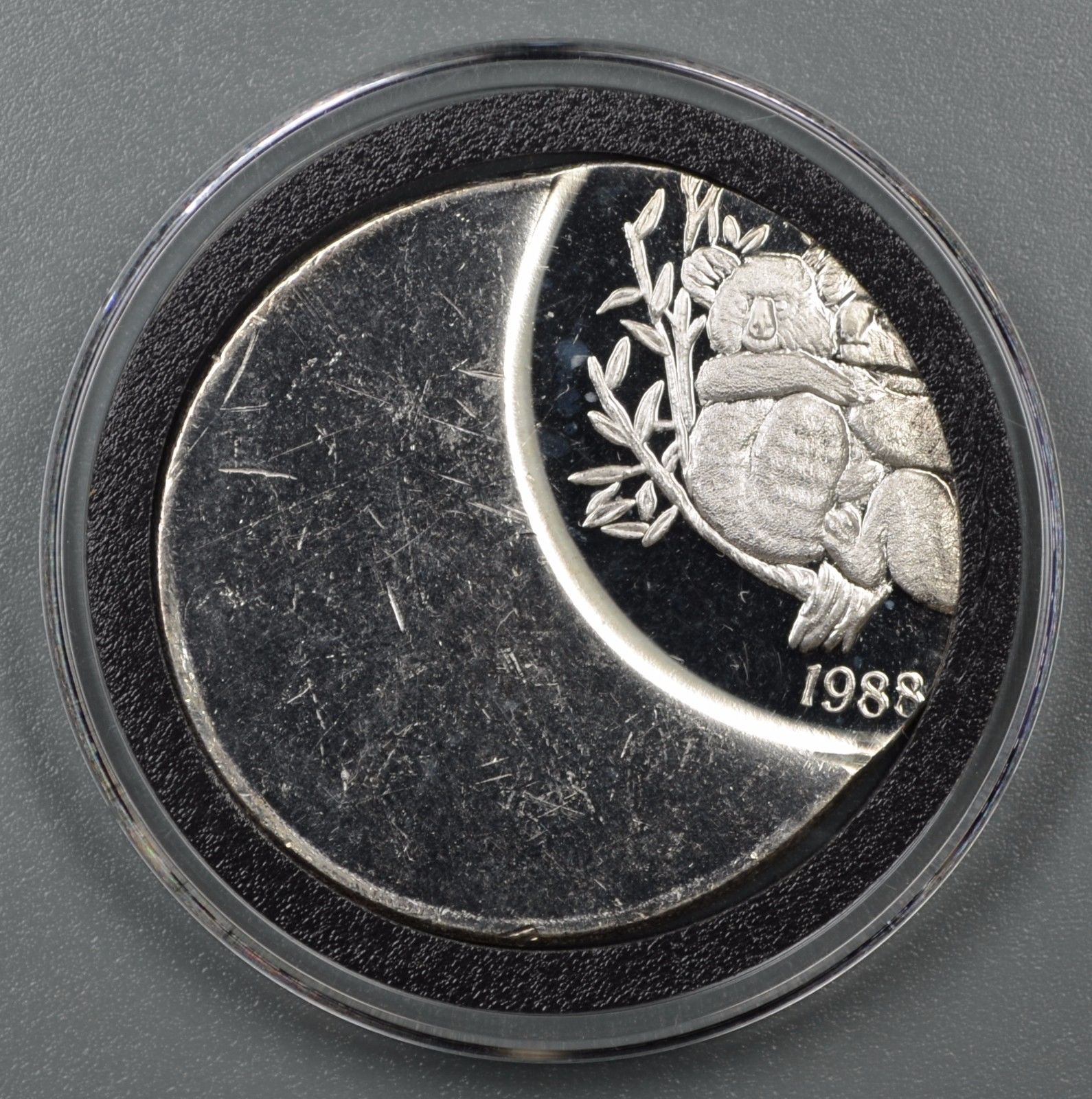
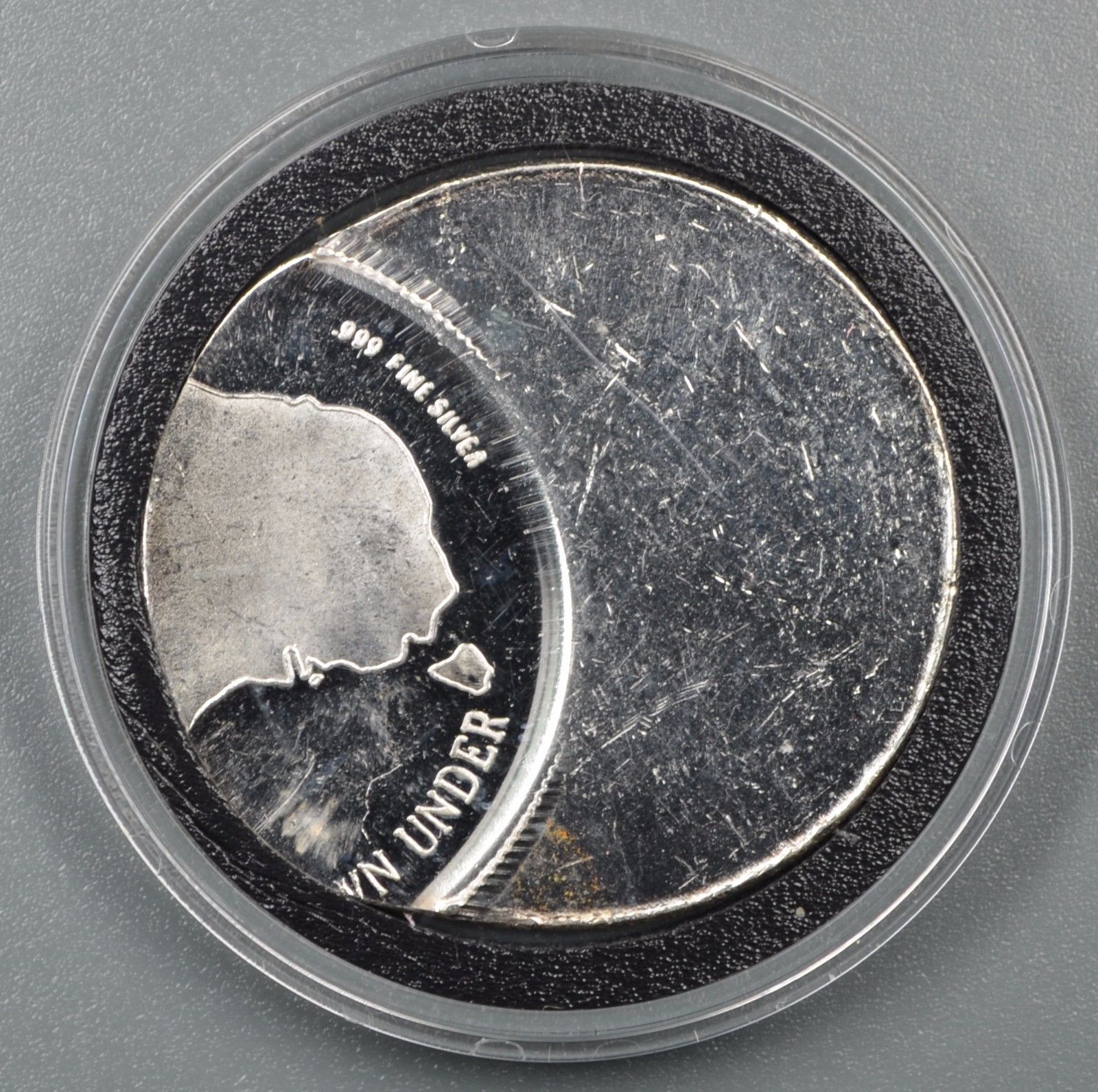
I'll say it's not genuine. I don't know how it could show edging/reeding on the second image seeing that the striking dies are completely separate from the collar die.
Note, I am not at all familiar with this silver round.
And yes I would fully expect fake striking errors to start pouring out of China. If there is something that sells for money they will copy it.
So let me ask this question... what if the coin was sitting on top of the collar, which then closes while the planchet is struck by the anvil die?
"Discovery follows discovery, each both raising and answering questions, each ending a long search, and each providing the new instruments for a new search." -- J. Robert Oppenheimer
Interesting point SPP. So much of the whole minting process I have to learn... I never even thought that was even a possibility....
My question then... if it was sitting on top of the collar how did it get such a great impression on both sides... I would've imagined that if it's on top of the collar (the most likely scenario would be because another planchet was already within the collar) that one side of the coin would not receive a strike.. but even if there wasn't a planchete in the collar ... one side would receive a weaker strike...
I may totally be wrong .. but if I am could you please explain why so I can learn
If it was struck off centre on the collar edge the only side showing a edging would be the anvil side, and that side would be jutting out while the other side would be incuse, like a dish. This is not the case, if I am making sense of the pics, it's backwards with this coin, the edging is sunken in? and therefore not possible IMO. You would only see edging on the anvil side which should be sticking out, not the other way around, and, it would be perfect not weak in the middle like this.
It would be nice to see the coin on its side, because if it is genuine, it should look more crooked than a dogs hind leg.
From what I see, the coin is not flat, it does have a dogleg. The Koala bear was struck by the hammer die... the map was the anvil, and sitting on the collar. Proof coins are also double struck - what kept this one from moving between strikes?
Personally, I think it is legit (but not legal tender, this is a bullion round)... but as you say, a photograph of the coin on an angle would be ideal, but when trying to ask the ebay selling for another photo..
Quote: "Unfortunately, this seller is not able to respond to your question."
I would have liked to buy this coin (just as a teaching tool, legit or not), and also XRF it. But the seller does not ship to Canada, and does not take questions - so I guess we'll never know if it is a legit error or not...
It is a tricky coin, and the whole point of this thread was for novice error collectors to think this one through... especially after watching someone bid on manipulated coins in a recent auction.
"Discovery follows discovery, each both raising and answering questions, each ending a long search, and each providing the new instruments for a new search." -- J. Robert Oppenheimer
Thanks for clarifying spp, I was looking at the pics the other way around. I have the feeling it's quite flat lacking that dog leg because it's in one of those thin airtight capsules. This could mean the collar pulled back half way through the strike, but I'm still at not genuine, not struck by mint. Most proof rounds are pressed three times, as per YouTube vids individually and this would never make it out.
Here is video
Hyh9SI5UhnY
*** Edited by Staff to add YouTube tags. [youtube][/youtube] Please use them in the future. We prefer embedded video. ***
Quote: There is NO way this would have got past the stringent Q&A at the Perth Mint, Fake
Unless, it had a "helping hand"... which has been known to happen...
"Discovery follows discovery, each both raising and answering questions, each ending a long search, and each providing the new instruments for a new search." -- J. Robert Oppenheimer
Call me skeptical, but this kind of thing happening in Australia is the world turned upside down. No, wait...
Anyway, for what I know about the production process and quality assurance at the Perth Mint, this definitely would have been noticed and removed. I say fake, as I really do hope that no one at the mint would be so 'corrupt' to help creating errors on purpose for some extra pocket money or so.
This item wasn't made by the Perth Mint. It wasn't even made in Australia. It was made by the Continental Coin Company of California in the 1980s, under the trade name "New Queensland Mint" (the same company that mass-marketed the Hutt River Province "coins"), before they got shut down for mail fraud.
Being a medal-maker rather than an actual mint, I'm sure they made such "errors" to order, if you asked them to.
Don't say "infinitely" when you mean "very"; otherwise, you'll have no word left when you want to talk about something really infinite. - C. S. Lewis
Disclaimer: While a tremendous amount of effort goes into ensuring the accuracy of the information contained in this site, Coin Community assumes no liability for errors. Copyright 2005 - 2026 Coin Community Family- all rights reserved worldwide. Use of any images or content on this website without prior written permission of Coin Community or the original lender is strictly prohibited. Contact Us | Advertise Here | Privacy Policy / Terms of Use










 Posted 07/10/2016 1:52 pm


