| Author |
 Replies: 11 / Views: 1,378 Replies: 11 / Views: 1,378 |
|
|
Pillar of the Community
United States
609 Posts |
This may be the best pic I am going to get. 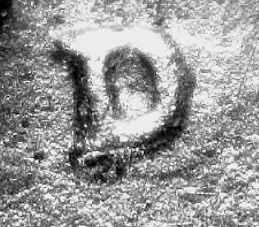 |
|
|
|
Pillar of the Community
United States
3507 Posts |
The surface indicates that it is a reprocessed (replated) cent. Unfortunately, That takes away any numismatic value even if it was an RPM. The act of replating these cents (outside the Mint) often distorts the look of details on the coin. Lettering and numbers can look doubled just from th replating issue.
You can see that "D" shaped blob to the right of the real D. That is definitely the plating. From the picture I can't tell if the area just under the D is the result of an RPM or just another anomaly caused by the replating.
Thanks,
Bill
|
|
Bedrock of the Community
United States
62064 Posts |
If you looked on the date also you should see the same exaggerated marks on it as well. Plating/re-processing can enhance something that is not there. Just as Bill said: "It distorts". The surface on re-plated/reprocess coins is very lumpy as the laying is uneven. It like a painting of a wall with a brush or roller. The texture is different from the original, distorted or filled in and rising where it didn't have it before it was painted.
|
|
Pillar of the Community
United States
7629 Posts |
It's not possible to tell whether this is an RPM without further images or information. On this particular issue, the date and other areas have to be taken into consideration...not just the mintmark itself.
|
|
Pillar of the Community
United States
7123 Posts |
What exactly are we to look for on the date that would indicate that the coin has an RPM ?
|
|
Valued Member
United States
236 Posts |
Is this a Zinc plated steel? I have more steels than I care for, but one of them is a bit more shiny than the others almost a "coating" type of surface. Zinc? It sort of looks like my Shell-casing copper plated steels, except silver colored. Also I do have a Steel with a D/D almost exactly like the one shown. It's rotated a bit more than this one, will post pics when I can. How can you tell if it's Zinc coated.
Eric
|
|
Pillar of the Community
United States
7629 Posts |
Okay...a primer.
The dies for 1943 cents wore in a very odd way because of the planchets they used - made of steel. A lot of times if the mintmark has blurring in any direction, if it's die wear, the date will have the same blurring. if the date is very clean and the mintmark looks like this one, then it's probably a repunched mintmark, but closer examination would be necessary to tell for sure.
By very far and away 1943 is the most difficult date to detect genuine repunched mintmarks, and it's also the most reported date that actually has nothing going on. It's all due to the odd die wear, odd planchet metal, the number of them that were reprocessed, and the fact that they catch attention of even generalist collectors. Very few people bother paying attention to a 1942D cent when there's a 1943D cent sitting next to it. Human nature.
For coffeegod...
All 1943 cents were made of steel plated in zinc. Some of them were replated a number of years later by fast-buck entrepeneurs looking to sell 'shiny' coins to unknowledged collectors. These were most often plated in zinc, but in some cases were nickel or mecury plated.
"Shell casing" cents specifically notes the cents made between 1944 and 1947 that were made from copper that was reclaimed from the war effort. A large majority of this copper had been brass shell casings. The alloy was refined and rather purified so that it closely resembled the older bronze, but trace amounts of gunpowder and sulphur in the metal caused it to react differently over time than other cents. They often have an orange to greenish orange color when they tone. Chemically their composition is slightly different than cents from other years...so we call them shellcase bronze cents.
Anyhow, the term 'shellcase' has nothing at all to do with 1943 cents.
|
|
Pillar of the Community
United States
7123 Posts |
Here is the best picture of the date from the first thread on this coin . Hope it helps to let wrongalot know about the RPM . 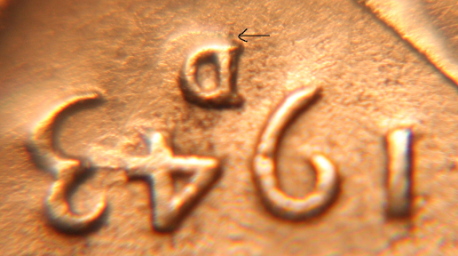 |
|
Pillar of the Community
 United States
609 Posts |
|
|
Pillar of the Community
United States
3507 Posts |
Still, not an RPM.
Thanks,
Bill
|
|
Pillar of the Community
United States
1934 Posts |
 found. Steel cents, ummmmmmmmmmm...........errrrrrrrrrrrrr...............no comment. |
|
Bedrock of the Community
United States
20753 Posts |
All 1943 cents were made of steel plated in zinc. Some of them were replated a number of years later by fast-buck entrepeneurs looking to sell 'shiny' coins to unknowledged collectors. These were most often plated in zinc, but in some cases were nickel or mecury plated.
Coppercoins: This is one thing I just don't understand. I know it was and may well still be being done but why. I really don't see any really big monitary gains from recoating those. I've seen many over the years that in some instances appear to almost be a proof. Yet I've never seen a 1943 sell for more than a few dollars some time ago and only now are a little more. Actually I know one dealer that sells almost uncircs for $0.50 each. I would think a coating process would cost almost as much as any profits from this.
Of is this one of those crooks are stupid things?
|
| |
Replies: 11 / Views: 1,378 |
|









 Posted 02/28/2008 03:04 am


