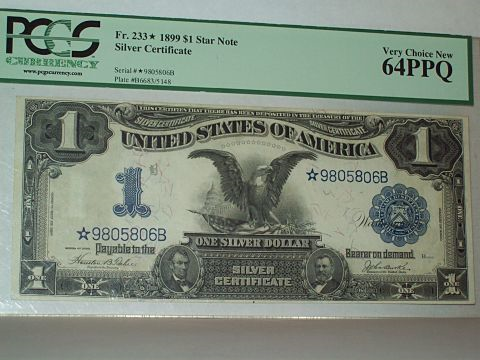
A comment from ARcoins in another thread actually made me think:
Quote:
Any coin, stamp or bill with a nickname is worthy of collecting.
I did live in a country, The Netherlands, where literally every coin and banknote had at least one nickname and I never thought of how special that actually was, especially since everyone knew them and used them on an almost daily basis.
I'm actually quite curious to hear if there are more coins, banknotes or currencies which are best known by their nickname. Anyone has suggestions, examples?
Let me kickoff here with a (yet still incomplete) overview of the Dutch gulden coins and banknotes, and where known, the origin of their nicknames:
1 cent: Spie. The name probably comes from the Rotwelsch word Spieß which means coin. It might also come from the word for 'piece of bread', and it's thieves language for cent.
2 1/2 cent: Plak. This means slab, a name it was already given in the 17th century and it lasted until the 1940's. The 2 1/2 cent piece (or 4 duit piece) was the biggest bronze coin around, which made it earn its nickname.
5 cent: stuiver. Until decimalization of the Dutch currency where the gulden became dominant, the stuiver was the leading currency unit: there were 8 duiten in a stuiver and 20 stuiver in a gulden. After decimalization, the 5 cent piece kept its name.
10 cent: 'dubbeltje' or 'duppie'. dubbeltje means 'small double' and refers to both being 2 stuivers and to being a very small coin. Duppie is derived from this and means the same.
25 cent: kwartje or heitje. Kwartje is the same as the American quarter, referring to being 1/4th of a gulden, in this case. Heitje comes from the Hebrew H, which is the 5th letter of their alphabet. 5 stuivers in a heitje, so the 5th character. For background information, The Netherlands used to have a very active Jewish community in the banking world.
1 gulden: piek or pegel or pop. Piek actually is taken from the 17th century Dutch coins, which had the image of a Dutch virgin holding a lance (called 'piek' in Dutch). Pop means 'doll' and refers to the virgin herself. Pegel was introduced about 100 years ago and comes from the Dutch word 'peil', which means measuring standard.
2,5 gulden: rijksdaalder, riks, knaak, achterwiel. Riks is short for Rijksdaalder, and that word is possibly derived from the French Rixdale. Daalder has a shared history as thaler. The original daalder in The Netherlands was 30 stuivers, until a new, silver coin was introduced with a value of 50 stuivers, the Rijksdaalder. Knaak possibly comes from Rotwelsch again, where Knök and Kneks mean 'daalder'. Achterwiel literally means rear wheel and this name the coin got for being the biggest coin around, just like the rear wheel of a carriage.
5 gulden: Bas, dikke stuiver, joeter, fiets. I have no idea where joeter or Bas come from, but 'dikke stuiver' actually refers to the design of the 5 gulden coin being very similar to a stuiver, just a bit biggest and certainly a lot thicker. 'Fat Stuiver' thus makes sense. Fiets is derived from the value being two rijksdaalders. Fiets means bicycle, and with two big wheels the Dutch just love to make bicycles, of course.
And for banknotes:
5 gulden: vijfje. Or 'little fiver'. Quite straightforward.
10 gulden: tientje, joet. Tientje is 'little tenner' and quite straightforward. 'Joet' comes from the Hebrew alphabet, where jod is the 10th letter.
25 gulden: geeltje. At the end of the 19th century, the color of this banknote was yellow. 'Geeltje' means 'little yellow'. The name lasted while the banknote changed color and design.
50 gulden: zonnebloem (sunflower). The banknote had a hug sunflower on it, which gave it its nickname.
100 gulden: meier, snip. Meier is derived from the Hebew word mei'oh, which means 100. Snip was introduced later, when a series of 100 gulden notes with a bird called 'snip' in Dutch were circulated. The name lasted after the introduction of new banknotes.
250 gulden: Vuurtoren (lighthouse). Quite straightforward: this beautiful purple banknote had a lighthouse on it, which made people call it a 'lighthouse'.
1000: rooie rug or rug. This means 'red back' or 'back'. The first series of 1000 gulden banknotes were colored red on the back. This led to its nickname, which lasted until the very end, even though the bank note changed in design and color a few times since: the last series were green...
So, now my question is: any more of this? Are there any more coins or bank notes with popular nicknames in this world?









 Posted 07/20/2016 4:30 pm