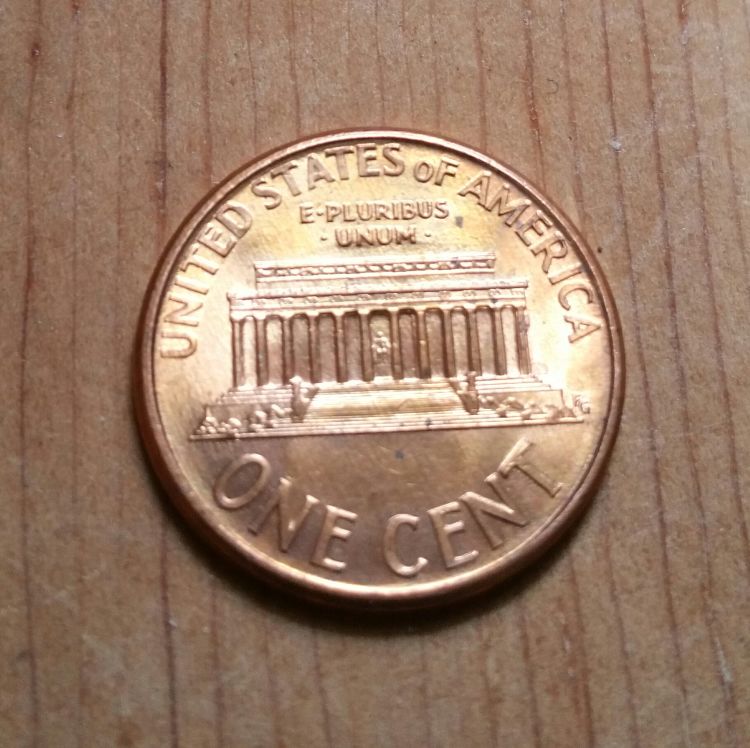
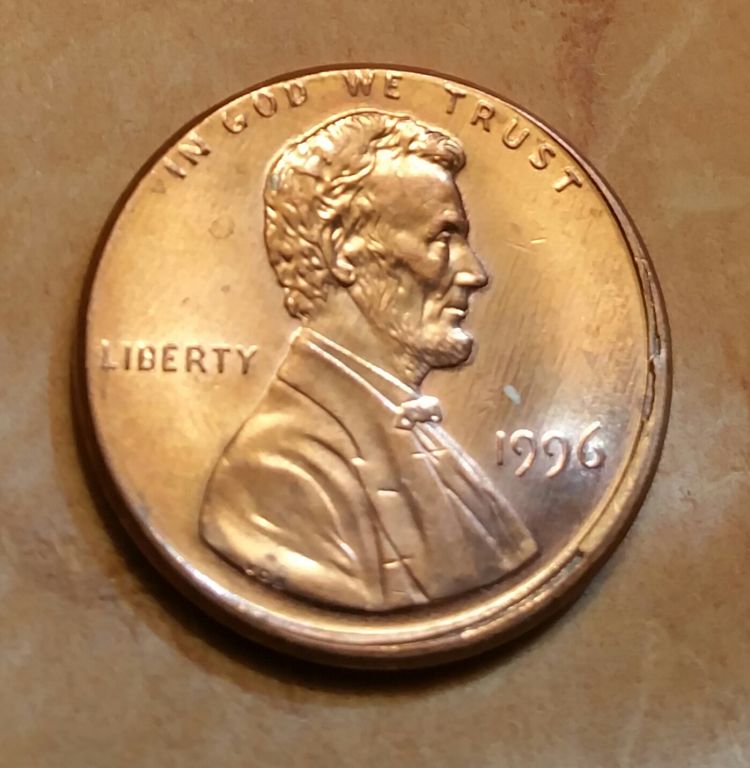
Kid, If the reverse is normal then a cool misaligned die just touching the edge of no return. The dies design rim is off the grid on that side. My second interest is in the opposite side. In my opinion this maybe classified as a rim
Cud by some of us including the experts and yes myself in most cases not long ago.
Note: I'm not bringing this up on a whim, nor trying to discredit yours or others as an actual rim
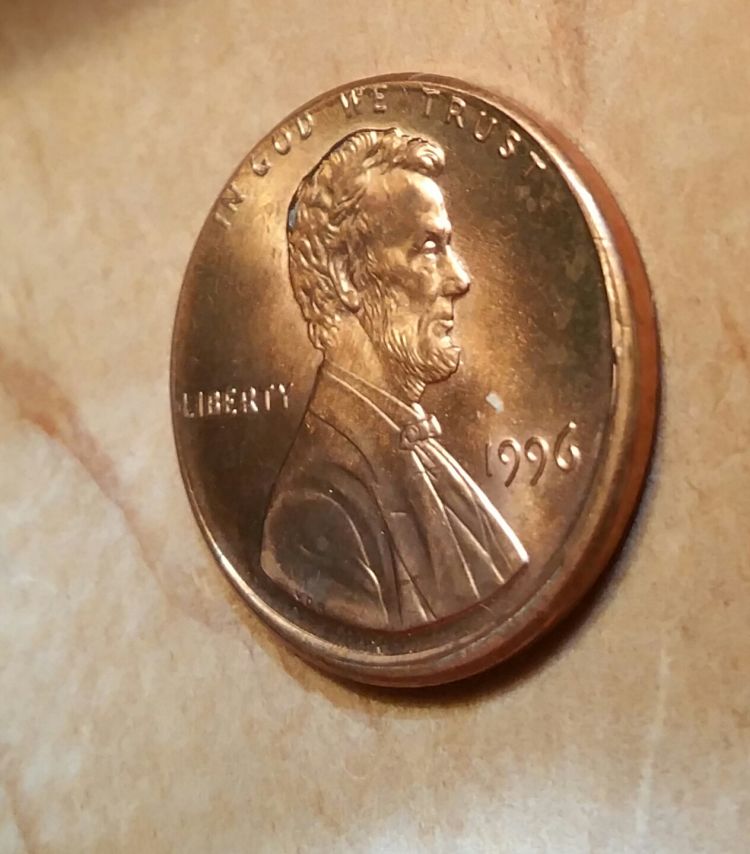
Cuds, but have studied these for a while now. I had hoped to gather my own examples for display, but your coin or pictures of this one here shows exactly what I'm going to try to describe as possibly another type of or an alternative to an actual rim
Cud in some cases.
The US Mint shows 1.52mm is the current standard thickness for cents. I have no specific + or - tolerances for thickness to give at this time. Thickness seems to vary even on normal struck coins, with tapered planchets and dies not meeting exactly flush and yes in cases similar to this (MAD) the thickness can vary a bit as well.
What I think I'm seeing over and over again on misaligned dies similar to this with the gutter is more of an "Incomplete Back-fill" and not an actual rim
Cud every time. Not saying this one isn't a rim
Cud, cause having the coin in hand beats any picture for gauging size and or thickness.
If the design rim is moved inward over the coin then the distance between it and the collar pushing metal back has more surface area to fill in on that side of the coin. Hence more pressure or material needed to complete the back-fill. Sometimes we see complete fill, sometimes not at all so couldn't there be a middle ground as in partial fill?
The gutter along with the partial raised or filled area resembles a raised blob of metal or
Cud. Metal under pressure tends to move in the path of least resistance. My understanding of a true
Cud is part of the dies design rim has broken or chipped away raising the area in question higher than the actual (1.52mm) design rim.
I find myself questioning many examples and seeking more evidence that these areas in question are actually raised due to the dies design rim has broken away or is the metal just raising up during the normal process of trying to back-fill (up and outward) into the gap or gutter?
One last point to ponder: If the design rim is actually all the way off one side of the coin, then what happens to the other side? Is it, (the design rim) now not fully covering the opposite side, thus making the rim rise higher? Thanks, Doug.









 Posted 07/28/2016 6:53 pm