| Author |
 Replies: 11 / Views: 1,007 Replies: 11 / Views: 1,007 |
|
|
Moderator
 United States
23731 Posts |
|
|
|
|
Pillar of the Community
United States
7067 Posts |
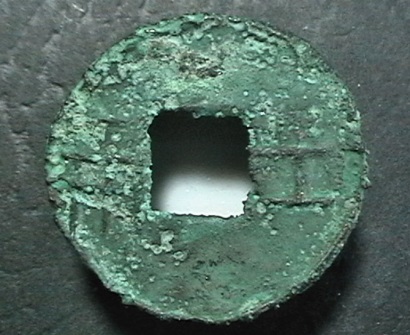
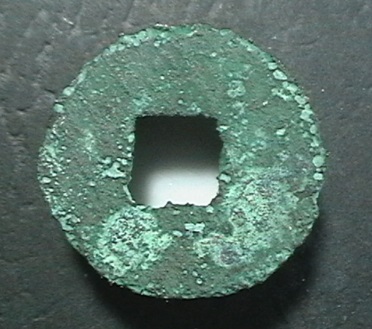
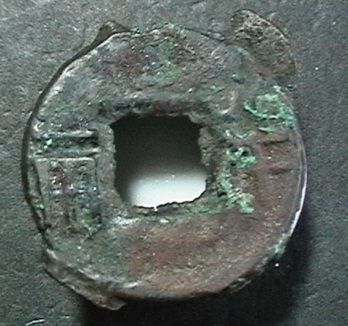
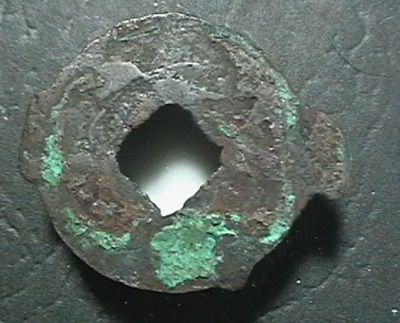
I could very well be wrong, but I'll be curious to see if number two is from the Western Han Dynasty (Ban/Pan Liang obverse)...
|
|
Moderator
 United States
23731 Posts |
Just checked my data base the first coin I have labeled as Qin and the second one as Han.
|
|
Moderator
United States
34565 Posts |
@bob, looks more like Western Han to me due to the shape of the liang looking like a sideways letter E. I'd go with Hartill 7.17. Ron is it 24 or 25 mm in diameter?
"If you climb a good tree, you get a push."
-----Ghanaian proverb
"The danger we all now face is distinguishing between what is authentic and what is performed."
-----King Adz
|
|
Moderator
United States
23731 Posts |
Right around 24mm a little more with the spurs.
|
|
Moderator
United States
34565 Posts |
I do see a somewhat similar coin in hartill that has the opposing sprues attached and it is listed under Qin dynasty (hartill 7.5). However, the script style looks different to me and that would be 26+ mm in diameter. I'm very interested to hear what TC has to say on all this.  "If you climb a good tree, you get a push."
-----Ghanaian proverb
"The danger we all now face is distinguishing between what is authentic and what is performed."
-----King Adz
|
|
Moderator
United States
23731 Posts |
I'm trying to remember where I put the box with those coins in it so I can remeasure and give a weight. I didn't have it listed in the data base for some odd reason so I'm going by memory which is getting pretty cloudy these days. If I find it I'll update the information.
|
|
Moderator
United States
23731 Posts |
OK I found them. The first coin is 25mm x 2.2 grams, and the second coin is 24mm x 2.9 grams.
|
|
Pillar of the Community
United States
6370 Posts |
Got Bob's email.  Been doing math homework all day.  Both are Western Han. The second one is later than the first one. The first one intrigues me (in a good way; I think it is genuine) because the characters are not regular. I think it is oriented properly, but some strokes seem to be missing. (Look at your other coin to see what I am talking about) There is also a rim, making it more desirable. Typically, anything over 5-6g and more than 28mm (though mostly more than 30mm) can be attributed to Qin and earlier. Around 180 BC (early Western Han), the weight standard was changed to 8 Zhu (~4g at 0.5g per zhu) and these measue 28-32mm in diameter and weigh 3-5g. [Notice how the weight is more consistent than the diameter. That is how these are attributed; weight, then character style/fabric, then size.] Over the next 40 years or so, the diameters shrank to 22-25mm, and the weight decreased to a 3-4 zhu standard (1.5-2g). At this point, the coin's stated denomination, "Ban Liang" ("Half Ounce", or 12 zhu, or 6g), did not match the amount of metal in the coins. Han Wu Ti felt that this was very confusing, so he decided to issue a coin that had a denomination equal to its copper weight. He issued a coin called a San ("Three") Zhu, but he made its actual weight a little heavier thinking that it would be popular and thus circulate. These new coins were popular, but they were melted down for their excess copper, thus they did not circulate. Han Wu Ti, seeing the failure in his coinage, ceased production after only two years, making the San Zhu rare today. He then introduced a Wu (five) Zhu to the correct standard (2.5g), and these quickly became the basis of Chinese commerce for the next 700 years. |
|
Pillar of the Community
United States
6370 Posts |
Here is what I mean when I say some stokes are missing on your first coin. It should be this: "Ban Liang" (read right-left) 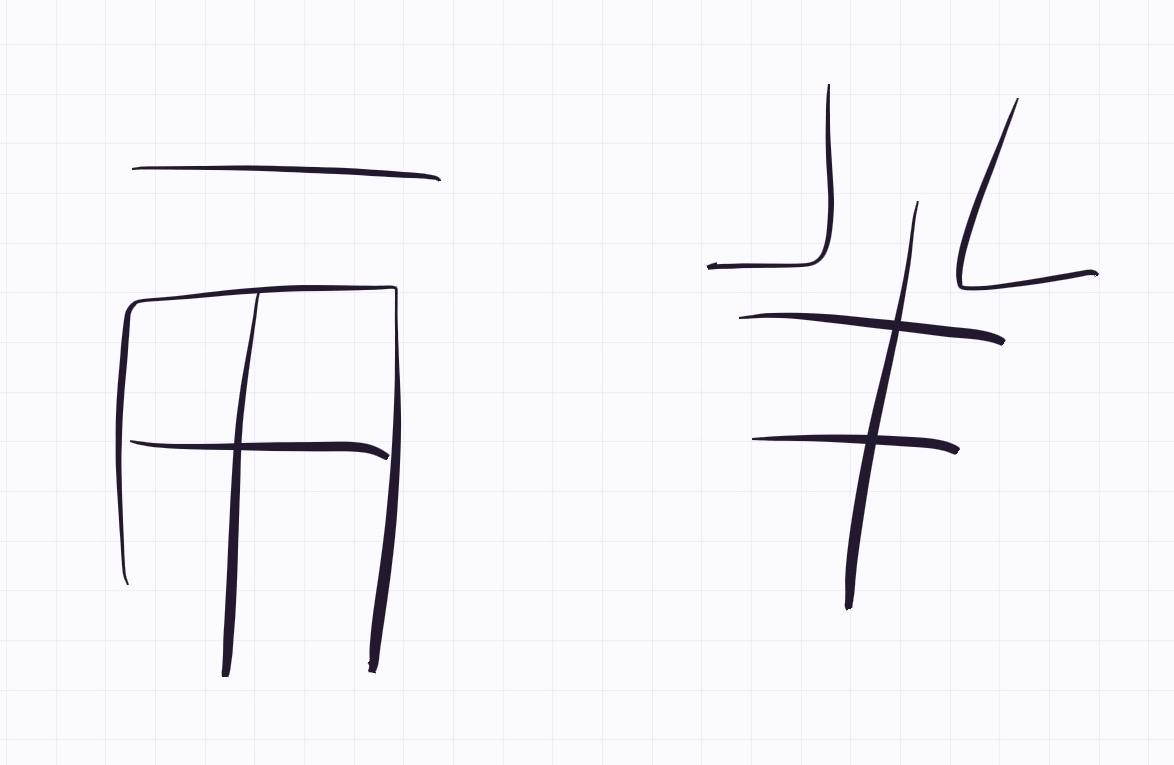 I see this: "Gong Liang" 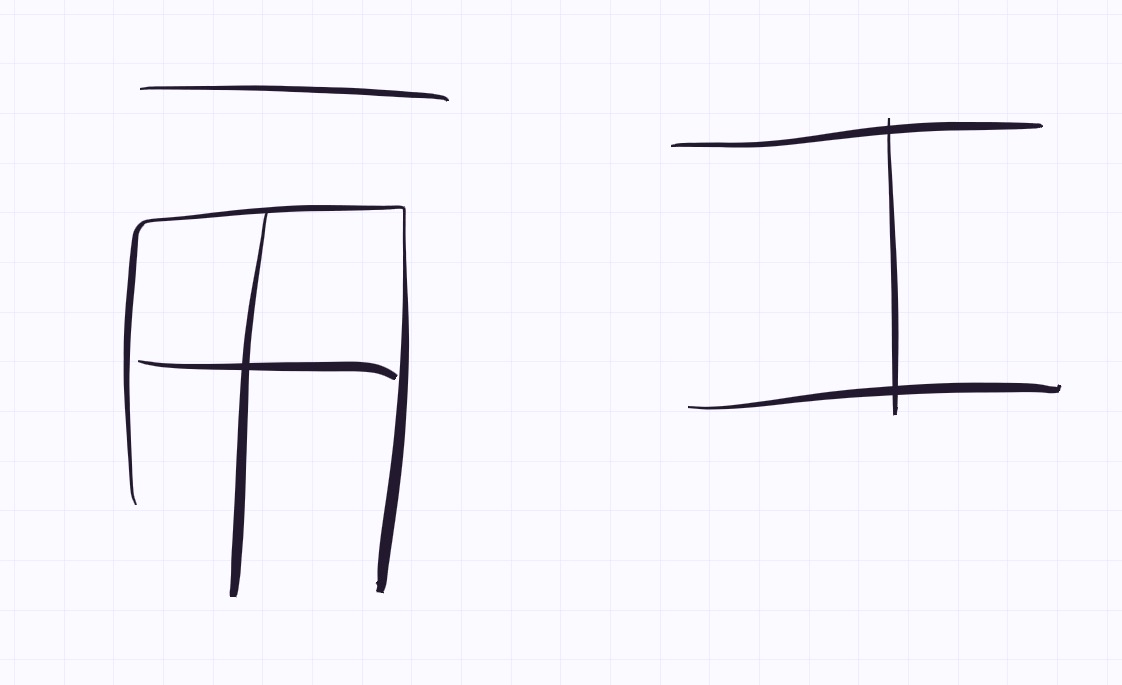 Can you give me in-hand input? Thanks! |
|
Moderator
United States
23731 Posts |
Goes to show how little I know about Chinese coins. Thank folks for the help. Thomas your knowledge about these coins is amazing, thanks for your help. I'm going to update my data base.
|
|
Moderator
United States
34565 Posts |
Quote:
Thomas your knowledge about these coins is amazing  "If you climb a good tree, you get a push."
-----Ghanaian proverb
"The danger we all now face is distinguishing between what is authentic and what is performed."
-----King Adz
|
| |
Replies: 11 / Views: 1,007 |
|






 Posted 09/11/2016 7:19 pm





