| Author |
 Replies: 4 / Views: 1,299 Replies: 4 / Views: 1,299 |
|
|
Pillar of the Community
United States
522 Posts |
Does anyone know about Bust Halves with a Dr. Houck counterstamp? I have just been back into coin collecting for about 4 years now. I collect classic coins.
About 3 years ago, I was at a coin show in Baltimore, the big one at the Convention Center downtown. I saw a Bust Half with a "Dr. Houck" counterstamp. The dealer told me it was rare but known. I wasn't sure how to evalute Bust Halves, or barely any other coins at that time for that matter. For sure, I am still learning. Anyway, I wasn't confident enough to part with the $150 asking price (it was in VG range). Plus, I had no idea, and still don't, about counterstamps.
The thing is that "Houck" is my family name and my family is from Baltimore (pehaps a coincidence that this coin was at that show). I know of no doctors in the familly, nor does my father.
So, now I'm in California and can't readily search the local B-more coin shops. I haven't seen this counterstamp at auctions or coin shows. Does anyone have any info on this or know where I could find such a coin again.
I feel like stumbling upon that coin may have been beginner's luck, and, dare I say it, "destiny". Ok, I have to laugh at that, too. But, I'd still like to find another.
|
|
|
|
Pillar of the Community
United States
4431 Posts |
Looks like you missed the boat on that Houck's Panacea counterstamp for $150. A pleasing example on an 1829 Bust Half just closed at $632. Earlier, less common dated host coins, bearing a decent counterstamp may command a higher price. At auction, if two or more collectors seriously want one, the price realized can sky-rocket. This is a well known and very popular counterstamp. Whereas the great majority of counterstamped coins tend to number ten or less specimens known, there have been well over a hundred of the Houck specimens recorded to date. Bust halves are by far the most commonly seen host coins that Houck stamped. The same stamp on other coins, like Bust quarters, tend to fetch far higher prices when sold. Here are my database notes on the issue: JACOB HOUCK, BORN IN FREDERICK, MD, OPENED A DRY GOODS STORE IN BALTIMORE IN 1828. BRUNK SAYS THAT HOUCK BEGAN SELLING HIS PANACEA IN 1834 FOR $1.50 A BOTTLE. ADVERTISING BETWEEN 1835-42, THE PANACEA WAS PURPORTED TO HAVE BEEN MADE FROM VEGETABLE MATTER. IN 1851, HENRY HOUCK TOOK OVER THE BUSINESS.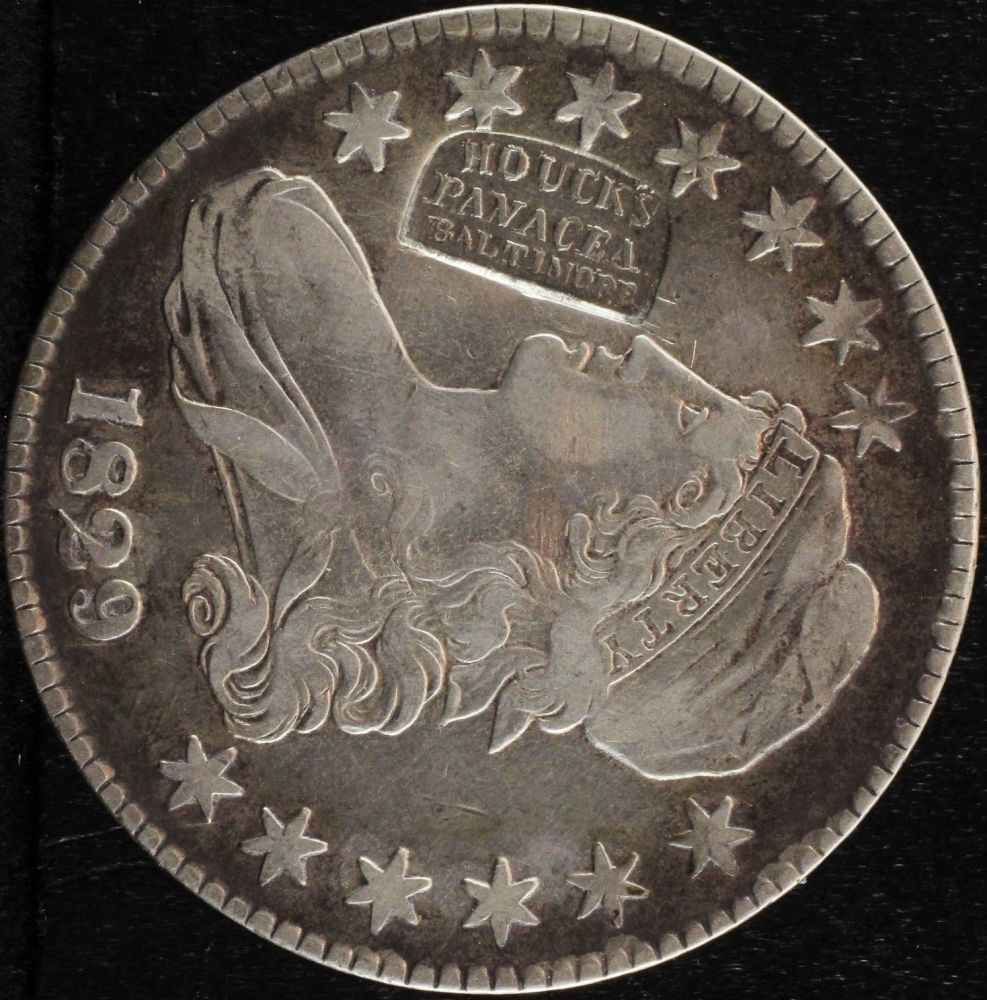 |
|
Bedrock of the Community
United States
94367 Posts |
Thanks for the background, most interesting.
|
|
Bedrock of the Community
United States
11951 Posts |
Nice looking coin. Knowing that kind of information really adds to having a coin like that in your collection.
I too have let some counter stamped coins slip away.
I hope to pick up more in the future.
|
|
Pillar of the Community
 United States
522 Posts |
Thanks, that is very interesting. At least I'll know what it is the next time I see one.
|
| |
Replies: 4 / Views: 1,299 |
|







 Posted 10/22/2016 4:44 pm





