Took quite a bit of sacrifices coin-wise on my part but it was worth it now that I'm finally getting a gold coin of the Visigoths, something sky-high on my want list of mostly 5th-9th century European coins. Relatively, some Visigothic gold (and some Ostrogothic) isn't unbelievable expensive, but for me they are really pricey, and this one was certainly worth it, especially since I put much work towards obtaining it. What's that phrase? Good things come to those who work hard, or something like that?
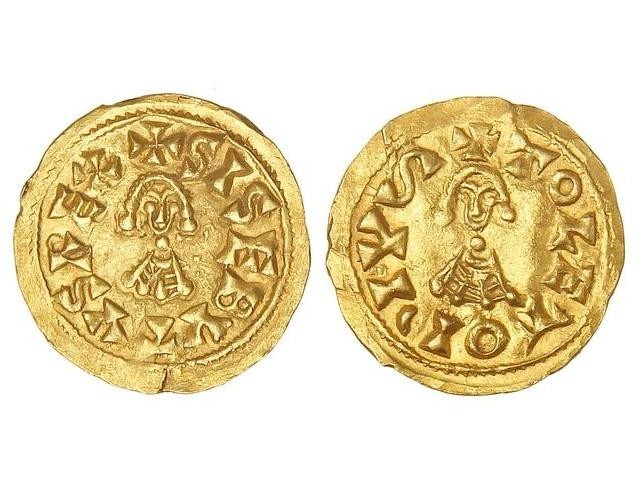
 Sisebut, Visigothic Kingdom
AV tremissis
Obv: + SISEBVTVS REX, bust facing
Rev: + TOLETO PIVS, bust facing
Mint: Toledo
Date: 612-621 AD
Ref: Miles 183a
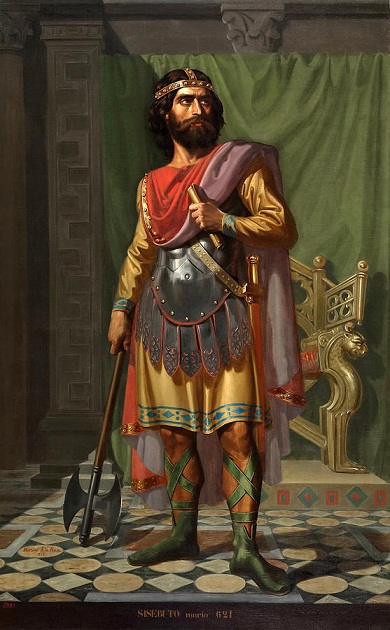
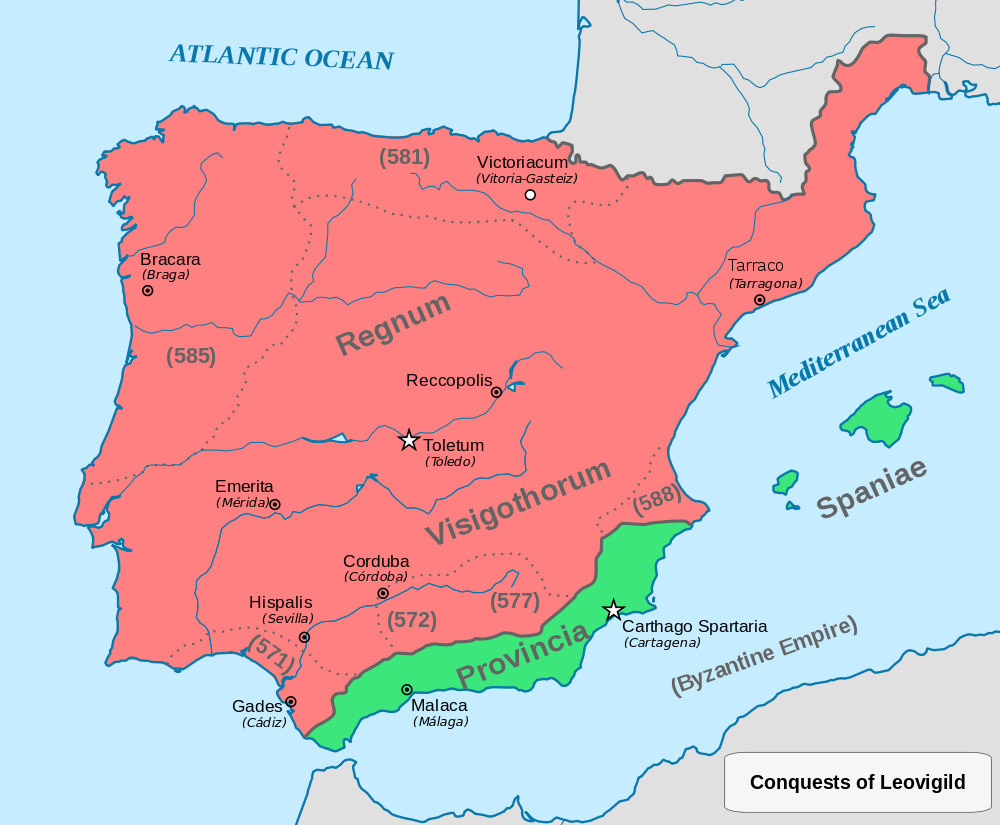
Sisebut (Sisebutus in Latin, Sisebuto in Spanish) was King of the Visigoths and of Hispania and Septimania from 612 to 621 AD. His rule followed a succession crisis when three Visigothic kings died in the span of twelve years. As king, Sisebut continued the decades-long conflict against the Byzantines (Eastern Romans) that controlled the southern portion of Spain, which was conquered during Justinian's wars of reconquest and was named Spania (a newer version of the name Hispania). In a campaign against them, "King Sisbodus took many cities from the Roman Empire along the coast, destroying them and reducing them to rubble" (as recorded by the Frankish chronicler Fredegar). Sisebut himself didn't live long enough to see the reconquest of southern Spain, which was finally completed by Suintila in 624.
Sisebut was noted by the writers of his time and afterwards. He was known as a very learned ruler, wise and "eloquent in speech, informed in his opinions, and imbued with some knowledge of letters". Letters written by him as recorded in manuscripts reflect his intelligence and range of emotions, and the personal tone they carry show his involvement in writing them. Sisebut also left behind literary works of his own, including a poem on lunar eclipses and a work detailing the life and death of the Bishop Desiderius of Vienne. An intellectual movement was occurring in Hispania around this time, and it is thought that Sisebut was a product of this movement.
(here's one of his letters:
https://epistolae.ccnmtl.columbia.e...tter/44.html )
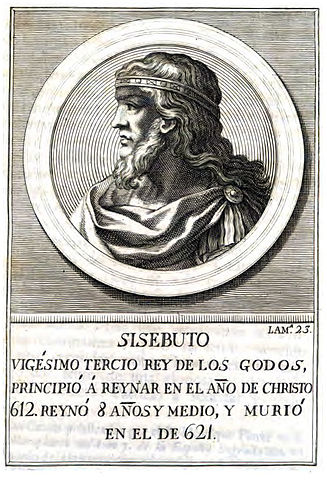
("Sisebut, 23rd King of the Goths, first ruled in the year of Christ 612. Ruled 8 1/2 years, and died in 621)
He was also a very pious Christian ruler, but found it internally difficult to juggle both his strong faith and his duty to be an effective king that waged war and spilled the blood of others, even that of the enemy. Unlike his Germanic ancestors and more recent predecessors who had professed Arian Christianity (the last one being Liuvigild), Sisebut was a ardent Catholic Christian, one that wanted all his subjects to profess Catholicism. This reached a point where Sisebut set out to forcibly convert the Jews of Spain, but very little is known of the extent of this attempt or whether or not he persecuted them (*still not crazy about this aspect of him though*

).
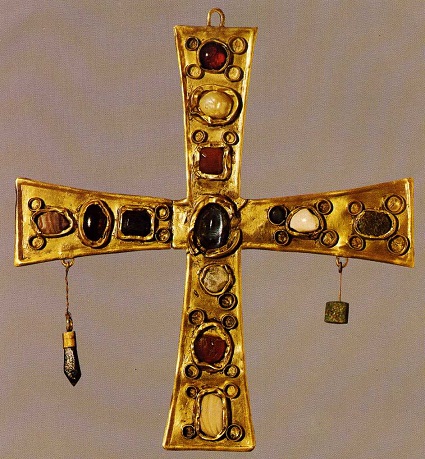
(Visigothic cross)
After living 55/56 years, King Sisebut died in February of 621.
Sources: Wikipedia articles for Sisebut, Gundemar, Spania
http://www.academia.edu/775090/_A_V...10_pp._89-99Also, here's a long but very good article that talks about the Visigoths' history and their contributions to Spain, which were great despite them being a relatively ignored part of Spanish history ("wedged... between great legacies of the Romans and the Moors"):
http://www.spainthenandnow.com/span...ult_154.aspxAnd finally, here's some facts related to the Visigoths:
The tribal Goths as a whole first come into contact with the Roman Empire in the 3rd century AD.
The Goths' ancestors came from Scandinavia.
The Thervingi (who would become the Visigoths) and the Greuthungi (later the Ostrogoths) inflicted a massive defeat on the Roman Empire in 376 at Hadrianople, destroying most of the Roman army and killing Emperor Valens.
The Visigoths under King Alaric fought on behalf of the Romans against the usurper Eugenius, and later laid siege to Rome, sacking the city in 410 AD.
The Visigoths were granted territory in Aquitaine by Emperor Honorius, within the empire. This marked the start of the Visigothic Kingdom. Over the next decades they would expand into Roman Hispania.
They allied with the Western Roman general Flavius Aetius when the Huns under Attila invaded Gaul in 451 AD. Roman-Germanic forces defeated the Huns at the Battle of the Catalaunian Plains.
Western emperor Majorian carried out a military campaign in the late 450s in which several tribes, including the Visigoths, were reduced to being federates of the Romans. Most of Hispania thus returned to Roman hands. But this situation only lasted a few years after Majorian's death.
Euric was the first Visigothic king to formally break from the dying Western Roman Empire.
They were pushed out of most of their territory in Gaul by the Franks in the early 500s, only retaining Septimania.
The Sueves, who established their own small kingdom in the northwest of Spain, were conquered by the Visigoths in the late 6th century.
The Visigoths founded the only new cities in western Europe after the collapse of the Western Roman Empire to around the 8th-9th centuries AD.
In 711 AD, Muslim forces from North Africa invaded the Visigothic Kingdom. King Roderic was killed in the fighting, and by 718, almost all of Hispania was under the rule of the vast Umayyad Caliphate, centered in Damascus. The remaining Visigothic nobles gathered in the far north and waged continued resistance against the Muslims. Their efforts lead to the establishment of the Kingdom of Asturias and the start of the Christian Reconquista.
The Reconquista lasted almost 800 years, when King Ferdinand and Queen Isabella of Aragon and Castile defeated the last Muslim kingdom in Spain, the Emirate of Granada, in 1492










 Posted 11/23/2016 06:05 am


