| Author |
 Replies: 8 / Views: 2,600 Replies: 8 / Views: 2,600 |
|
|
Press Manager
 United States
1420 Posts |
CoinWorld - Ta-to'-ka-in'-yan-ka may be the most famous Native American whose name most people get wrong. This Hunkpapa Lakota tribal leader's portrait appears on the Series 1899 $5 silver certificate, making it probably the most familiar image of a Native American on a piece of U.S. paper money. 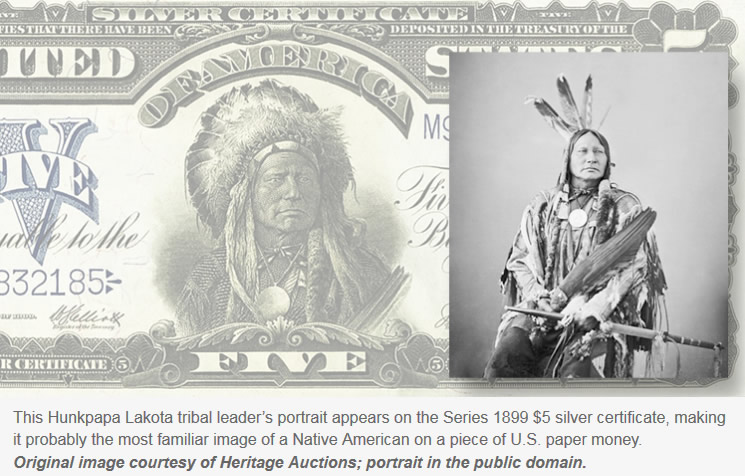 To his people, he was Ta-to'-ka-in'-yan-ka (the Americanized spelling differs from source to source). To the white Americans who knew him, he was Running Antelope. And to generations of collectors, he is known as Chief Onepapa. Ta-to'-ka-in'-yan-ka was born in 1821 near present-day Grand Forks, S.D. Forrest W. Daniel, writing in the January-February 1969 issue of Paper Money, notes that at the time of his birth, few whites could be found in the region, though that would change by the time he reached adulthood. Ta-to'-ka-in'-yan-ka was a member of the Hunkpapa (or Oncpapa) band of the Lakotas, the western or Teton Sioux. The Lakotas lived in the western Dakotas and Nebraska, where they hunted bison. The other two Sioux groups were the Dakotas, who lived in what became Minnesota, and the Nakotas, who lived in the eastern Dakotas. Ta-to'-ka-in'-yan-ka's lifetime paralleled the period of near obliteration of Native American culture, as it ran into the human juggernaut that was the American westward expansion. Read the Entire Article
|
|
|
|
Pillar of the Community
United States
839 Posts |
Here is a postcard of Running Antelope, in a less impressive rendering, printed about a decade after his death in 1896. 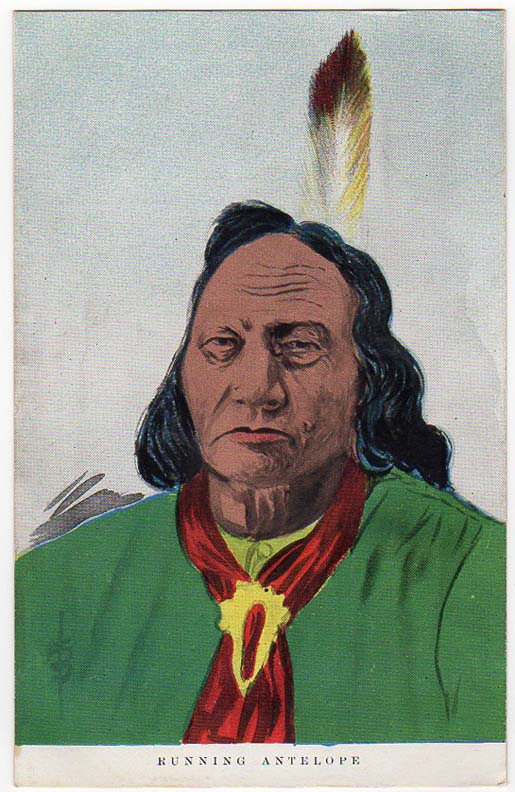 |
|
Bedrock of the Community
United States
94367 Posts |
His long missing brother was Falling Rock, who people in the west are still watching out for today.
Edited by Coinfrog
12/19/2016 5:02 pm
|
|
Pillar of the Community
United States
4637 Posts |
The stories I hear about the Chief depicted on this iconic note never fail to amaze me.
Like the one about him wearing a different head dress because the Sioux head dress was too tall for the engraving.
Or the one about him not living to see the currency he was depicted on.
Was this note a Big Deal around the time it was being circulated ? Did people look at it and say, "this note will be iconic and sought after one day, it's beautiful." or was it just another five dollar bill ?
|
|
Pillar of the Community
United States
3516 Posts |
|
|
Bedrock of the Community
United States
94367 Posts |
Stever - Apparently just another five dollar bill, and it would seem not that treasured at all. There were over 500 million of these printed over 20-odd years, and Chambliss/Hessler report that census data suggests that only about one note for every 39,000 issued has survived - a rate far smaller than its contemporary Woodchopper USN counterpart. Ironically, then, this note seems not to have been particularly revered or saved in any quantity, which accounts for its relatively high value today.
|
|
Pillar of the Community
United States
839 Posts |
Came across this recently and thought I'd share it here. That full war bonnet the chief wears on the currency portrait was an invention of the Bureau of Engraving and Printing. In 2007, a BEP engraver re-engraved the portrait to match the original photo posted at the top of this thread. Here's what that looks like: 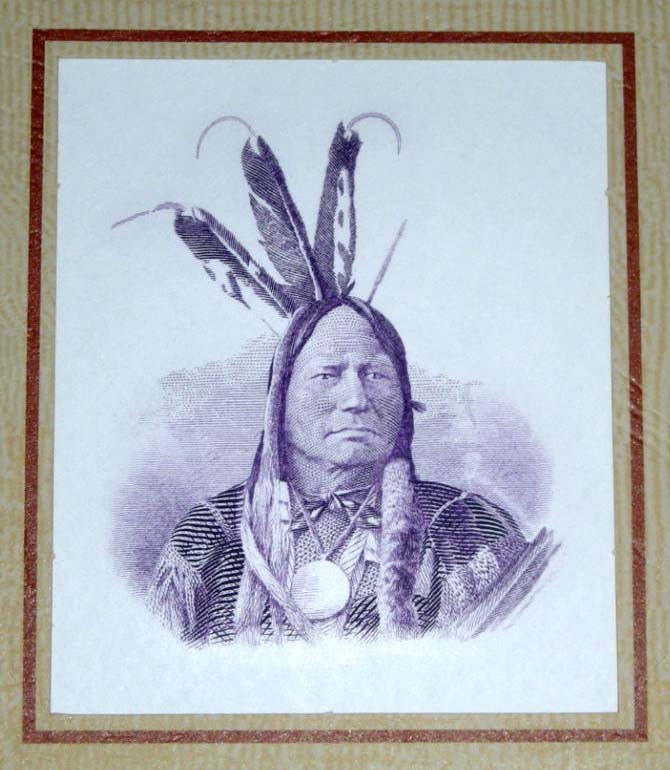 |
|
Bedrock of the Community
United States
94367 Posts |
Very interesting - can't say I fault the BEP's poetic license, or is that not the P/C thing to say?  |
|
Bedrock of the Community
 United States
12910 Posts |
Very cool. It's human nature to exaggerate, I suppose. Or at least to make "reality" a little more... appealing?
|
| |
Replies: 8 / Views: 2,600 |
|







 Posted 12/19/2016 5:00 pm





