I am beginning to think that everyone on the forum has trouble with the diagnostics on these! (Just looking at the number of responses!)
What about this for two possible diagnostics:
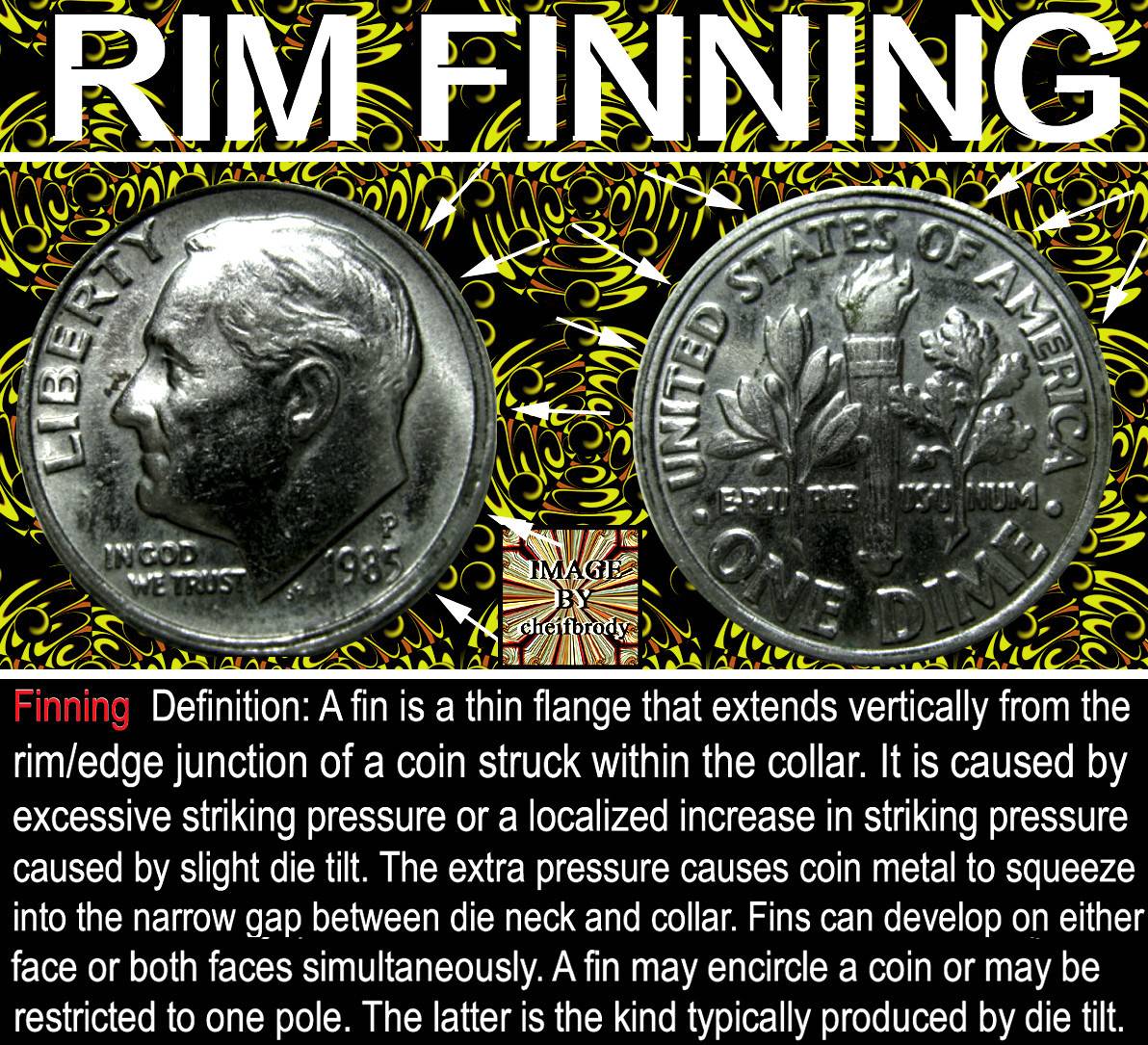
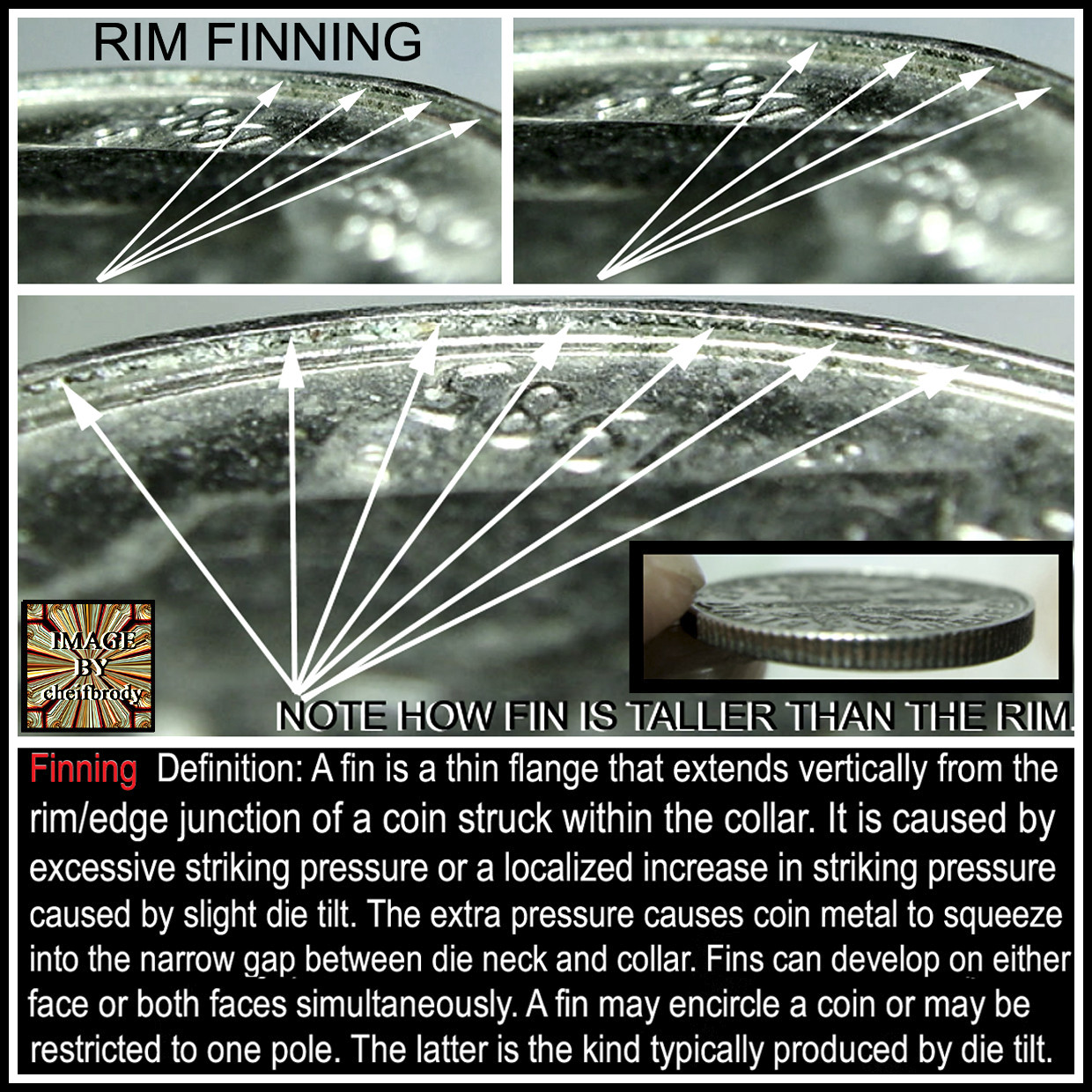
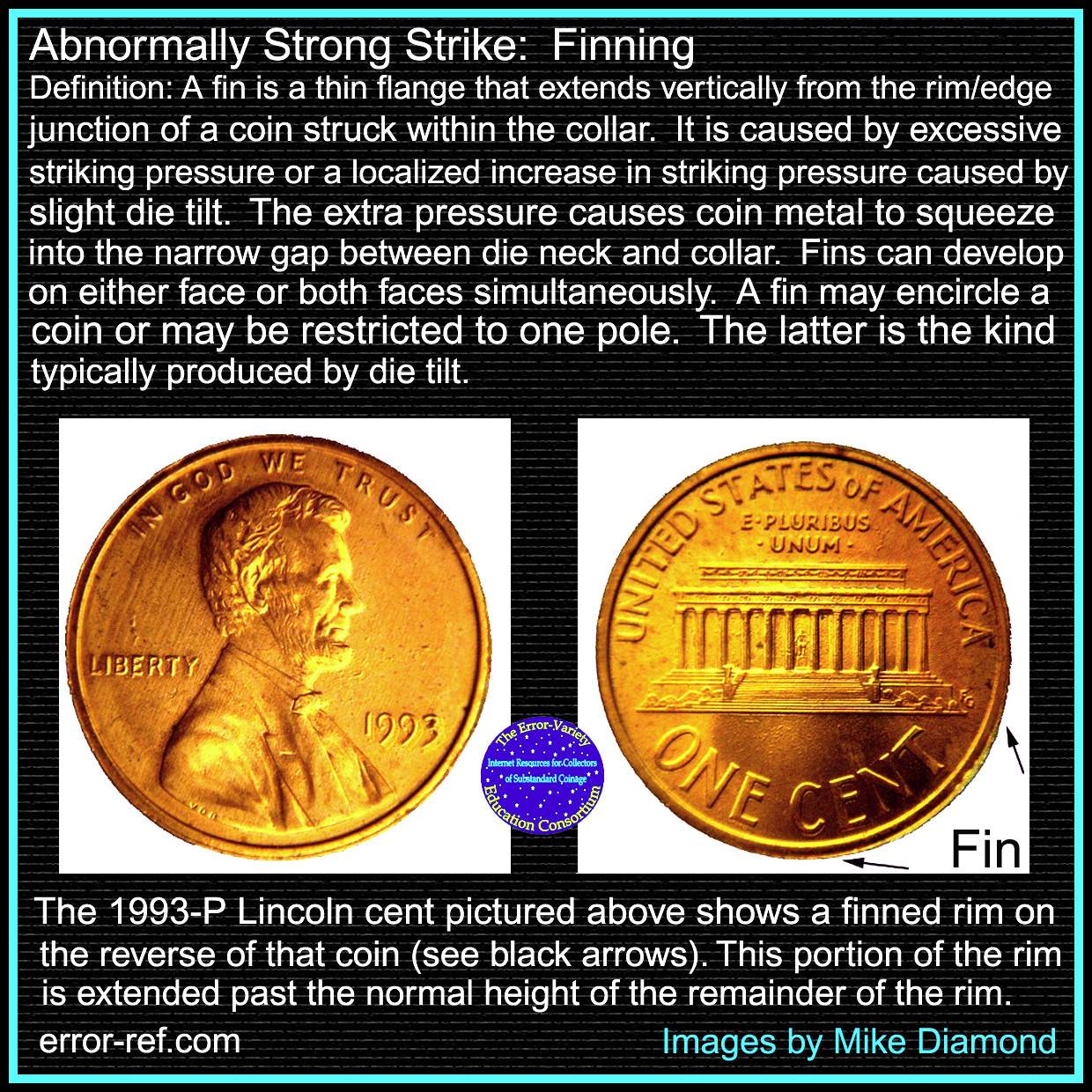
To be a folded over Rim Fin, there must be a clear indication that a Rim Fin exists adjacent to the feature.
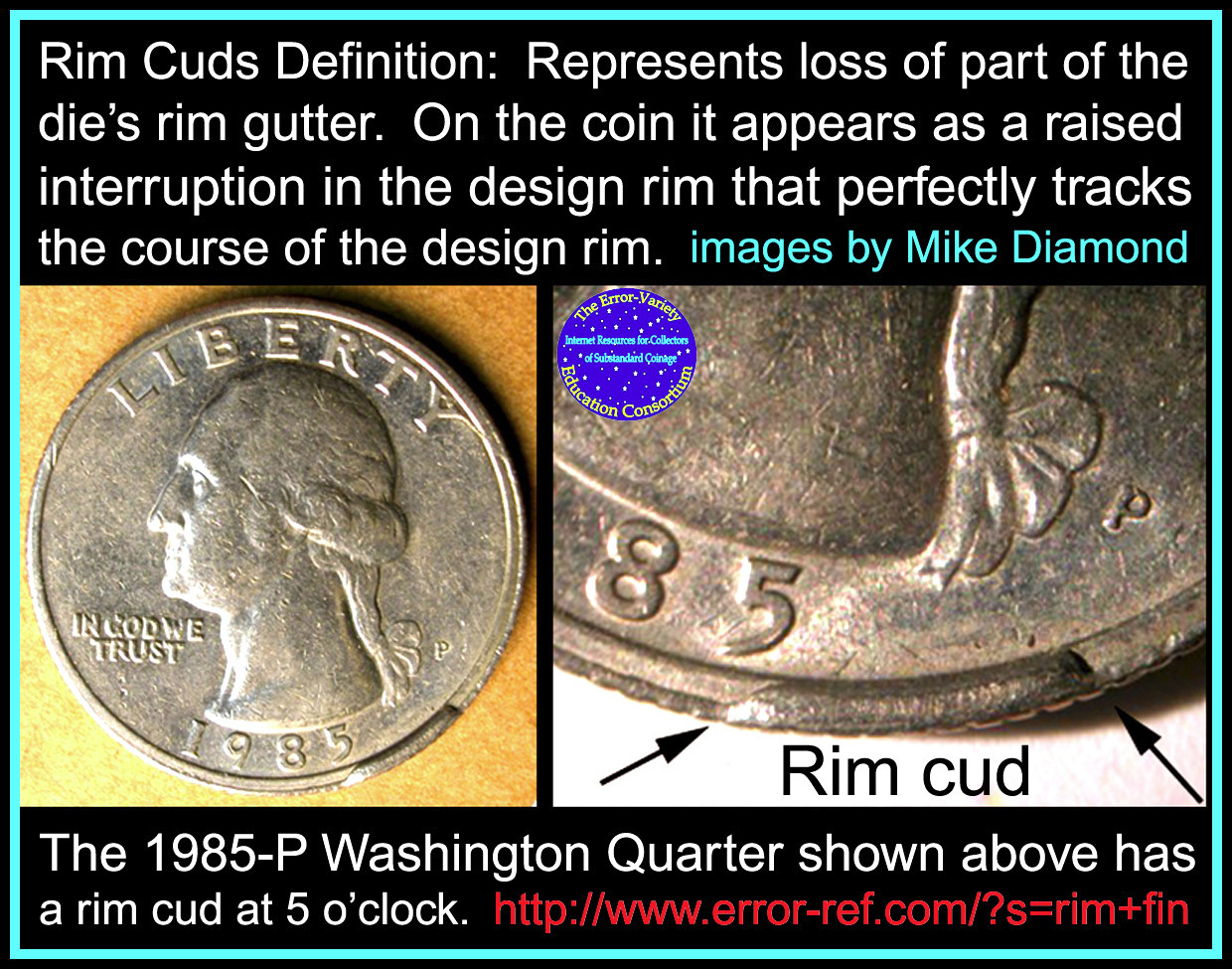
In addition, a Rim Cud will usually exhibit even boundaries rather than the jagged boundary seen in some features on what could be called a Folded Over Rim Fin.
Finning: A fold over is where the fin is not laying on the outside edge of the rim. If it would have been found showing the rim, they are more desirable. Flattened, we see all the time.
I think the Folded Fin starts out vertical and folds inward usually from circulation. You can see the edge of it as separate from the coin; it becomes less apparent with more circulation. The Cud on the other hand, is formed solid with the coin when struck. jmo Also, like you said, the fin is more jagged than the Cud. Hope that helps.
Quote: I think the Folded Fin starts out vertical and folds inward usually from circulation.
I am thinking that a Rim Fin is likely to be fairly well folded over by the time it leaves the mint. Take a look at this video to see why I think that;
Nice video Pete. Was that Hillary pouring coins out of that bucket? lol I agree they get folded some at the mint. We talked about this subject before, at which time I did some research. I read that the bulk of the folding is from circulation. If that's important, I can probably find the source. My intention on this post is to try to help you differentiate a rim Cud from a folded fin, as you asked. Come to think of it, I believe circulation actually starts after the strike, not necessarily after they leave the mint.
Very interesting! If you find the reference, I would like to see it!
I had not thought of circulation that way!
I don't know that this is important enough for you to go to the trouble of finding the reference, but it would be interesting. I am forever curious! Thanks for your help!
I can't find it, and everywhere I've looked talks about the folding occurring at the mint. So I'll revise my belief that most of the folding happens at "traditional thinking of circulation". I still believe circulation starts after the strike, so my belief remains most of the folding occurs from circulation. So now the question has evolved. When does circulation start? The ramifications are enormous. If it's deemed, after coins leave the mint, bag marks would become mint errors, and so on. I say circulation starts after the strike.
Yes, I think MD is technically PSD when it's the bounce after the strike, but not PSD when it's die wear. A little innovative I suppose, but good for our hobby.
I think this is the standard definition. The coin, while still being processed at the mint is not yet "in commerce". It still may experience PSD, however.
Yes coop and CM are correct I believe, that is why some coins are coming back from PCGS as details coins because of Machine Damage to them. PCGS must've tightened up on it I guess
Disclaimer: While a tremendous amount of effort goes into ensuring the accuracy of the information contained in this site, Coin Community assumes no liability for errors. Copyright 2005 - 2026 Coin Community Family- all rights reserved worldwide. Use of any images or content on this website without prior written permission of Coin Community or the original lender is strictly prohibited. Contact Us | Advertise Here | Privacy Policy / Terms of Use







 Posted 12/19/2016 05:14 am




 )
) To be a folded over