| Author |
 Replies: 61 / Views: 8,965 Replies: 61 / Views: 8,965 |
|
|
|
Pillar of the Community
United States
5964 Posts |
Quote:Quote: circulation A term applied to coins that have been spent in commerce and have received wear. http://www.coincommunity.com/dictio.../coins_c.asp The first part of that definition (spent in commerce) refers to circulation, as in "getting around". The second part refers to circulation as "wear on the coin". It is clear to me that after being struck, coins are handled by people as well as machines. Coins can receive wear and/or damage without leaving the mint - just as coins can remain uncirculated while in circulation. Wear and damage are often interchangeable, a coin can receive wear while never contacting a human hand. In light of our revelation, I think the definition needs to be revised.  ? or  ? |
|
Pillar of the Community
United States
5964 Posts |
Dustin you are the glossary guy. You did such a great job with PSD, you should handle this (if the thumbs come back up). |
|
Pillar of the Community
United States
2775 Posts |
Proper creation of the design rim boils down to three basic elements. Note I use the word Adequate as meaning - "satisfactory or acceptable in quality or quantity".1. Adequate Material. 2. Adequate Pressure. 3. Adequate Containment. The rim Cud generally starts and stops abruptly on the face of the coins rim. Size is pending the die break or amount of chipping involoved on the dies 45° recessed design rim itself. The dies recessed rim will have been altered from its origanal state. Common causes include die fatigue and collar clash. The fold over Rim Fin is a different type of breach in containment and would seem to have a more gradual appearance in its development as the material breaches its designed boundries. Pending the type of fin which typically can be high and thin or low and wide, a wide coller or abnormal out of aligned strike are common culprits. Whether it folds over and gets distorted before or during circulation can become more puzzeling and often miss diagnosed as a rim Cud. Note my term of an incomplete backfill effect (I've used in the past) in reference with slight misalignments are often misdiagnosed as rim Cuds, when in fact its a type of low Rim Fin lacking in containment that at times produces a partial filled gutter on the rim. I've been trying to classify this effect seperatly in the past, but now see it seems to coincide along with a containment breach. See link you shared recently concerning "Double Rims and False rims". Mike Diamond explains rim fins in it better than I. Thanks, Doug. http://www.coinworld.com/news/us-co...tances.html#Edited by Halo1st
12/20/2016 9:56 pm
|
|
Pillar of the Community
 United States
3363 Posts |
Quote:Note my term of an incomplete backfill effect (I've used in the past) in reference with slight misalignments are often misdiagnosed as rim Cuds, when in fact its a type of low Rim Fin lacking in containment that at times produces a partial filled gutter on the rim Would you call this an "incomplete backfill effect"? 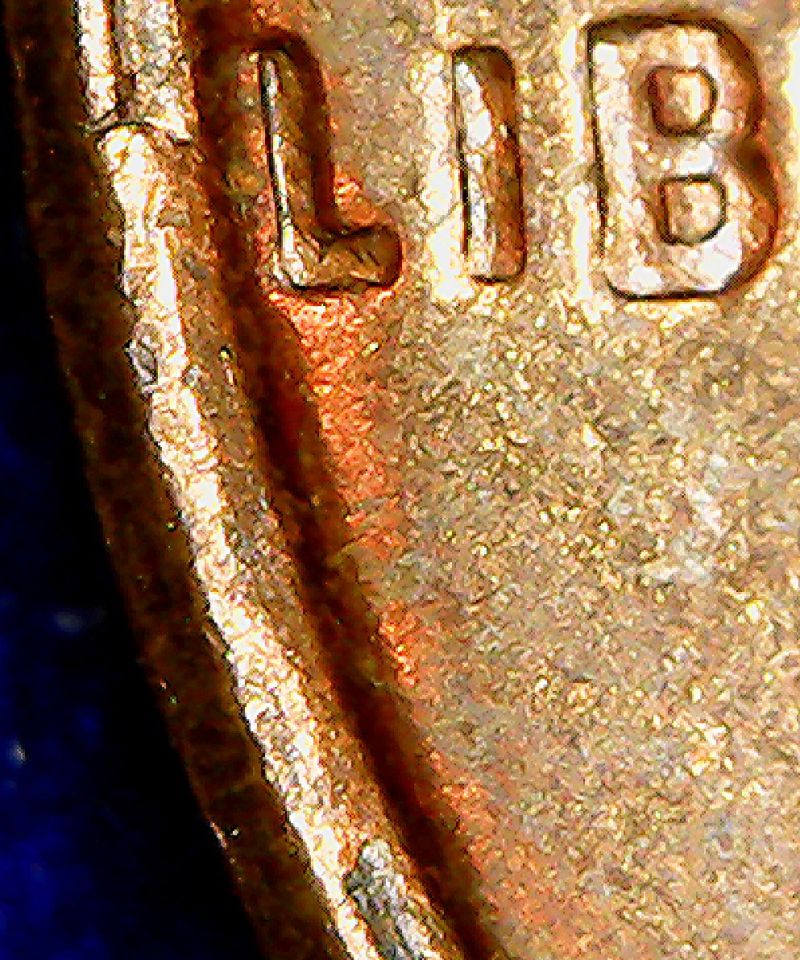 |
|
Bedrock of the Community
United States
62064 Posts |
I've seen many graded coins from PCGS with machine damage on them. It is often the case of miss cleaning or coin damage that only get the 'genuine' grades. The coin is legit, but the surface is altered. (usually in an attempt to get a higher grade) Thus Coins that are sent in to be graded should be left alone as far as cleaning them. Better to get the face grade, than to alter them unnaturally to to be body bagged.
|
|
Pillar of the Community
United States
3516 Posts |
Jim!!  Thanks!! I'll try to get right on it! Finals and all.... and my idea for a new definition, , but this cant just be me! Lets have everyone put some input in, Ill put it all together, edit it up, and viola! |
|
Pillar of the Community
United States
2775 Posts |
Quote:
Would you call this an "incomplete backfill effect"? Yes I would suspect as such. Because the gutter effect is present I would ask is the strike misaligned and is the flip side normal? Also would ask is the effect raised higher than the actual design rim should be? It is possible to have a rim Cud and a misaligned strike together. When all three dies are perfectly aligned the material can flow outward until it makes contact with the collar. Outward flow is stopped and backfilling begins allowing the material to flow or fill the voids that make up the design rim. If we move the obverse die just a bit then containment is lost on the one side, The backfill will continue cause the collar and opposing die have two sides contained. The obverse dies inner design rim will still perform some resistance hence the double rim or false rim or gutter is created. In some cases the gutter can partially fill, resembling a rim Cud or a fold over Rim Fin. I generally rule out fold over Rim Fin if the inner design rim is clearly present. Suppose it could be possible in some cases, but I find it hard to believe a fold over Rim Fin would fold right in line perfectly with the curve of the inner rim. Using an image you previously posted of a die that clearly shows the recessed design rim and the tolerance involved. If you picture in your mind the opposing die is the exact same diameter. Containment is lost even if the die is misaligned ever so slightly. Thanks, Doug. 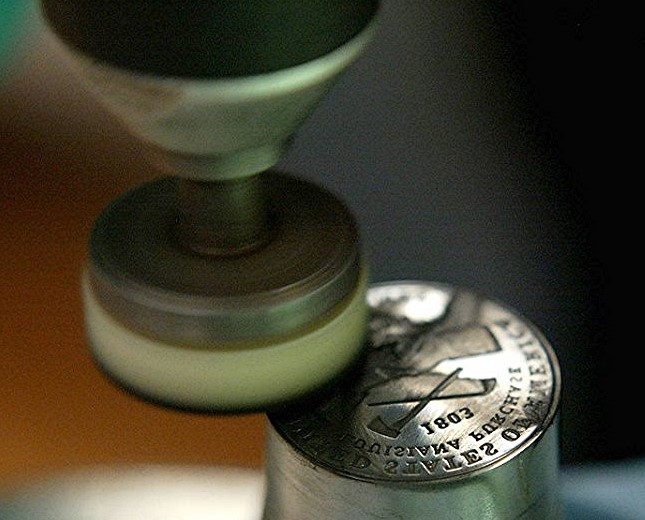 |
|
Pillar of the Community
United States
3363 Posts |
Quote:
I would ask is the strike misaligned and is the flip side normal? Also would ask is the effect raised higher than the actual design rim should be? Thanks for the explanation! Here is the full coin: 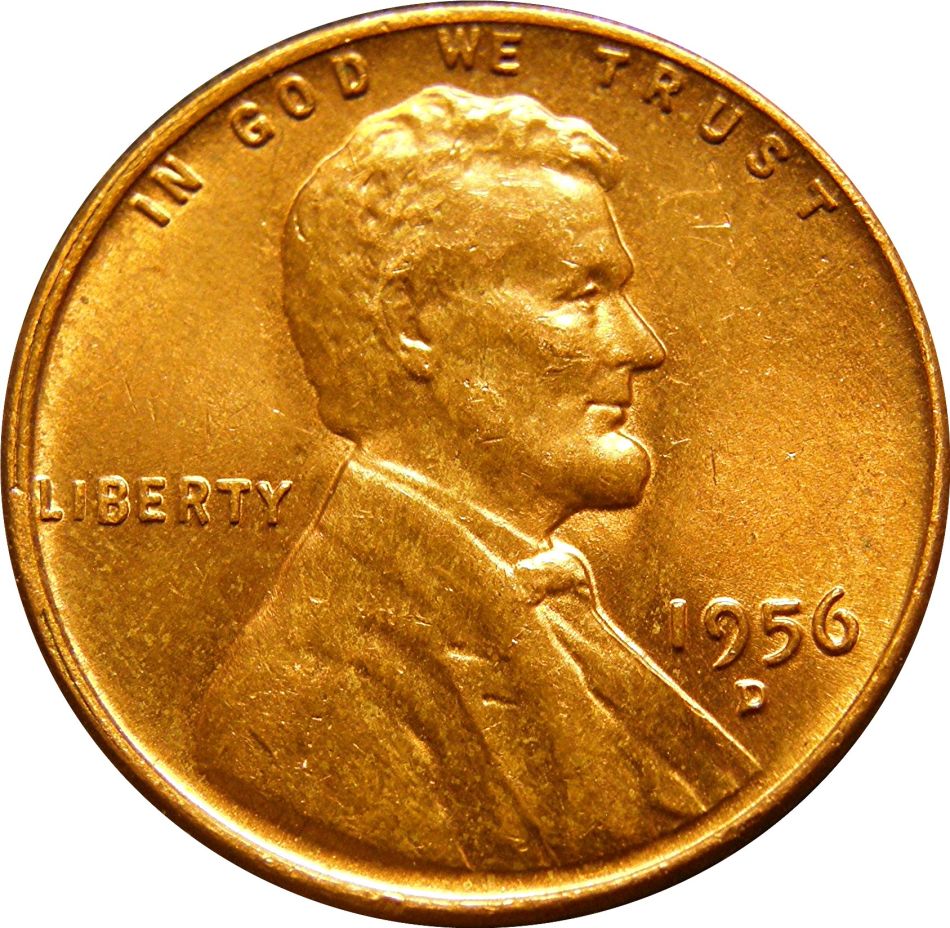 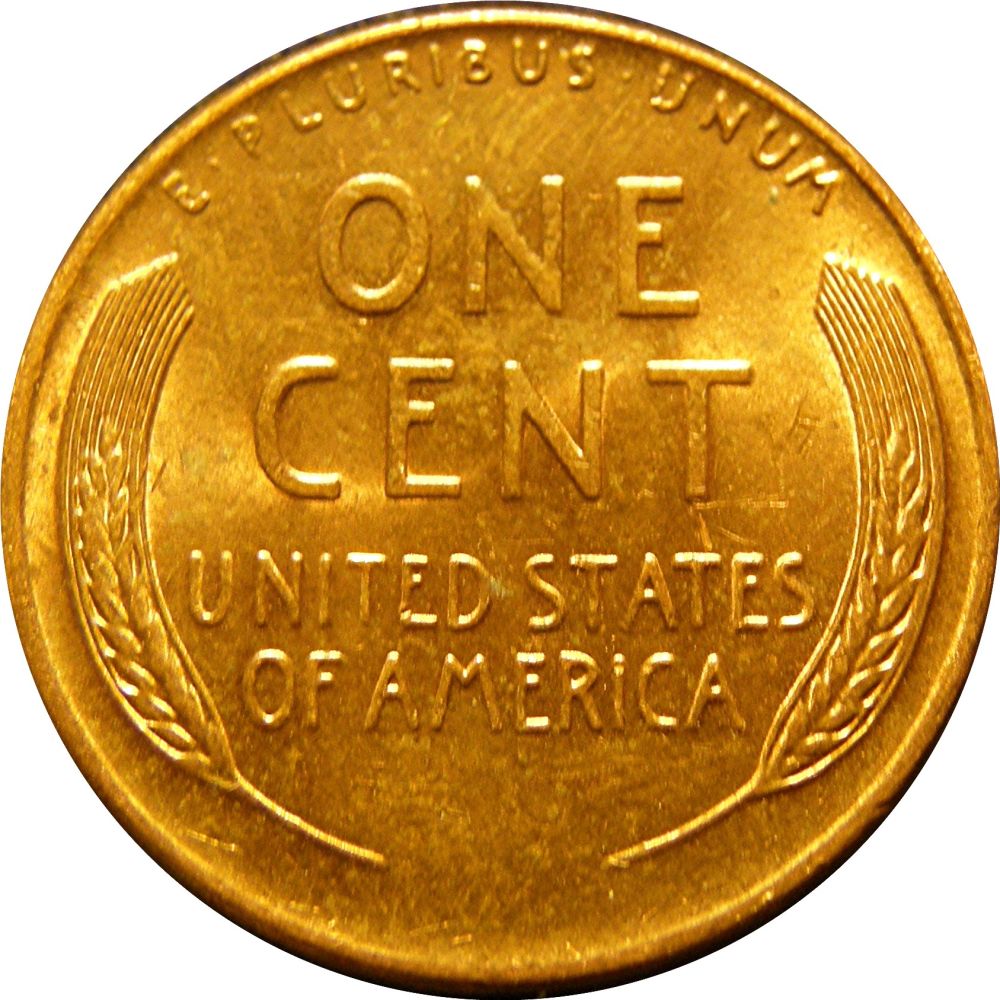 |
|
Pillar of the Community
United States
2775 Posts |
The US Mint shows 1.52mm is the current standard thickness for cents. I have no specific tolerances for thickness to give at this time. Thickness seems to vary even on normal struck coins, with tapered planchets and dies not meeting exactly flush. Seems to be a slight miss alignment present. So I ask does it rise above the height of the normal design rim? If not then I would think the backfill was cut short. If so then a potential rim Cud. Thanks, Doug. Adding an analogy, when I use a caulk gun to fill a crack. It flows into the crack until it meets resistance then begins back filling. If I remove pressure to soon I'm left with a partial filled crack. If pressure had continued I'd have a filled crack. Edited by Halo1st
12/21/2016 1:05 pm
|
|
Pillar of the Community
United States
3363 Posts |
Quote:
does it rise above the height of the normal design rim The one above does rise above the design rim. However, I am not convinced that it is important in determining whether it is a rim Cud or a folded over Rim Fin. The photo below is what I think is a folded over Rim Fin and it, too, rises above the design rim. The difference between these 2 is that the feature in the photo above has an even boundary, and the one below has a jagged boundary. 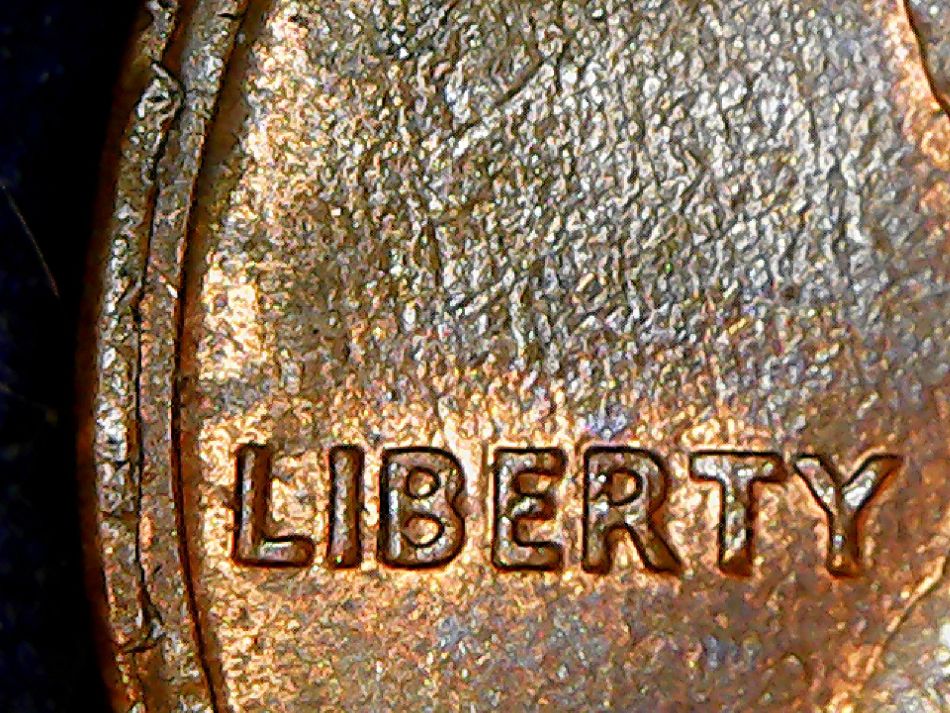 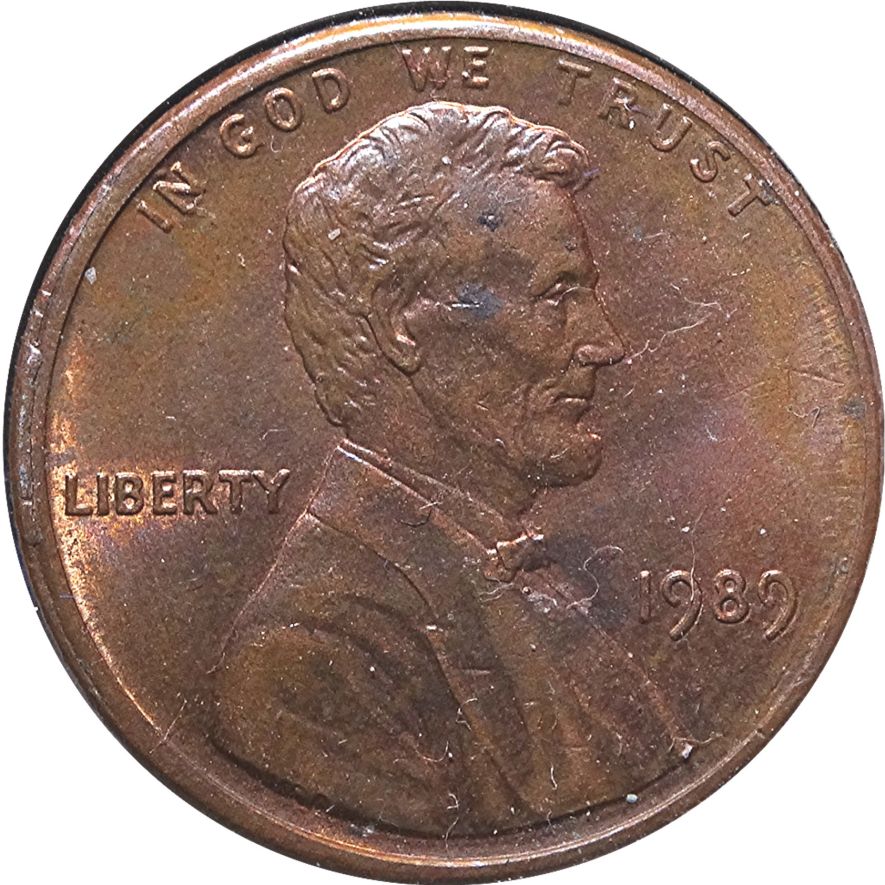 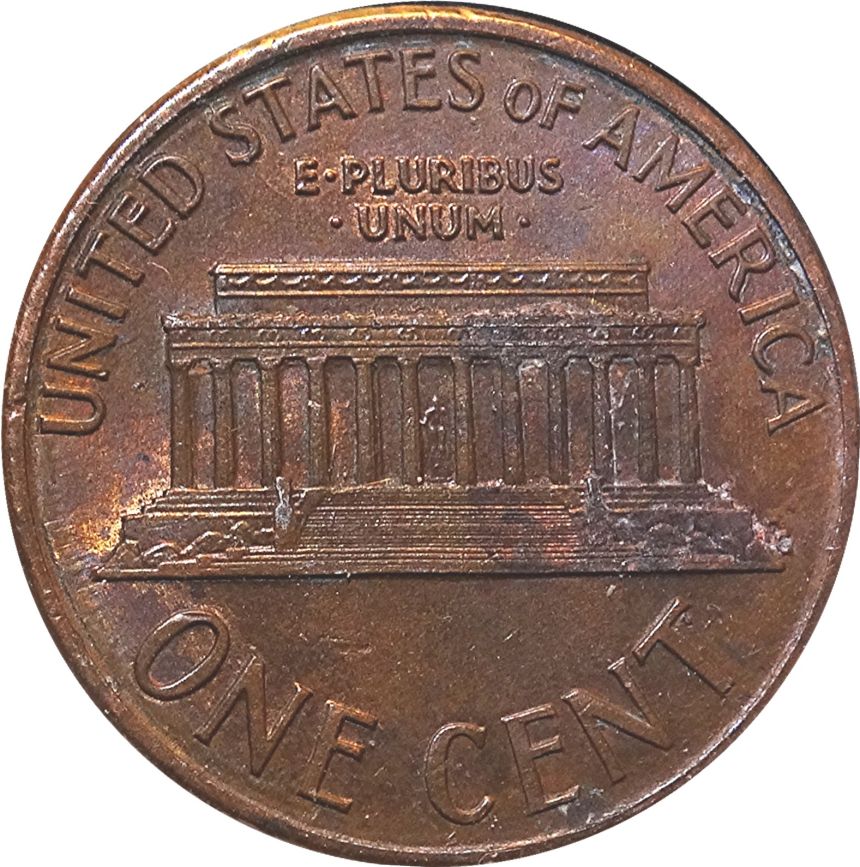 |
|
Pillar of the Community
United States
2775 Posts |
Quote:
I think the Folded Fin starts out vertical and folds inward usually from circulation. I've often wonder why rim fins never seem to fold over backwards over the edge? I know inwards seems to be the logical choice to fold, but do not recall ever seeing one folded back over the coins edge. Thanks, Doug. Edited by Halo1st
12/21/2016 1:43 pm
|
|
Pillar of the Community
United States
2775 Posts |
Pete, the 1989 LMC has taped into my grey area. Slight misalignment. Seems to start and stop abruptly suggesting Cud, but also seems to be folded over suggesting folded Rim Fin. Since it doesn't seem to be attach to the design rim. I think I'd classify it as a raised ridge / fin due to the misalignment that's been folded over or pushed inwards after strike. Thanks, Doug. Edited by Halo1st
12/21/2016 2:05 pm
|
|
Bedrock of the Community
United States
62064 Posts |
They do on partial collars. But that is not an issue with the collar breaking. More if an issue with the location of the planchet. 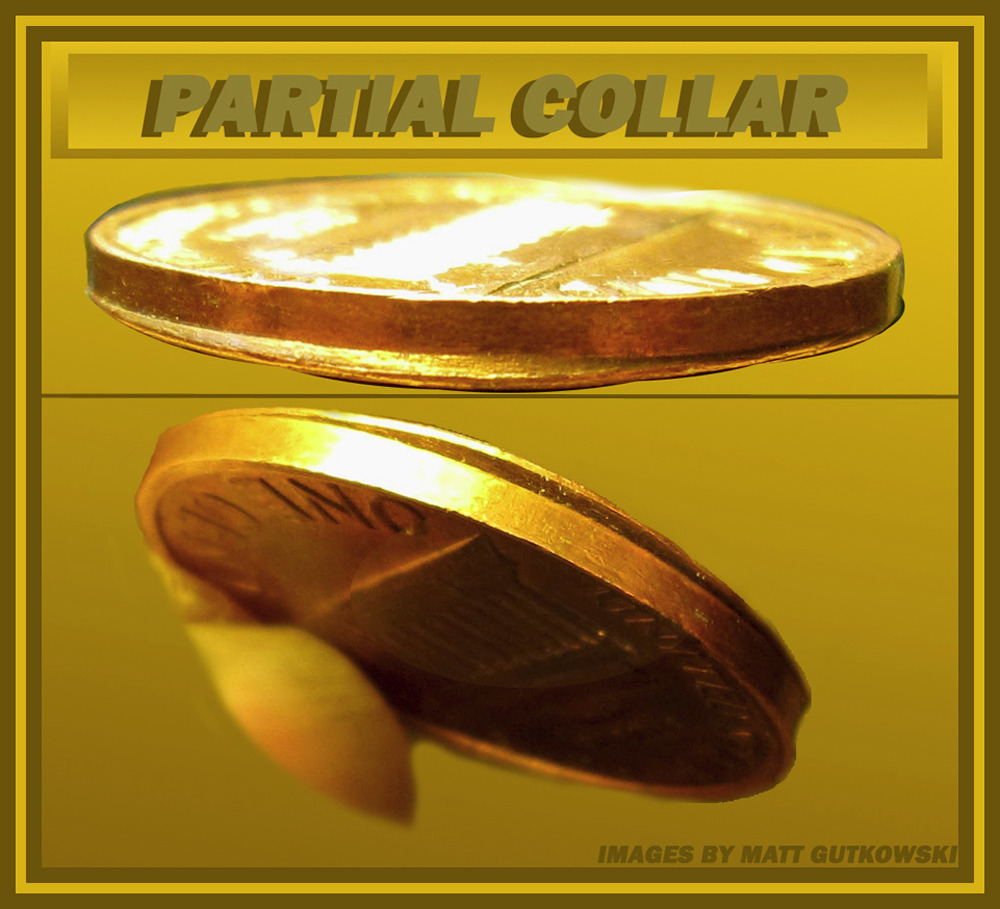 But on broken collars it does affect the outside edge of the coin: 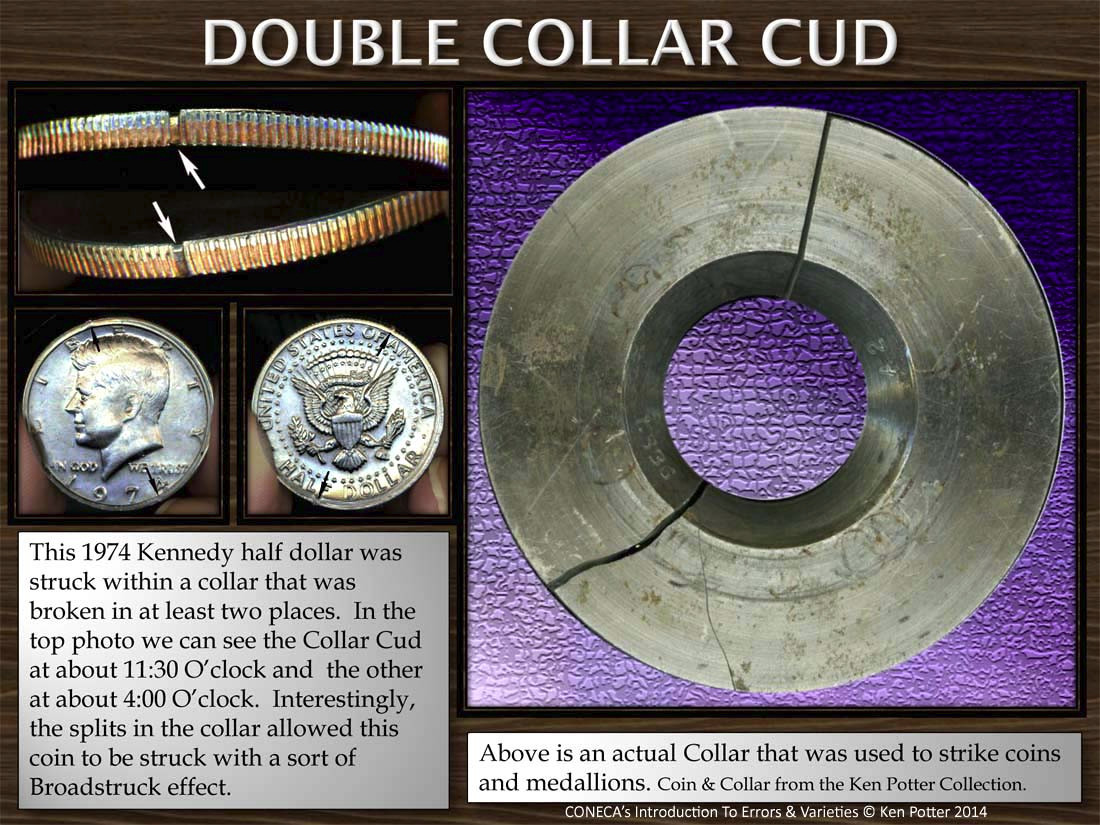 |
|
Pillar of the Community
United States
2775 Posts |
The half dollars edge is a good example of what to look for when I say you might want to check a coins edge. I see its rightly called a collar Cud. Would it also be classified as a wide collar? Note the gutter on both sides of this coin. Thanks Doug. |
|
Pillar of the Community
United States
5964 Posts |
Thanks Dustin, Your enthusiasm is admirable. I know you'd do it well, but I guess it's best to drop it for now. It would probably take a leading expert to bring about such a drastic change to a definition that's been around for so long.
Pete, sorry I got side tracked on your thread, I'll not reply on this one again.
|
| |
Replies: 61 / Views: 8,965 |







 First Page


 Posted 12/20/2016 9:17 pm





