| Author |
 Replies: 11 / Views: 3,205 Replies: 11 / Views: 3,205 |
|
|
Bedrock of the Community
United States
10284 Posts |
I remember my father had a complete set of Indian cents and almost complete set of Buffalos. He took them out and put them in a soft slide folder with a fake leather brown cover. They were amazing coins in the 2x2's but a year or so later, it was one ugly picture. VF 1877 AU 1909 S BU 1908 S and decent 1870's. The rest were almost all UNC, But the green showed up even worse on beautiful coins. I was doing a coin show and the dealers came around the tables doing trading between eachother. I had the Buffalo and Indian set out pretty cheap and pointed out the issues, which were obvious. I felt pretty lucky to get about $800.00 cash for both folders since 90% of the coins were pretty well ruined in my opinion. These two sets would have been quite valuable today! If only ...Time since would have made the green turn black by now. That's what happens after the PVC slime eats up the metal and finally stabilizes, leaving it's hard black carcass stuck fast to the coin forever. Well, that was back in the late 80's or early 90's. The slime has been a problem for longer than that. I'm guessing maybe 40 or 50 years now. I was just wondering if there was ever a solution found to take care of this. Has any mad scientist ever come up with a solvent that removes the green and does not harm a coin? I'm not talking about verdigris. I searched this forum and could not find anything about a cure, so I thought I'd post. |
|
|
|
Pillar of the Community
United States
1119 Posts |
|
|
Bedrock of the Community
 United States
10284 Posts |
I have used acetone with some success on small amounts and specks of PVC green if it's bright green, but it seems there's never 100% removal. I just wondered if there was a chemical that recently was discovered that works on PVC.
Acetone doesn't always do the job. On high grade unc coins, it's hard to remove without hurting the area around a glob.
On circ coins, I can soak a Q tip in acetone and softly swab a soaked in acetone coin and get fairly good results. Sometimes it takes several soakings.
What I end up with is something better than a coin without PVC and an area that looks cleaned off, and that's about it.
|
|
Bedrock of the Community
United States
10051 Posts |
 - pure acetone - and it inexpensive. Check Wal-mart. I get mine where they sell fingernail polish - but get only 100& acetone. Don;t get any nail polish remover with fragrance or coloring added. Recently on another thread someone said it is less expensive to buy in the paint department. Acetone removes organic contaminants and does not remove any metal. I have heard some people say they have had trouble with using it on copper, but I never have. So do a test piece first. The problem they say they have had is the copper turns a very slight pink color. As to other metals - it is incapable of chemically reacting with them. Since you are not removing any metal - it is considered conserving and not cleaning. There will be no residue from the acetone left. |
|
Pillar of the Community
7234 Posts |
I recently had to get my Large cents out of them darn PVC holders and they had the "green residue" going on them from the PVC. Seeing they were circulated I had great results (after an hour of soaking in 100% acetone) with hot water and Dawn dish washing detergent with an extremely SOFT tooth brush lightly applied to their surfaces. Let air dry after rinsing with distilled water.
Remember - ONLY on circulated coins!
Edited by Mark1959
02/22/2017 11:25 pm
|
|
Moderator
 United States
191400 Posts |
The problem is that there is no going back once the containment has chemically reacted with the coin. Asking if there is a cure for late stage PVC damage is really akin to asking if we can make a VF coin MS again. Original surfaces are gone forever.
With that said, you could probably make a PVC slimed MS coin your pocket piece. Perhaps time will make it a more acceptable sub-AU coin, assuming the damage has not gone too deep.
|
|
Rest in Peace
United States
18456 Posts |
Not for nothing ,but have you tried Verdi-care yet ? It works on verdigris ,should do a good job on PVC slime . Or you can contact Badthad and ask him if he knows of anything else for your problem .  |
|
Moderator
United States
191400 Posts |
I do not think Verdi-Care will work for PVC slime. Different chemistry. I could be wrong and BadThad can certainly confirm.
|
|
Bedrock of the Community
United States
19997 Posts |
VC will remove PVC residue but acetone is a LOT cheaper.
As jbuck stated, if the PVC has been on there a long time, the hydrochloric acid damage has been done already. If you remove the residue, the surfaces underneath will be damaged.
Lincoln Cent Lover!VERDI-CARE™ INVENTOR https://verdi.care/
|
|
Moderator
United States
191400 Posts |
Quote:
VC will remove PVC residue but acetone is a LOT cheaper. Good to know.  |
|
Bedrock of the Community
United States
10284 Posts |
Thank you gents! I do have 100% acetone around here. A damaged area looks better than the blob. I think I have Verdi Care and Verdi Gone here in a box too. 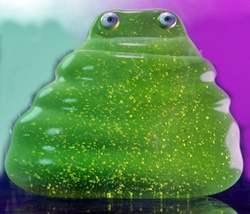 |
|
Pillar of the Community
United States
2589 Posts |
For pvc contaminated coins in higher grades, I send them to NCS, the most recent batch of 10 slimed coins I sent in, 6 of them came back with no, 3 got details grades due to hairlines under the pvc I couldnt see, and 1 came back in a body bag with altered surfaces.
|
| |
Replies: 11 / Views: 3,205 |
|








 Posted 02/22/2017 11:04 pm


