| Author |
 Replies: 19 / Views: 4,754 Replies: 19 / Views: 4,754 |
|
Valued Member
United States
230 Posts |
|
|
|
|
Moderator
 United States
56855 Posts |
|
|
Pillar of the Community
United States
7174 Posts |
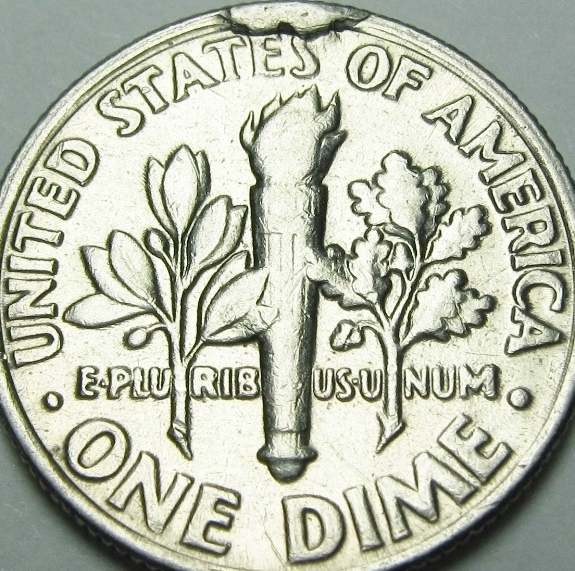
This is a Cud. A Retained Cud would be before the piece broke off of the die. Cu10c1991p-01r Nice find Edited by Cujohn
03/05/2017 7:32 pm
|
|
Valued Member
 United States
230 Posts |
hi john, thought that's what it was called?...isn't it if it's still attached verses fallen out? ....I'm no expert, still learning...pretty cool though.
|
|
Valued Member
United States
230 Posts |
yikes, I was confused, i'll get it right one day...thanks cujohn ....  |
|
Bedrock of the Community
United States
62064 Posts |
I think this might be solder on the coin. If this were a Cud, then the opposite side would be weak. I'm not seeing that on this coin. |
|
Pillar of the Community
United States
5964 Posts |
|
|
Pillar of the Community
United States
1000 Posts |
A Cud occurs when a piece of the die chips off. Before it fully chips off, it lives as a die crack. When the crack gets deep enough, it breaks off. A coin struck after the chip will have a blob of metal - this is a Cud. A Retained Cud is before the chip, and shows up as a die crack that originates and ends at a rim. It can be a small crack (as is the case here), or it could be a crack that busts off nearly half the die (an example of this can be seen as the home page of Cuds on Coins). |
|
Pillar of the Community
United States
2563 Posts |
|
|
Pillar of the Community
United States
5964 Posts |
If that's the case, maybe it was a strong strike because it shows no weakness on the other side. Just guessing.
|
|
Bedrock of the Community
United States
12477 Posts |
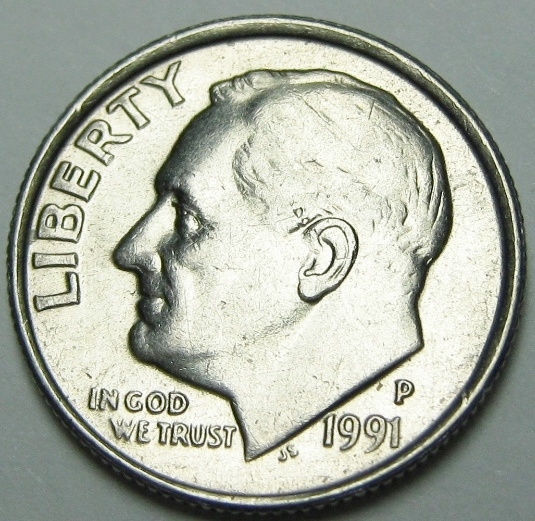
Thanks for the link CC2000. It does look almost exactly like that. The C-o-C example shows obverse weakness in the lower legs of the 9's (especially the second) and the OP's coin shows some weakness in the second 9. I think it's a Cud. In Memory of Crazyb0 12-26-1951 to 7-27-2020
In Memory of Tootallious 3-31-1964 to 4-15-2020
In Memory of T-BOP 10-12-1949 to 1-19-2024
|
|
Moderator
United States
56855 Posts |
So would it be safe for me to say that a Retained Cud is the same as what I call a pre-cud die crack or a pre-cud die break? John1  |
|
Pillar of the Community
United States
5964 Posts |
John1, a Cud is only a Cud if it's a die break. If a Cud is not retained it's only a blob. If a Cud is retained, some experts insist on either vertical or horizontal metal displacement as proof of a break, otherwise it's a rim to rim crack (possibly pre-cud, but only if it was determined to actually break later on). The OP's coin looks to me like a Cud. Edited by CoinMasters
03/06/2017 8:18 pm
|
|
Bedrock of the Community
United States
62064 Posts |
Rim Cuds don't flow over the area of the field is. This coin has over that field/devices. Edited by coop
03/06/2017 5:11 pm
|
|
Pillar of the Community
United States
7174 Posts |
John1, I like the term pre Cud. Describes it better than retained. You have to think about it backwards, Retained Cud is a Cud that's not a Cud yet because the piece of the die hasn't fallen out yet, oh man I think I just hurt my brain. |
|
Valued Member
United States
230 Posts |
hi everyone, just wanted to show a pic of the edge , doesn't look soldered, matches CoC o1R ....thanks for the replies.... 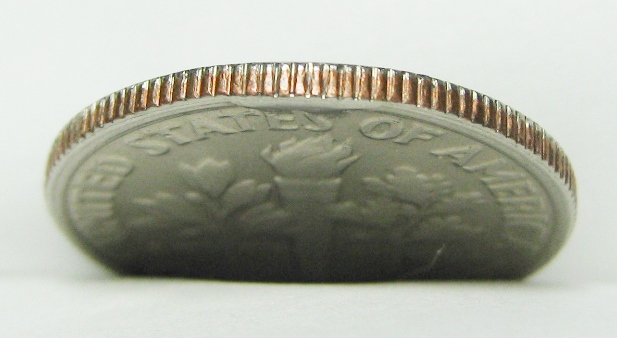 |
| |
Replies: 19 / Views: 4,754 |








 Posted 03/05/2017 7:31 pm





