| Author |
 Replies: 30 / Views: 2,795 Replies: 30 / Views: 2,795 |
|
Pillar of the Community
United States
5964 Posts |
I've been on here two years now. I knew nothing about varieties or errors when I arrived. Compared to some on here that is still the case. 98% of what I have learned though, has come from Coop. That's a debt I can never repay. The other 2% has come from other sources, and lately has given Coop and me differing opinions in two areas. One is the cause of Woodys, but that's all theory anyway, so I suppose that's no big deal. The other is MD, which I'll get to shortly. I guess this first paragraph is intended as an apology to Coop for some of my comments as we discussed our different opinions. Some of them could be perceived as rude, but somehow I believe Coop knows I'm just grappling with the issues. That's just the kind of leader we have here. On to MD. I find it fairly easy to recognize most varieties and errors. The most difficult part for me is distinguishing some Doubled Dies from some forms of MD. Distinguishing forms of MD can help me do that. The first step to solving a problem is to identify it, so I'm going to list some statements I believe to be true. If anyone knows for certain any of them are not, please correct me. 1. MD includes "doubling" caused by excess movement of the die and/or wear on the die. 2. "Doubling" caused by excess movement of the die and/or wear on the die are both considered Strike Doubling because the "doubling" occurs at the time of the strike. 3. Excess movement of the die, which is also referred to as Strike Doubling leaves a flattened appearance on one or both sides of some of the devices. It follows parts of some of the relief areas on the coin, and is generally the same color. 4. MD due to wear on the die is usually thick and mushy and larger as the die wears even more. 5. Both forms of "doubling" reduce the size of the devices. I will consider these statements as true unless I hear otherwise. Thanks for any help. |
|
|
|
Pillar of the Community
United States
7592 Posts |
 I couldn't agree with you more! this has also been a very challenging area of correctly identifying doublings for me as well,but throughout my own research and learning I do agree with your entire statement. |
|
Pillar of the Community
 United States
5964 Posts |
That's the last type of reply I expected, I guess we've been doing some of the same reading. Thanks and good luck finding the coin you really want find.  |
|
Rest in Peace
10197 Posts |
Coinmasters, with your sentiments and have one point of fine tuning. #5 is absolutely correct, but you also have to take into account #4 where die wear does increase the device size. They can happen together and often do. Just lately the third and forth hit bounces are quite unique, seeing them in pics 3D even. I was thinking earlier if a good simile to the process of die strike is when you hammer a nail, the hammer literally bounces multiple times each whack. Used to do carpentry, that double hit potential was used maximize energy...is why pro carpenters take no more than 2-3 hits to sink a 16d nail. The force of downward momentum requires a bleeding of energy that way, physics of it I guess. |
|
Pillar of the Community
United States
5964 Posts |
Strike Doubling occurs when a loose die has completed it's downward stroke and is on it's way back up. It doesn't bounce from the strike, it shifts and sheers metal off of raised devices that were created on the downward stroke. The flattening isn't from another strike, it's from the loose die shifting the edge of the recess on the die into the relief on the coin. It's all one strike, that's why MD is a mint error. Anything after the strike is damage.
|
|
Pillar of the Community
Canada
891 Posts |
I can get confused with this, I thought I read that Strike Doubling occurs when the die, on the downward stroke, bounces off the surface of the coin shifts position and lands lightly in a different spot |
|
Moderator
 United States
56855 Posts |
|
|
Pillar of the Community
United States
2260 Posts |
Nice link John. I added this one to my favorites. Thank you
|
|
Moderator
United States
56855 Posts |
I have had it in my favs for a long time. Did you know Ken Potter is a CCF member? John1  |
|
Valued Member
United States
261 Posts |
|
|
Pillar of the Community
United States
7592 Posts |
john1, yes that is a very informative link by K.P.,been using it for quite some times!
But this is a complex issue and I have seen experts opinions differ from one another on the terms and forms of different doubling! and not all agree with one another on the exact nature of doubling sometimes!
Edited by Chase007
03/16/2017 10:27 am
|
|
Pillar of the Community
United States
5964 Posts |
OldMike, if the die is tight in it's retainer, there's no way it bounces off the surface. The whole press behind it would have to bounce. Thanks John1, I see the experts disagree on the cause of Strike Doubling. Ken's theory is more aligned with Coop's. I did a quick search and found this link that contradicts Ken's explanation. http://www.coinbidders.com/Strike%2...0-%20PDF.pdfDon't quote me on this, but when I was researching for this post I think I saw where mike is in agreement with this link also. The more I look for facts, the more I find theories. The only thing they seem to agree on, is it's part of the strike and therefore classified as a mint error. Edited by CoinMasters
03/16/2017 10:57 am
|
|
Pillar of the Community
United States
5964 Posts |
We agree again Chase.
Iwannado the doubling for the famous 55 was on the die before it struck the coins.
|
|
Valued Member
United States
261 Posts |
Ok I think I understand MD Is often flat hub doubling and die doubling is true most often raised doubled die.
|
|
Pillar of the Community
United States
5964 Posts |
Yes. When you see the Doubled Die you'll usually know it right away. 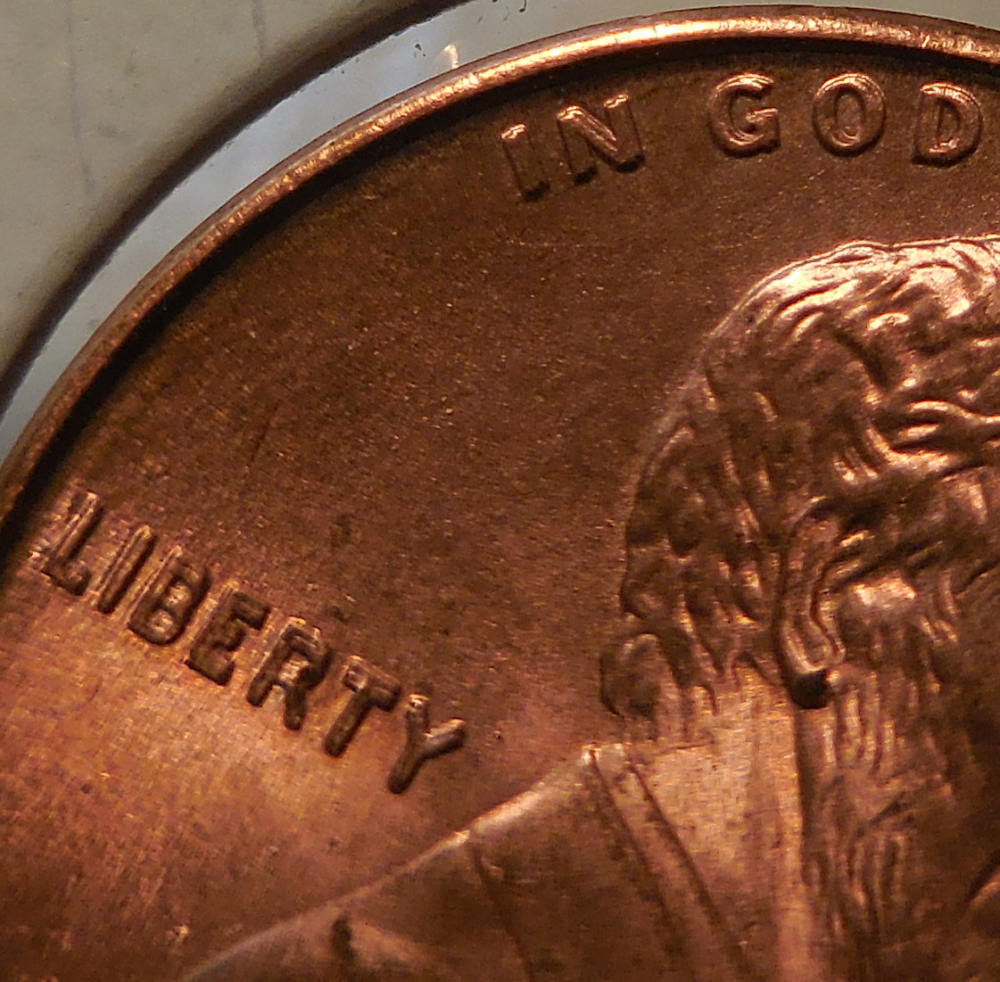 |
|
Pillar of the Community
United States
2376 Posts |
I'm not sure why you are lumping Machine Doubling and as you say wear on the die in the same basket. You have made some good points in regards to the movement of the machine parts and or the planchet at the time of the strike which can create a coin like no other. This coin like no other is one of the points that separates Die Deterioration, or as you say , wear on the die from Machine Doubling. As a die deteriorates it developes characteristics that that will be repeated in every coin struck till the die progressively changes enough to notice a difference in the coins. The difference MDing will be different coin to coin Die Deterioration doudling will be the same on many coins |
| |
Replies: 30 / Views: 2,795 |







 Posted 03/15/2017 7:34 pm





