| Author |
 Replies: 9 / Views: 2,046 Replies: 9 / Views: 2,046 |
|
|
Pillar of the Community
 United States
2843 Posts |
I bought this from a dealer who "guarantees" that it is genuine. It weighs about right considering condition. and tests to be about 90% silver. My main concern is with the black marks- is that sand casting? and the filled in 8 of of the denomination. What do you all say? Thanks. 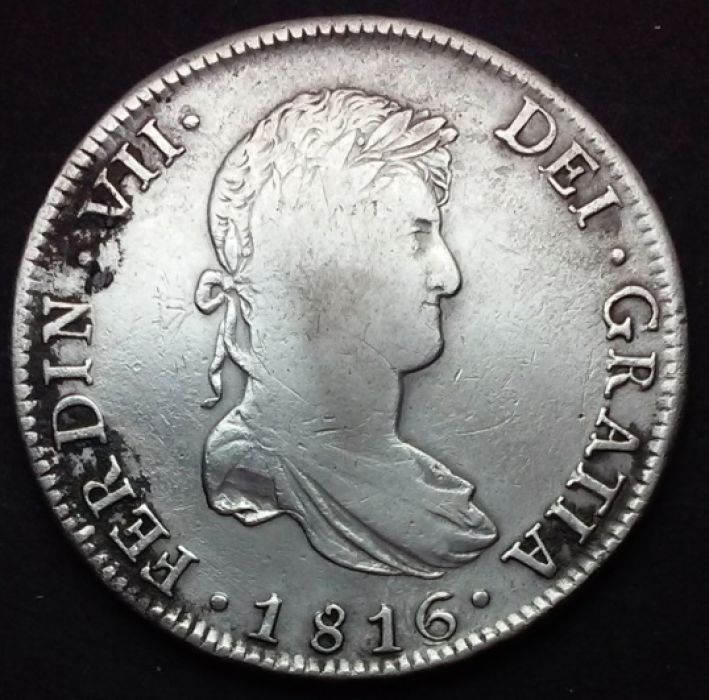 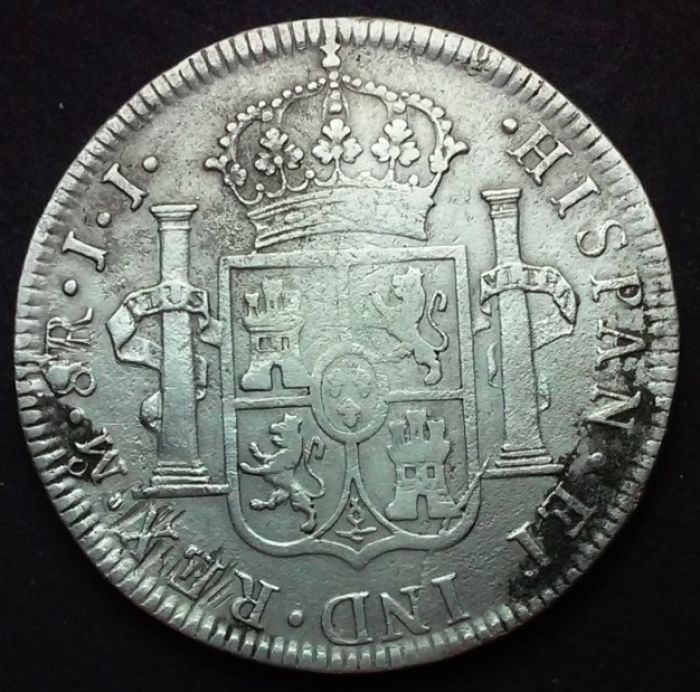 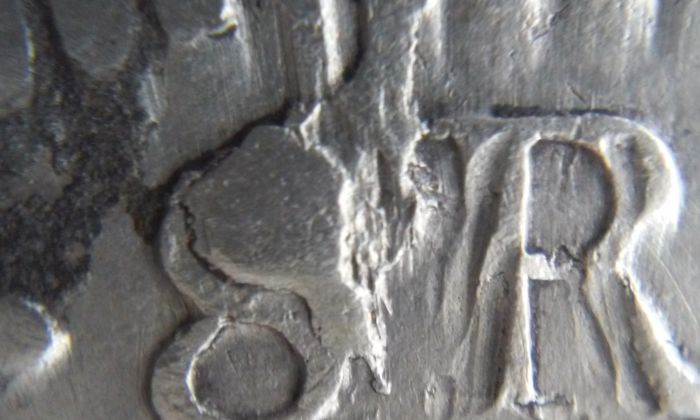 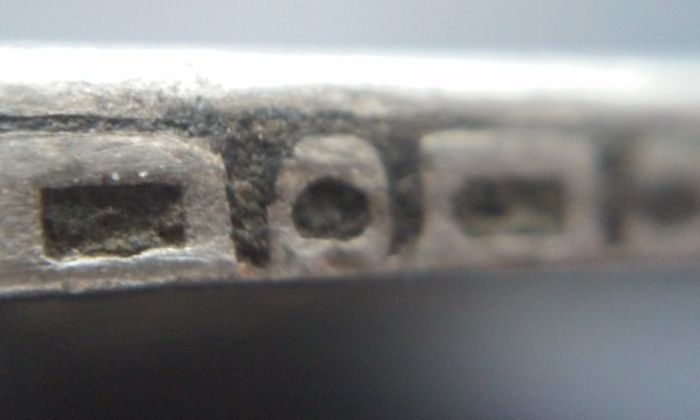 |
|
|
|
Pillar of the Community
United States
1915 Posts |
|
|
Pillar of the Community
United States
4883 Posts |
I've seen coins that look something like this after having been through a fire. Despite the best attempts to "restore" such, they remain impaired.
Colligo ergo sum
|
|
Pillar of the Community
United States
1915 Posts |
There are a number of aspects about this coin that resemble my fakes instead of my genuine, so if it is genuine I guess I haven't seen enough of them to know just by the picture. So I'll ask the experts about the mintmark: would the letter M be as thin as it is on this coin or would it be much thicker?
|
|
Pillar of the Community
United States
5362 Posts |
From a picture, authentication is always tricky. But here are some comments.
You say the coin weighs "about right considering condition". What do you consider about right? That is a valid question because many collectors seem unaware that to circulate a coin had to weigh over 95% of the stated original weight and that wear was used by banks as a method to gauge when it was appropriate to retire coins.
Second how was the 90% silver test accomplished? Have you determined specific gravity?
The coin has clearly been damage significantly as pointed out earlier - possibly a fire was involved. I also would be concerned that the date may have been altered - the 6 digit has a tail that is longer than I see as "normal".
In reviewing the punches used to make the dies - I also do not like the castle punch used in the lower right quadrant of the shield. The base on the right side is a sweep not a reversing curve as is typical.
I am somewhat bothered by the infill of the 8 in the denomination as it would necessitate a ragged hole in the die itself.
The edge looks correct (shape) for the very limited area that can be seen - the infill of the features with possible fire scale would need to be estimated and removed from the weight. But I think the edge may have been ground with a wheel to expose the edge detail.
The dealer may guarantee the coin to be "genuine" but I would not guarantee it is an original 1816 coin made in Mexico City without some added information.
The black marks have nothing to do with sand casting in my opinion.
Overall I dislike the coin and I would hope you paid closer to melt value than retail for a Fine grade example.
|
|
Pillar of the Community
 United States
2843 Posts |
Thanks Swamperbob
The weight is 26.5 which is 98% of the proper 27.02 grams or should weigh.
The composition was determined by XRF.
Overall I wondered if the condition coukd be attributed to shipwreck damage rather than fire.
|
|
Pillar of the Community
United States
1962 Posts |
Fire damaged... or, possibly more likely, a ground/hoard find (as opposed to a water find, from the overall look) that suffered environmental impacts. Either way, it bears the effects of a horrible incomplete and inconsistent buffing/cleaning... Fake, genuine, or in between... it's really not a coin you should ever WANT to buy unless it was dirt cheap. In real terms... no more than $25 or so. Quote:
I am somewhat bothered by the infill of the 8 in the denomination as it would necessitate a ragged hole in the die itself. These blobs of extra shmuugim are not at all uncommon on Mex. Ferd. VII. This die was clearly suffering... |
|
Pillar of the Community
United States
1915 Posts |
If this coin weighs 26.5 and is 90% silver I guess I just didn't expect that looking at the pictures. And that makes me even more insecure about offering opinions based on the posted photos.
|
|
Pillar of the Community
United States
1962 Posts |
|
|
Pillar of the Community
United States
1758 Posts |
Too many problems but since you did the XRF and confirmed 90% silver the black buildup or toning in other examples as a case in point is due to the high silver where silver in its most oxidized state is black. This is a signal I use when buying counterfeits. If black toning - I pass. Obviously most people will use the reverse logic - black toning or a black buildup is a good thing - well in terms of it being a high silver content in the alloy. Interesting filled-in upper loop in 8R. Large die crack. Appears cast in some areas but its not ... yes thin lettering in the mint mark. But the question remains why buy it? - but at $25 it may even be worth more as a contemporary circulating counterfeit ... but IMO its regal from a 15 sec. overview. While we are talking about oddities on coins those cracks you see sometimes on 8R's is due to silver corrosion-induced embrittlement. See this paper:
Corrosion-induced embrittlement of ancient silver
R.J.H. Wanhill and J.P. Northover
In high silver content alloys general corrosion is a slow conversion of the original metal surfaces or fracture surfaces to silver chloride. The silver chloride forms a brittle, finely granular layer, but does not affect the remaining metal's integrity. On the other hand, unfavorable environmental conditions and longevity of interment may result in an object being completely converted to silver chloride. Not in this case of these 18/19thC objects but all coins have both sulfur and chlorine on the surface. Chlorides generally from water vapor and human handling and sulfur from environmental factors.
Intergranular corrosion is the most common type since it occurs in mechanically worked and annealed ancient objects and with these coins. This type of corrosion has been attributed partly to low-temperature segregation of copper which is commonly present in silver. In particular, so-called discontinuous precipitation of copper has been suggested to be very detrimental. This precipitation sometimes causes the grain boundaries to appear meandering.
So environmental factors (chlorine and sulfur) coupled with the typical regal alloy (90% Ag, 5% Cu) and poor annealing and the trace copper in this silver alloy will lead to some 8R's to embrittle and crack. So this cracking is pro-regal and not pro-CCC. IMO.
JPL
|
| |
Replies: 9 / Views: 2,046 |
|






 Posted 05/09/2017 12:39 pm





