| Author |
 Replies: 11 / Views: 2,872 Replies: 11 / Views: 2,872 |
|
|
Pillar of the Community
United States
1101 Posts |
Good morning. Looking for some feedback on this 1949-D Jefferson. Potentially D over S? Thanks in advance. SS 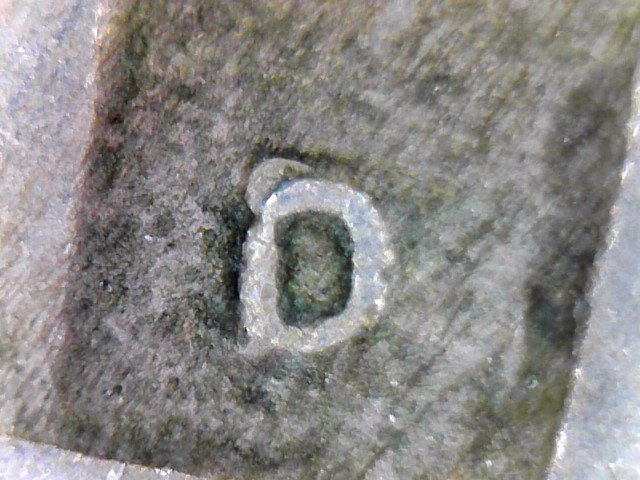 |
|
|
|
Bedrock of the Community
United States
10284 Posts |
|
|
Bedrock of the Community
United States
10284 Posts |
I'm not saying you don't have something interesting there. I just don't think it is the major D over S. 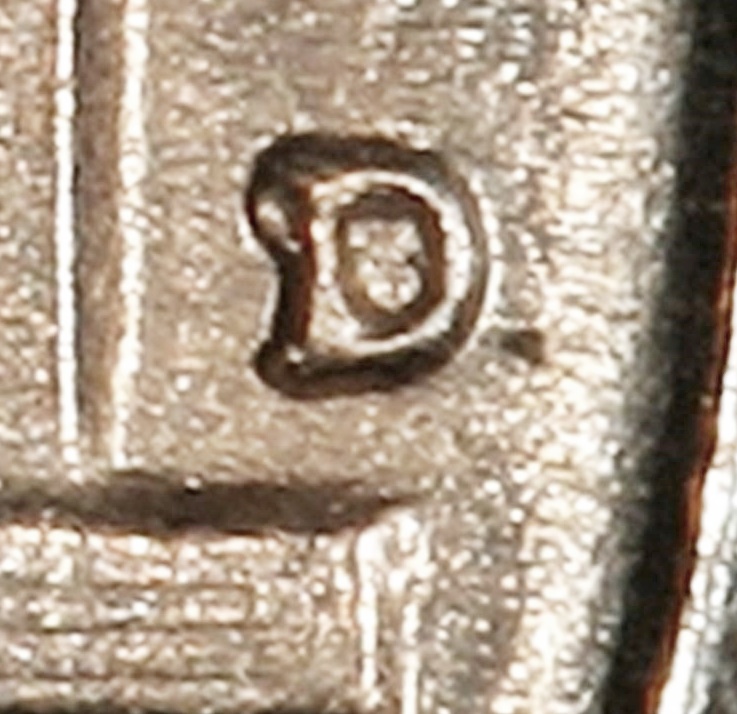 Edited by TNG
07/23/2017 10:03 am
|
|
Pillar of the Community
 United States
1101 Posts |
|
|
Pillar of the Community
United States
3741 Posts |
This one is interesting. I have found three 1949-D D/S nickels over the years, all from bulk rolls or in circulation, none grading over F-12. They aren't quite unicorns, but are darned scarce in any grade. The pictured coin is definitely not the sought-after D/S, but it has an interesting mystery that is similar to the (debunked) "1952-D and S Lincoln Cent." Let's start with the loop at 11 o'clock on the D. It is not a damaged coin, but rather appears to be from a damaged die. The image of mine is a virtual clone, showing the same loop. Now look completely to the left of the D, in the 10 and 11 o'clock position. There is a faint "S" visible. It is separate from the mint mark, like the Lincoln Cent. My opinion is that the "S" on this coin is not a mint mark, but is simply interesting die flow. What do others think about this? 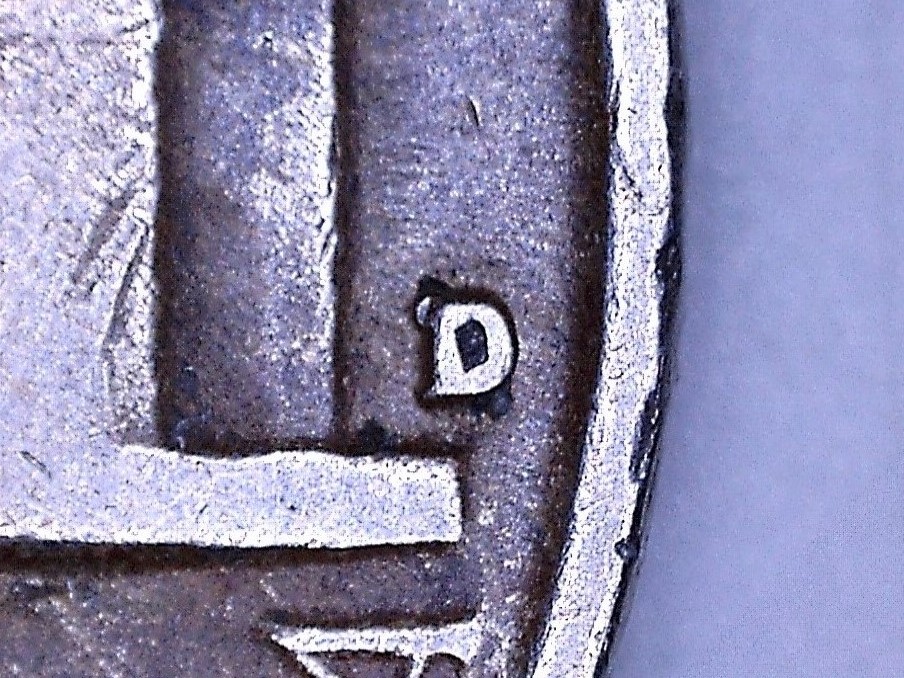 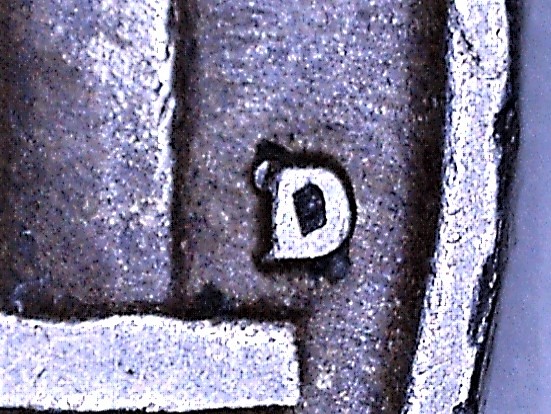 |
|
Bedrock of the Community
United States
62064 Posts |
Damaged. That area was flattened. If it were a RPM, then it would be raised. 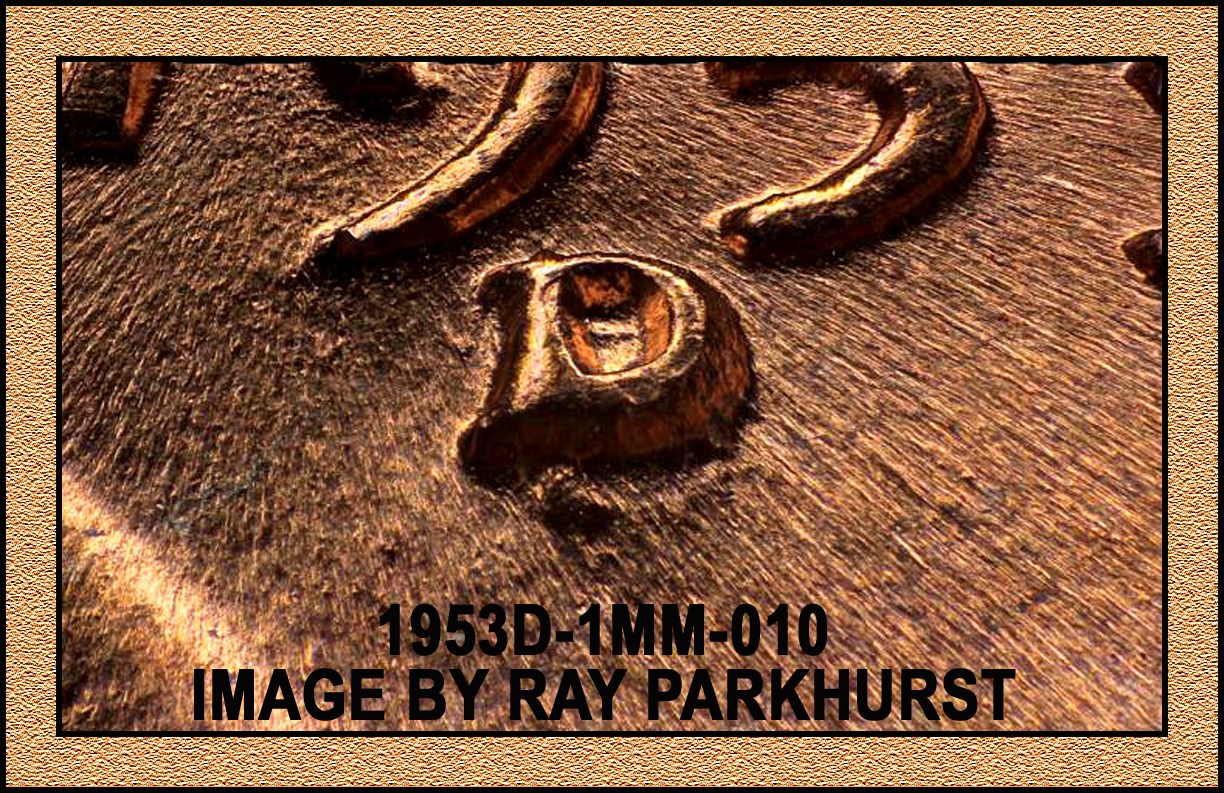 |
|
Bedrock of the Community
United States
94367 Posts |
Agree - the top serif was flattened, though I'm guessing it still is (partly) raised.
|
|
Pillar of the Community
United States
3741 Posts |
Thank you for the quick replies! I agree, for certain, it's clearly not the D/S or a D/D RPM.
On the partially flattened serif on the "D," my first reaction was damage as well. What made me pause about the coin damage issue is that I have seen an unusual number of these on 1949-D Jeffersons, all involving the top serif on the "D." The post by shotgung that started this thread is another example, though with more wear. Over the years, I've seen dozens of these in the bulk 1949-D rolls I've gone through in search of the D/S overmark. What strikes me as a bit odd is the location and consistency of appearance. The same serif in disproportionate numbers of the same date and mint on a small mint mark in a well protected area of a hard metal coin? It's just odd. I've never seen these as collectibles, but I wish I had kept a few of them for die comparison. It would be conclusive for damage if the coins came from different die pairs. Ditto if there is significantly different appearance of the flattened area. Then there is also the question of what could have adhered to a die that would both flatten and leave some raised area.
One thing that is clear is that this die was badly overworked, like a lot of the dies in this era. There are lots of areas of die flow all over the obverse and reverse, the strike is weak, and there are a couple areas where hairline die cracks are starting. This poor die pair was "rode hard and put away wet."
Back to my question. Does everyone agree with my conclusion that the "ghost S" to the left of the "D" is just die flow? I would think that if it was something more, that clear examples from an early die state would exist. That, and the location and size are significantly wrong for any mint mark.
Thanks again!
|
|
Rest in Peace
10197 Posts |
One other thing to consider if the damage seems similar: is there an event/machine that may doo this. I have a theory as on older Lincoln cents, there is extreme metal movement on the last digits of the date on many coins, two threads today AMOF. I'm thinking this is caused by the older style coin roll end crimper and probably upon initial coin contact to spin. The location of the D on a Jefferson nickel is in the same relative location and could well have suffered the same fate. |
|
Pillar of the Community
United States
3741 Posts |
Crazyb0, I hadn't thought about the coin roller possibility. Good catch and definitely a plausible explanation. Thanks!
|
|
Bedrock of the Community
United States
62064 Posts |
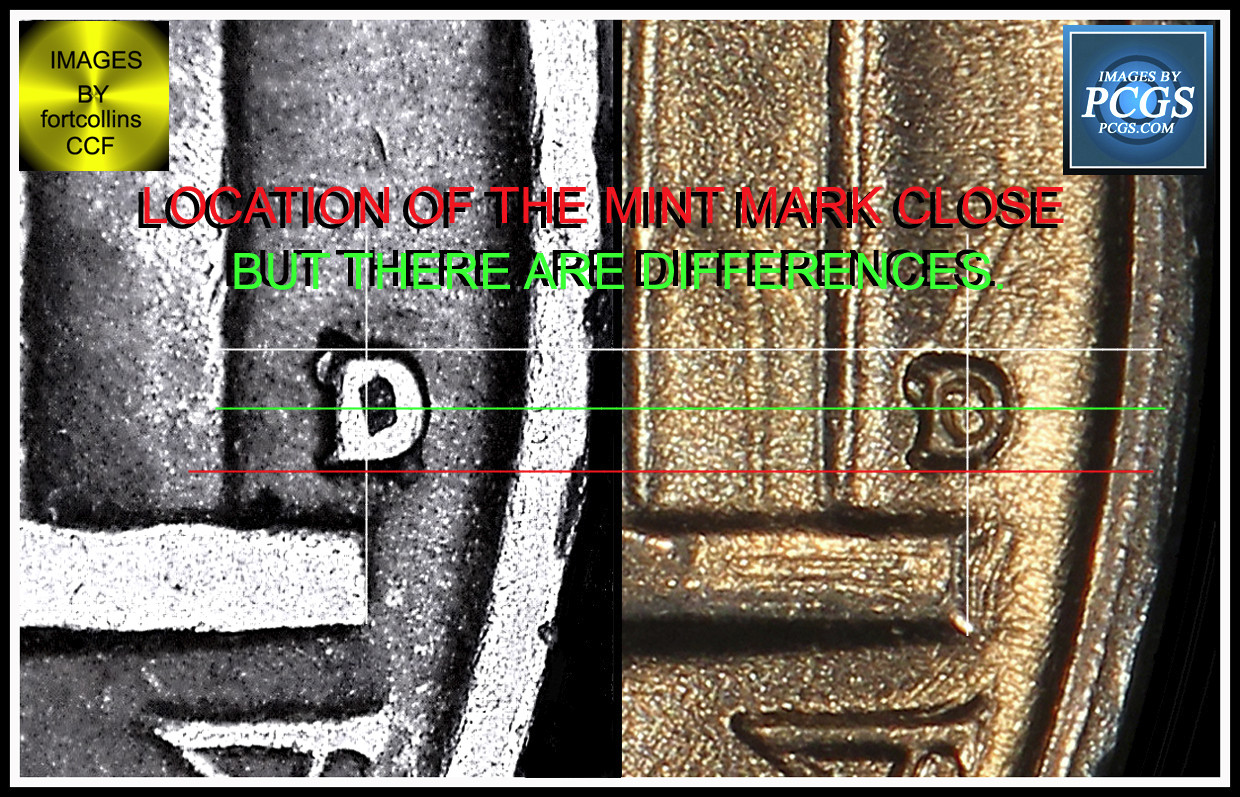 Here is a side by side with images. I don't feel this is the same die. |
|
Pillar of the Community
United States
3741 Posts |
coop, I agree, it appears to be a different die. Thank you for your measurements and pic upload. You rock! I'm still curious about the "ghost S" to the left of the D mint mark. I find similarities between this 1949-D and the (debunked) 1952-D "D and S" Lincoln Cent. There clearly is an "S" shape to the left of the mint mark, but I am not convinced it is more than die flow. One of my friends has a different view, however, and thinks it is the residue of a misplaced and weakly punched "S" mint mark. Here is why I don't see it as the residue of an S mint mark: 1. It is too close to Monticello. It is also a bit too far north, but not abnormally so. The closeness to Monticello is a big problem. 2. What appears to be a ball on the "S" is on the bottom, which would make it inverted. 3. It appears to be the wrong "S" for a 1949-S Jefferson. 4. I can't find any clear indications in the surrounding field of removing a mint mark, though the die is late state. 5. It lacks the clarity of even a weakly punched mint mark, although the die itself is very late state. 6. If this had been a mint mark, where are all the other coins from the same die? Wouldn't there be at least one other example somewhere? Thoughts? Am I right on this just being die flow? Here is the image I uploaded earlier, with the "ghost S" circled. 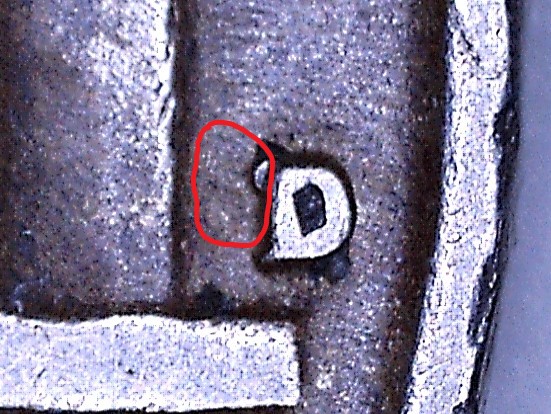 |
| |
Replies: 11 / Views: 2,872 |
|







 Posted 07/23/2017 10:00 am





