| Author |
 Replies: 20,374 / Views: 962,170 Replies: 20,374 / Views: 962,170 |
|
|
|
Bedrock of the Community
Canada
24885 Posts |
Congratulations to the winner ...
|
|
Pillar of the Community
United Kingdom
516 Posts |
|
|
Pillar of the Community
Canada
5287 Posts |
Someone needs to give @jbuck a rattle.
|
|
Bedrock of the Community
United States
12477 Posts |
Here you go:  In Memory of Crazyb0 12-26-1951 to 7-27-2020
In Memory of Tootallious 3-31-1964 to 4-15-2020
In Memory of T-BOP 10-12-1949 to 1-19-2024
|
|
Moderator
 United States
194606 Posts |
You guys.  I should have something up shortly. Have some popcorn.  |
|
Moderator
United States
194606 Posts |
Let us revisit my old avatar... 1944 Newfoundland 10 Cents  Newfoundland was a Dominion of the British Empire before joining Canada in 1949. So in effect, the legal entity that issued this coin no longer exists. So, post a coin that was issued by a government that no longer exists as it did when the coin was issued. This can be other former British Dominions or colonies, countries that were absorbed into others, nations that had their government radically changed via revolution, former constituents of the Soviet Union, former bits of Yugoslavia, etc. As long as you can explain it, it is allowed! Instead of points, I will just choose my favourite. The more obscure your entry, the better. |
|
Pillar of the Community
New Zealand
1679 Posts |
Nova Scotia became one of the four founding members of Canada on 1 July 1867 when it joined New Brunswick and the Province of Canada in Confederation. 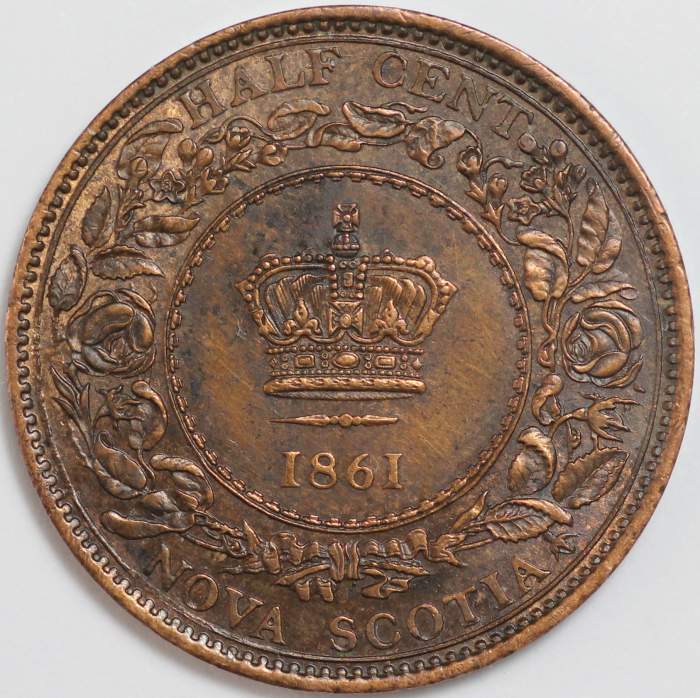 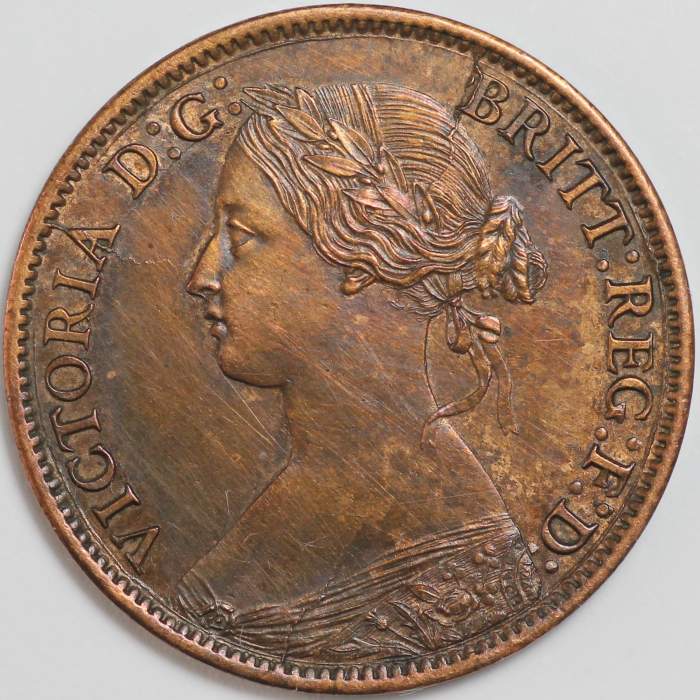 Cheers Don
Vickies cents and GB Farthings nut.
"Old" is a figure of speech and nothing more
Edited by fourmack
12/31/2017 12:41 am
|
|
Bedrock of the Community
United States
12477 Posts |
Interesting... I suppose my newly gifted Newfoundland 10 cents wouldn't be that obscure.  In Memory of Crazyb0 12-26-1951 to 7-27-2020
In Memory of Tootallious 3-31-1964 to 4-15-2020
In Memory of T-BOP 10-12-1949 to 1-19-2024
|
|
Moderator
United States
194606 Posts |
Quote:
Nova Scotia became one of the four founding members of Canada on 1 July 1867 when it joined New Brunswick and the Province of Canada in Confederation. Beautiful coin!  Quote:
I suppose my newly gifted Newfoundland 10 cents wouldn't be that obscure. No, but still worthy of a post.  |
|
Pillar of the Community
United States
2403 Posts |
Quote:
former bits of Yugoslavia, etc. As long as you can explain it, it is allowed! What about Yugoslavia itself? 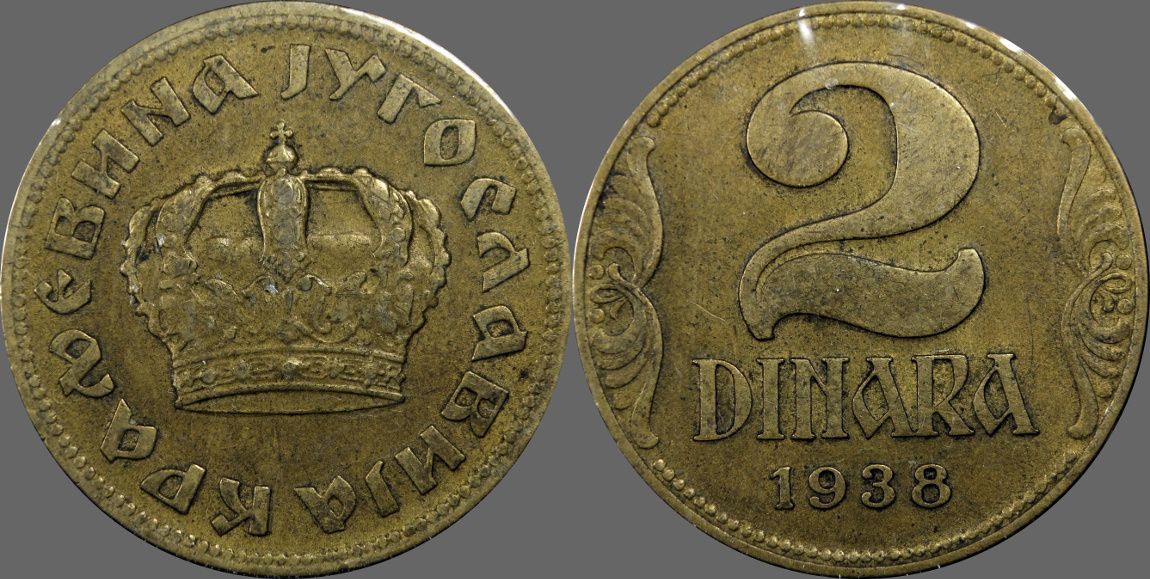 By 1992 Yugoslavia itself was broken up into what is the present day the countries of Slovenia, Croatia, Bosnia and Herzegovina, Serbia, and Macedonia. Edited by MontCollector
12/31/2017 03:24 am
|
|
Pillar of the Community
United States
9395 Posts |
Paphlagonia, 1 drachm, 480-450BC (or 490-420BC): 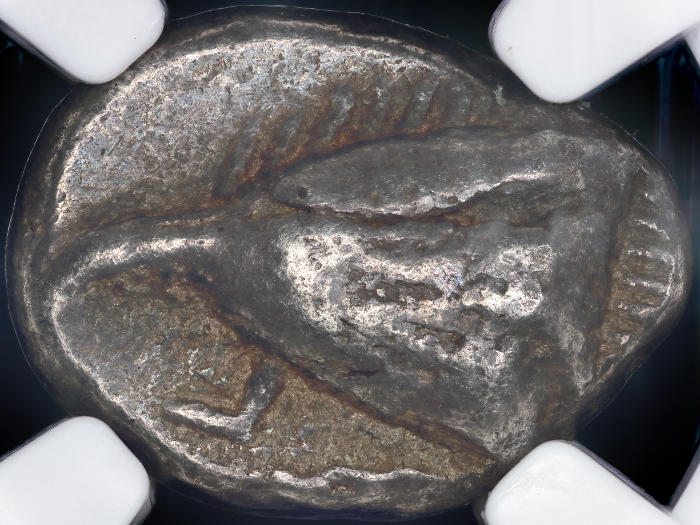 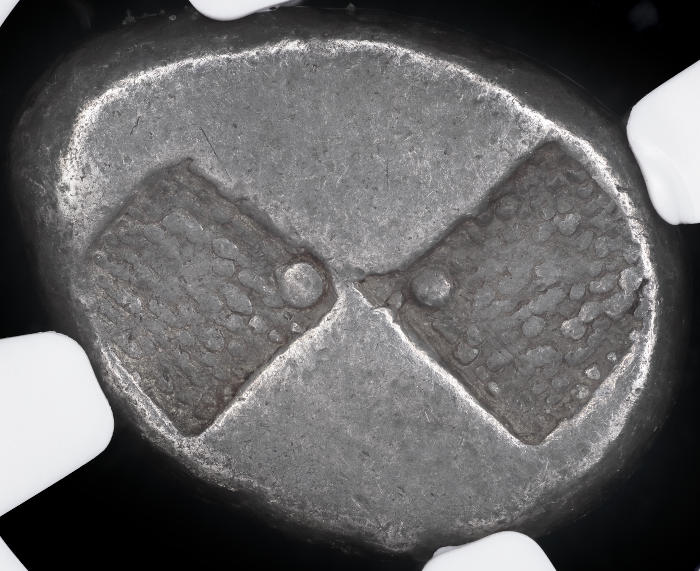 This coin may have been minted when Paphlagonia was independent. Governments (after 425BC): - Archaemenid (Persian) Empire - Macedonia - Cappadocia - Pontus - Galatea - Roman Empire - Byzantine Empire - Seljuk Sultanate - Nicean Empire - Ottoman Empire - Turkey (current) Edited by pepactonius
12/31/2017 05:29 am
|
|
Moderator
United States
34532 Posts |
I'm with @pepactonius on this one that this particular challenge potentially favors the ancient coin collector, as virtually none of those governments still exist (other than maybe Iceland...) Therefore my entry is this 2.5 Nummia from the Ostrogoths minted under the authority of King Baduila/Totila. My full post about this coin is here: http://goccf.com/t/304097, but below is a little more info about the Ostrogoths directly taken from Wikipedia: Quote:
The Ostrogoths (German: Ostgoten; Latin: Ostrogothi, Austrogothi; Italian: Ostrogoti) were the eastern branch of the later Goths (the other major branch being the Visigoths). The Ostrogoths traced their origins to the Greutungi - a branch of the Goths who had migrated southward from the Baltic Sea and established a kingdom north of the Black Sea, during the 3rd and 4th centuries. They built an empire stretching from the Black Sea to the Baltic. The Ostrogoths were probably literate in the 3rd century, and their trade with the Romans was highly developed. Their Danubian kingdom reached its zenith under King Ermanaric, who is said to have committed suicide at an old age when the Huns attacked his people and subjugated them in about 370.
After their annexation by the Huns, little is heard of the Ostrogoths for about 80 years, after which they reappear in Pannonia on the middle Danube River as federates of the Romans. After the collapse of the Hun empire after the Battle of Nedao (453), Ostrogoths migrated westwards towards Illyria and the borders of Italy, while some remained in the Crimea (where the Crimean Ostrogoths existed as a distinct people until at least the 16th century). During the late 5th and 6th centuries, under Theodoric the Great most of the Ostrogoths moved first to Moesia (c. 475-488) and later conquered the Kingdom of Italy of the Germanic warrior Odoacer. In 493, Theodoric the Great established a kingdom in Italy.
A period of instability then ensued, tempting the Eastern Roman Emperor Justinian to declare war on the Ostrogoths in 535 in an effort to restore the former western provinces of the Roman Empire. Initially, the Byzantines were successful, but under the leadership of Totila, the Goths reconquered most of the lost territory until Totila's death at the Battle of Taginae. The war lasted for almost 20 years and caused enormous damage and depopulation of Italy. The remaining Ostrogoths were absorbed into the Lombards who established a kingdom in Italy in 568. King Baduila/Totila was the second-to-last Ostrogoth king and the one who gave them a brief echo of former glory before the whole region fell into chaos. Out of the ashes of the Ostrogoth Empire, the Lombards's kingdom was ignited and northern Italy would spend more than a millennium as a collection of city states. 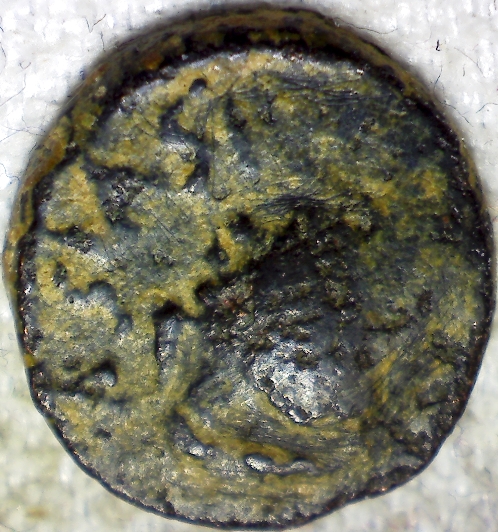 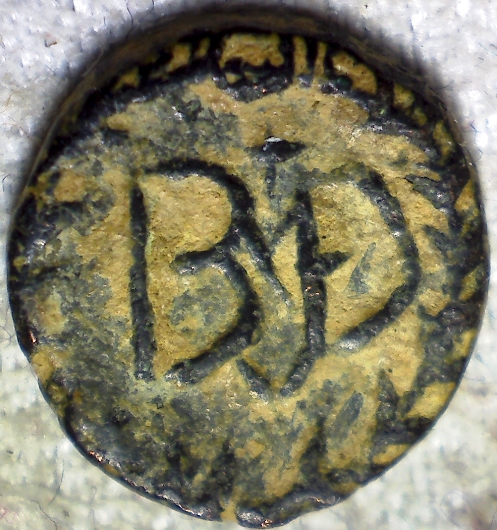 "If you climb a good tree, you get a push."
-----Ghanaian proverb
"The danger we all now face is distinguishing between what is authentic and what is performed."
-----King Adz
|
|
Pillar of the Community
United States
1801 Posts |
Central American Republic 8 Reales 1826. One of my favorite images on a coin, the sun peeking over the mountains. This coin was struck in what is now Guatemala during the period of time after the Spanish control of Central America had collapsed and the individual areas were establishing their independence. The republic consisted of the present-day states of Guatemala, El Salvador, Honduras, Nicaragua, and Costa Rica. Formed into a Republic in 1823, infighting and class animosity had the Republic in full blown civil war by 1827 and completely dissolved by 1839. However Costa Rica, Guatemala and Honduras continued issuing coins of this style into the late 1840's. 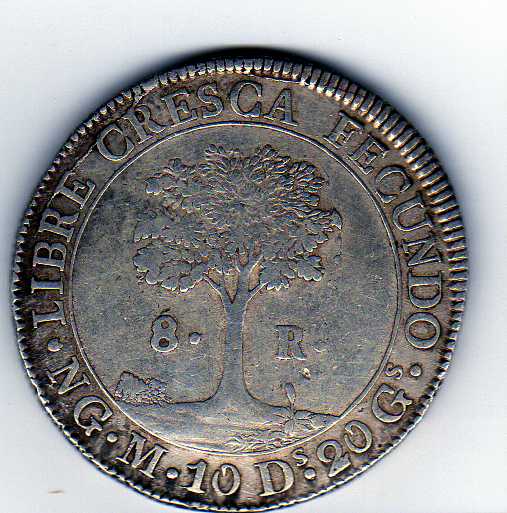 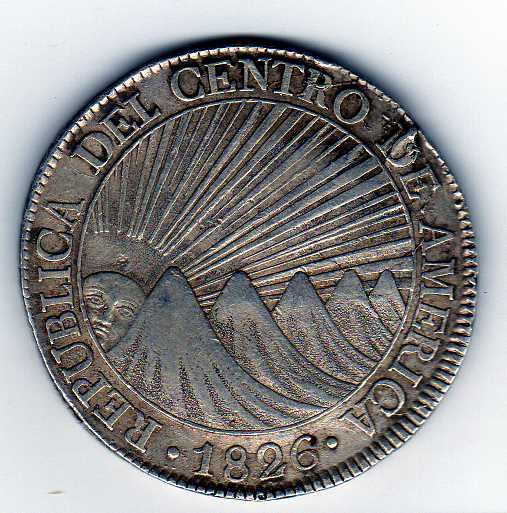 |
|
Pillar of the Community
 United States
6130 Posts |
Obscure forgotten countries and cultures are my forte! I think I have my entry, but I might post more to keep the spark alive in days 2 and 3 of this contest. Silver denarius from Bolskan in modern day Huesca, Spain, c.200-179 BC  Not much is known about the indigenous inhabitants of the Iberian peninsula. It was colonized by the Phoenicians, Greeks, Celts, and Carthaginians throughout early classical antiquity. Since much of Iberia was friendly to Carthage, that became the start of Hannibal's route to Rome during the Second Punic War from 218-201 BC. Rome however emerged victorious, and part of the peace terms were that Carthage withdraw from Iberia completely. From 200 BC, Spain was a patchwork of areas under direct Roman control, Roman tributary states, and independent kingdoms under Iberic, Celtic, or Lusitanian control. Direct Roman influence expanded through a series of skirmishes over the course of nearly 200 years, as the Senate refused to finance an organized campaign of conquest. The Peninsula was not fully conquered until the time of Augustus. Spain would ultimately come under Roman rule from the 1st through 4th centuries, then fall to the Visigoths from the 4th through 8th centuries, when it was conquered and held by Muslim forces until the early modern age. After the conclusion of the Reconquista at the end of the 15th century, Spain went on to become a kingdom at the head of a worldwide empire, then a Republic, then a fascist dictatorship, then a constitutional kingdom again. Bolskan specifically was a Celtiberian city that was nominally independent but still answered to Rome. The language is a dialect of Iberian, a likely indigenous language family that was written with a heavily modified Punic alphabet. Bolskan clashed with Rome and was crushed and razed in 179 BC, being rebuilt as Osca. Edited by Finn235
12/31/2017 8:49 pm
|
|
Pillar of the Community
Canada
5287 Posts |
Quote:
this particular challenge potentially favors the ancient coin collector I do not agree unless jbuck prefer the look of ancient coins. Jbuck will select the winner based presumably on the aesthetics of the coin. |
| |
Replies: 20,374 / Views: 962,170 |






 First Page
 Previous Page


 Posted 12/30/2017 3:07 pm





