| Author |
 Replies: 34 / Views: 3,334 Replies: 34 / Views: 3,334 |
|
Pillar of the Community
United States
6196 Posts |
|
|
|
|
Rest in Peace
United States
17900 Posts |
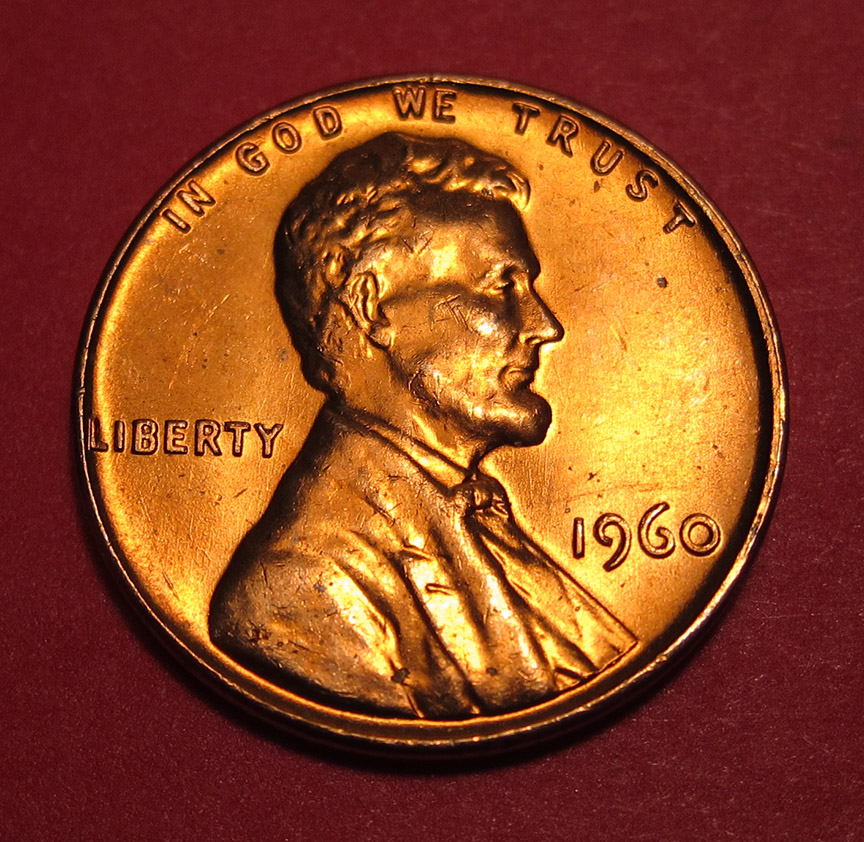
To even consider this as a DDO, all the letters would need to show a consistent look. In this case thinking the G and D of GOD indicate doubling but the O in between doesn't, wouldn't make sense. |
|
Valued Member
United States
338 Posts |
I think maybe it is not a DD.
|
|
Bedrock of the Community
United States
79549 Posts |
That's strange. Not sure what it is, but it is very interesting. We'll see what the others think.
Errers and Varietys.
|
|
Moderator
 United States
23522 Posts |
I have to consider it random die gouging for the moment, as they do not appear to faithfully follow the curves and proportions of the feature being "doubled." Doubling in a die should be an exact copy of the doubled feature, and considering the location and offset of these anomalies, it's unlikely any sort of hubbing process could result in them being standalone features anyway. Sometimes the best way to figure out what it is, is to eliminate what it isn't.  These letters weren't hand-punched into individual dies, and an error of this type in the original Master would have led to thousands, if not millions, of identically-anomalous examples. |
|
Rest in Peace
10197 Posts |
 100% w/ SD, it isn't hub doubling either MDD or DDO. It is probable since you have concurrent coins, this was some piece of errant metal causing a gouge/dent in the die which replicated until it was polished out or die was replaced. Interesting to find, but no error. Unless...you plan on selling on ebay as/such.  |
|
Bedrock of the Community
United States
79549 Posts |
Case is now closed as we determined it's just a good randomly placed Die Gouge. Interesting find, but carries no extra value. Keep it for the grade it's in. :)
Errers and Varietys.
|
|
Pillar of the Community
 United States
6196 Posts |
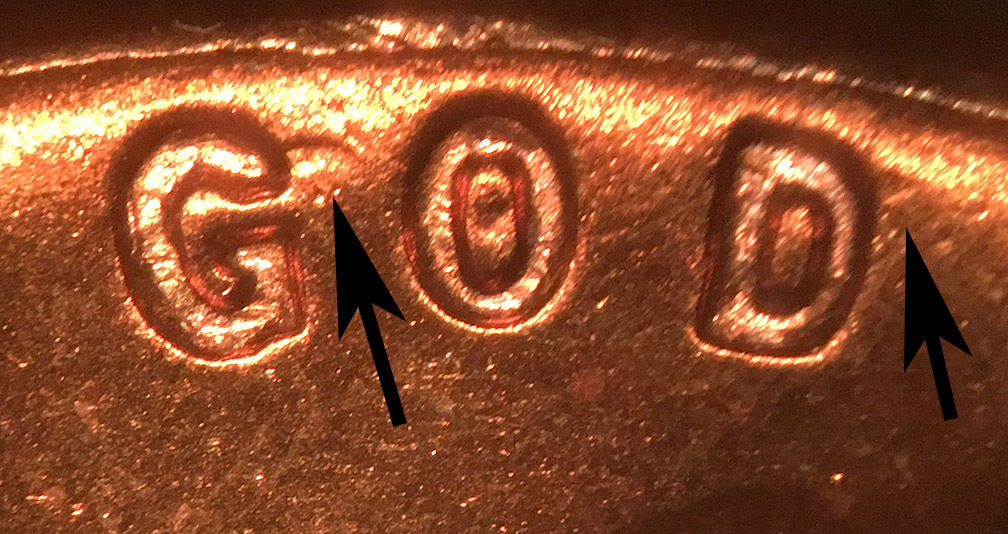
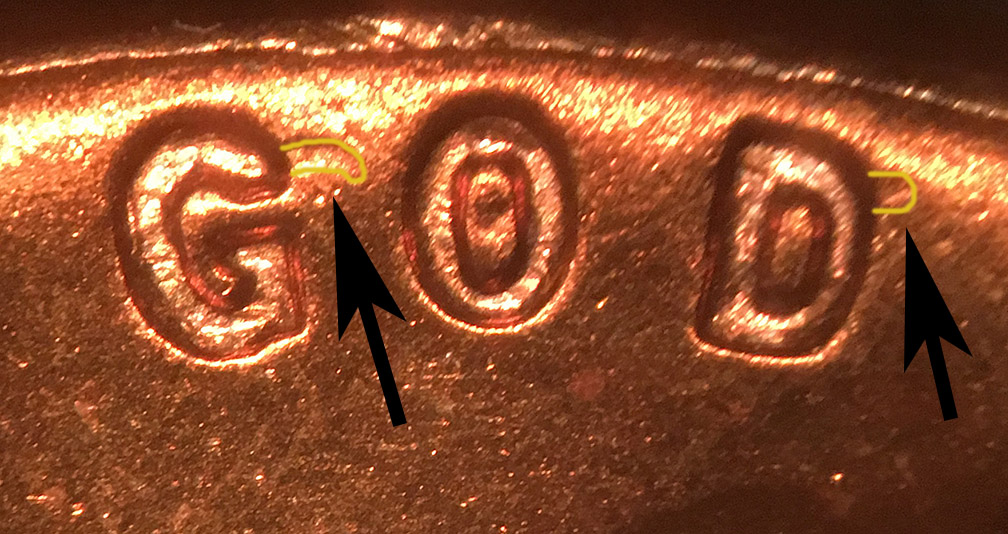
E&V, Not sure why you are closing this case, but I think I will ask that it remain open for at least a little longer. I see some very astute comments and thoughts so far and greatly appreciate hearing from those who know a whole lot more than I do about how doubled dies are created and whether something like this could even be created in such a manner. As a non-expert on such things, my thoughts are that it is some type of a die gouge (since it is raised) and that the pairing with a similar type thing by the D is just coincidence and that's that. That said, the reason I am asking that that I find enough similarity with 1964 DDO-022 that I think it is worth running around the experts for an opinion. Which people are giving and I thank you! http://varietyvista.com/01b%20LC%20...4PDDO022.htm |
|
Bedrock of the Community
United States
79549 Posts |
Because it's already been solved. It is a Die Gouge. Like I said, Die Gouges don't carry any value. Lookup Die Gouge on the internet. Your coin resembles a Die Gouge. Here's what a Die Gouge looks like. All credit goes to Coop for the picture. 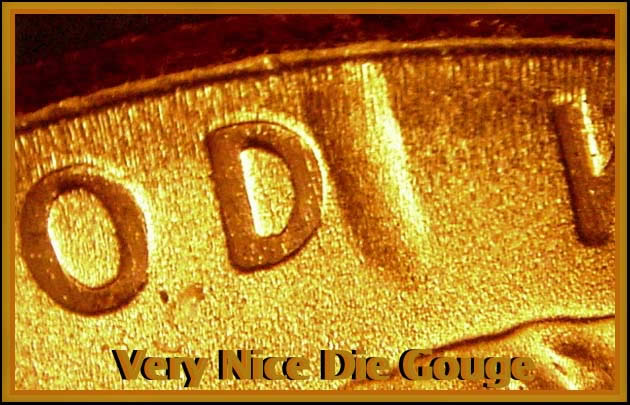 Errers and Varietys.
Edited by Errers and Varietys
08/29/2017 7:39 pm
|
|
Moderator
United States
23522 Posts |
Perceived value cannot be considered the only appropriate criteria for contemplating a die anomaly. Gouges such as this are "smoking gun" attributes for identifying specific die pairs, and as such are among the most important factors in attributing those issues which have been delineated by variety. This coin would be a permanent resident in my own collection, for that reason: the ability to make a connection to another coin later. It's not like anyone (or everyone at once ) will ever successfully attribute Lincolns by die pair, but as an example this is a surefire feature to nail down a dateless coin like a Greaser. And if you have a dateless Greaser which you can positively date, you're gonna get a premium for that coin. |
|
Bedrock of the Community
United States
79549 Posts |
|
|
Pillar of the Community
United States
3656 Posts |
I have been going back and forth on your post all day. I was first considering a possible die clash - then ruled that out. Then looked into a die dent - just don't know. With the curve on that mark that is by the G is really tough to figure out.  |
|
Pillar of the Community
United States
2775 Posts |
I agree with SsuperDdave in that I'd hold onto them as reference coins for now. My first thought was a die gouge, die dent or tooling marks. That would show on multiple strikes.
Did some research to help suggest or eliminate potential DD. Can find nothing previously known to substantiate this. Also checked into a potential clash and counter clash, but nothing lines up as of yet. Thanks, Doug.
|
|
Pillar of the Community
United States
3656 Posts |
TB did you try to do an image overlay of the G to the anomaly to see if matches up with angle?
|
|
Pillar of the Community
United States
6196 Posts |
No, I haven't done any overlays, as it sorta seemed like the offset distance between the two spots was about the same. If I get a chance later I will see about doing that just to see what happens as why not.
|
|
Pillar of the Community
United States
6196 Posts |
Break out the 3D glasses! I really don't know how to correctly offset an overlay in such a case, but a bit of experimenting showed that Photoshop found the shape of the gouge to be a good enough fit for the G that when I moved the opaque layer over the gouge Photoshop recognized the fit and snapped the G into the gouge spot. Not that that means a great deal but it was cool to see the fit. Otherwise a straight horizontal slide didn't seem just right, so this is what things look like with the "doubling" layer rotated exactly 3 degree clockwise. I'm going to need a Dramamine after this bit of photoshop work! 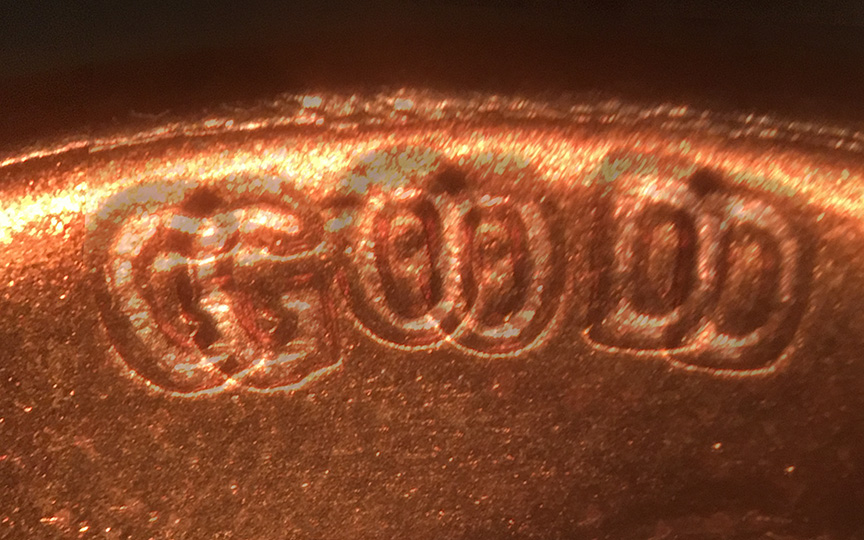 |
| |
Replies: 34 / Views: 3,334 |









 Posted 08/29/2017 1:59 pm





