











 Posted 09/04/2017 12:38 am


I can understand your disappointment; it is otherwise a very nice coin.
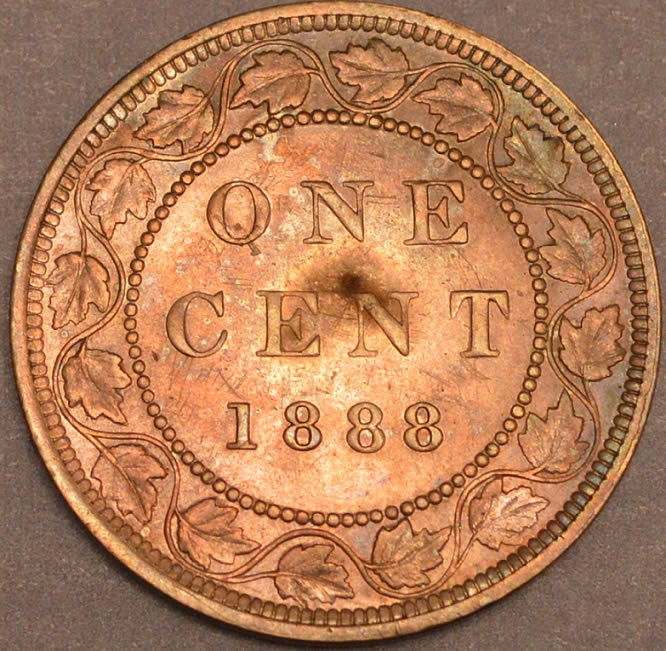
It is called a 'carbon spot', but it is not carbon.
The black area is either copper sulfide, chloride or oxide, or combination of those. Inorganic, and not sensitive to removal by an organic solvent.
It is a small area of patination, probably caused by a small spot of dust or salt, and probably combined with moisture that has stayed on the coin for long enough to cause the result that you can see now.
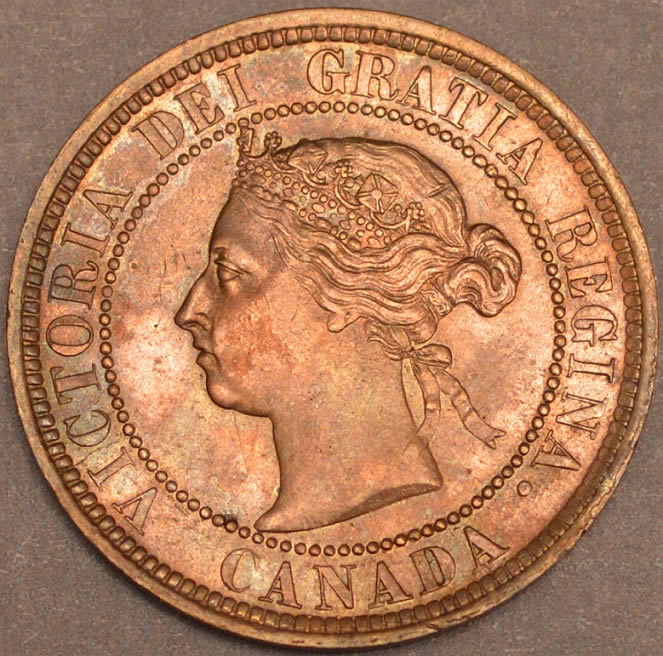
I also notice a small die crack between the 'I' and 'C' of VICTORIA.
It is called a 'carbon spot', but it is not carbon.
The black area is either copper sulfide, chloride or oxide, or combination of those. Inorganic, and not sensitive to removal by an organic solvent.
It is a small area of patination, probably caused by a small spot of dust or salt, and probably combined with moisture that has stayed on the coin for long enough to cause the result that you can see now.
I also notice a small die crack between the 'I' and 'C' of VICTORIA.


