

 Posted 09/30/2017 12:33 pm


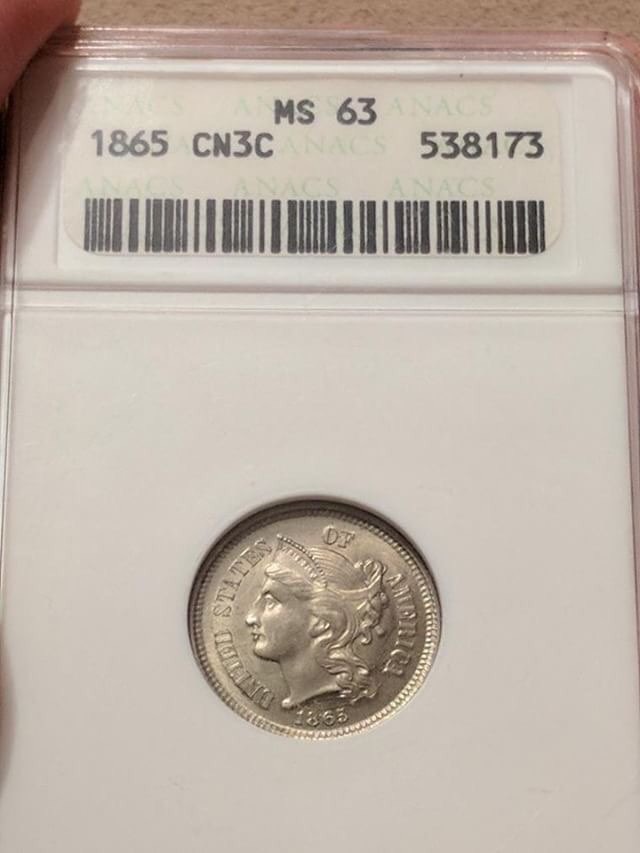
This is a nice 1st year issue of the 3 Cent Nickel. This transitioned the 88% copper and 12% nickel composition of the copper-nickel cents to the 75% copper and 25% nickel composition of this issue. The metal alloy was much harder and this led to striking issues.
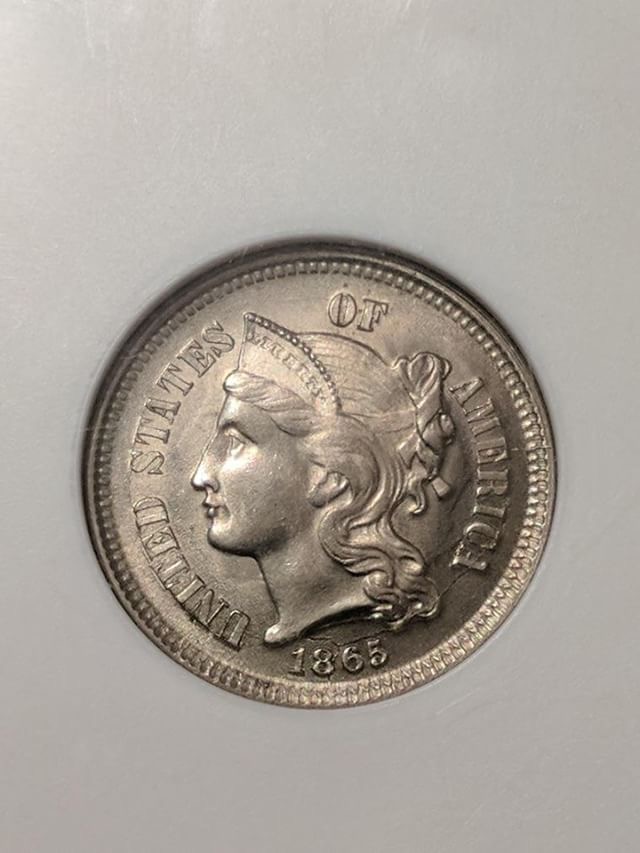
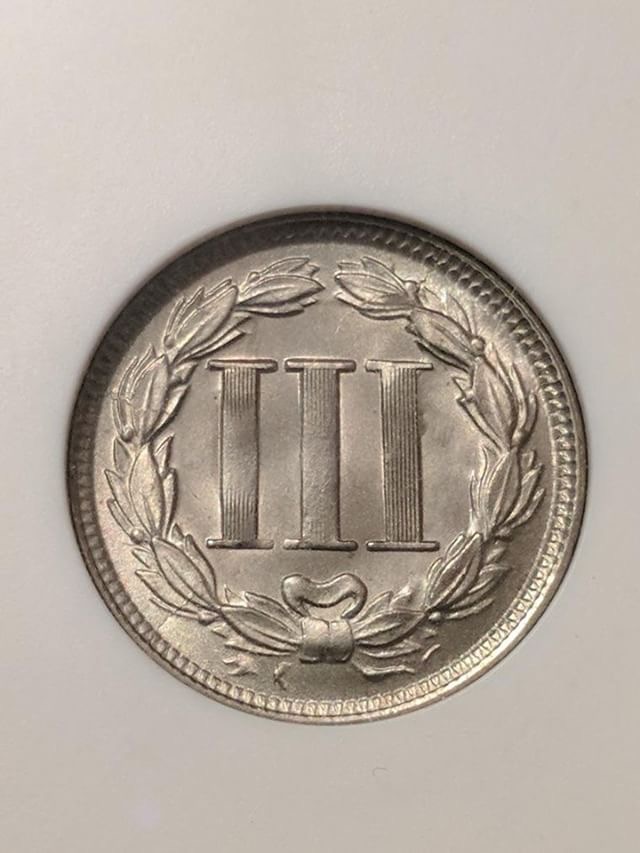
This coin is typical of the weaker strikes in the first year. I agree with oih8tw8's ms64 assessment, but the weak strike on this coin is most evident in the first two II's in the III denomination found in the center of the reverse. The vertical lines in the first two II's are flat. The third I shows a full set of vertical lines. There are coins out there that are fully struck. This coin has pretty well defined hair in the obverse, which is flat in many coins. I would suggest trying to find a coin with fully struck vertical lines in the III reverse denomination. These are much harder to find, but well worth the extra effort.
This coin is typical of the weaker strikes in the first year. I agree with oih8tw8's ms64 assessment, but the weak strike on this coin is most evident in the first two II's in the III denomination found in the center of the reverse. The vertical lines in the first two II's are flat. The third I shows a full set of vertical lines. There are coins out there that are fully struck. This coin has pretty well defined hair in the obverse, which is flat in many coins. I would suggest trying to find a coin with fully struck vertical lines in the III reverse denomination. These are much harder to find, but well worth the extra effort.
IN NECESSARIIS UNITAS - IN DUBIIS LIBERTAS - IN OMNIBUS CARITAS
THE MAN IN THE ARENA, Theodore Roosevelt at the Sorbonne Paris on April 23, 1910: "It is not the critic who counts; not the man who points out how the strong man stumbles or where the doer of deeds could have done better. The credit belongs to the man who is actually in the arena, whose face is marred by dust and sweat and blood, who strives valiantly, who errs and comes up short again and again, because there is no effort without error or shortcoming, but who knows the great enthusiasms, the great devotions, who spends himself in a worthy cause; who, at the best, knows, in the end, the triumph of high achievement, and who, at the worst, if he fails, at least he fails while daring greatly, so that his place shall never be with those cold and timid souls who knew neither victory nor defeat."
My coin website:https://fairfaxcoins.com
THE MAN IN THE ARENA, Theodore Roosevelt at the Sorbonne Paris on April 23, 1910: "It is not the critic who counts; not the man who points out how the strong man stumbles or where the doer of deeds could have done better. The credit belongs to the man who is actually in the arena, whose face is marred by dust and sweat and blood, who strives valiantly, who errs and comes up short again and again, because there is no effort without error or shortcoming, but who knows the great enthusiasms, the great devotions, who spends himself in a worthy cause; who, at the best, knows, in the end, the triumph of high achievement, and who, at the worst, if he fails, at least he fails while daring greatly, so that his place shall never be with those cold and timid souls who knew neither victory nor defeat."
My coin website:https://fairfaxcoins.com