| Author |
 Replies: 17 / Views: 6,561 Replies: 17 / Views: 6,561 |
|
New Member
United States
5 Posts |
Hello! I recently ran across this 1943 steel cent in a lot of coins that I purchased. It seemed a little odd to me so I decided to compare it to other 1943's that I had on hand. First thing that caught my attention was the off color of this coin. So I decided to weigh it and found that it only weighs 2.57 grams it is 19mm in diameter and only has a thickness of 1.45mm instead of the standard 1.57mm. I am sure it is a steel penny because I checked it with a magnet and it jumped right on. So... I put it next to a standard 1943 and it looks as though there may be some differences in the obverse profile of Lincoln and the font seems to be different also. Then again maybe I have just stared at it too long and really need a second opinion! Any help with this little oddity would be greatly appreciated!! The coin has great detail and is AU in condition. 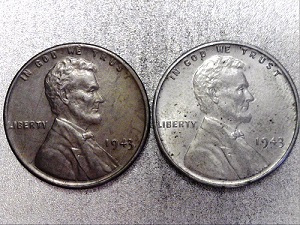 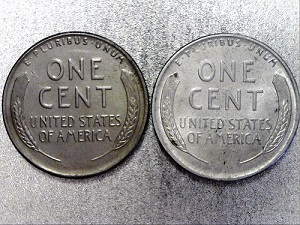 |
|
|
|
Rest in Peace
United States
1559 Posts |
Hi Gypsigirl1  and  to CCF While I'm no expert, I would have to say that someone tried to make it look like a copper 1943! If it were a true 1943 copper error, you would have yourself a small fortune. In 1943 the U.S. Mint switch over to steel in support of the war efforts and the need for the copper used for bullet casings and such. There were some copper planchets that were accidentally used and a few copper 1943's were minted and made it out into circulation. Unfortunately if yours sticks to a magnet, it's not copper. The mint returned back to copper in 1944. Thank you for your question and keep them coming. I'm sure some of the experts will chime in soon with a more informative explanation  Edited by Tootallious
12/09/2017 12:47 pm
|
|
Moderator
 United States
16684 Posts |
Welcome to the CCF Gypsigirl1.
As stated, it appears to be a copper plated steel cent. Weight and a magnet should confirm this.
I'm also moving your post to Modern for better exposure.
swcoin.ecrater.com
|
|
Bedrock of the Community
United States
94367 Posts |
to the CCF! |
|
New Member
 United States
5 Posts |
Thanks so much for your input. Every little bit helps. The pictures are showing this coin darker than it really is. I wish I could have gotten the toning of this coin to come out better it actually almost looks like a soft light pink or rosy satin finish.I was wondering if it could be a "sintered planchet" or improperly annealed coin considering that the weight is considerably lighter and the thickness is less than what it should be. It actually weighs exactly what a silver planchet error weighs, but I know it is not silver because of the magnet test.(Darn the luck!) The detail on the strike seems to be somewhat different than the standard 43's that I compared it with along with the font on the obverse and reverse seem to be thicker also. Does anyone know how to test for sintering? Even if it turns out to be a dud, It has really nice eye appeal and I will probably keep it as a conversation piece. I'm just really curious about the differences.   |
|
Rest in Peace
10197 Posts |
to the madhouse! Like has been said, either you have a plated steel 1943 or one that has had most of it's original zinc coating worn off then due to environment and other factors has become stained. Weight is also a key here. It should weigh 2.5 gr as a steel cent, copper planchets are 3.1gr. The 43 steelies are a coin many have modified in many ways. I don't think a "sintered" planchet is your case here, steel cents went through a bit different upsetting process than coppers in their finishing blanking/planchet stages. It was a "coating " process more than a tempering process. Edited by Crazyb0
12/09/2017 11:59 pm
|
|
New Member
United States
5 Posts |
Thanks Crazyb0. I will definitely do some reading on this topic. Don't really know much about the different processes that were used for plating the coins an am always up for learning as much as possible when it comes to researching the coins that I have or may purchase in the future. I still like the looks of this coin and will most likely keep it for conversation. Thanks for the info! |
|
Bedrock of the Community
United States
20753 Posts |
Something is wrong here. Your coin is 2.57grams and should be 2.7grams. That means it could not be coated or it would weigh more, not less. Also, 1.45 thick instead of 1.57. Again, if plated or coated should be more, not less. Diameter is correct though so again, possibly not plated or coated. Almost makes me think it is a fake. Difficult to imagine anyone would spend time and money to fake a coin worth only a few dollars. I like those Cents and have well over 4,000 of them. None look like yours. |
|
New Member
United States
34 Posts |
I'm no expert but I was thinking fake as well |
|
Pillar of the Community
United States
3463 Posts |
It could be an unplated Steel planchet, but it would most likely show some rust unless it has been stored well.
The steel stock sheets were plated with Zinc prior to the blanks being punched out so the edges would not have the Zinc plating on them. Can you see a difference in color from the edge to the other surfaces?
|
|
Bedrock of the Community
Canada
21711 Posts |
Not an expert on Lincoln's but I can tell when something appears wrong. To me this is a counterfeit. Looking at the Obverse, their are numerous details that are wrong. The nostril is different. The 9and 3 in the date are different. The copy on the top is too far from the rim and appears different. 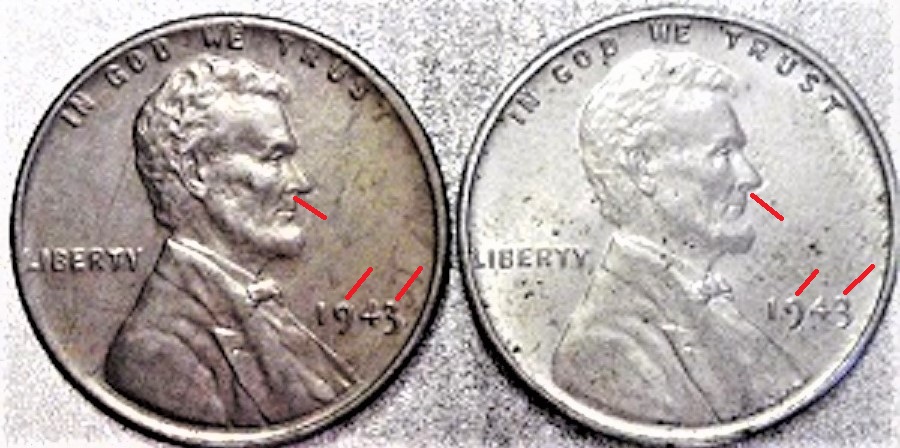 On the Reverse. The "T" does not line up. The shape of the "S" is different. The style of the copy at the top appears different. 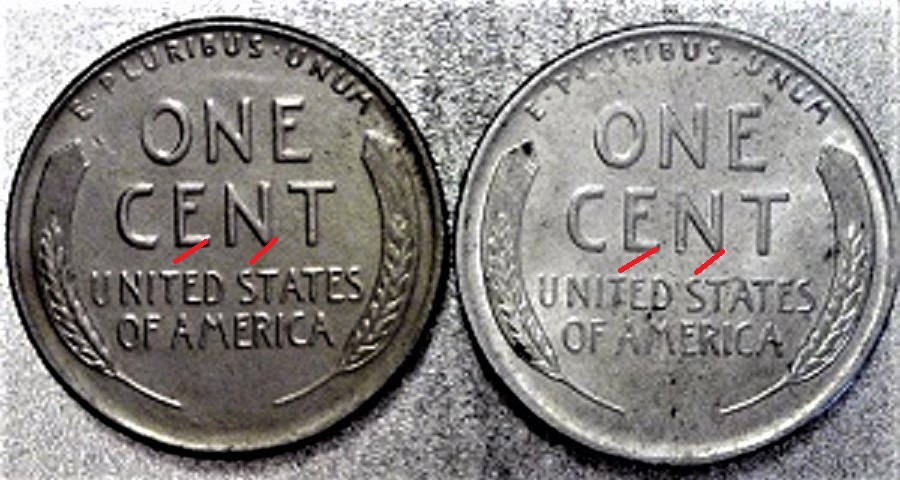 Edit- Correct typo Edited by JimmyD
12/10/2017 1:25 pm
|
|
Rest in Peace
10197 Posts |
In response to JimmyD, I agree it is a copy but for different reasons. Your obverse observations aren't necessarily indicators of a counterfeit. The letters nearer the edge shows a later die state and same with nostril and 9/3 are symptoms of Die Deterioration and stretching movement outwards. What gives it away as a plated coin is the ONE CENT on reverse. Notice the squared off edges of the original while the "copper" shows unnatural rounding of electroplating. The weight is a misnomer, the tolerances plus what has to be done to remove a bit of "skin" to properly electroplate is well within limits. 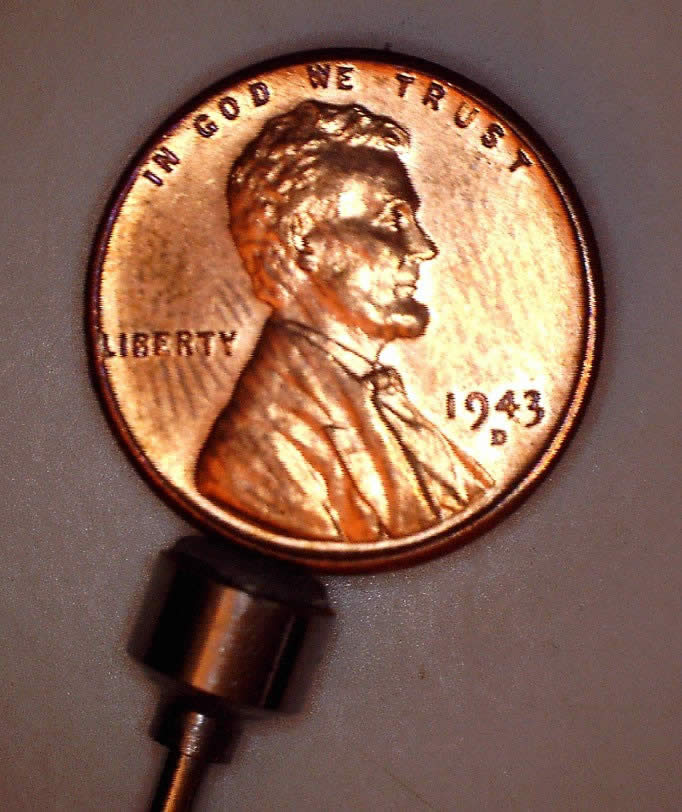  Edited by Crazyb0
12/10/2017 1:35 pm
|
|
Pillar of the Community
United States
3463 Posts |
Quote:
What gives it away as a plated coin is .... The coin is under weight for a Zinc coated Steel cent and is thinner. I think an extra plating would be ruled out. |
|
New Member
United States
41 Posts |
Just out of curiosity, why would someone fake a penny?
|
|
Pillar of the Community
United States
3332 Posts |
The measurements and color all suggest an unplated planchet. Would the absence of the plating cause the anomalies noted in the devices?
"Nummi rari mira sunt, si sumptus ferre potes." - Christophorus filius Scotiae
Edited by Bump111
12/15/2017 10:10 pm
|
|
Moderator
United States
191235 Posts |
Quote:
Just out of curiosity, why would someone fake a penny? When the cent being faked is worth a lot of money. A copper 1943 cent it worth a lot of money. |
| |
Replies: 17 / Views: 6,561 |










 Posted 12/09/2017 1:00 pm


