| Author |
 Replies: 9 / Views: 7,501 Replies: 9 / Views: 7,501 |
|
|
New Member
United States
7 Posts |
I am having trouble finding a single reference for a 2006 North Dakota State Quarter that I have aquired. The reverse is a uniformed golden color, while the obverse is normal and an exceptionally high grade (I would consider it an MS 69 or 70, but that would probably be because it's mine#128523;) Anyway, the closest suggestion that I could find outside of the experimental Maganese planchet, which so far has only been found in the 1999 State Quarter series, would be discoloration from a cardboard holder, but this coin has an exceptional strike and a beautiful obverse, with all devices on both sides of an above standard appearance (please don't rely on the provided pictures to support my statement, as my phones camera is not remotely very good for this)... I understand that the experimental Maganese explanation would be shooting for the stars, so can anybody shed some light on identifying this error? 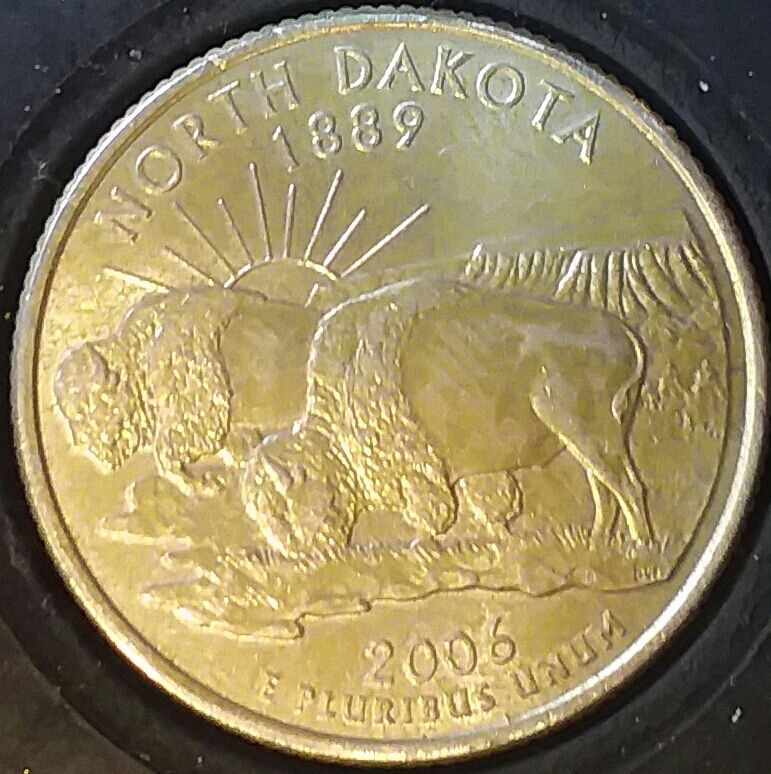 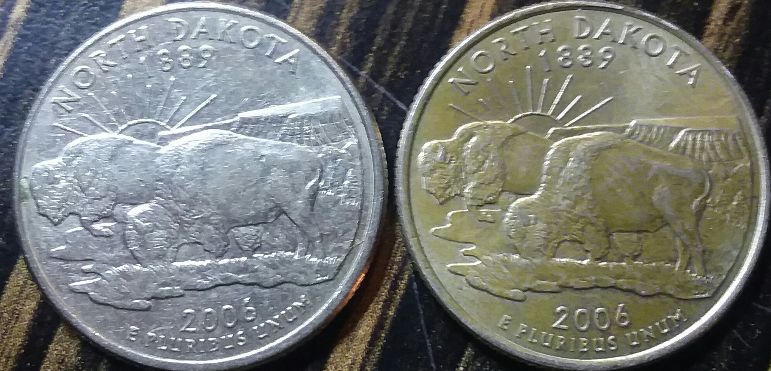 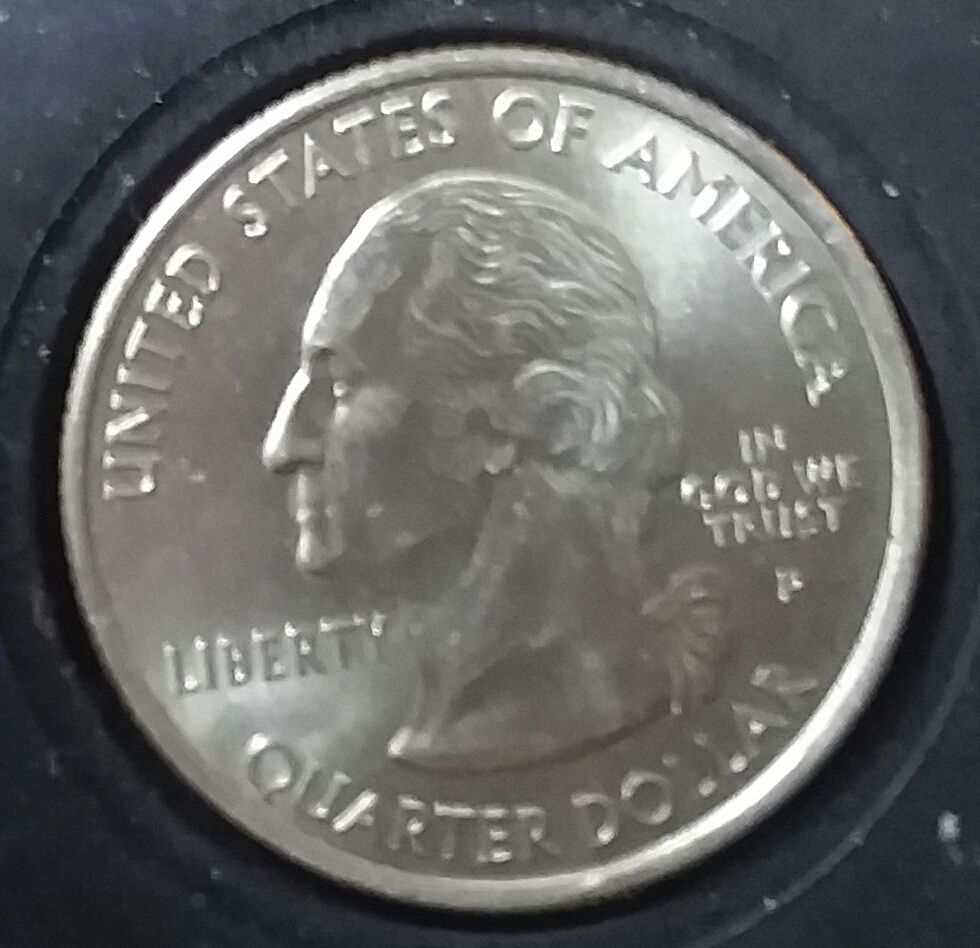 |
|
|
|
Bedrock of the Community
United States
62064 Posts |
The coin toned yellow (usually sulfur turns it this color) in circulation. Normal planchet. this color is often found on coin from the eastern part of the U.S. Possibly because of the higher sulfur content in the air. (that is what I've been told)
|
|
Moderator
 United States
195823 Posts |
 to the Community! I agree, just environmental exposure. |
|
Bedrock of the Community
United States
79206 Posts |
To CCF! Just Environmental toning from being in circulation. Worth face value. Errers and Varietys.
|
|
Pillar of the Community
United States
3463 Posts |
to the forum! I agree, just toning/staining. No offense but it sounds like you need to study up on your grading skills. That coin isn't a MS-69 or MS-70. |
|
New Member
 United States
7 Posts |
Thank you for your help, and no offense taken... as I said, my camera is not that good, and I have only been doing this for a few years, so I'm sure I have plenty to learn... but, I am interested and I do enjoy myself being involved in this hobby. I appreciate you guys taking the time to help me become better at this, I really do.
|
|
New Member
United States
7 Posts |
I would like to ask, though, as to the probability of the entire reverse being effected with toning due to exposure, even the same gold color through all the reeding, where it meets the copper core, without there being even a hint of toning on the obverse? I mean, if the coin is uniformaly covered with a clad layer that is of the same composition, how can the toning occur in such a distinct way?
|
|
Pillar of the Community
United States
2567 Posts |
Maybe the coin sat tails up for a while protecting the obverse
|
|
Moderator
United States
195823 Posts |
Quote:
Maybe the coin sat tails up for a while protecting the obverse Probably. |
|
Pillar of the Community
United States
4233 Posts |
I picked up a couple 2017-P Effigy Mounds quarters in Atlanta this past spring and folded them up in a hotel room stiff paper card to protect them for the trip home. After 6 months sitting on my desk I opened up the folded paper to look at them again and noted that they are going yellow, very similar to what you posted. I'm going to just leave them in there and see what happens. One of them on the right, "normal" quarter on the left. 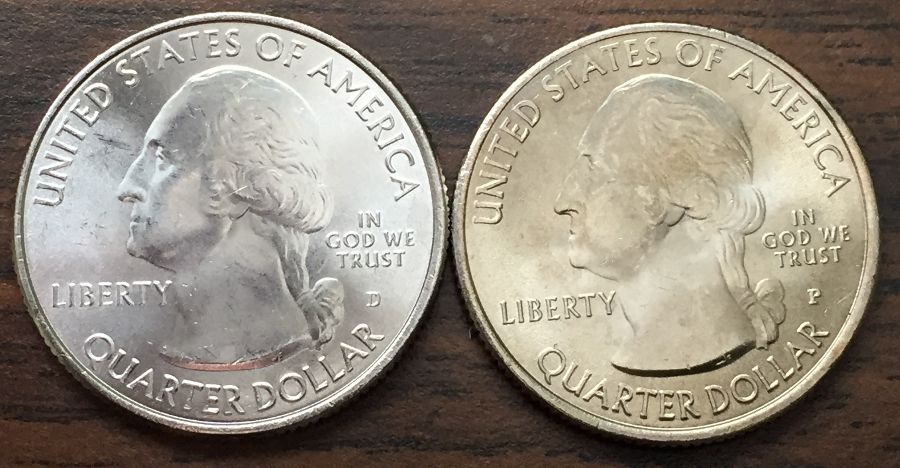 Edit: here's an article I found quickly on sulphur content in paper/cardboard and tarnishing. Seems likely to be the culprit. https://theassayoffice.co.uk/tarnish_labexpertEdited by kbbpll
01/18/2018 11:37 am
|
| |
Replies: 9 / Views: 7,501 |
|






 Posted 01/15/2018 2:45 pm





