| Author |
 Replies: 20 / Views: 8,418 Replies: 20 / Views: 8,418 |
|
Pillar of the Community
 Spain
2752 Posts |
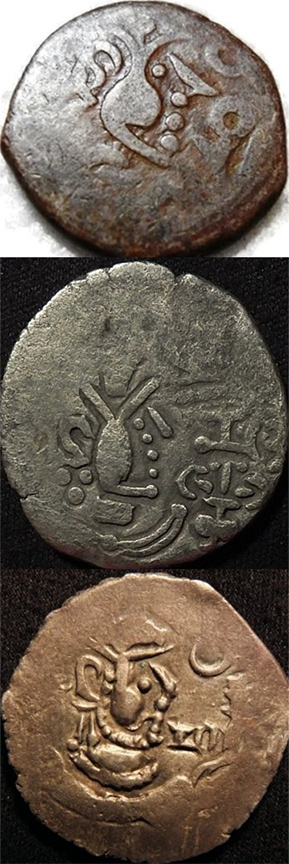
Palas Dynasty Bengal 850-988AD Silver drachm 3.78gr Again don't know much about these..but will start to research... Wiki has a good breakdown of the history.. Obverse-King's bust to right (I really like the style of this portrait) Reverse-Fire altar Paul 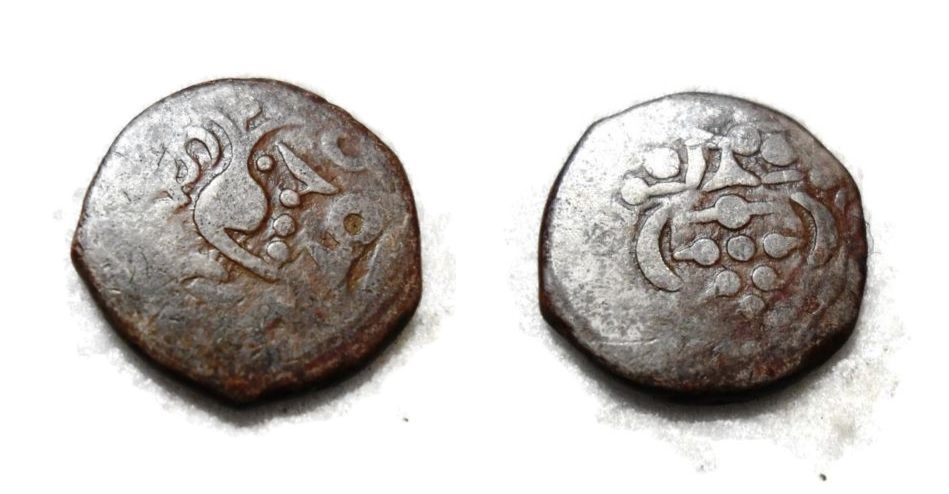 |
|
|
|
Pillar of the Community
United States
7067 Posts |
I love the portrait on this one, even with the periphery worn away. Neat coin.
|
|
Moderator
 United States
23731 Posts |
Haven't seen one of these before, Paul you have been finding some really nice coins lately.
|
|
Rest in Peace
United States
17900 Posts |
That is a real nice looker. I've never seen that one either.
|
|
Moderator
United States
34549 Posts |
I, for one, would love to have you follow up on this thread when you are done with your research. This isn't an area that I am knowledgeable.
"If you climb a good tree, you get a push."
-----Ghanaian proverb
"The danger we all now face is distinguishing between what is authentic and what is performed."
-----King Adz
|
|
Pillar of the Community
 Spain
2752 Posts |
The Palas dynasty of Bengal..As promised a little bit of history and a new photo of my coin... 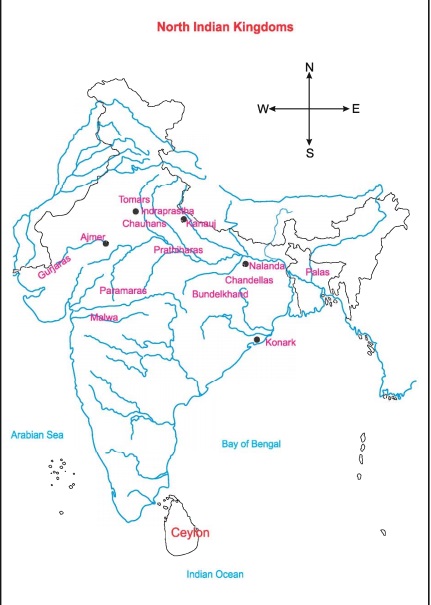 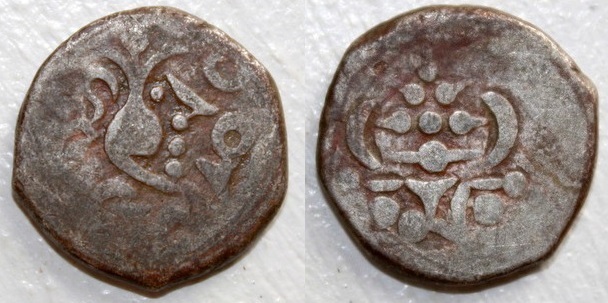 This is the only photo reference I seem to be able to find that is very similar..Ref Numista.. 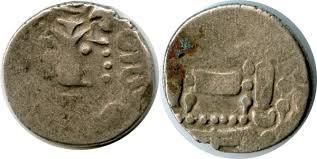 The Rajput Period (647A.D- 1200 A.D.) 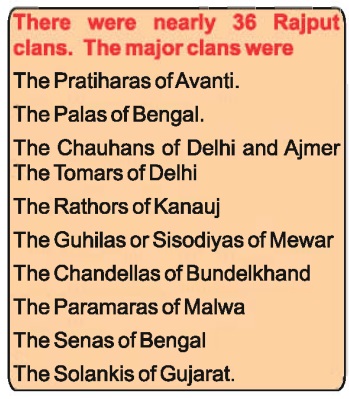 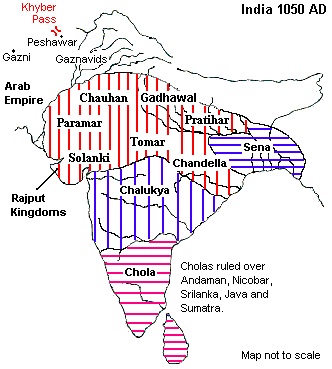 The Pala Empire was an Indian imperial power, that existed from 750-1174 CE. It was ruled by a Buddhist dynasty from Bengal in the eastern region of the Indian subcontinent, It gets its name from all the rulers bearing names ending with the suffix Pala, which means protector.The Palas were followers of the Mahayana and Tantric schools of Buddhism.Here's a list of the rulers.. Gopala I (750-780) Dharmapala (780-810) Devapala (810-850) Mahendrapala; Shurapala I Vigrahapala I (861-866) Narayanapala (866-920) Rajyapala (920-952) Gopala II (952-969) Vigrahapala II (969-995) Mahipala I (995-1043) Nayapala (1043-1058) Vigrahapala III (1058-1075) Mahipala II (1075-1080) Shurapala II (1080-1082) Ramapala (1082-1124) Kumarapala (1124-1129) Gopala III (1129-1143) Madanapala (1143-1162) Govindapala (1162-1174) There was complete anarchy in Bengal between 750-760 A.D, so the chieftains of Bengal selected Gopala as the King of Bengal and Bihar in order to put an end to the chaos. Gopala soon restored order and founded the Pala dynasty. He extended his power over Magadha and the Pala dynasty ruled over northern and eastern India. Dharmapala (769-815 A.D.) the son of Gopala, succeeded him and became the master of Northern India after defeating the Pratiharas. He was a staunch Buddhist and founded several monasteries and the famous Vikramasila University. He also renovated the Nalanda University... I lived in India for a while many many years ago and actually visited both these places not realising that one day I would own a coin related to them... 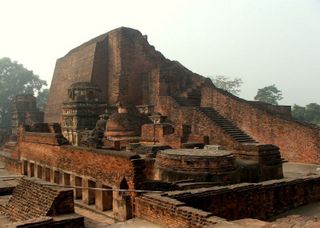 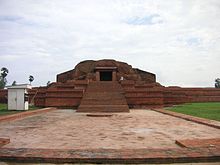 ....................................Nalanda university.......................................................Vikramshila university Dharmapala's son Devapala (815-855 A.D.) who succeeded him kept the Pala territories intact. The last Pala king was Govinda Pala and by the middle of the 12th century the Pala kingdom gave way to the rising power of the Senas from the East. The Pratiharas of Central India, the Palas of Bengal and the Rashtrakutas of Deccan wanted to establish their supremacy over Kannauj and the fertile Gangetic Valley. Their struggle lasted nearly 200 years and weakened all of them which enabled the Turks to eventually overthrow them all. 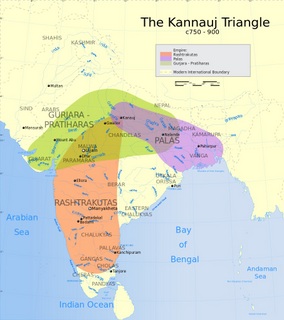 |
|
Moderator
United States
23731 Posts |
Paul, a very informative post. Thanks for updating this thread.
|
|
Pillar of the Community
Spain
2752 Posts |
Thanks Ron...
I still have a 'NAG' about this coin as I cannot find a similar bust style, they all seem to be of a much cruder style like the Numista reference...
Any thoughts? Or even better a photo of a comparable specimen?
Thanks Paul
|
|
Moderator
United States
34549 Posts |
Quote:
Any thoughts? Maybe reach out to @drnsreedhar? "If you climb a good tree, you get a push."
-----Ghanaian proverb
"The danger we all now face is distinguishing between what is authentic and what is performed."
-----King Adz
|
|
Pillar of the Community
United States
7067 Posts |
|
|
Pillar of the Community
Spain
2752 Posts |
Thanks Bob... That has given me a couple of leads  Paul |
|
Pillar of the Community
United States
6130 Posts |
Yeesh, I thought I had already replied to this thread? First off, very nice pick up! I had been watching that one, but decided not to risk the wife's wrath: "Don't you already have *ENOUGH* of these?!"  Your attribution is correct, as near as I can tell. Still haven't found time in the day to read Maheshwari's chapter on the coins; I am not familiar enough with the coins to digest it from a quick skim. Your coin is called a Sri Vigra dramma, tentatively attributed to Vigrahapala I, 861-866. Before this standardization, the Pala drachms were a trainwreck, with styles and standards all over the place. Most are inscribed, generally Sri Ma or Sri Mi. They are supposed to be common, but only very rarely appear for sale. That RKS Store has gotten his paws on so many is a fluke; I've snatched up several dozen after two years of losing auctions for $15-25 per coin. This type of coin comes in a few flavors; there are "proto Sri Vigra" coins, which are a bit better struck and have a solid column for an altar shaft. They don't actually say Sri Vigra, but have crescents like that square face drachm you linked from numista - Maheshwari thinks those might be a degenerate "Ja". Within the proper Sri Vigra, the altar shaft is replaced by a single letter - Ma on your coin (the more common type) and Sa (a little less common). I missed out on a nice Sa type a few days ago - sniped at the last second on what I assumed to be a safe bid. Following this (or parallel?) Is the Sri VI drachm, much more common but also tough to find in its non-degenerate form: 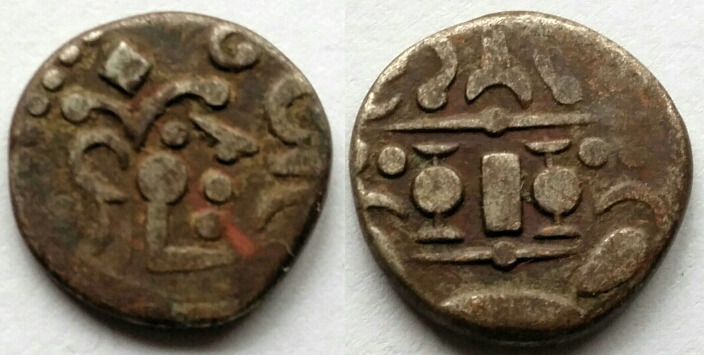 Note the similar "candy" shaped fire altar ribbons. The shaft is a pillar on this coin, and the flames are replaced with a "spire" shape, while the attendants arms curve the wrong way. I have honestly no clue what coin type served as inspiration for this coin! Over time, the design elements expanded to the point that most only show the letter "Sri" and the center of the fire altar. The Sri Vi was adapted to create the Bhoja type drachm; the flames replaced with a legend and the obverse totally replaced. |
|
Pillar of the Community
Spain
2752 Posts |
Thanks Steve! Your replies have been very helpful and are much appreciated Quote:
the altar shaft is replaced by a single letter - Ma on your coin I hadn't seen this so really good to know.. 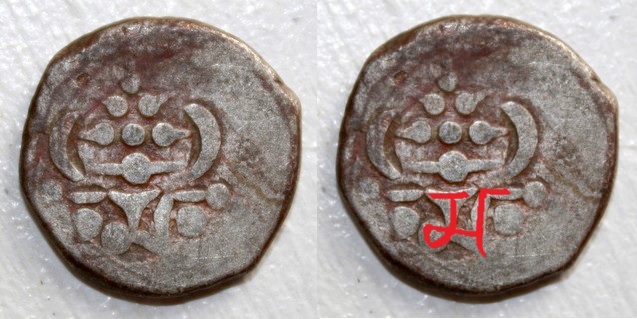 btw..Very nice coin with great detail good pick up... Paul |
|
Pillar of the Community
Spain
2752 Posts |
Picked this one up a few weeks ago..Again I was quite taken by the simplistic absract portrait "Proto Sri Vigra"..19.8mm 3.68grams. As far as I know its the earlier type of the Palas-type drachms(The OP coin) I think around 775-850AD... One thing I did notice is the 2 attendants either side of the altar aren't as abstract, and seem to have a reasonably realistic human form and are definitely female? 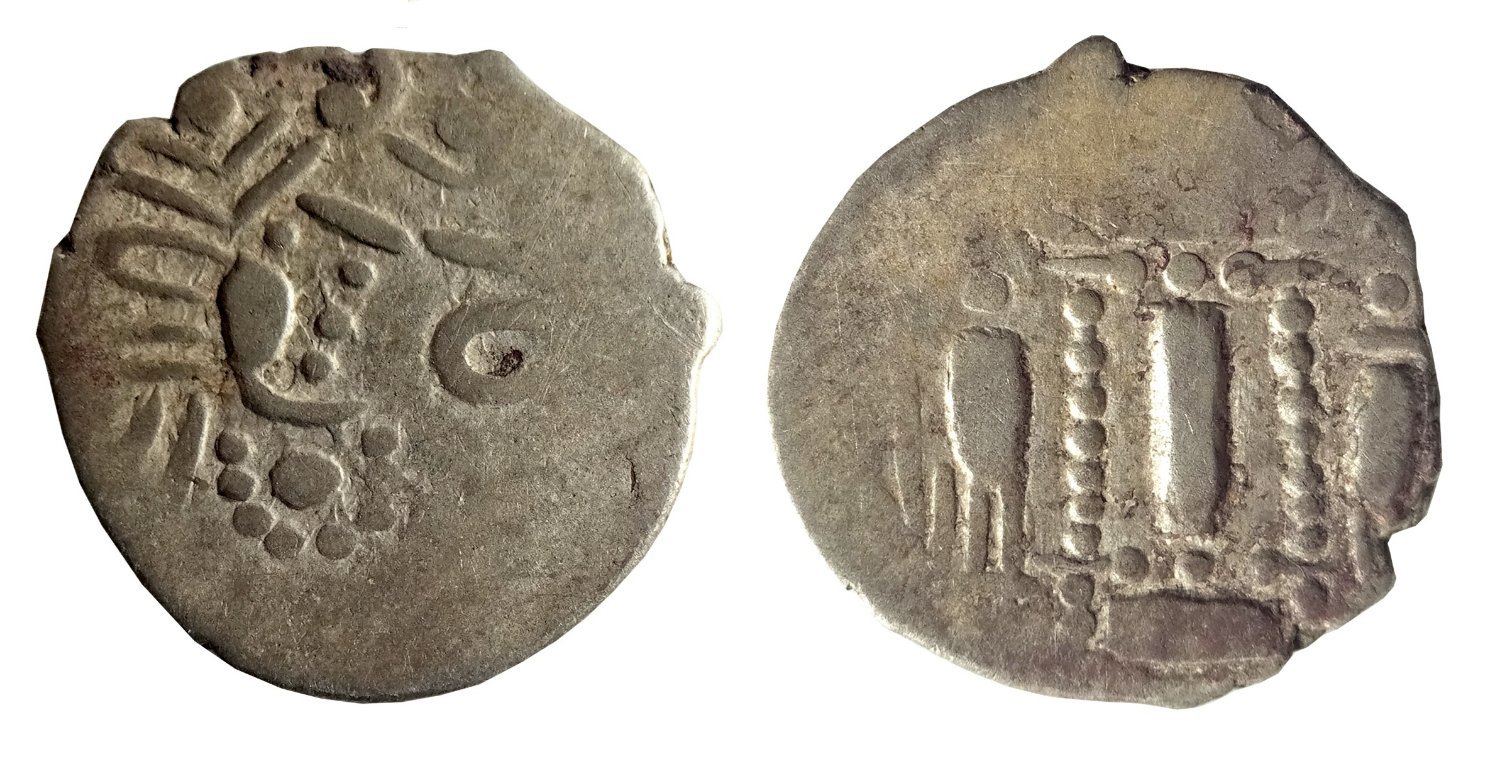 I managed to find 5 other coins of the same type and have used these to simulate a rough picture of what I think the design is showing. The red symbols in front of the portrait,from the top, read 'Sri Vi' but I'm having problems reading 'gra'(the bottom symbol)..Maybe this is just an extension of the decorative clothing?...See below Any info greatly received. Thanks Paul 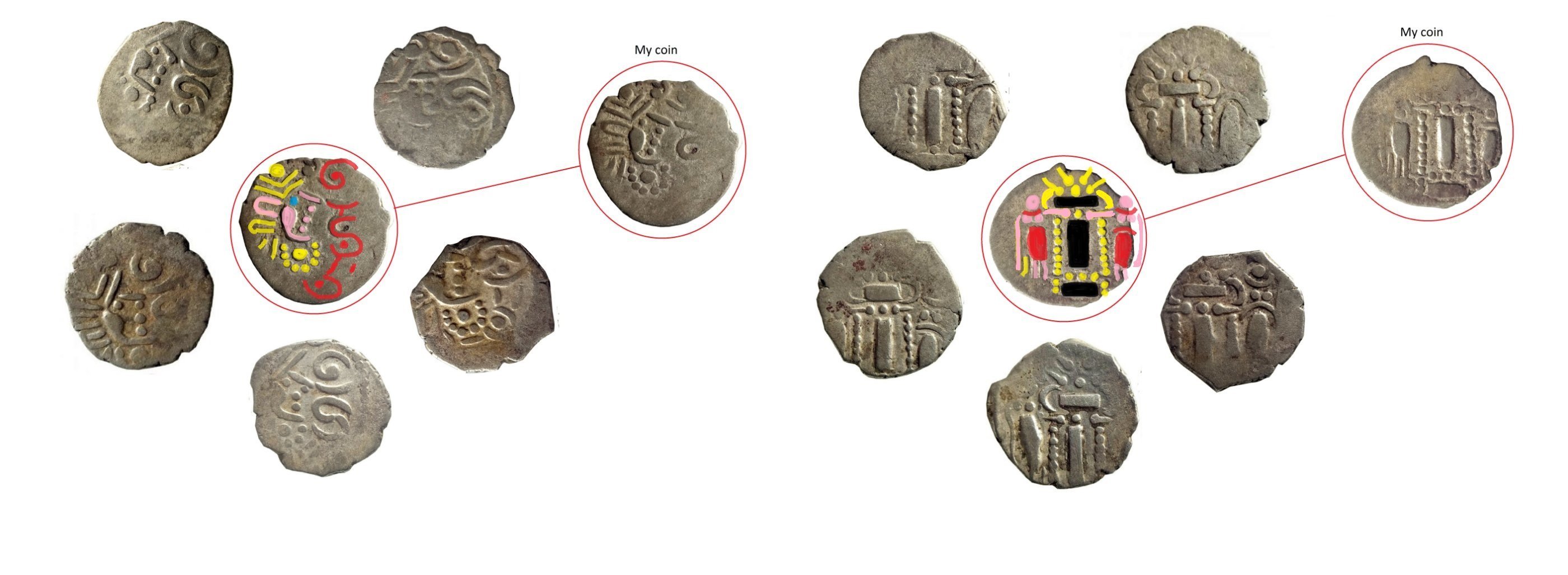 Edited by Palouche
01/26/2019 4:38 pm
|
|
Pillar of the Community
United States
1554 Posts |
After reading through this thread, I thought I would see what John Deyell has to say in his Living Without Silver: The Monetary History of Early Medieval North India, 1990 (pp. 25-28). He begins by noting an inscription which records temple donations between AD 902 and 967. The inscription mentions a coin called vigrahapala dramma, "generally agreed" to be the coin type discussed here, along with another called adivaraha dramma. Deyell interprets the obverse inscription as sri vigra. Sometimes sa or ma are found on the reverse. The traditional attribution since the 19th century has been, he explains, to the Palas of Bengal. Deyell finds this "untenable", however, due to the fact that the only Vigrahapala of that dynasty reigned c. 854-857, at a time when the vigrapala dramma's primary circulation zone was under the control of Bhoja I Pratihara. Deyell then cites more recent scholarship which attributes these coins to the Gurjara-Pratiharas, prior to the issue of the adivaraha drammas, Bhoja's "boar" coins. On the basis of design evolution, Deyell dates the vigrahapala drammas "prior to AD 836" and on the basis of "several stages of evolution" suggests that "they must have been issued over a long period, possibly 50 to 100 years". This dating places them in the reigns of Bhoja's predecessors but raises other concerns, namely who in fact was in control of the areas indicated by coin finds in the century prior to 836. Deyell concludes that the most likely scenario is that the vigrhaapala drammas were issued "by the successive protagonists for the possession of [the region] in the eighth century: Indrayudha of Kannauj, Dharmapala of Bengal, Vatsaraja Pratihara of Ujjain, or any of their feudatories and allies, throughout the region of the Ganja basin". Whatever the explanation, Deyell notes that this coin type passed current with later Pratihara issues as evidenced by the fact that of 52 documented hoards containing vigrahapala coins, 23 also contained later Pratihara coins (i.e. the adivaraha coins mentioned above).
Edited by Kushanshah
01/27/2019 07:57 am
|
|
Pillar of the Community
Spain
2752 Posts |
Thanks for the information KS!
Its a shame (and frustrating) but this book seems to be so expensive otherwise I'd buy one...Paul
Edited by Palouche
01/29/2019 02:37 am
|
| |
Replies: 20 / Views: 8,418 |







 Posted 02/18/2018 4:22 pm