| Author |
 Replies: 10 / Views: 2,356 Replies: 10 / Views: 2,356 |
|
|
Rest in Peace
10197 Posts |
Edited by Crazyb0
02/20/2018 9:54 pm
|
|
|
|
Pillar of the Community
United States
3479 Posts |
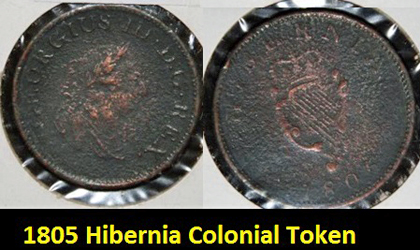
cool finds! The only one I recognize from trolling colonial listings on Heritage is the Hibernia but I don't ever recall seeing one dated 1805. I like your approach. I do the same thing. I research price history and bid on colonials accordingly on Heritage. Then spend the next few weeks learning about the coin I purchased.
|
|
Pillar of the Community
United States
3344 Posts |
 I like 'em man! Love old copper. "Nummi rari mira sunt, si sumptus ferre potes." - Christophorus filius Scotiae
|
|
Moderator
 United States
34562 Posts |
Nice additions to your collection!
"If you climb a good tree, you get a push."
-----Ghanaian proverb
"The danger we all now face is distinguishing between what is authentic and what is performed."
-----King Adz
|
|
Pillar of the Community
United States
4883 Posts |
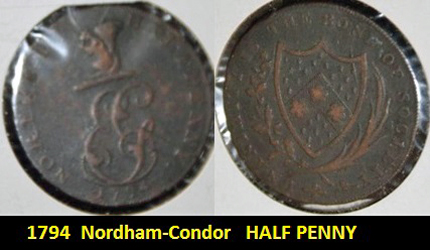
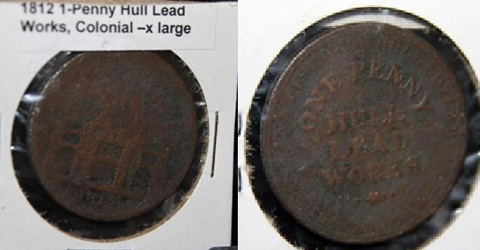
I think this group would be most accurately classified as Provincial (Conder) Tokens of the type that circulated within the U.K. in the late 18th and early 19th centuries.
Colligo ergo sum
|
|
Rest in Peace
 10197 Posts |
Thank you Lucky Cuss for actually answering my question. I'm trying to determine where these were used as currencies. Now, were any of these actually circulating during our early US financial times or not? I'm trying to decide, are these going in my US collection as alternative Colonials or do they reside in my old Foreign collections?
|
|
Pillar of the Community
United States
1677 Posts |
While anything could possibly have circulated, I would only consider the Irish halfpenny as something that may have circulated in the U.S. I don't know if the Condors even circulated in England to any great degree.
|
|
Pillar of the Community
United States
4883 Posts |
Quote:
I would only consider the Irish halfpenny as something that may have circulated in the U.S. Certainly the earlier 18th century Hibernias did, but I'd have doubts that one dated 1805 would have. Quote:
I don't know if the Condors even circulated in England to any great degree. Per Wikipedia: "By 1795, millions of [Conder] tokens of a few thousand varying designs had been struck and were in common use throughout Great Britain." Colligo ergo sum
Edited by Lucky Cuss
02/21/2018 5:45 pm
|
|
Rest in Peace
10197 Posts |
Yes, after reading quite a bit and actually Identifying these per James Conder and others, these were the common coinage circulating. The British mint had stopped coin production in the 1770's and didn't resume until 1821, the businesses took matters into their own hands to correct that problem!
Wasn't any different back then...the most feared words were "I'm from the government, I'm here to help you"!
Edited by Crazyb0
02/21/2018 6:09 pm
|
|
Bedrock of the Community
United States
12477 Posts |
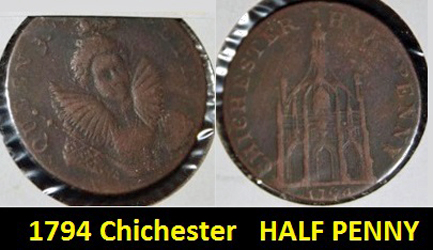
I know I've posted the link to the online D&H Conder catalogue here somewhere. I bet you could find the majority of those in there. I really don't know if they were also used early on as commonly circulating coinage in the US or not. I'm not sure that's a question that could be definitively answered. Here's the link again, anyway: http://provincialtokencoinage.weebly.comI actually managed to download the entire work in a format I can print. Unfortunately, it's over 600 pages, so that may have to wait.  Anyway, the 1794 Chichester (Sussex) halfpenny at the start is on this page of the D&H catalogue: 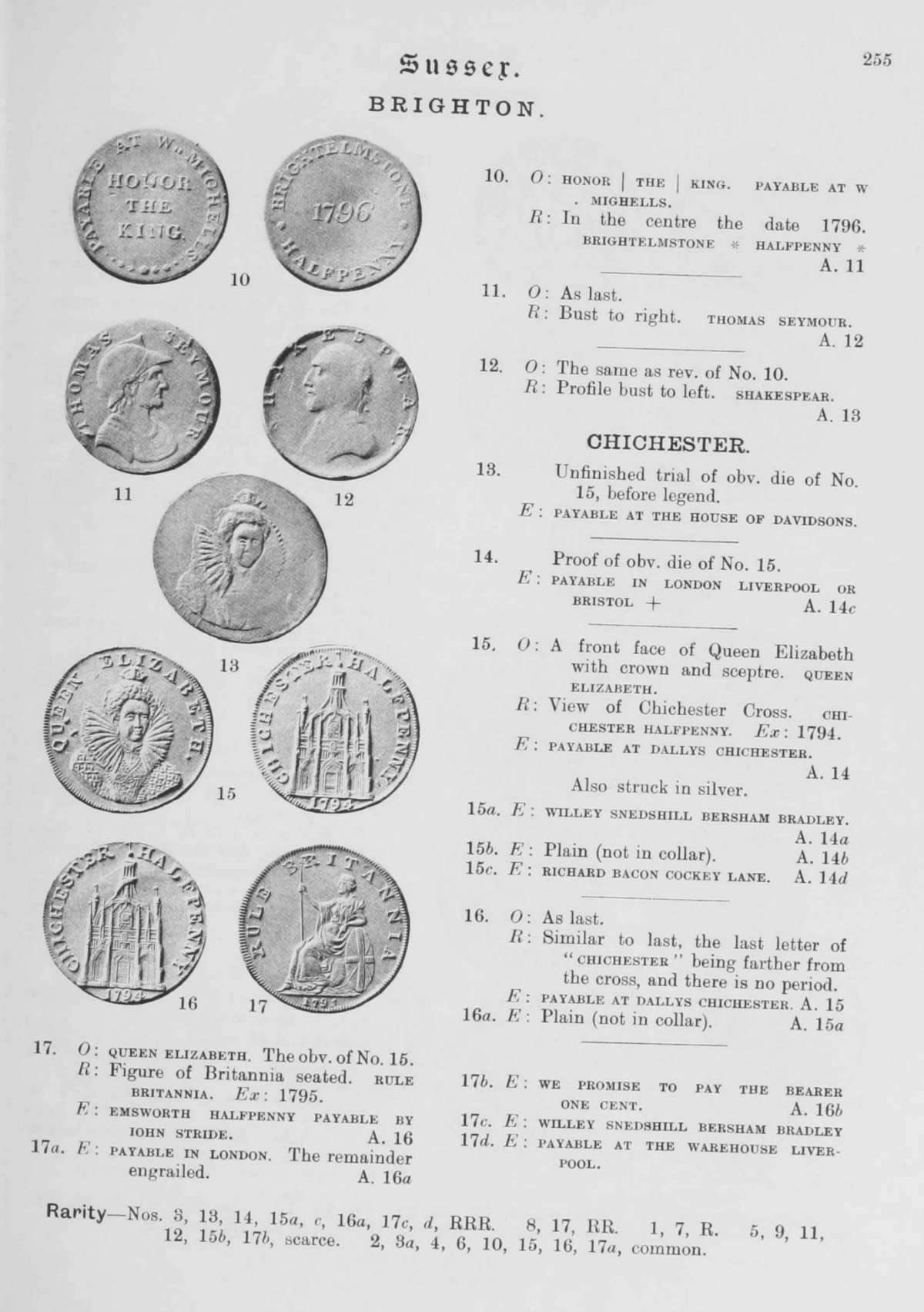 In Memory of Crazyb0 12-26-1951 to 7-27-2020
In Memory of Tootallious 3-31-1964 to 4-15-2020
In Memory of T-BOP 10-12-1949 to 1-19-2024
Edited by spru
02/22/2018 03:02 am
|
|
Pillar of the Community
United States
1677 Posts |
I have found early 19th century British coins metal detecting along with large cents so they probably did circulate to some degree, but certainly not in the quantity of the earlier pieces.
|
| |
Replies: 10 / Views: 2,356 |
|









 Posted 02/20/2018 10:40 pm





