| Author |
 Replies: 89 / Views: 11,141 Replies: 89 / Views: 11,141 |
|
|
|
Pillar of the Community
Belgium
1185 Posts |
curious to see your guesses about this one hint: it is an arendrijksdaalder n.d. minted in 1584 in the city of Nijmegen, months before the army of Alexander Farnese cause the closure of this mint 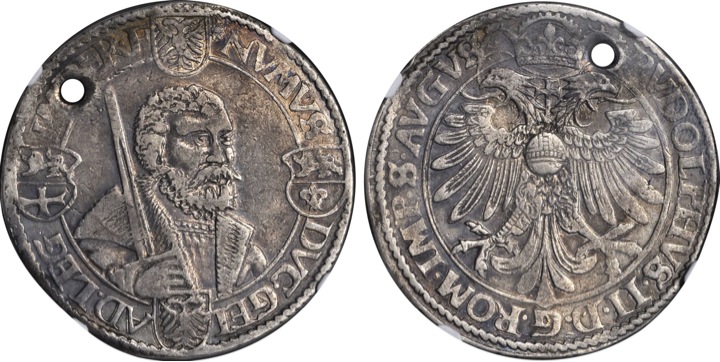 |
|
Pillar of the Community
United States
3352 Posts |
Not knowing anything about whether this arendrijksdaalder is an extreme rarity, I'd call it a $300 coin with the hole. The only other arendrijksdaalder I could find to compare is this 420 euro specimen from Deventer. http://rondomons.nl/vergroot.php?co...nheight=1024The holed cob is not a rarity and is well worn, though the date is readable. It cost $14, and probably worth 3x that. "Two minutes ago I would have sold my chances for a tired dime." Fred Astaire
Edited by thq
04/16/2018 9:48 pm
|
|
Pillar of the Community
Australia
1333 Posts |
|
|
Pillar of the Community
Belgium
1185 Posts |
the estimations of 170-300 $ are very well in agreement with S&B but this piece turned out to be extremely rare and was sold for 2200 $ this case illustrates that it is hard to predict the price of rare holed coins https://www.numisbids.com/n.php?p=l...44&lot=24492 |
|
Pillar of the Community
United States
3352 Posts |
The same applies to the very expensive Spanish royal cobs, where holes are common http://www.sedwickcoins.com/articles/royals.pdfIn the case of my low grade Guatemala, the hole is ugly and the condition is worn. Without the hole it might be worth 25% more. "Two minutes ago I would have sold my chances for a tired dime." Fred Astaire
|
|
Pillar of the Community
  United States
8029 Posts |
Many good lessons. Certainly that thaler posted by 1c5d is an extreme case of a very rare coin that is still worth a lot with a hole. thq, I was going to guess something like $20-25 for your Guatemala cob, after looking through recent auction results. As you say, I also ran across quite a few Spanish colonials with holes that are currently up for auction with starting prices well into the $hundreds. Here is a post-Colonial (Ecuador) that I sold some time ago. Tiny coin with a VERY tiny hole. Any guesses? 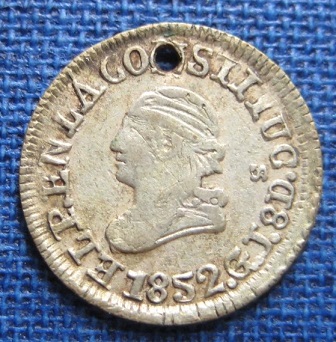 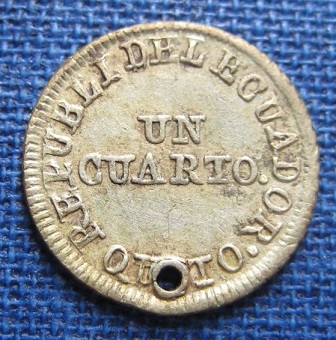 |
|
Pillar of the Community
Belgium
1185 Posts |
|
|
Pillar of the Community
United States
8029 Posts |
Thanks for bumping the thread.
Very close. It sold for $36. I am pretty sure it only cost me a dollar or two when I bought it back in the 1970s.
|
|
Pillar of the Community
Belgium
1185 Posts |
Quote:
it only cost me a dollar or two when I bought it back in the 1970s and then you considered this coin to be holy? Edited by 1c5d7n5m
05/22/2018 01:45 am
|
|
Pillar of the Community
United States
8029 Posts |
That was before I was collecting "holy" coins. But I found that "hole-y" coins allowed my small budget to go much farther (I think I was earning $1.80/hour working at McDonalds evenings after school)
|
|
Pillar of the Community
Belgium
1185 Posts |
great story !
a bit alike how I started in the early 1970-ies - in the tulip bulb fields region in South Holland: summer vacation of bulb cleaning for an hourly wage even less than what you describe ended up with the amount of money to buy a new coin ; in that period (oil crisis) the market was expensive
|
|
Pillar of the Community
United States
4883 Posts |
Here's one I picked up just today. So far as I can determine, this was issued under the auspices of the Batavian Republic for circulation in the Dutch East Indies. The denomination is 5 cash, which was equivalent to one sixteenth of a gulden. The Latin motto on the obverse translates as "watch and pray". That it's holed dead center suggests this was done so as to be able to carry it strung on a thin cord. 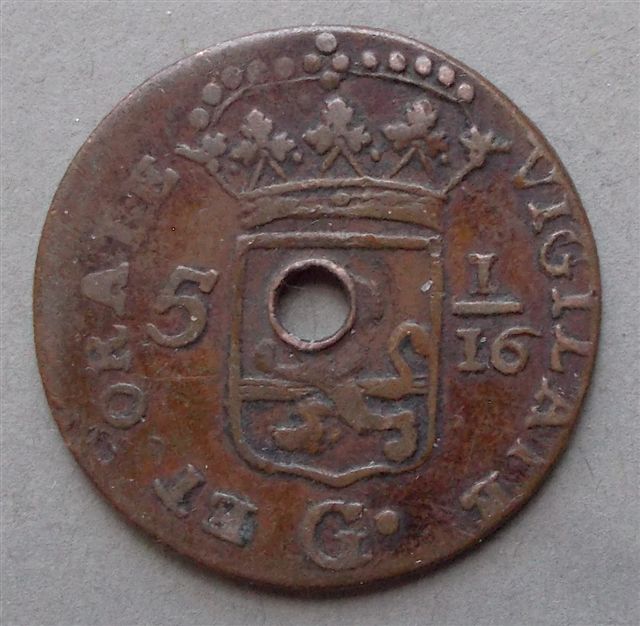 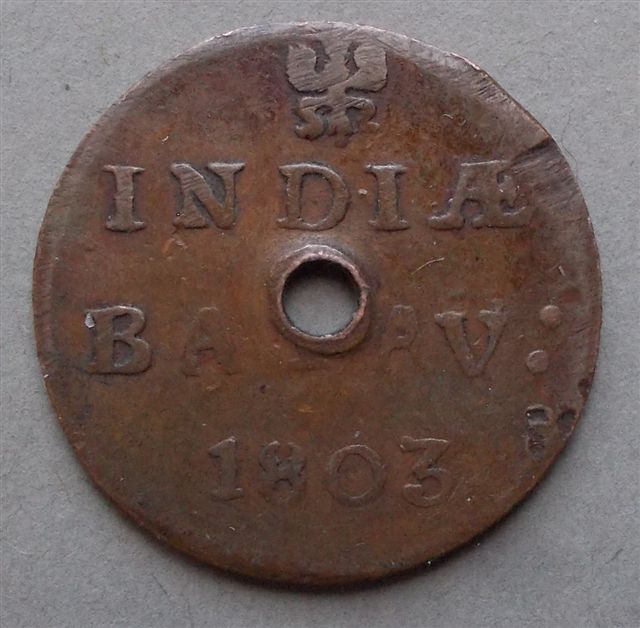 Colligo ergo sum
|
|
Pillar of the Community
Belgium
1185 Posts |
@Lucky Cuss interesting case, perhaps this was local standardization rather than vandalizing your coin is a farthing (duit) which was worth 1/8 th of a stuiver in The Netherlands, but perhaps more in de Dutch Indies were other currencies of small denomination circulated with 20 stuivers in a guilder, there were 160 duiten per guilder Your coin was issued in the Dutch province of Overijssel (OBV: coat of arms - Lion walking in the river IJssel) in the former Dutch Indies local denominations in copper were made had central holes (so called Pitjes ); this is why the Dutch Batavian Republic coin was adapted to local use later, during the coins issued in the Kingdom of Holland (from William 1 on) the coins of the Dutch Indies were produced from the start official central holes (e.g. the 2 1/2 cents); here are two weblinks (in Dutch) to this type of officialized coins http://wiki.muntenenpapiergeld.nl/i...?title=Pitjehttp://wiki.muntenenpapiergeld.nl/i...=GaatjesmuntEdited by 1c5d7n5m
05/23/2018 02:56 am
|
|
Pillar of the Community
United States
4883 Posts |
In wasn't really expecting a flurry of guesses on the price I paid for that Dutch coin, so I'll end what little suspense there may've been - as part of a larger group, it worked out to costing me about 15¢. Here's another interesting holed coin - I take it to be a ½ real, but there's some discrepancies. First it appears to heavily worn from circulation, and therefore seems a poor candidate for holing so as to be worn as jewelry. Second, even allowing for its wear and holing, it's really light at just 1.11 gram. You wouldn't think a ½ real would be likely to be forged, but in the past there was a practice whereby a debased contemporary counterfeit was holed to mark it as such. If that's what was done in this instance, it seems clear that passed from hand to hand for an awfully long time before being invalidated. 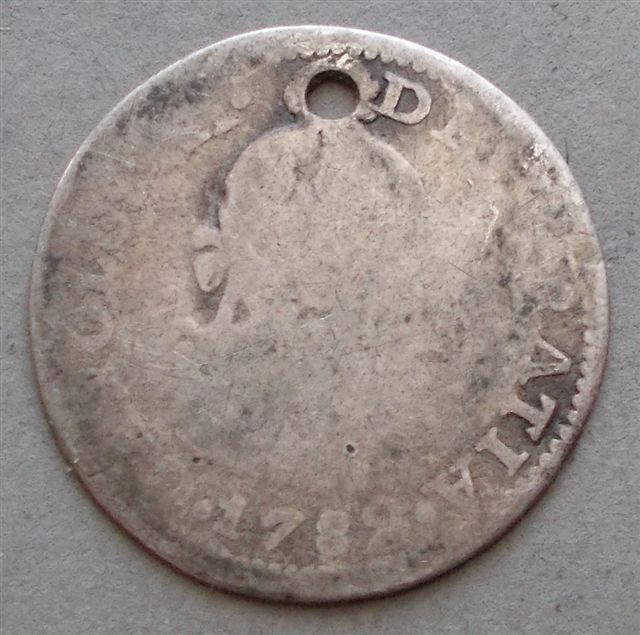 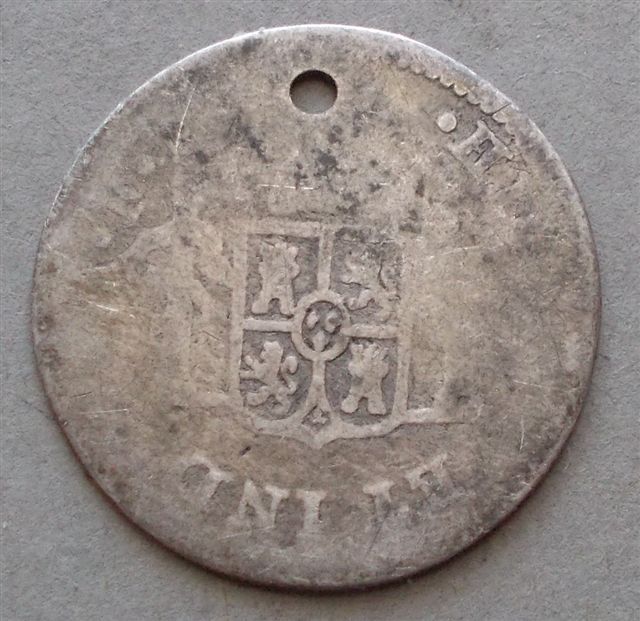 Colligo ergo sum
|
|
Pillar of the Community
United States
8029 Posts |
Interesting holed copper, Lucky Cuss, and also interesting speculation about that half real. I'll respond with my own holed CHarles III 1/2 real (1775) that sold for $4. So I will guess yours cost less, maybe just a dollar or so. 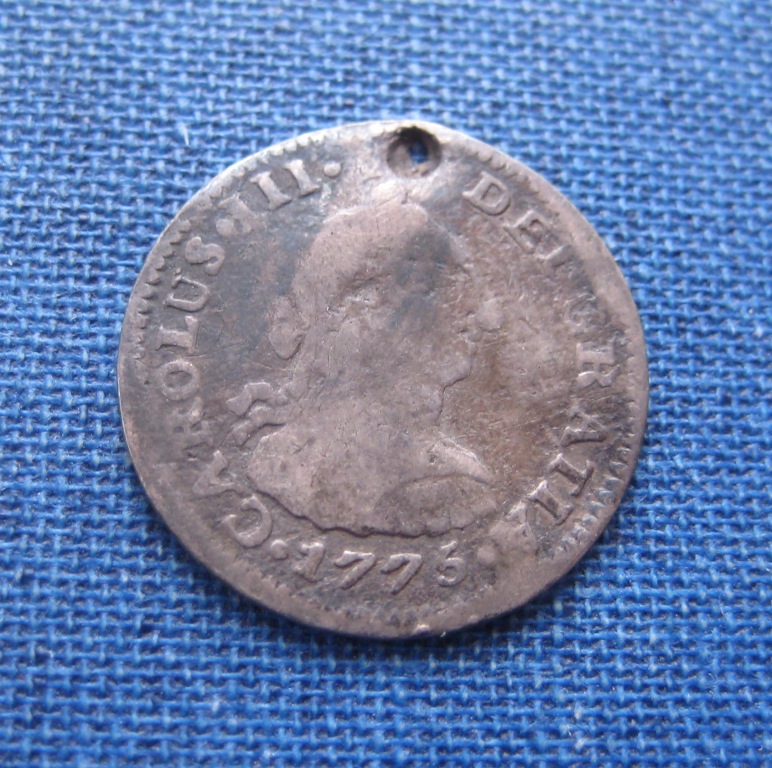 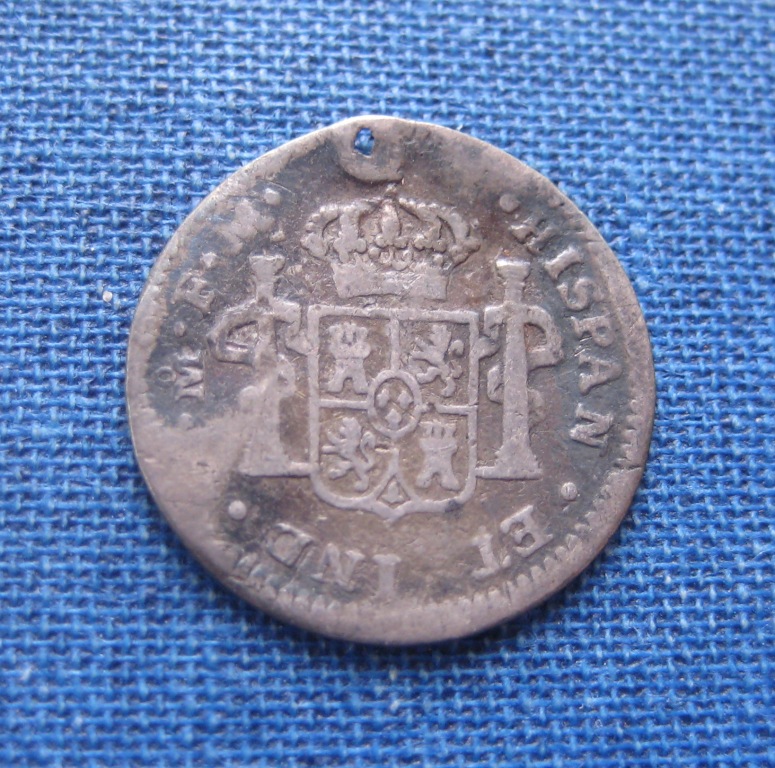 Edited by tdziemia
05/24/2018 10:12 pm
|
| |
Replies: 89 / Views: 11,141 |






 First Page
 Previous Page


 Posted 04/16/2018 9:40 pm


