| Author |
 Replies: 23 / Views: 4,961 Replies: 23 / Views: 4,961 |
|
Pillar of the Community
United States
2643 Posts |
Well, the yen was a fake. How about this? 26.91 gr., 41.2 mm.   |
|
|
|
Bedrock of the Community
United States
12057 Posts |
Not an authentic coin, unfortunately, in my opinion. In addition to the lack of any test marks, the dot after the 5 in the date looks more like a dash, and, more telling, the mint mark of A which is present on all 1765 issues is not present below the bust. The Madonna's face is too detailed for a real coin, and the lettering on the obverse and reverse too well aligned when considering that the dies were letter-punched by hand. The stops (dots) in the obverse legend are too small as well. A PCGS-graded 1765-A Madonna Thaler: https://www.PCGS.com/cert/80886239Member ANA - EAC - TNA - SSDC - CCT #890 "Most of the things worth doing in the world had been declared impossible before they were done." -- Louis D. Brandeis |
|
Pillar of the Community
Australia
1333 Posts |
Sad to hear that maybe this will turn out better.
|
|
Pillar of the Community
 United States
2643 Posts |
|
|
Bedrock of the Community
United States
12057 Posts |
You are correct that the dot can sometimes look like a dash; and that they were struck without mintmarks. I confirmed this in my own copy of SCGC. For some reason I thought all of the 1765's were A mints, but that is not the case. (I'm not as old as these coins, but I'm not a freshly-minted Euro, either.) However, out of a couple dozen of these I've held and seen in-hand over the past years, I have yet to find one without adjustment marks, and I still think that taken as a whole the coin looks off. Even the prooflike Uncirculated examples in the high-grade TPG holders show flat strikes with weak detail and planchet adjustment or file marks. There have been so many jewelry and tourist copies made of these issues for so long that it is always worth it to examine the coin with a critical eye! Weight should be +/- 28.5gm and 41mm diameter. If passes those + ring and specific gravity tests it would be worth authentication since passing those basic tests tips the scales in your favor (no pun intended.) Member ANA - EAC - TNA - SSDC - CCT #890 "Most of the things worth doing in the world had been declared impossible before they were done." -- Louis D. Brandeis |
|
Valued Member
United States
414 Posts |
100% fake. Besides the tone that I instantly didn't like (smells Chinese), there are plenty of other telltale signs of this being a forgery. Here is an original example: 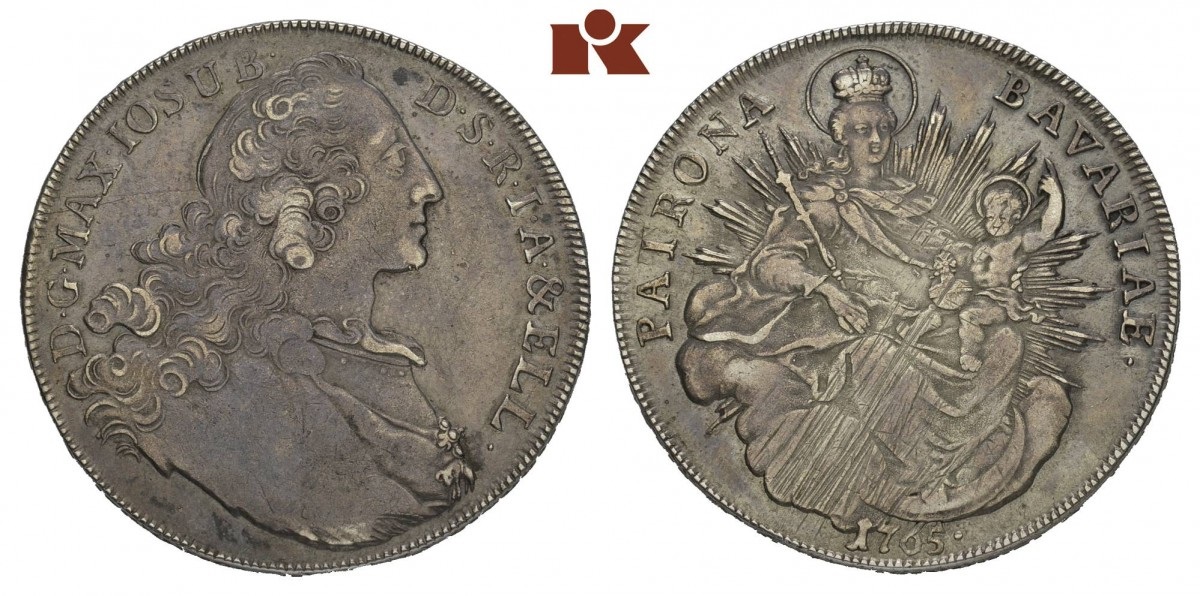 Take a look at the original and look at yours. For starters these are never so perfectly round, generally with pre 19th century German State thalers you should always be wary of perfectly circular coins. Also to Paralyse's point, adjustment marks are very common though not mandatory. Secondly, look a the denticles, especially on reverse, there are just giant blocks of denticles mushed together. Lastly the details are all mushy. Take a look at the lettering - the X in 'max' for example looks like a 'K', the E in 'Bavariae' is a blob, etc. Besides the visual component your coin's weight is off nearly a whole 1g; these should weigh about 28g. 1g variation is outside acceptable threshold. All of this, combined with the look and feel of your coin again suggest a cast copy. Here are a few more original samples so you can get a better feel for the type. Note the similarities between the originals. 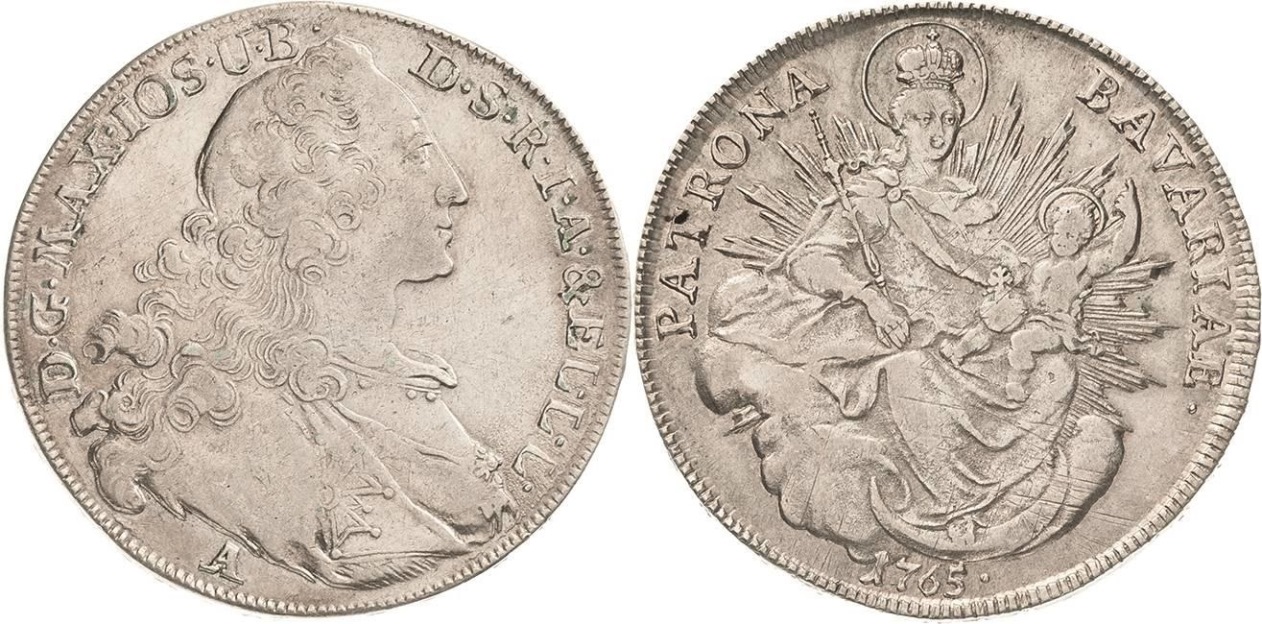 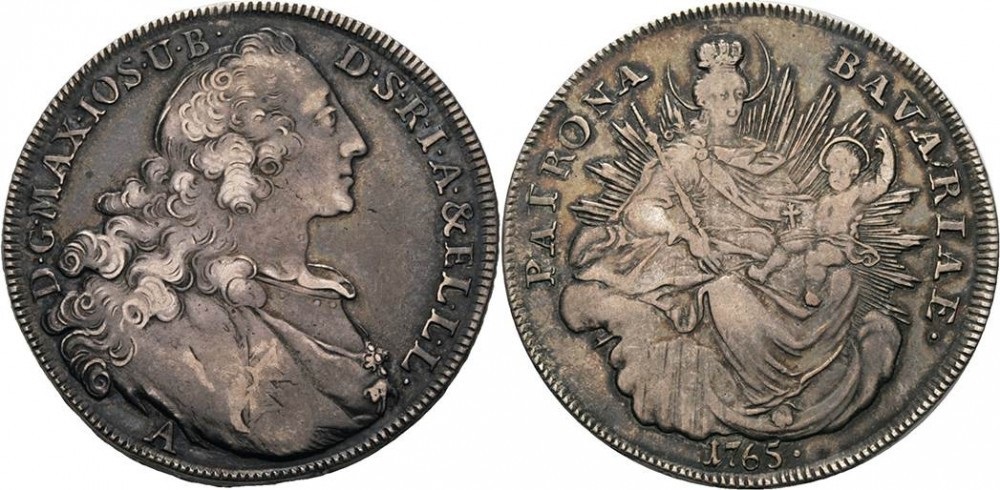 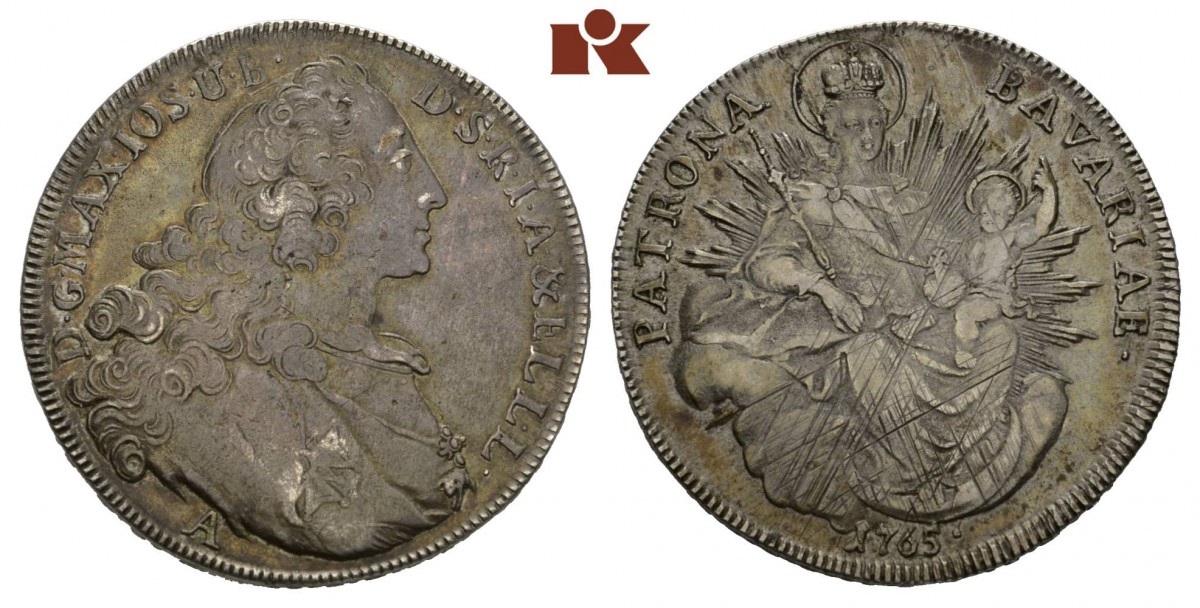 |
|
Pillar of the Community
United States
4883 Posts |
The visual cues I pick up on in what appears to be a numismatic forgery is how inconsistently the A's are rendered in the obverse legend and that the 1 in the date doesn't clearly overlap the edge of the device as it does with the others.
That said, this is far from a totally incompetent effort, and is scary for that reason. It's also indicative of how broad the range of issues that the Chinese counterfeiters deem worthy of their time has has become.
Arkie - I don't mean this in any but the most constructive way. I'd venture a sizable portion of us here have on occasion fallen into careless buying habits, but when you start to get burned too often, it's probably time to to take a step back and reconsider your overall approach.
Colligo ergo sum
|
|
Pillar of the Community
United States
2643 Posts |
You think that buying this as part of a bulk purchase for perhaps 10% over spot is too reckless?
|
|
Valued Member
United States
414 Posts |
Yes if you are helping someone get rid of a lot of brass and copper at silver prices. If you bought $50 worth of this stuff then not a huge deal. On the other hand if you've spent several hundred on stuff thinking it's silver but it's really just a bunch of China junk then you're at a significant loss. This money could have been better spent on a nice single coin.
|
|
Pillar of the Community
United States
4883 Posts |
Quote:
You think that buying this as part of a bulk purchase for perhaps 10% over spot is too reckless? The answer I'd give is that if the counterfeits mixed in have any silver content at all, then it's at least not a total loss, although I don't know how you resell such to go to the smelter if you really can't determine just what the fineness is exactly. If their composition is merely a convincing combination of nonprecious metals, then they're trash, except for somebody's black cabinet as an educational prop. I can only speak for myself on this - I really don't want to buy counterfeits at all unless they're contemporary and therefore historical in their own right, or if they're just so bad and cheap that they're good for a laugh. Colligo ergo sum
|
|
Bedrock of the Community
United States
12057 Posts |
Not all of the Madonna thaler counterfeits were modern; there are known semi-contemporary counterfeits in real silver, pewter, and at least one known example (last I checked) in gilt white metal, almost all were probably made in the 19th c. for collector demand and use in jewelry.
The design was so popular that Ludwig II of Bavaria briefly resurrected it in the mid 1860s for use on the reverse of the Bavarian Vereinsthaler, including circulating and prooflike specimen strikes; however, these coins are 8mm smaller and nearly 10g lighter in weight than the originals, providing some insight into how much that same Bavarian thaler had been devalued in less than 100 years.
Member ANA - EAC - TNA - SSDC - CCT #890 "Most of the things worth doing in the world had been declared impossible before they were done." -- Louis D. Brandeis |
|
Pillar of the Community
Hong Kong
1270 Posts |
IMHO, I don't see anything wrong with this coin so I don't think it is a fake. This is quite a common coin, not expensive so it is not possible as a numismatic forgery.
|
|
Valued Member
United States
414 Posts |
Henry,
Respectfully, you are incorrect on both of your points.
1. Just because a coin is not extremely valuable doesn't exclude it from forgers' "to fake" lists. Plenty of low value silver forgeries out there. Take the common US Morgan for example... in low grade most are worth little above melt and yet there are a TON of forgeries, some better some worse. Selling base metal at silver prices IS a very lucrative business.
2. I have posted 4 examples of genuine thalers and laid out what was wrong in the OP's coin. If you still cannot see it, then take a closer look. Focus on the letters (X, A, E, &). Also look at the dentils, they are all wrong. Lastly, this was not struck. As paralyse point out, the fact that coin is much too underweight, as it should weigh closer to 28g, only reinforces that it is a cast.
I'm sure if arkie did an SG test he would get something far below 10.
|
|
Pillar of the Community
 United States
1950 Posts |
I am also in the camp that is not sure on this...
There are certainly some concerning elements, but based off photos exclusively, not 100% sure on this...
If indeed not genuine, I would lean towards it being semi-contemporary, not base metal nor modern.
|
|
Valued Member
186 Posts |
Personally I have some doubts about the item.Doesn't quite look like a Chinese copy (I've seen worse)but its appearance is a bit suspicious.Even if a genuine coin won't command too much money, this doesn't exclude the possibility of a modern forgery.I think there are some different variants for this 1765 type but i'll leave the comparison with other thalers away for the moment.Whilst the diameter may vary between 40-42mm, the 1 gram underweight(as stated before by cableguy815) is definitely a big no-no for a 18 century thaler minted in great numbers!A picture of the edge might be interesting!,In the end, being unable to have the coin in hand means that's quite hard to make an 100% judgement!
Edited by paulCT
05/05/2018 02:58 am
|
|
Bedrock of the Community
United States
12057 Posts |
In the condition as posted by OP if genuine this is a USD $175-$200 coin minimum; the Chinese are busy knocking out fakes of common date US coins that are worth $2 to $10 at most, so yes, they do copy cheap coins. When dealing with photos, there are no absolutes, only suspicions, and this coin is highly suspicious. Can I say with 100% certainty that this is not an authentic issue? No. But I can put the probability of its being a fake at around 90% with confidence. After spending a good bit of time with a particular coin series, you begin to see what the Germans call the "Gestalt", i.e. the perception of something as more than just the sum of its parts. It is this sense that allows experienced collectors of a certain type of coin to help differentiate the fakes from the genuine coins, even if, at a cursory glance, all of the "parts" seem to be mostly correct; this is just putting into more formal terms the sense that "it just doesn't look right." OP's coin just doesn't look right. Member ANA - EAC - TNA - SSDC - CCT #890 "Most of the things worth doing in the world had been declared impossible before they were done." -- Louis D. Brandeis |
| |
Replies: 23 / Views: 4,961 |






 Posted 05/01/2018 9:03 pm





