| Author |
 Replies: 11 / Views: 3,847 Replies: 11 / Views: 3,847 |
|
|
Pillar of the Community
United States
4883 Posts |
A diminutive coin, at just 14.6 by 13.3 mm. I'm reading the mint mark as SMKB (Cyzicus), and as such it would seem to be to RIC IX 26b. I'm intrigued by what appears to be a staurogram (tau-rho) in the reverse's left field. This would be distinct from the labarum (chi-rho) that Constantine employed as a symbol for "Christ" (Χριστος). The staurogram is believed to stand for "cross" (σταυρος) or "crucify" (σταυροω) and as such may be considered to be the first, rudimentary form of the crucifix. It also coincidentally closely resembles a later Knights Templar version of the cross, which is thought by some to possibly have been derived from a symbol representing the pagan goddess Tanit. In any event, here with the collapse of the Western Roman Empire drawing near, we see an instance of Christian iconography being incorporated into a coin's design, a practice that subsequently became pervasive with regard to Byzantine coinage.   Colligo ergo sum
|
|
|
|
Rest in Peace
United States
17900 Posts |
An interesting coin filling that between the collapse of one and the beginning of another world power.
|
|
Moderator
 United States
34549 Posts |
Very nice coin. We had a pretty vigorous discussion of the chi rho at one point here on ccf I think. I don't remember a discussion of a tau rho so this is an interesting addition.
"If you climb a good tree, you get a push."
-----Ghanaian proverb
"The danger we all now face is distinguishing between what is authentic and what is performed."
-----King Adz
|
|
Pillar of the Community
 United States
4883 Posts |
I'd add that there's a transitional aspect to this coin, a juxtaposition between Christianity and Greco-Roman religious beliefs, as evidenced by Victory being shown on the reverse as well. Beyond being a personification, she was in fact a goddess for the Romans just as Nike was to the Greeks. One last point to make is that in any case she certainly conforms to the later concepts of what an angel ought to look like.
Colligo ergo sum
|
|
Moderator
United States
15908 Posts |
I have absolutely zero knowledge to contribute to any of this discussion ... simply writing to share my admiration for those of you who do ... and the power of the CCF as an educational community to connect us.  David Take a look at my other hobby ... http://www.jk-dk.art |
|
Pillar of the Community
United States
4883 Posts |
Perhaps a little late for this, but I thought it'd be worthwhile to add a graphic illustrating the difference between the staurogram and the labarum.  Colligo ergo sum
|
|
Pillar of the Community
United States
4883 Posts |
Keeping the preceding discussion in mind, note the choice made in this instance as to how to depict the "Flaming Cross".... 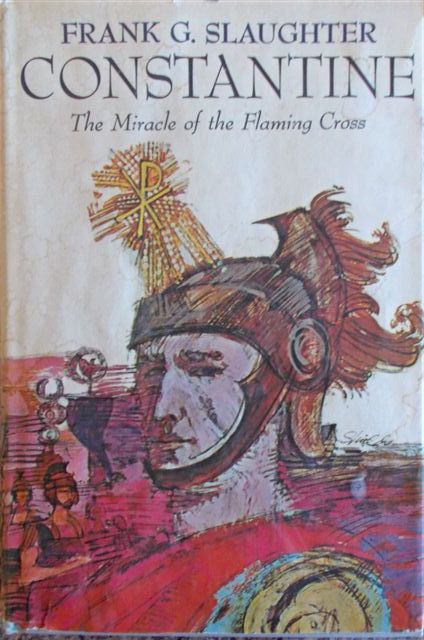 Colligo ergo sum
|
|
Pillar of the Community
United States
1554 Posts |
Nice coin and interesting discussion! One small point of clarification. The labarum is a Roman military standard or vexillum topped with a banner bearing the Chi-Rho.
Edited by Kushanshah
06/22/2018 2:32 pm
|
|
Pillar of the Community
United States
4883 Posts |
Quote:
The labarum is a Roman military standard or vexillum topped with a banner bearing the Chi-Rho. Although many sources I've looked at seem to use labarum and chi-rho interchangeably, I'd concede that you're absolutely correct on this point. Technically, the terminology I should be employing in referring to the symbol itself is as either a chrismon or sigla, or more generally as a christogram. Colligo ergo sum
|
|
Pillar of the Community
United States
1122 Posts |
Great coin, I found one in my uncleaned lot. 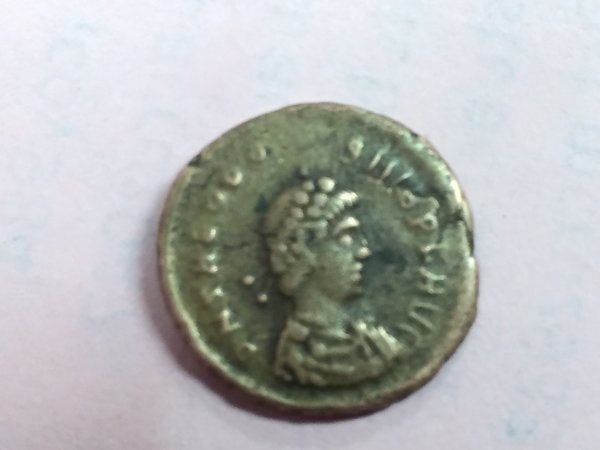 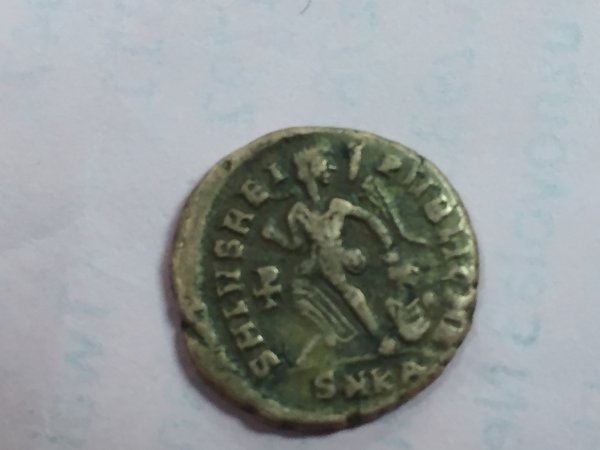 |
|
Pillar of the Community
United States
4883 Posts |
Quote:
I found one in my uncleaned lot. I don't see this type with an SMKA mint mark specifically cataloged. Colligo ergo sum
Edited by Lucky Cuss
06/22/2018 10:40 pm
|
|
Pillar of the Community
United States
1554 Posts |
RIC IX, 26(b)/ 30(a), attested for officinae A, B, Γ and Δ, examples of each in the British Museum collection.
Because this type was issued both before and after the death of Valentinian II it falls into two periods by the scheme of RIC IX and thus receives two numbers, though the coins issued during the two periods are indistinguishable.
Edited by Kushanshah
06/23/2018 12:16 am
|
| |
Replies: 11 / Views: 3,847 |
|










 Posted 05/04/2018 9:20 pm


