First Page
 Previous Page




 Posted 09/15/2019 06:04 am


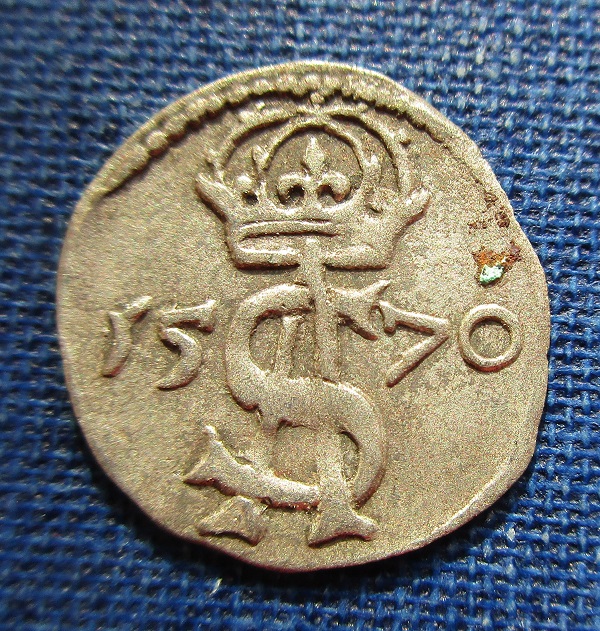
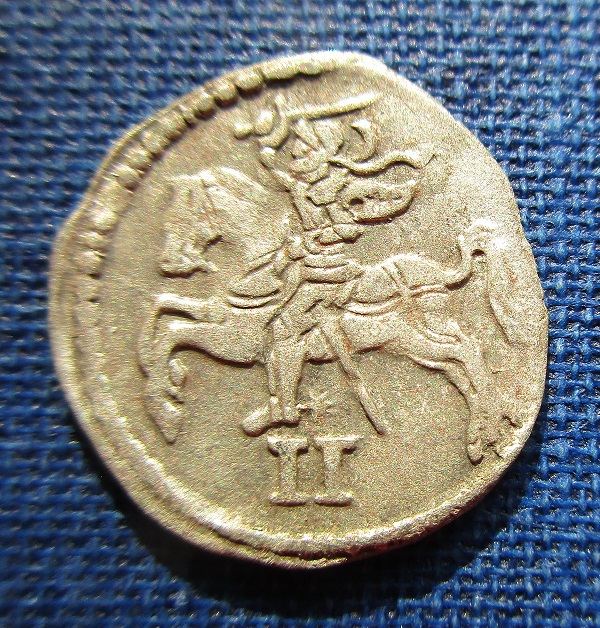
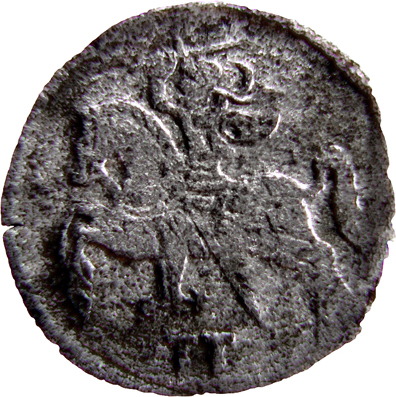
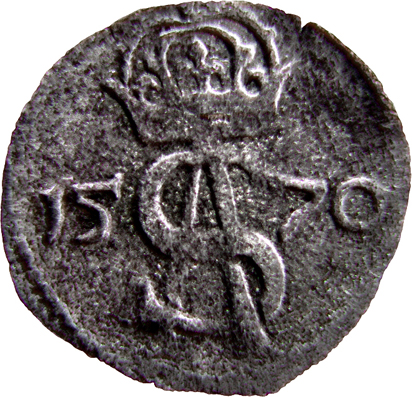
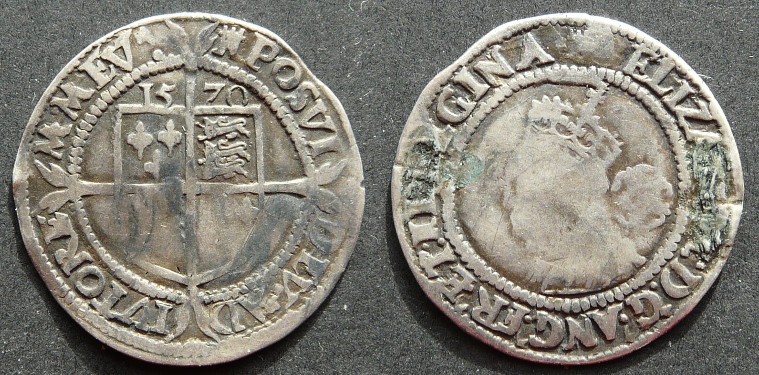
nice sixpence, NumisRob !
below a 1570 jeton featuring (as the jeton of yesterday) King Philip II of Spain (obverse) and Anna of Austria (1549 - 1580), his fourth wife (reverse). Philip and Anna married in May 1570 via a so called proxy wedding, as Philip was in Spain and Anna in Austria - without cars or airplanes a few months travel time. https://en.wikipedia.org/wiki/Anna_...een_of_Spain

A few interesting details:
- the jeton erroneously refers in the legend of the reverse to Isabella of Valois, Philip's third wife, who died in childbirth in 1568
- Anna, much younger than Philip, was originally "scheduled" to mary Philips' only son, Don Carlos, who died (not naturally) in 1568 - a major tragedy in the personal life of king Philip.
here is a portrait of Anna by the Dutch painter Antonis Mor while she traveled through the Netherlands on her way to her new husband:

very interesting point, tdziemia !
Belgium is indeed the name of a modern country created in the aftermath of the Napoleontic era, the creation of a "buffer state" in 1815 which split into a Northern part (The Netherlands) and Southern part (Belgium) in 1830.
But the name has a long history. The origin is Julius Caesar who describes Belgica as being a part of Gaul, bigger than current Belgium as it included parts of modern France, Germany and the Netherlands
This bigger Belgium is also often mentioned in the 16th and 17th centuries when the Burgundy Habsburg dynasty united the 17 provinces into one political and economical entity. The whole region of is often depicted in cartography as the LEO BELGICUS: head and shoulders representing the Northern Provinces (the future country of the Netherlands) and the body and legs being not only current Belgium, but also territories that now belong to Northern France, Luxembourg and Western Germany. Below an early example (1583 of) Frans Hogenberg (who was banned from the Netherlands by the duke of Alva and worked in Cologne).

And I want to end this post with splendid 1650 example printed in Amsterdam by Claes Jansz. Visscher, just 2 years after the end of the 80 years (1568-1648)which has split the magnificent lion in several pieces - up to present times. (Of course the poor animal peacefully dwells now in the great Zoo of Europe).

Also this LEO gives a nice summary of my story of 80 days: around the lion with its rich details of provinces and towns, one can read the legends around the portraits of quite a few important actors of this story: Philip II and the Duke of Alva, Alexander Farnese, William of Orange and his sons Maurits and Frederik Hendrik; François d'Alençon, Archduke Albert to name a few.
Still two days to complete my story of the Dutch revolt. Then I will rest for about 2 weeks far from any internet access.
below a 1570 jeton featuring (as the jeton of yesterday) King Philip II of Spain (obverse) and Anna of Austria (1549 - 1580), his fourth wife (reverse). Philip and Anna married in May 1570 via a so called proxy wedding, as Philip was in Spain and Anna in Austria - without cars or airplanes a few months travel time. https://en.wikipedia.org/wiki/Anna_...een_of_Spain
A few interesting details:
- the jeton erroneously refers in the legend of the reverse to Isabella of Valois, Philip's third wife, who died in childbirth in 1568
- Anna, much younger than Philip, was originally "scheduled" to mary Philips' only son, Don Carlos, who died (not naturally) in 1568 - a major tragedy in the personal life of king Philip.
here is a portrait of Anna by the Dutch painter Antonis Mor while she traveled through the Netherlands on her way to her new husband:
Quote:
Yet here we see in this allegorical Belgia a reference to the future (1830?) Belgium?
Yet here we see in this allegorical Belgia a reference to the future (1830?) Belgium?
very interesting point, tdziemia !
Belgium is indeed the name of a modern country created in the aftermath of the Napoleontic era, the creation of a "buffer state" in 1815 which split into a Northern part (The Netherlands) and Southern part (Belgium) in 1830.
But the name has a long history. The origin is Julius Caesar who describes Belgica as being a part of Gaul, bigger than current Belgium as it included parts of modern France, Germany and the Netherlands
This bigger Belgium is also often mentioned in the 16th and 17th centuries when the Burgundy Habsburg dynasty united the 17 provinces into one political and economical entity. The whole region of is often depicted in cartography as the LEO BELGICUS: head and shoulders representing the Northern Provinces (the future country of the Netherlands) and the body and legs being not only current Belgium, but also territories that now belong to Northern France, Luxembourg and Western Germany. Below an early example (1583 of) Frans Hogenberg (who was banned from the Netherlands by the duke of Alva and worked in Cologne).
And I want to end this post with splendid 1650 example printed in Amsterdam by Claes Jansz. Visscher, just 2 years after the end of the 80 years (1568-1648)which has split the magnificent lion in several pieces - up to present times. (Of course the poor animal peacefully dwells now in the great Zoo of Europe).
Also this LEO gives a nice summary of my story of 80 days: around the lion with its rich details of provinces and towns, one can read the legends around the portraits of quite a few important actors of this story: Philip II and the Duke of Alva, Alexander Farnese, William of Orange and his sons Maurits and Frederik Hendrik; François d'Alençon, Archduke Albert to name a few.
Still two days to complete my story of the Dutch revolt. Then I will rest for about 2 weeks far from any internet access.


 .
.