I recently read this article on Dollar bill's history and found it interesting and decided to share.Hope you'd enjoy.
*US currency has undergone several transformations.
While some people are in favor of eliminating the $1 bill, this common denomination has a fascinating history.
*The dollar's design has undergone some interesting alterations over the years -- from the "funnybacks" that emerged in the 1920s to the web-printed bills of the 1990s.
*It's believed that, in 1690, the Massachusetts Bay Colony issued the first paper currency in America.The capital was needed to finance the military during King William's War, the North American arm of the War of the Grand Alliance (aka the Nine Years' War).
*Despite opposition from Great Britain, each of the 13 colonies had its own currency by the time of the American Revolution.These notes were typically expressed in Spanish reales as well as in British shillings, pounds, and pence.
*Noted polymath Benjamin Franklin began printing paper money as early as 1728 and proposed a universal paper currency in 1765.
Franklin is known for his quotes about money, such as "A penny saved is a penny earned," and "The use of money is all the advantage there is in having it."
*When the Continental Congress needed a way to finance the Revolutionary War in 1775, it began issuing notes called Continentals.
*Congress called for the regulation of coin currency in 1792, but didn't make a specific reference to paper money. Thus, individual banks started issuing their own notes.
*To finance the Civil War, Congress sanctioned the issuance of a national paper currency.
*16th U.S. President Abraham Lincoln issued the first $1 bill in 1862 as a legal tender note (legal tender is a form of money approved by the government).
*George Washington didn't appear on the note until 1869.
*By 1874, the blue and green colors on the front of the $1 bill were removed.
*George Washington's wife, Martha, appeared on the 1886 silver certificate.
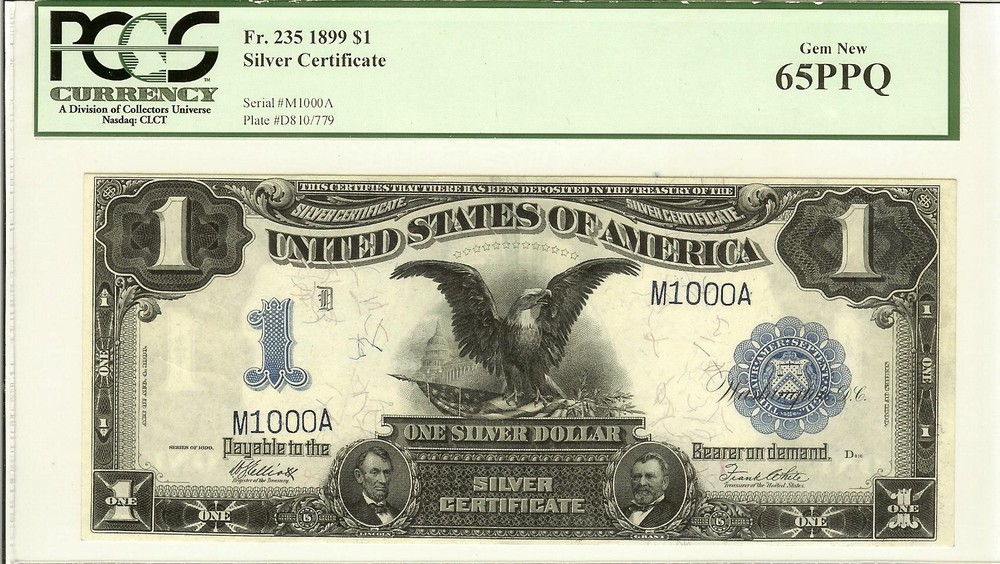
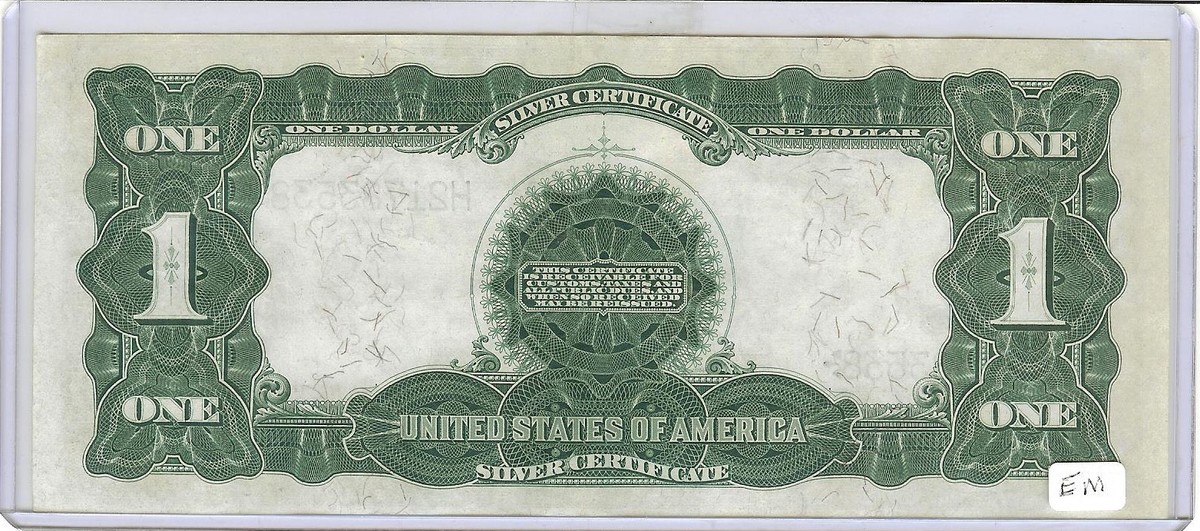
*The $1, $2 and $5 notes issued in 1896 are known among collectors for their artistic merit.
*After the Panic of 1907 — the first global financial crisis of the 20th century — President Woodrow Wilson signed the Federal Reserve Act in 1913.
*The 1920s saw the introduction of the smaller-sized dollar bill that we know today. The change in proportion was likely to reduce production costs.
*1957 marked the addition of the "In God We Trust" motto on the the back of $1 bill.
*In 1963, the Treasury Department began issuing Federal Reserve notes in $1 denominations.
*The design of the $1 bill hasn't changed much since.
*Between 1991 and 1995, the Bureau of Engraving and Printing installed a web press — the type of press used to print newspapers.
*Today, the $1 note constitutes 45% of the Bureau of Engraving and Printing's currency production.














 Posted 07/09/2018 4:59 pm


 ) up against such historic greats and geniuses as:


