| Author |
 Replies: 11 / Views: 2,932 Replies: 11 / Views: 2,932 |
|
|
Pillar of the Community
United States
3499 Posts |
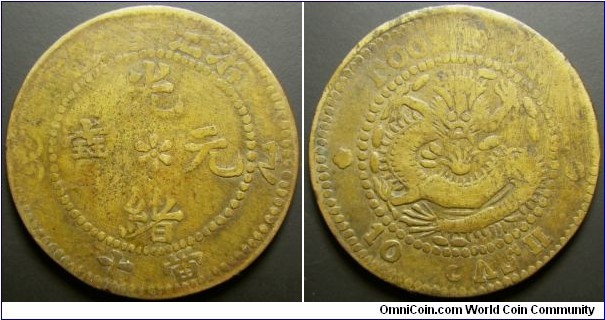
I just acquired this very odd, and possibly unofficial Chinese 10 cash coin. It appears somewhat similar to copper 10 cash coins from Hu Peh Province, but I certainly cannot find this variety in my Krause or anywhere on line. Obviously Hu Peh Province is misspelled as "Huipeh Peovince," and the "E" in "Ten Cash" is backwards. What do you think? Is this a contemporary counterfeit? Or could is be some weird variety of official coinage? Thanks! 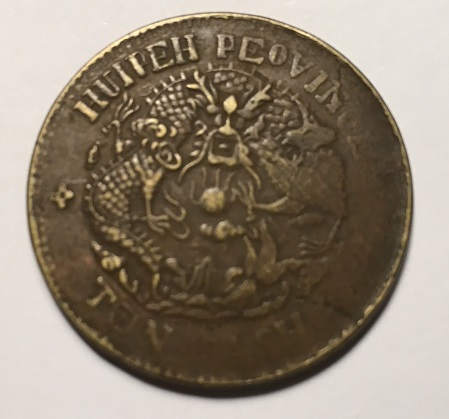 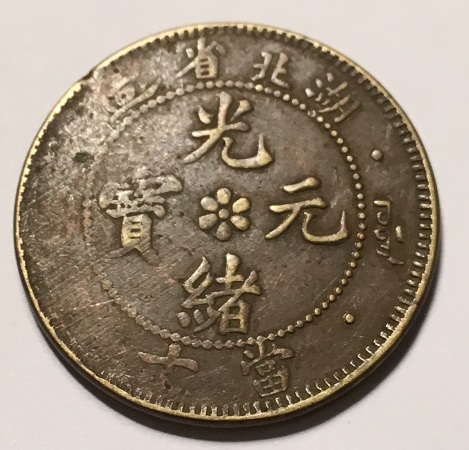 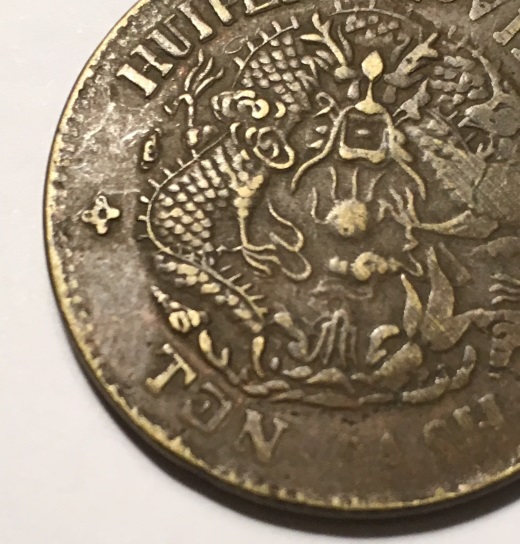 Edited by Archraz
10/30/2018 11:04 pm
|
|
|
|
Pillar of the Community
United States
1674 Posts |
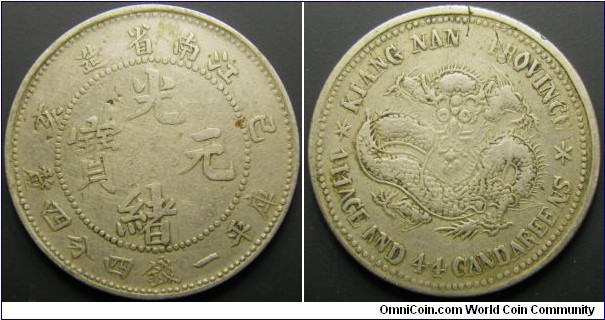
Certainly has the look of a CC. Here is one I have, lettering is quite similar between the two coins :) 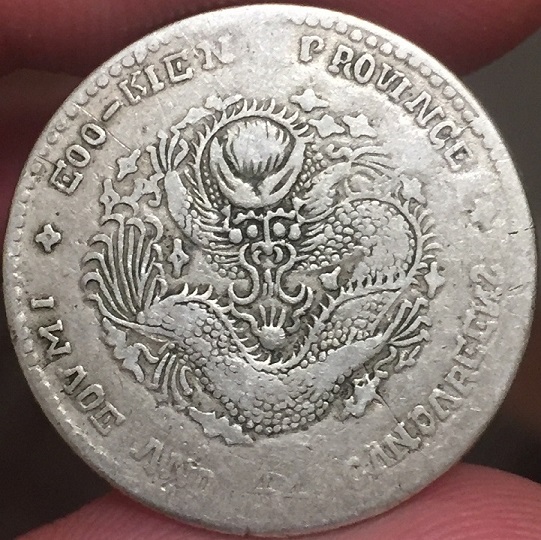 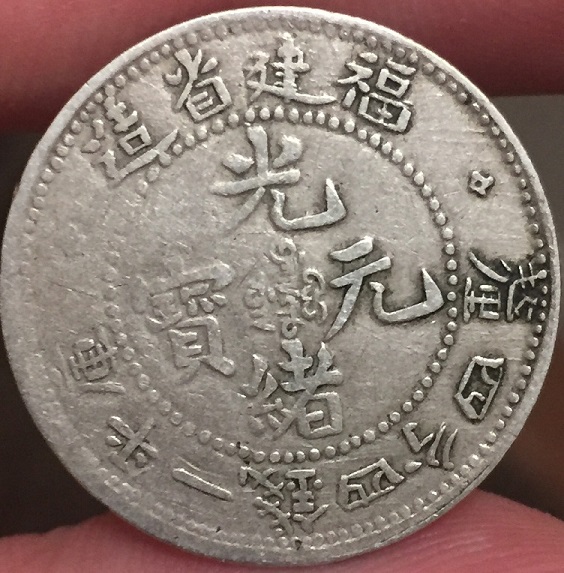 |
|
Pillar of the Community
 United States
3499 Posts |
Numismat- Awesome example! Thanks for confirming my suspicions.
|
|
Pillar of the Community
United States
5362 Posts |
The coin does have the appearance of a contemporary counterfeit. Unfortunately that is not conclusive proof. You need to do more work. First see if you can locate other examples that match and check provenance. If examples have been known since the early 1900s it is contemporary. Second review publications for notices of counterfeits of the same variety and when they first appeared.
You can also confirm the existence of a "profit margin" for the maker. This may have been minimal but should indicate a reduction in value - namely the metal content - so it should be light weight and/or use a cheaper alloy of copper.
Part of the definition of Counterfeit NORMALLY includes a profit margin for the manufacturer. Since the definition of terms Counterfeit versus Forgery lies in the motivation for manufacture there must be a clear profit to be gained in passing or selling the coin at face value at the time of manufacture.
This is one reason why the collector value of fakes (counterfeits or forgeries) is based on the knowledge base of the collector. Remember a fake of an old issue can be made recently and artificially aged to look contemporary, so caution must always be taken when adding to the list of known counterfeits. I treat all "newly appearing examples" as Forgeries until I develop scientific proof that it is more likely than not to have been made for circulation and not just to take advantage of an uneducated collector.
The best proof is of course a previously published image of the same variety that dates to a time BEFORE the coin was viewed as collectable and while it was still in circulation. That is why in the case of 8 Reales the book "Monograph of the Silver Dollar, Good and Bad" by John L. Riddell published in 1845 is so important.
I have read somewhere about a book (now extremely rare) that was published in the 1950s that illustrated many forgeries known to exist at that time. That book would provide a no later than date for the coins illustrated. Alloys of known coins of known provenance (disclosed by XRF) could then be used to compare to newly discovered coins. They should be consistent with alloys made while the coin circulated. The same technique can be used with die making and minting/casting techniques.
A coin made using a technology or alloy that was developed in the past 50 -100 years can be used to identify examples of many older issues.
|
|
Pillar of the Community
United States
3499 Posts |
swamperbob- Thanks for the insight. I really appreciate it!
|
|
Pillar of the Community
United States
4883 Posts |
On the more modern forgery versus older contemporary counterfeit question - one thing that can be telling is if there seems to be a slew of them in the marketplace, or has been at some point, and what sort of premium is (was) being asked for them. As Bob has rightly pointed out, there has to be some profit to be made one way or the other. On the other hand, if there are very few that've surfaced and they're not currently or recently being hyped and priced as "rare errors" or such, that'd come down on the side of a "genuine" fake as opposed to one contrived to fleece collectors. You might even check the website that cannot be named (as in "___ ____ and the Forty Thieves") to see if there are any being hawked there, which'd be a red flag.
Colligo ergo sum
Edited by Lucky Cuss
11/02/2018 9:13 pm
|
|
Pillar of the Community
United States
3499 Posts |
Lucky Cuss - thanks for the help! I actually pulled this out of a dealer's 25 cent junk bin. It was in there alongside a number of authentic Chinese 10 and 20 cash coins ca. 1905-1920. I actually pointed it out to the dealers, and he just laughed and said that that he didn't even realize that a fake was in the mix of real Chinese coins he had just dumped in there.
|
|
Pillar of the Community
United States
1915 Posts |
All I know is that it is not uncommon to have oddball spellings of English words on Chinese coins. I tend to focus on silver coins, so I know little about copper.
|
|
Pillar of the Community
Australia
3841 Posts |
My partial coin collection http://www.omnicoin.com/collection/gxseriesMy numismatics articles and collection: http://www.gxseries.com/numis/numis_index.htmRegularly updated at least once a month. |
|
Pillar of the Community
United States
4883 Posts |
Quote:
I actually pulled this out of a dealer's 25 cent junk bin. It was in there alongside a number of authentic Chinese 10 and 20 cash coins ca. 1905-1920. I actually pointed it out to the dealers, and he just laughed and said that that he didn't even realize that a fake was in the mix of real Chinese coins he had just dumped in there. The circumstances you describe lead me to believe it's much more likely than not that it's indeed an older, previously circulating contemporary counterfeit. Quote:
All I know is that it is not uncommon to have oddball spellings of English words on Chinese coins. Here's an official issue for which "KUO" was rendered as "KIIO" - this is a recognized, cataloged variety. 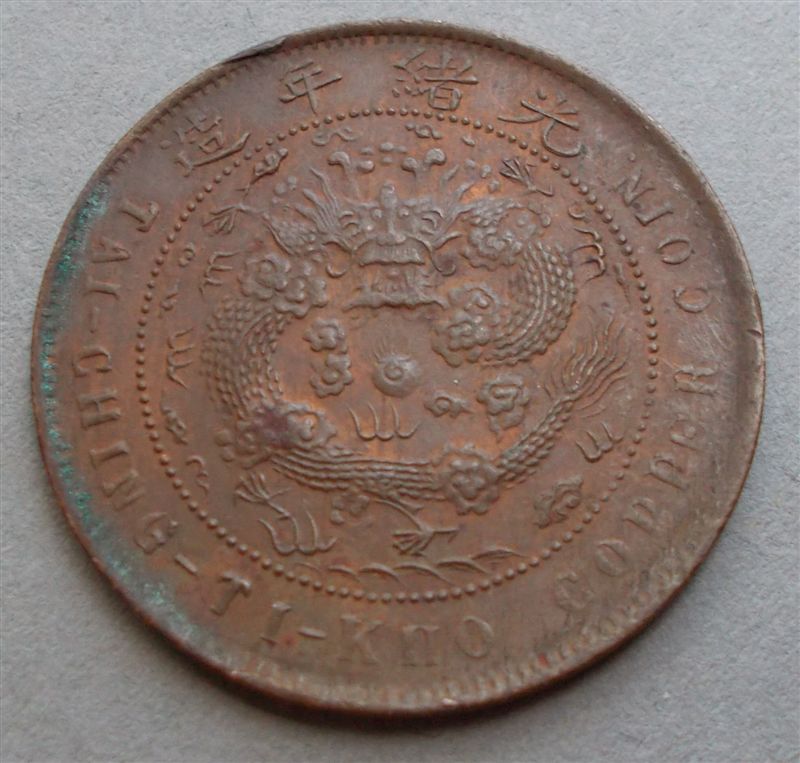 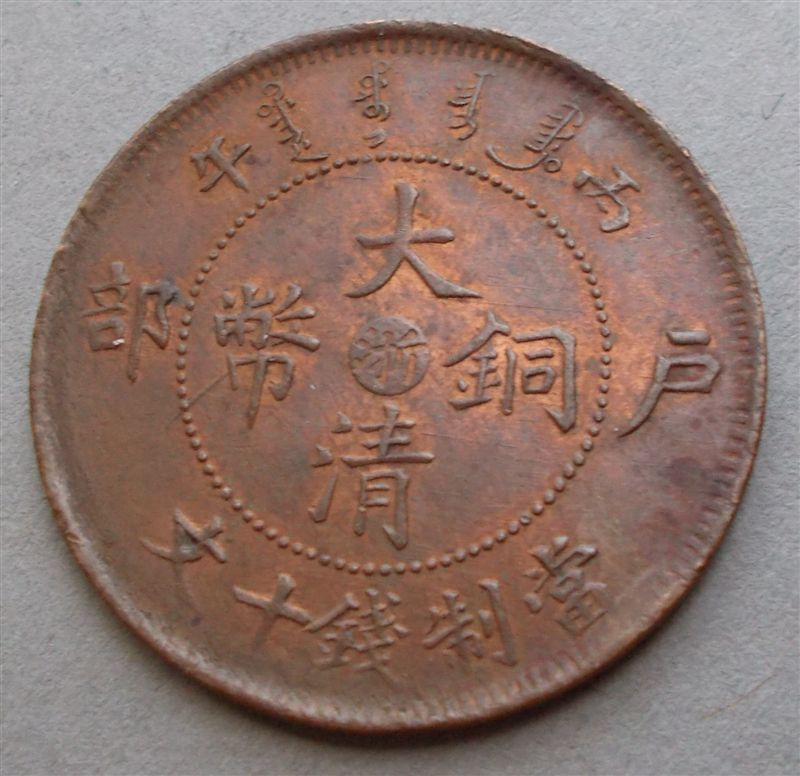 Colligo ergo sum
|
|
Pillar of the Community
United States
1915 Posts |
Yeah, the cross bars on letters A and H are missing among many coins. Kann illustrates a good number of wrong spellings and shapes of English words and letters among official Chinese coins.
|
|
Pillar of the Community
United States
1674 Posts |
It's common to see butchered western language on asian coins, generally more pronounced on the contemporary counterfeits, but found on both genuine and CC types :)
|
| |
Replies: 11 / Views: 2,932 |
|







 Posted 10/30/2018 11:19 pm