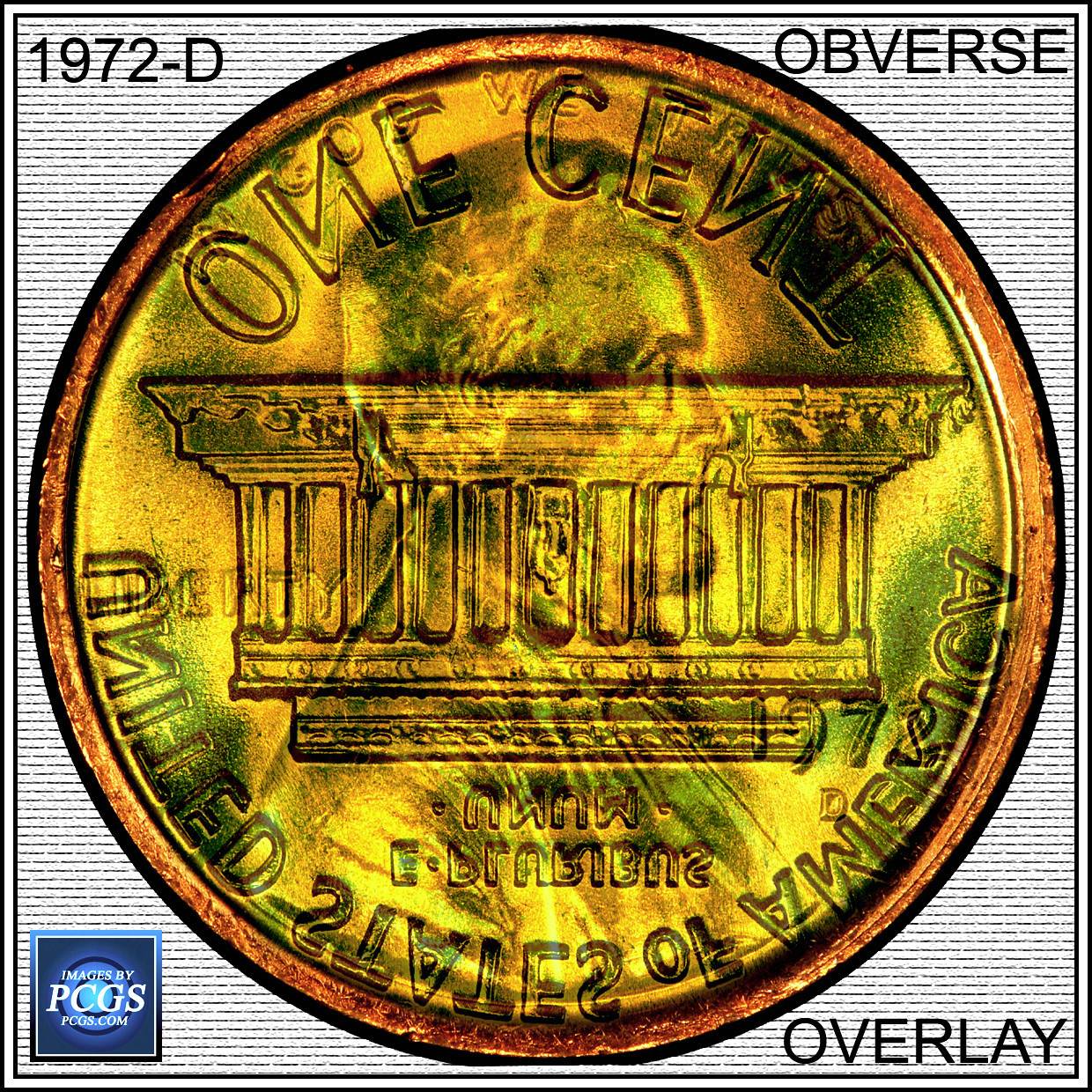
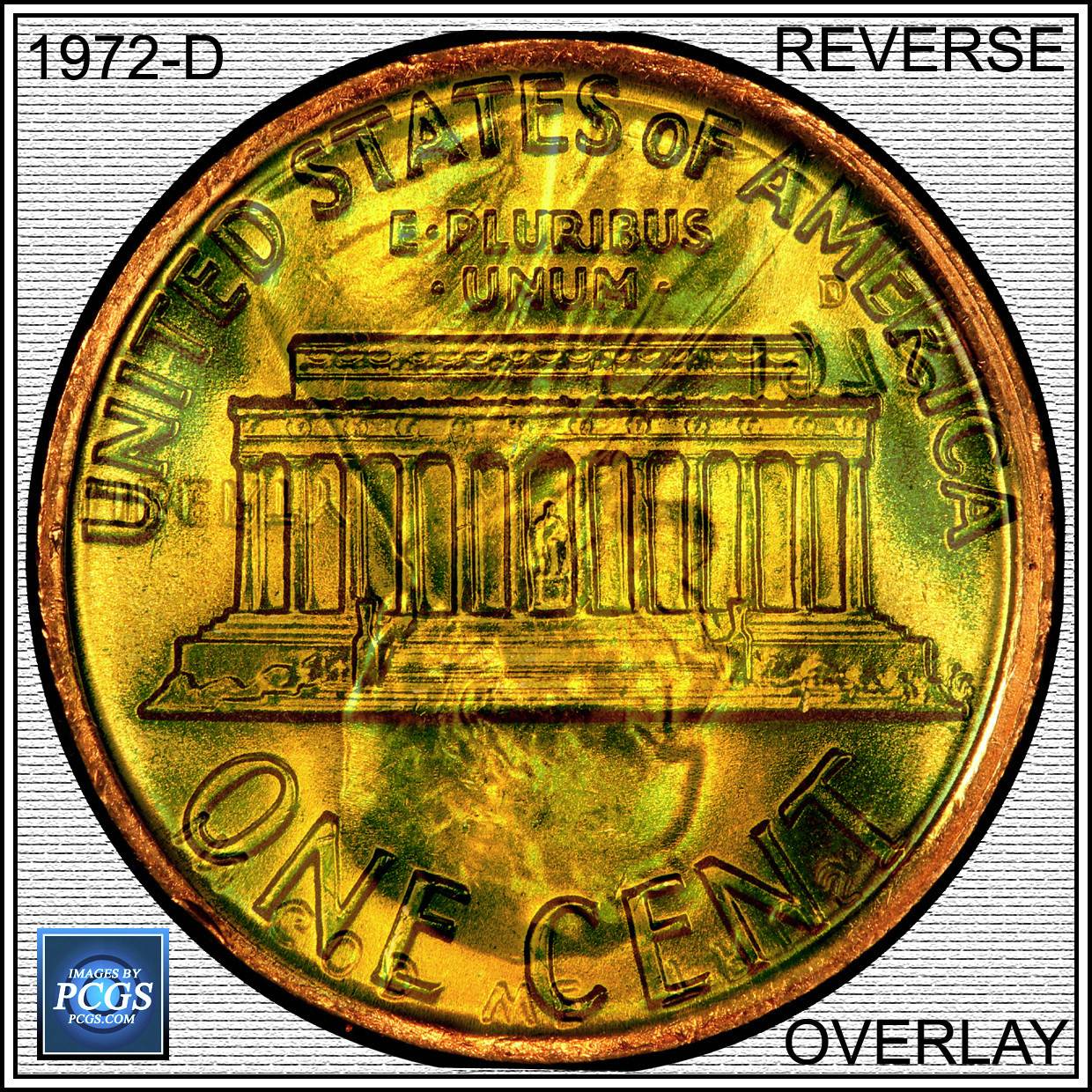
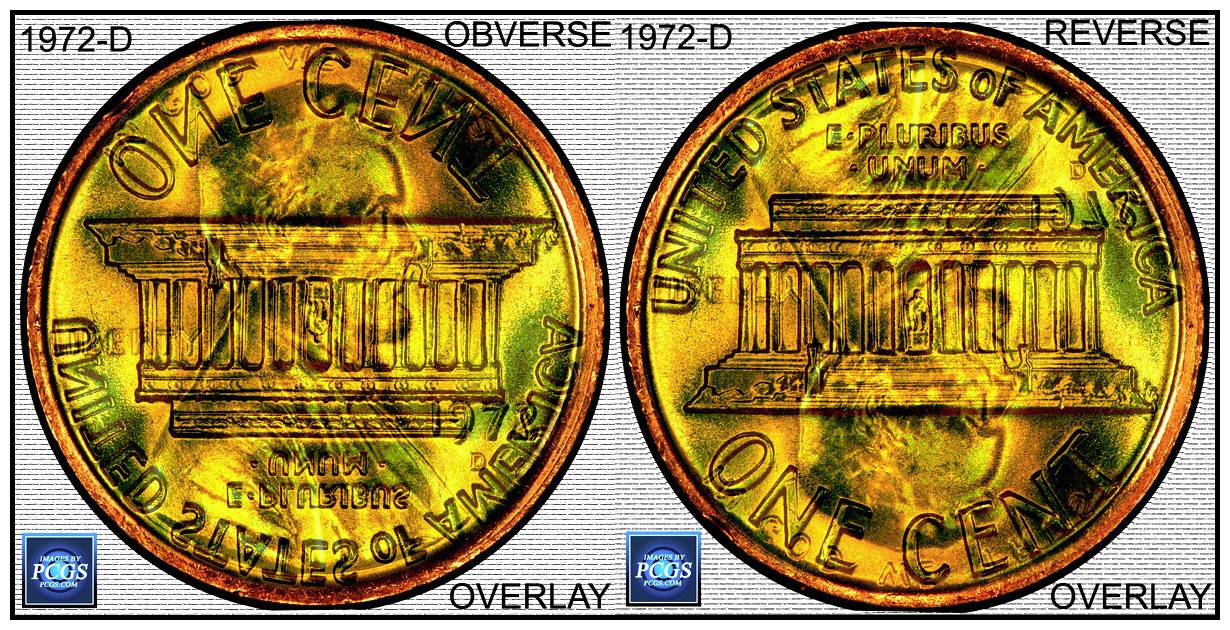
Are we talking about a 1969 or 1970 production. Really doesn't matter.
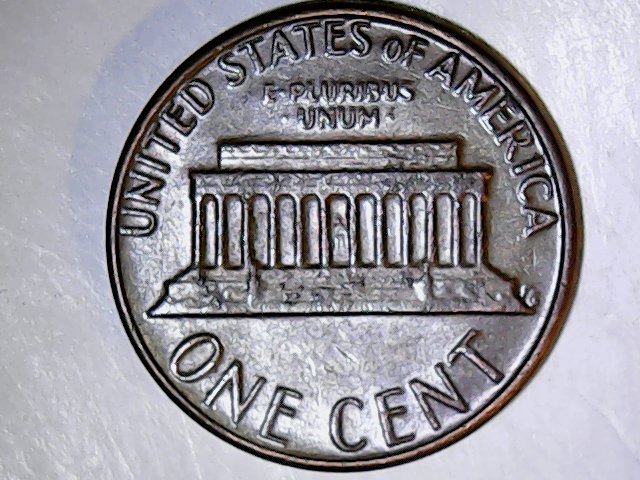
Food for thought. When the floating roof was thought to be a common issue that occurred on any given year. My research done back then found 99% of memorial cents exhibiting full double sided (abraded) floating roof were from the years 1969 and 1970. The remaining 1% is not set to memory as I can't recall any other year that shows both sides fully abraided in the same fashion, much less multiple dies from the same years.
Of that 99%, the majority working die examples were in production at the Denver and San Francisco mints. Some produced from the Philadelphia mint was found as well, but less common. Side note: PCGS listed 1969D FS-901 no FG do to the missing intials, but soon found more than one die was effected and stopped slabbing them as a unique die variety soon there after.
Another time line: In 1969 a new reverse (RDV-002) as well as obverse (ODV-024) designs were introduced. Also note this year the alignment lugs used for the multi squeeze hubbing and die alignments were discontinued due to hubbing issues. Some thought to be a contributing factor to the major 1969S Class I
DDO. Several other
DDO's were produced between that year and 1972 including another major Class I
DDO from Philadelphia and the alignment lugs were reintrodused in 1973.
The full double sided floating roof seem to stop after 1970. Note: the arival of the RDV-008(?) design was put in production along with the RDV-002 design in 1971 and would seem to follow into 1972. Again I've seen some other years come close, but not completely abraded after 1970.
In 1973 the RDV-003 design was introduced and the 1969-72 RDV-002 design was no more.
To summerise I can only speculate and assume the dies were annealed and hardened proper, as I was not present to see the 1969 - 1970 initial hub or die impressions. But I do still wonder if the reverse hubbing and or die impressions might have been lacking in some respect during this time period to start with? If so that could explain the acceleration of the process of what it actually is, a seemingly hastened die abrasion issue. I'm under the impression all working hubs and working dies were manufactured at the Philadelphia mint and distributed to the other mints production plants during this time period. Thanks, Doug.







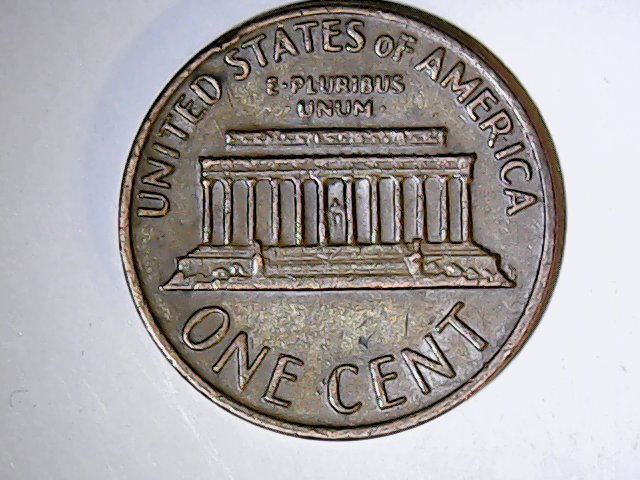


 Posted 01/21/2019 11:05 pm