| Author |
 Replies: 8 / Views: 1,208 Replies: 8 / Views: 1,208 |
|
|
Pillar of the Community
United States
4883 Posts |
I had the good fortune today to be the first retail customer to get to look through an unsorted group of ancients (some Greek, some Roman) that a shop I frequent had purchased. This trio was not at all identified, but I readily recognized them as being issues of Gallienus. Publius Licinius Egnatius Gallienus had the ill luck to rule at a time when the empire was greatly pressured by both external enemies and internal upheavals. His key failure was that despite two campaigns in the west, he proved unable to oust the usurper Postumus from governance there. During this period, Roman coinage became increasingly debased. The first of the coins presented here is at least billon in composition, but the other two are clearly made of bronze, and were most likely merely given a silver wash. I have this one as RIC 494, struck at Milan (Sear 10295). The reverse die looks to have been on its last legs. 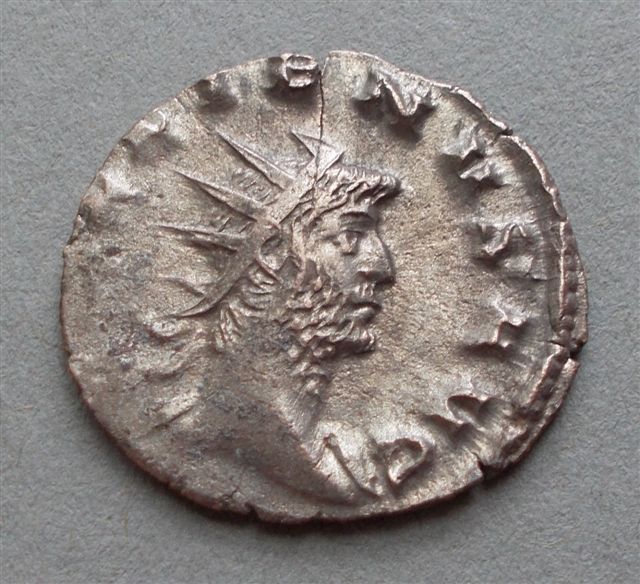 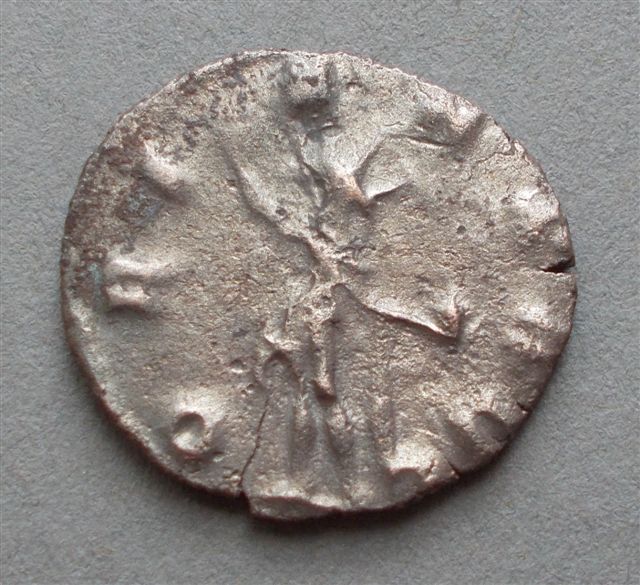 The next one I've identified as RIC 194A (Cohen 279) which despite the "S" mint mark was supposedly struck at Rome. The emperor's countenance is rather pleasant, wouldn't you say? 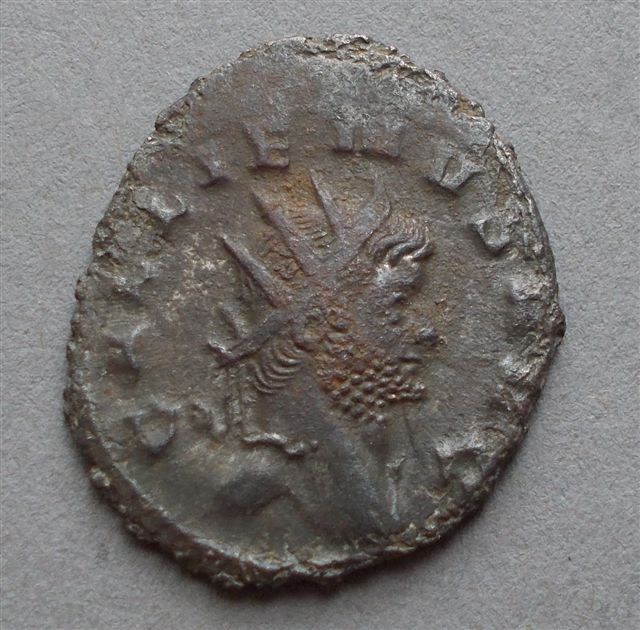 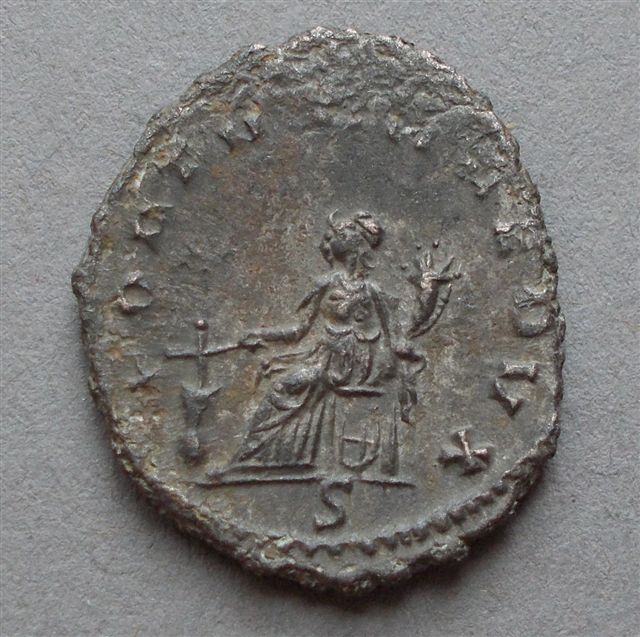 The final example I believe to be RIC 236 (Sear 10288). In stark contrast to the preceding specimen, here the emperor's expression is very intense. 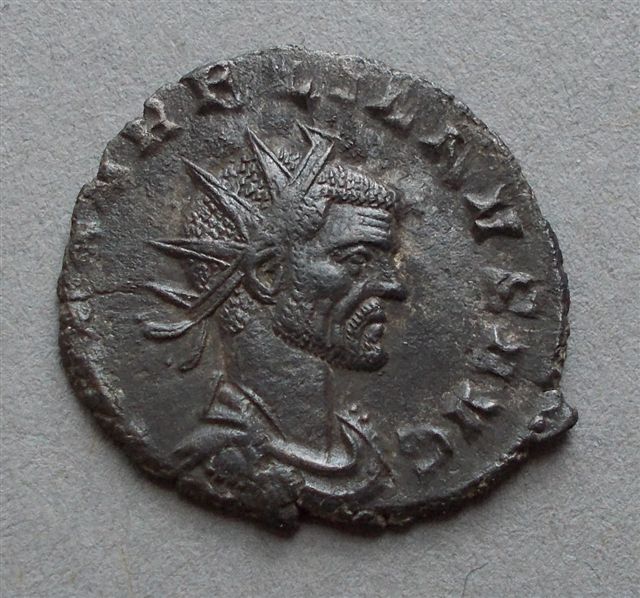 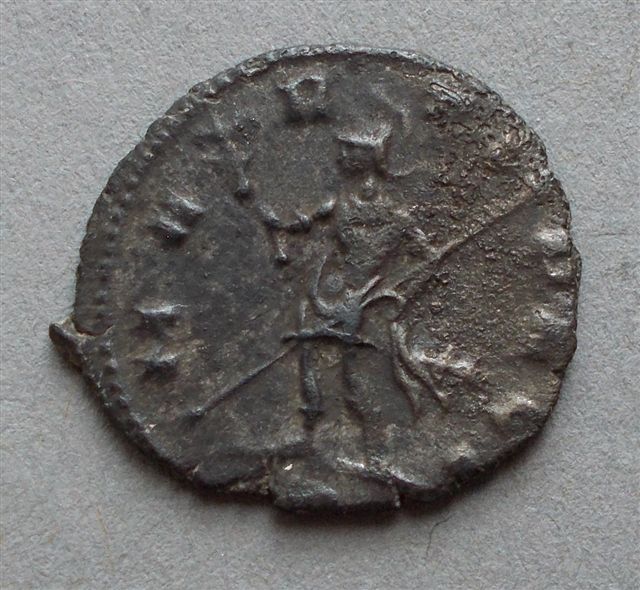 Colligo ergo sum
|
|
|
|
Pillar of the Community
United States
6130 Posts |
Nice pickups!
The last one is a pre-reform of Aurelian, not Gallienus. Unusually nice bust on that one, I might add!
|
|
Pillar of the Community
 United States
8052 Posts |
Very neat set! Yeah, not too often we see scowling imperial portraits (in any era!)
|
|
Pillar of the Community
 United States
4883 Posts |
Quote:
The last one is a pre-reform of Aurelian, not Gallienus. Perusing the issues of Aurelian, I can't find this reverse. Colligo ergo sum
|
|
Valued Member
New Zealand
292 Posts |
Awesome pickups and love the silvering on the first one.
|
|
Pillar of the Community
United States
1554 Posts |
The S on reverse on the second coin is for the officina. Cohen 279 lists both S and MS in exergue. RIC splits Cohen's "S" into two numbers, RIC 194a with Greek ς attributed to Rome and RIC 484 with Latin S attributed to Milan. As you can see from the photo below, there is a barely a hair's breadth of difference between 194a top and 484 bottom. I tend to doubt that both ς and S were intended. The lettering otherwise seems stylistically identical, supporting a single mint which Göbl lists as Rome. I would probably catalogue it as "RIC 194/484; Göbl 546g (Rome); Cohen 279". 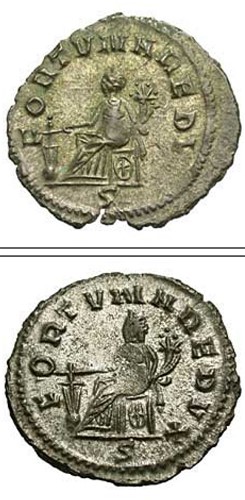 Edited by Kushanshah
02/25/2019 11:12 pm
|
|
Pillar of the Community
United States
6130 Posts |
Last one is MARTI PACI, Mars standing left holding olive branch and spear. I believe it's RIC 133. Not on Wildwinds, but rated Common on the spreadsheets here: http://www.romancoin.info/ |
|
Pillar of the Community
United Kingdom
4208 Posts |
The preform antoniniani of Aurelian are very interesting because the bust changed so much so quickly when the reform happened. This one must has the finest bust I've seen on one, too (and the name is readable, which is always nice - ...RELIANVS AVG).
|
|
Pillar of the Community
United States
4883 Posts |
Quote:
Last one is MARTI PACI.... I concur, that's what the reverse legend in fact is. Quote:
...the finest bust I've seen on one... That's nice to hear, as it was this aspect, along with the particularly stern visage, that motivated me to cherrypick this particular example. I totally misread this coin to begin with, and do appreciate being straightened out with regards to its true identification. Colligo ergo sum
Edited by Lucky Cuss
02/26/2019 3:33 pm
|
| |
Replies: 8 / Views: 1,208 |
|







 Posted 02/25/2019 8:57 pm





