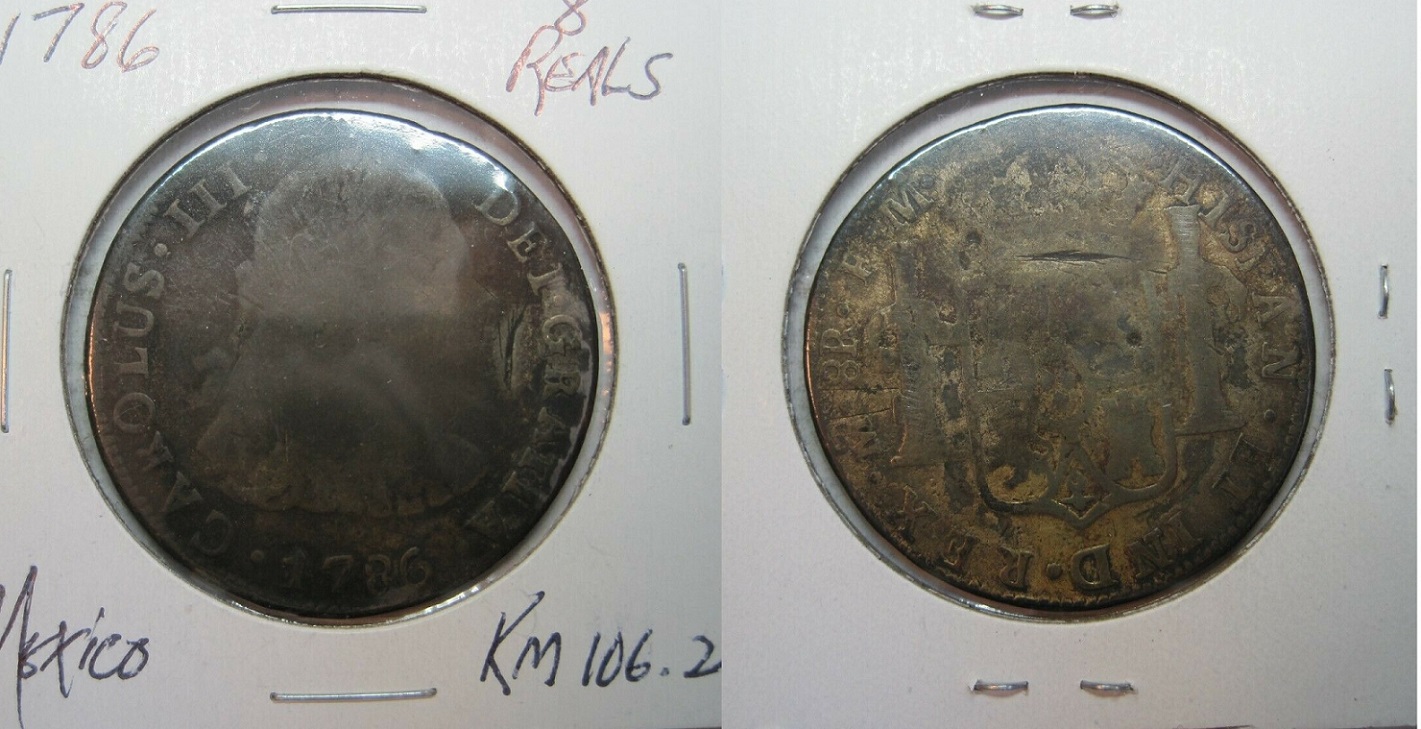
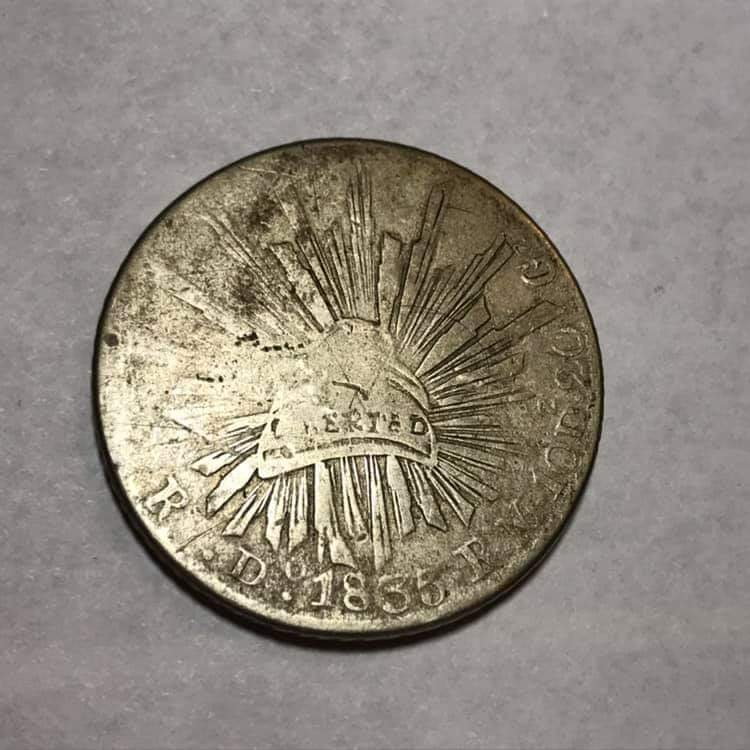
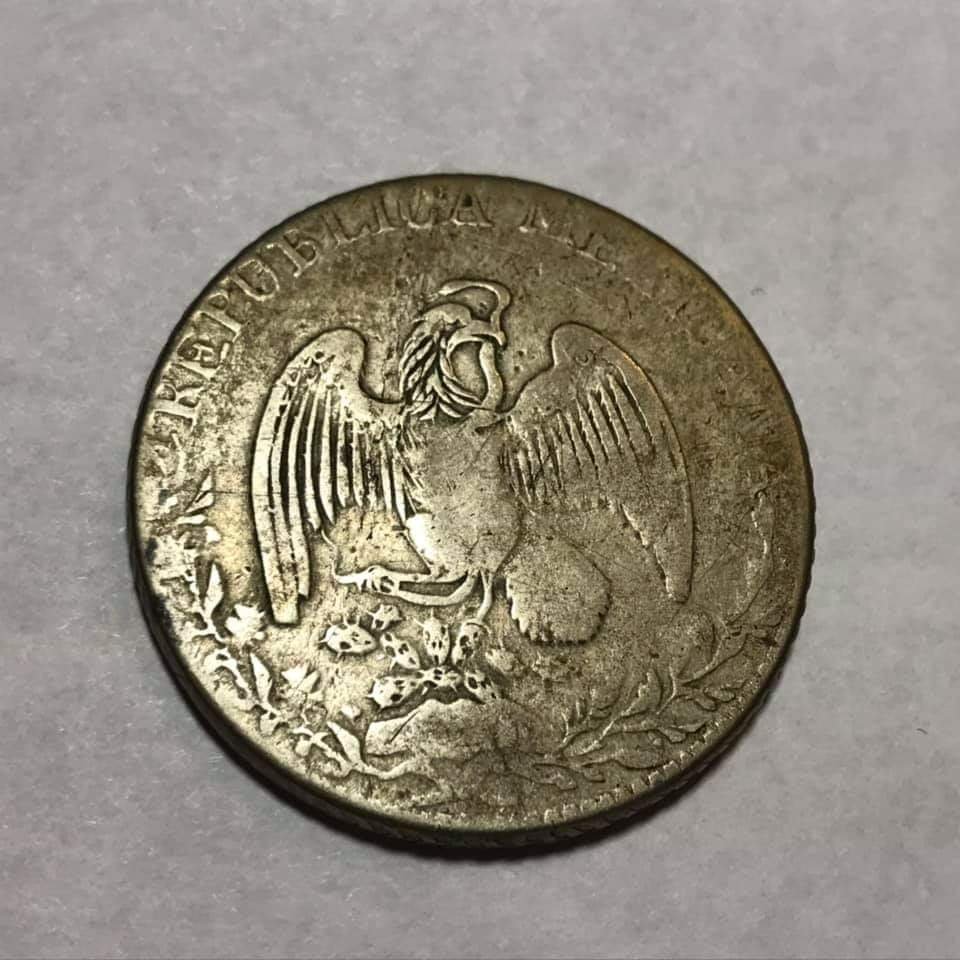
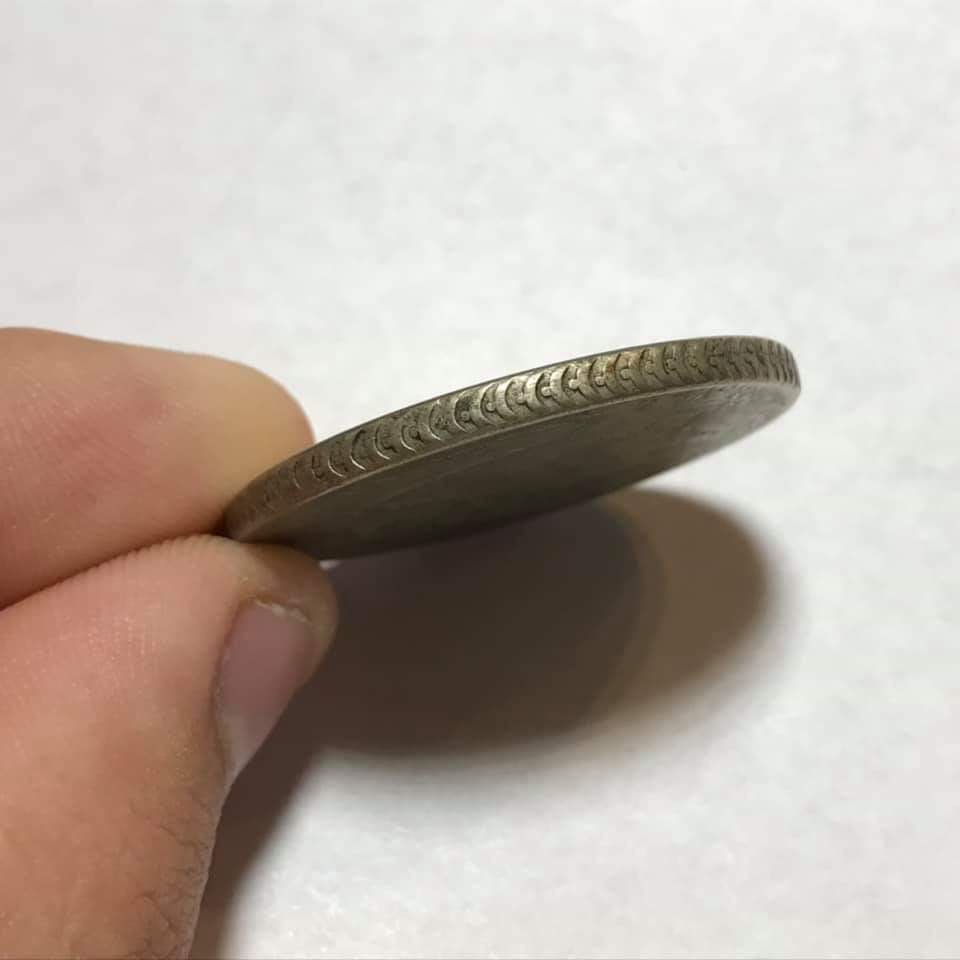
I am convinced that such a thread would allow "safer bidding" by collectors who want to collect or simply learn about such pieces first hand. The goal would be to teach such people how to distinguish the collectable more valuable CCC (Contemporary Circulating Counterfeits) types from the illegal Counterfeits of currently Monetized issues or the worthless forgeries NF (Numismatic Forgeries).
These appear every day on
ebay and I believe they result in the loss of money by bidders who are not properly informed about what they are buying.
In the thread I would propose including live auctions. In particular I would like to post cases where a coin is incorrectly described. Not all counterfeits are collectable, legal or even valuable and recently dealers posting HF coins as if they were CCC types to increase prices.
I would not propose to identify EVERY counterfeit posted on
ebay that would be impossible. But I would propose creating a thread that I would follow to answer questions about the coins I post. I also envision that interested buyers could post other suspect coins looking for an opinion on authenticity or the categorization of type of fake. I would envision running one thread as long as there was active interest. I would plan to post examples of different types as they appear for use in discussions.
I would not guarantee that I could categorize all coins outside my area of expertise correctly - but I would do my best. Coins within my area of interest and expertise - specifically Mexican 8Rs (1770-1897) I would feel comfortable with saying I could do those with about 99% accuracy to deter fraud.
As an example of my proposal - here are 10 recently completed auctions involving various "Un-real 8 Reales" that novice counterfeit collectors might have problems with when bidding.
1.)
https://www.ebay.com/itm/1792-Conte...392271646059 This coin was sold by a good friend of mine from Canada and it is properly described as a Contemporary Circulating Counterfeit. It is no longer monetized and is exempt from HPA marking due to age. It was made in the UK using a thin Sheffield Plate technology sometime before 1830. It is a variety that appears in my book and in fact this coin is on the accompanying discs as one of the known examples.
So in this case, I would indicate it is properly described as a Class 1 CCC made before 1973.
IMPORTANT NOTICE: Importing such a coin from Canada violates the letter of the Law as regards HPA since the coin is being imported into the US AFTER 1973. The person violating HPA would be the buyer not the seller. There is no HPA equivalent in Canada and no prohibition on sales of demonetized counterfeits. However, once inside the US, the coin can not be readily distinguished from others of the identical type that have been in the US for decades. I am therefore doubtful that any demand for marking such a coin COPY would be made by the US Commerce Department.
2.) The same coin posted by a resident of the US would be completely legal to possess and/or re-sell as long as the sale follows
ANA standards of full disclosure regarding the nature of the object.
3.)
https://www.ebay.com/itm/CONTEMPORA...183758334063 This coin which did not sell at a price of $350. It is described in a manner that presents a bidder with an open question. The seller calls it a "Contemporary - Forgery". It is actually correctly described as a "Numismatic Forgery made after 1973" and as such would require the HPA marking of "COPY" to make it legally marketable in the US. This is not a coin that was actually made for circulation as money alongside genuine coins of the type. It was recently made to defraud collectors of genuine coins or to defraud collectors of CCC types.
Since this coin is also an import, it would be improper for a US buyer to import the coin and not stamp it with COPY to comply with HPA. Sale without COPY would also violate
ANA rules even if the coin was described as not genuine. The use of such coins for fraudulent resale is why the US Commerce Department issued HPA in the first place.
4.)
https://www.ebay.com/itm/1834-Mexic...273764109215This is an example of an improperly described coin. This is a CCC type listed in J.L. Riddell's 1845 book "Monograph of the Silver Dollar, Good and Bad". It was made in either France or the US. It has been known to exist in the US from the period prior to 1845 and would not violate HPA or
ANA rules as long as it was properly identified. Here there is no warning that the coin is NOT GENUINE. It was however sold at an excellent price (IMO).
5.)
https://www.ebay.com/itm/MEXICO-8-R...352621913879 This is a second example of a coin that is not properly described. It is a rather high grade example of a common CCC variety linked by die re-matings with examples seen in Riddell's book but not specifically listed in Riddell. The coin is believe (by myself) to have originated in the NE US during the pre-US Civil War era based on numerous finds in New England and Canada and a paucity of finds in the Southeast and western US. These are very common in German Silver so a post 1835 origin is probable until earlier alloys are discovered. Age is also confirmed by related examples that were cancelled using period methods and by examples with heavy circulation wear. This coin is clearly a pre-1973 issue and does not need to comply with HPA but the sale itself would violate
ANA rules because of the description. The only clue to the coin being a fraud (other than the clear pictures) is the description of the coin as an 1833 D. There was no D mint mark used in Mexico. It is therefore a fantasy.
6.)
https://www.ebay.com/itm/MEXICO-183...362605596787This is an example of a relatively accurate description of a CCC - the only problem is the word Forgery which would not apply to this coin and may have chilled bidding. I bought this particular coin because it is a Riddell related variety belonging to a Scarce to Very Scarce family grouping - the # 376. Some of the punches used on the eagle die appear identical to that variety and engraving traits appear to strengthen the linkage. The Cap has been entirely redesigned. It is a totally new die pair in my experience. The link to Riddell is strong enough for me to preclude a modern origin and I expect that fact to be fully proven once I have the coin in hand. Origin is most likely US and definitely pre-1845. Does not fall under HPA and import restrictions are not a factor.
7. )
https://www.ebay.com/itm/MEXICO-SIL...323760328873This is an auction for a very common CCC type that is not listed in Riddell but has some ties to Riddell. It does not require HPA marking and these are well attested as present in the US from decades before HPA existed. The seller no where refers to the coin as a counterfeit or any similar term. The only possible clue is the mint mark stated as being G. Since the G mint mark does not exist the coin is technically a fantasy. The price is acceptable for a high grade CCC of this family but the buyer may not have known he was bidding on a counterfeit. This violates
ANA policy on full disclosure even in the absence of the need to be marked as COPY.
8. )
https://www.ebay.com/itm/1821-Peru-...273782669751 This coin represents more of a problem in my view than any of the preceding. It is called a Contemporary CF, however, I would be reluctant to concur with that label. The weight, edge and general appearance lead to the inescapable conclusion that the coin is fraudulent. However the appearance of the die is INCORRECT for a counterfeit made before the Civil War. So while it may be a later copy - there is little reason for it to have been created after 1860 because of a lack of a market for such a counterfeit to pass into circulation. A Mexico City version I would classify as a Class 2 - made for the China Trade counterfeit but Peru? No. I have doubts. So in this case, I would exercise caution regarding accepting it as a Class 1 CCC. It could just as easily be a Numismatic Forgery. The price was just outside my range of the amount I would be willing to gamble.
9. )
https://www.ebay.com/itm/1797-Mexic...192867119885 This is an example of a more or less correctly described CCC which did not sell. Bit of a surprise there. It is an example of a thick plate Sheffield type - which date normally to the War between the UK and Spain (commenced 1796) and part of the emission of counterfeits described as early as 1796 by Spanish spies in the UK. This counterfeiting story was first published in French by French authorities in 1903. The article describing this counterfeiting method first appeared in English in a Spink magazine article in 1915. This counterfeiting method is different in nature and age from the item described under #1 above. This coin is however complaint with HPA by virtue of age (similar coins are reported in Riddell although the origin was at the time unknown). It also ships from the US.
10. )
https://www.ebay.com/itm/SILVER-WOR...132999480464This is an incorrectly described coin. It is not an example of the 1833/2 overdate - it is a variety of the Riddell #223. This coin has been cancelled using a drilled hole and it has a large test cut on the eagle side. It is an example of the "broken toe" family of coins. The 1833 version is a slightly scarce variety of the 1832 Zs OM with the broken toe. The Riddell #223 uses the 1832 variety as a plate coin and lists 1829, 1830 and 1833 as also existing. I have added an 1831 version as well which is also scarce. This number was listed by Riddell as existing abundantly in 1845. I would still call the 1832 version as extremely common.
The price for this very low grade copy is correct in my opinion.
This posting covers 10 auctions that occurred in a week's time.
If you view this kind of thread as beneficial let me know.
One thing I was wondering about are the pictures that accompany the listing since they disappear in time. That would add time for me but not too much







 Posted 04/08/2019 5:31 pm