| Author |
 Replies: 8 / Views: 1,957 Replies: 8 / Views: 1,957 |
|
|
New Member
United States
26 Posts |
|
|
|
|
Bedrock of the Community
United States
62064 Posts |
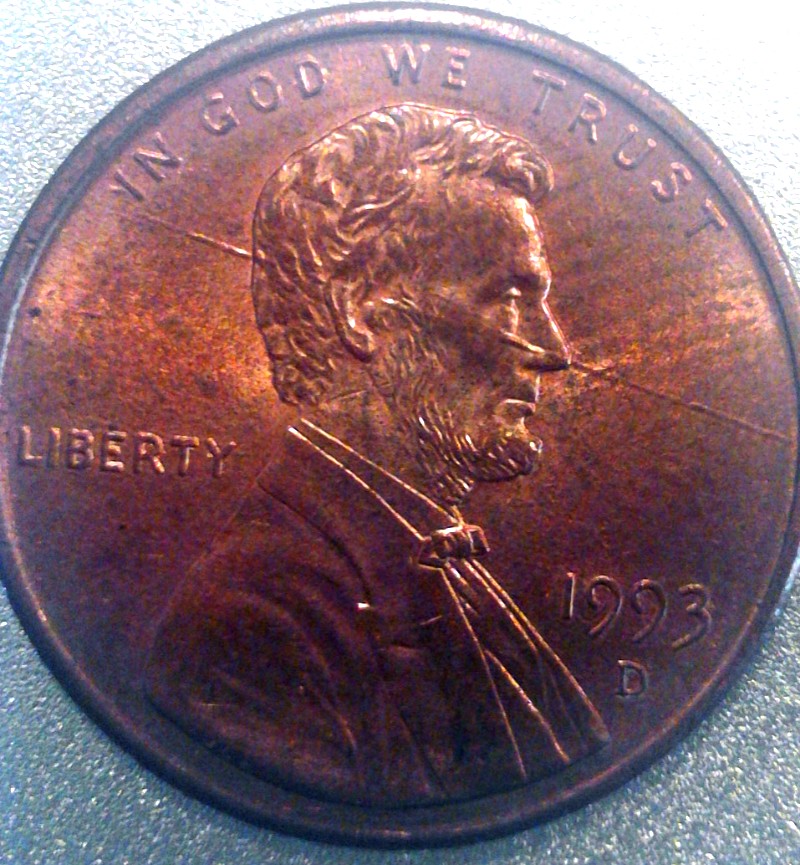
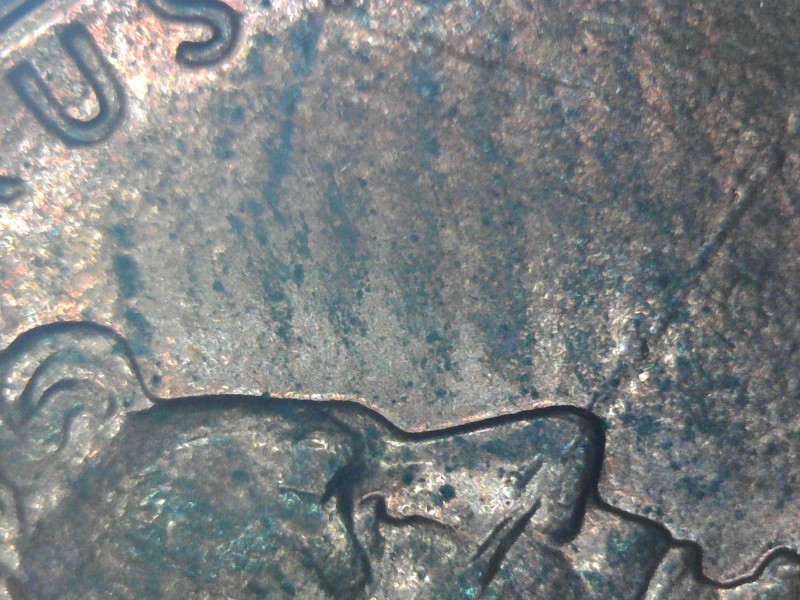
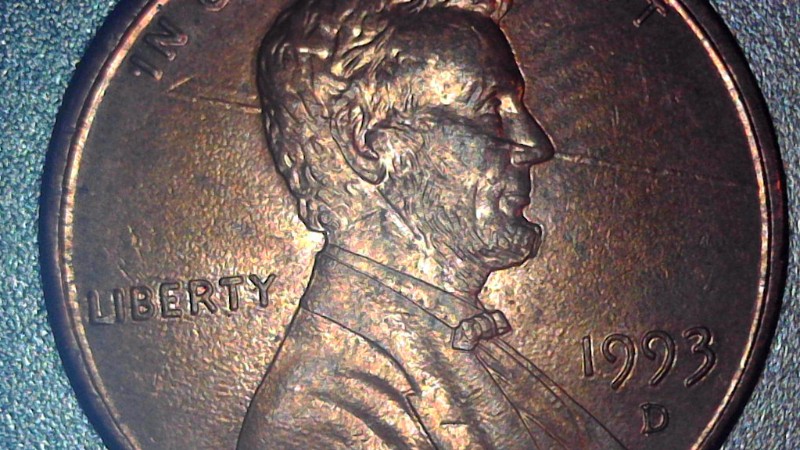
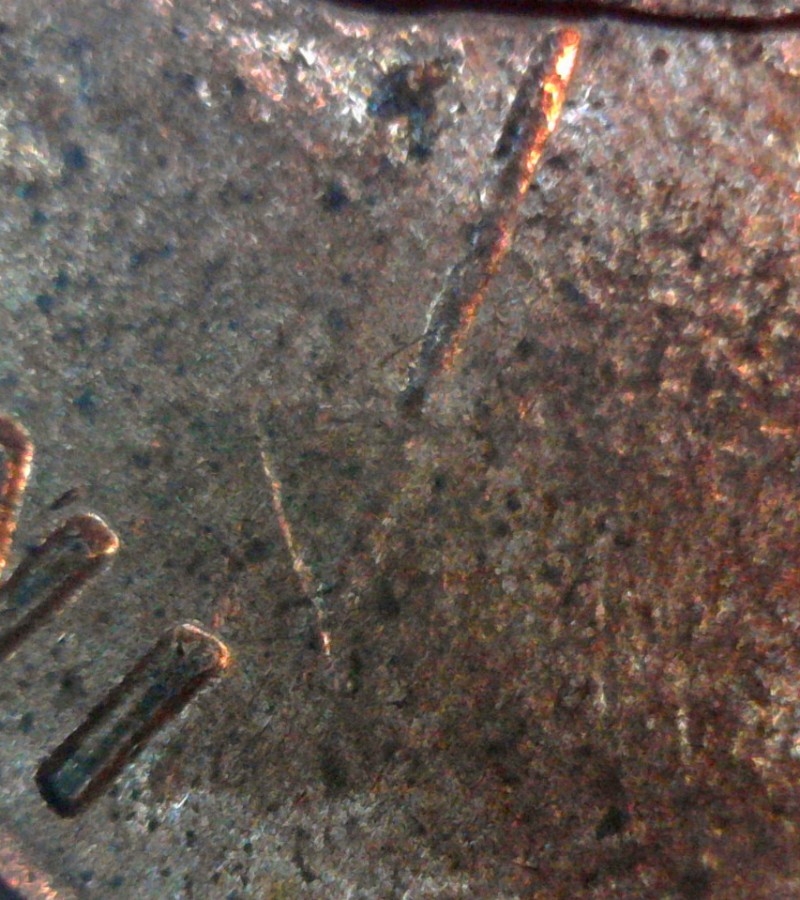
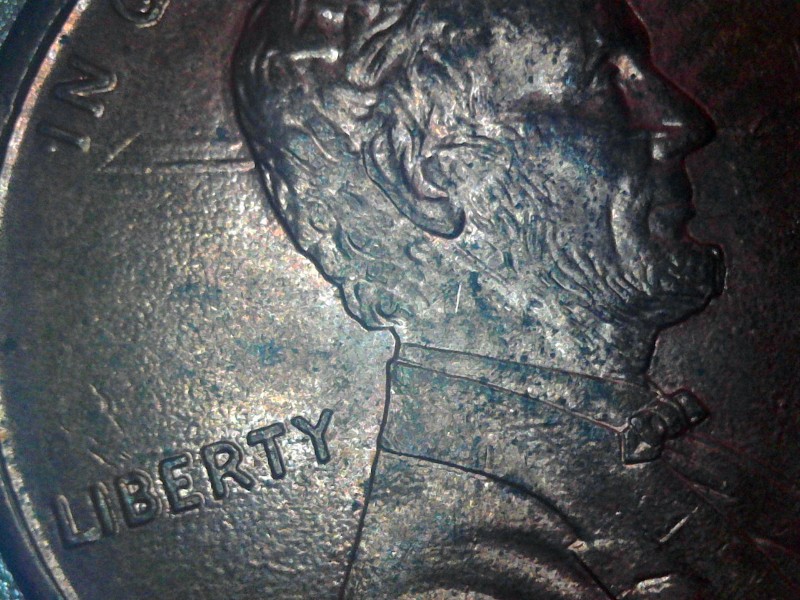
 Linear plating bubble. (you can press down with a toothpick and it will flatten) These are common. No premium. Just a gas pocket under the plating of the zinc. |
|
Moderator
 United States
34563 Posts |
Yes that looks like a linear plating bubble. It is a very good example of this as they usually don't seem to span the entire face of the cent. I agree with @coop that there isn't a premium on it though.
"If you climb a good tree, you get a push."
-----Ghanaian proverb
"The danger we all now face is distinguishing between what is authentic and what is performed."
-----King Adz
|
|
Bedrock of the Community
United States
94367 Posts |
 to the CCF! |
|
New Member
 United States
26 Posts |
Dear Coop, sorry its taken so long to get back. I did exactly what you suggested! And, you were exactly right! It was also instructive; for me, to get the tooth pick and watch under my digital magnifier, how the bubble was actually formed. It amazes me that the bubble had lasted so long, it looked so pretty!!! but thanks for the help. as I said, Learning!! and THAT was an excellent learning opportunity! Now, I am seeing many bubbles as I keep looking!!
Thanks!
|
|
New Member
United States
26 Posts |
oops, forgot to ask..... when I first saw the bubble, my FIRST thought was that spear....the one on the Buffalo nickel...? and how that spear is a gouge.....right? so, I saw my bubble and thought yeehawww....... So, can you give any help on how YOU know, when you see a dramatic thing like that? How do YOU know, its a bubble....and not a gouge? Do I take a toothpick to all of them? Or do you search on line and see if any others have shown up first? Because, if you hadn't have told me to do that, I never would have.....being worried I would damage the coin and regret it later......I've never held a Buffalo nickel with the spear and mabye if I ever get a gouge, I will understand the differences by sight then>>>>? just pondering.... |
|
Pillar of the Community
United States
715 Posts |
Only on copper-plated zinc cents (1982 and later) do we see plating bubbles like this. They're not always in a big line, however. Sometimes it looks more like little pimples on the surface. It's not inconceivable that a coin could be struck from a die with a large die gouge like you're referring to with the speared bison, it's just far more rare as compared to the plating bubble issues we see on the zinc cents. If you found something like this on a different denomination, it'd very likely be a die gouge instead since they aren't plated like the cents are. You can always double check your pennies with your toothpick, but usually these things have a bit of a look to them, and you'll sort of know it from just looking after seeing them enough.
|
|
Bedrock of the Community
United States
62064 Posts |
The die gouges/scratches will pass behind the raised devices on the fields and will be raised, but do not give with a toothpick. 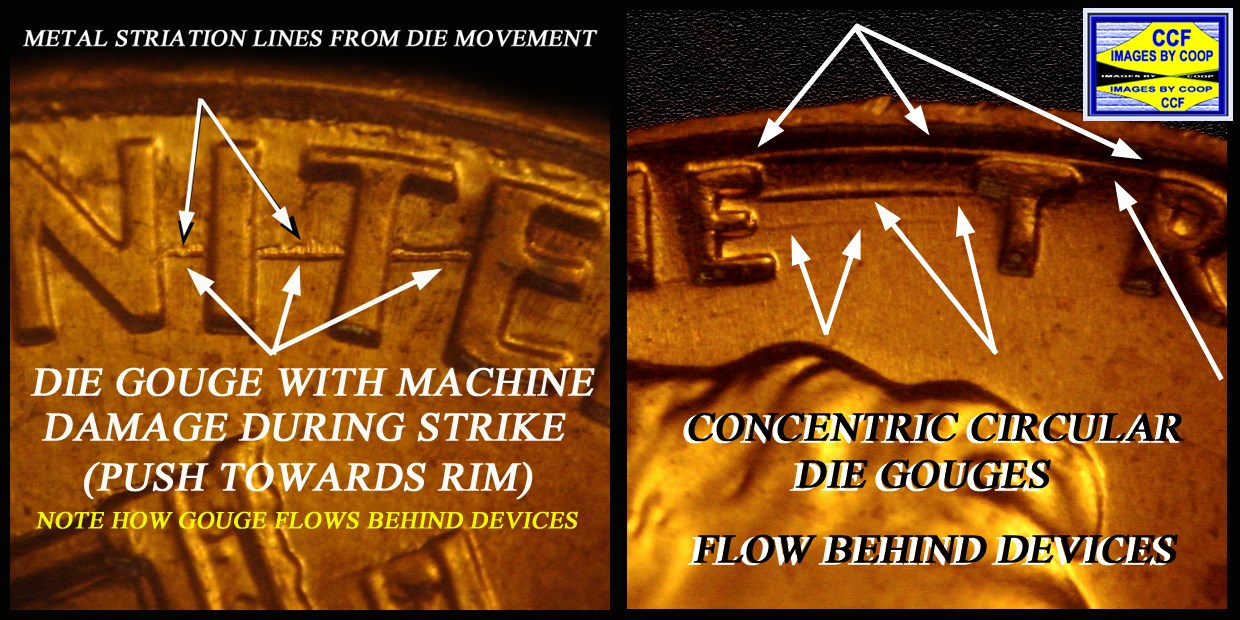 Note how they flow behind the devices? 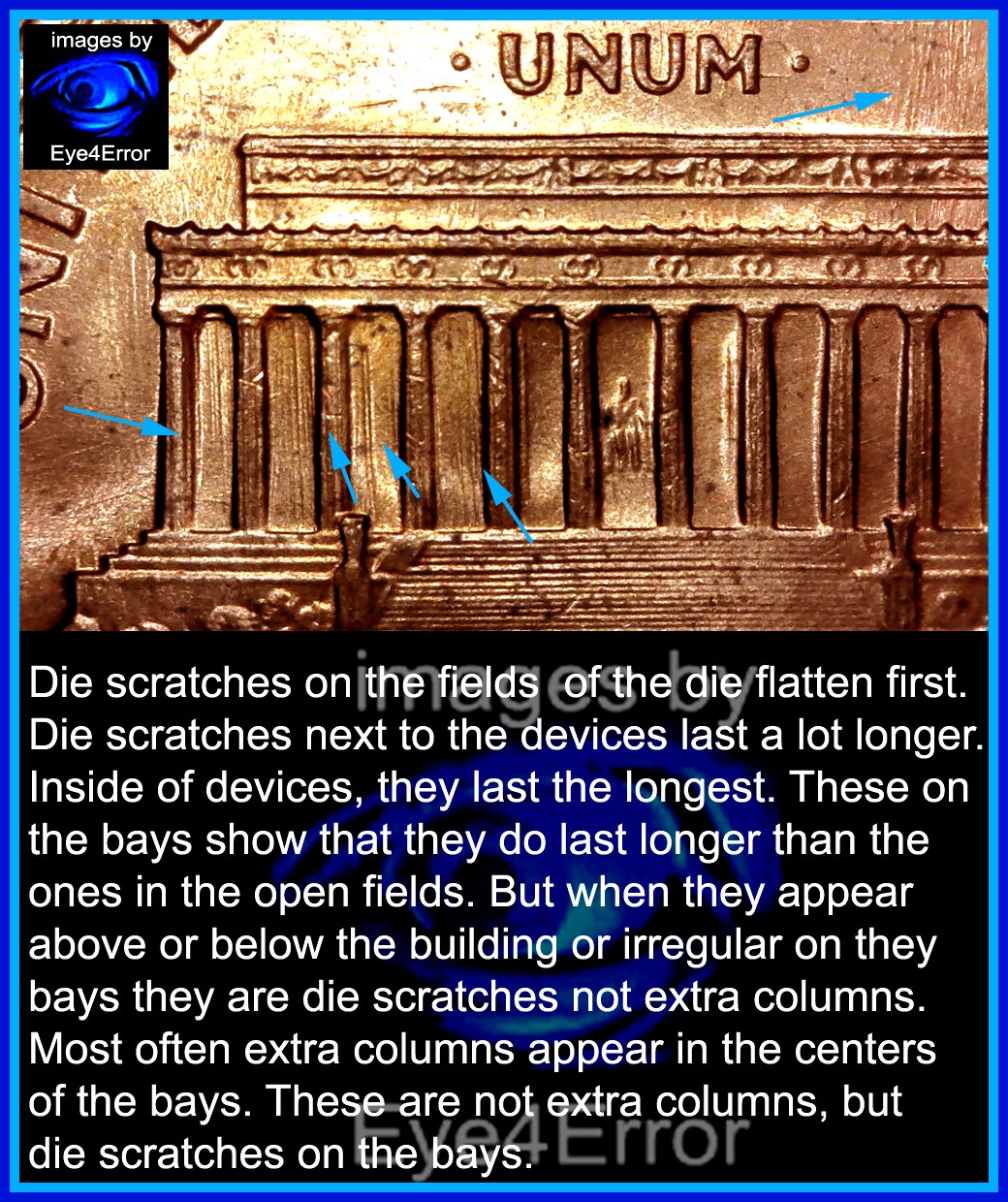 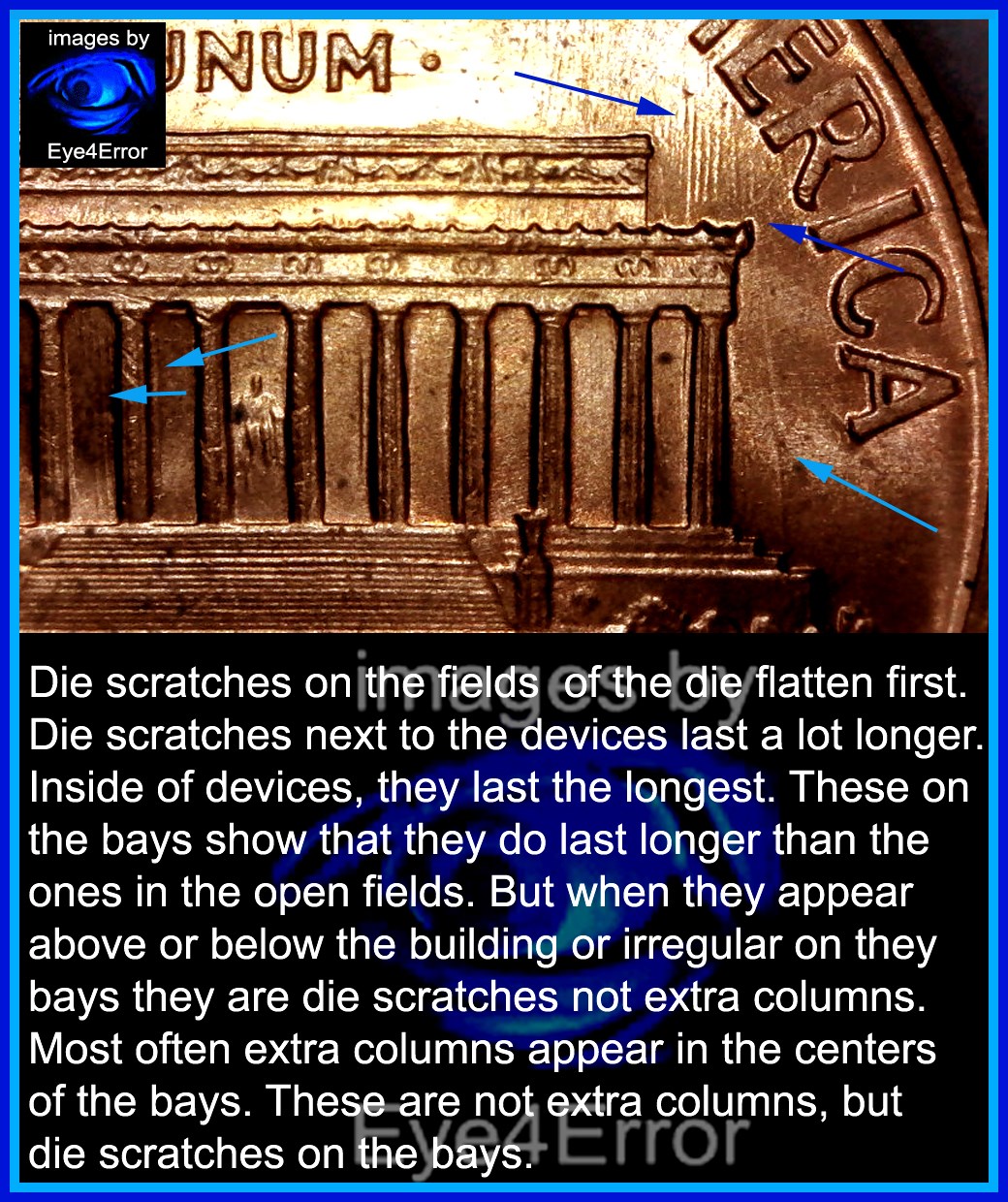 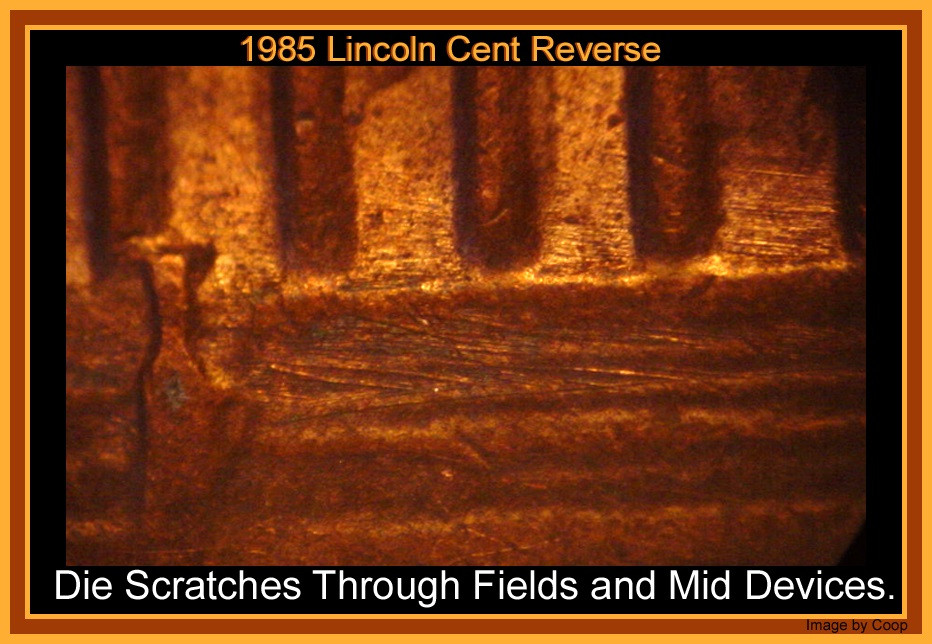 When a die is polished, the strongest area affected are the fields. (because they are on the outside of the die. Just opposite a coin) So the steps and the bays on the Memorial will show die scratches when the die is over polished with what looks like a wire brush on this coin. 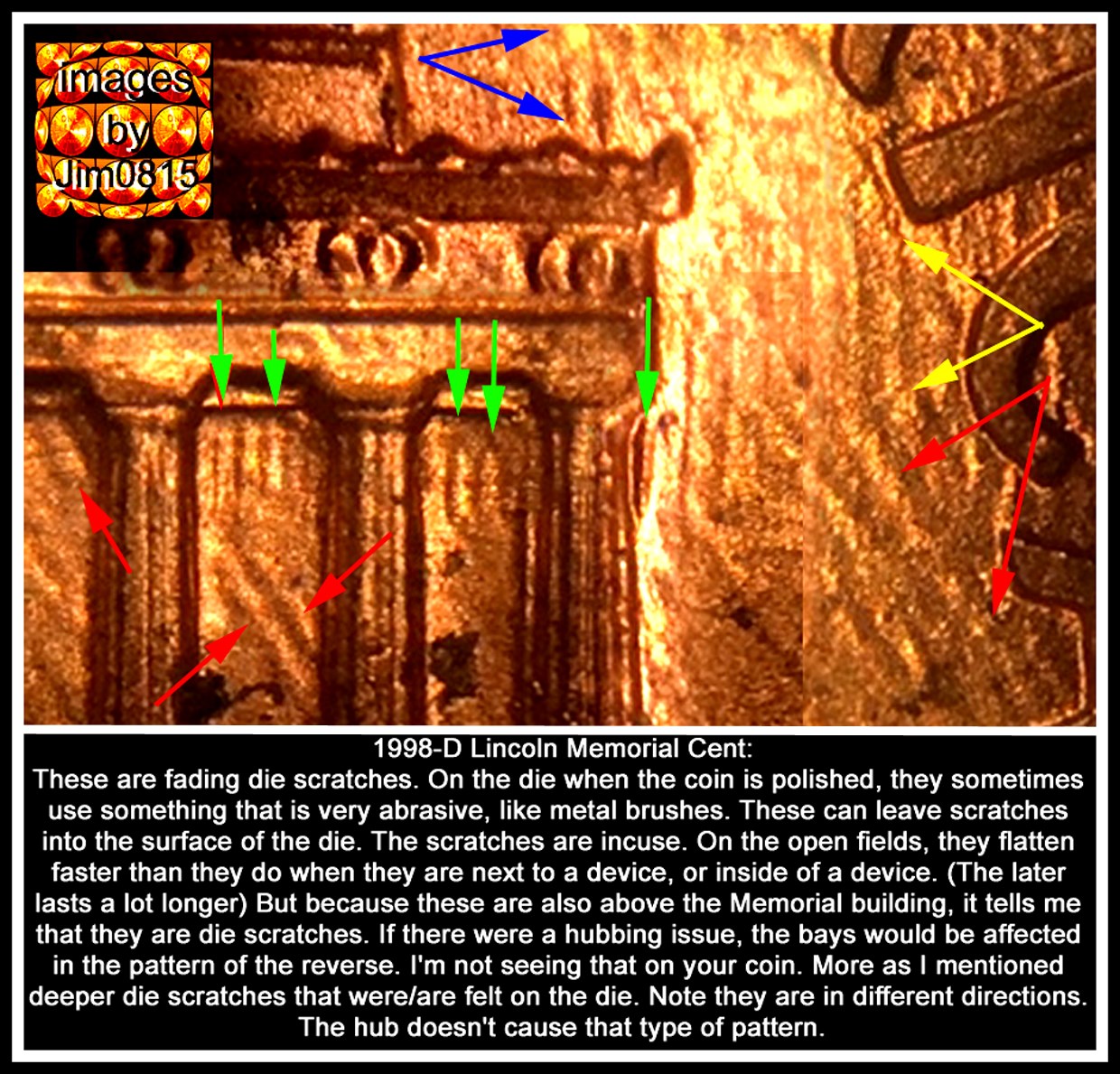 Interesting how die scratches fade on a die and why some last longer than others because of locations. |
|
New Member
United States
26 Posts |
you all, thanks so much. explanations make sense. very helpful 1. zinc plated denominations... 2. the sequence of die scratch flattening from field to device... both very helpful. thanks!!
|
| |
Replies: 8 / Views: 1,957 |
|










 Posted 12/25/2019 7:35 pm


