| Author |
 Replies: 20 / Views: 11,477 Replies: 20 / Views: 11,477 |
|
Valued Member
United States
84 Posts |
In my Dad's coin hoard, I came across a 1946 nickel that does not look like any other non-wartime nickels. I gave it a 99% pure isopropyl bath to see if it's surface dirt but it still looks like a circulated wartime nickel. I hesitate to send it in to NGC or PCGS for testing if it's just a spender... Is there an easy test with normal household materials that can be done that won't damage it on the off-chance it is a 1946 transitional? I tried to take a couple of pics that show its real color vs other wartime nickels I have. Should be enough to see why I want to check...    Edited by ShineOn
02/16/2020 2:40 pm
|
|
|
|
Valued Member
United Kingdom
179 Posts |
I would get it weighed using a set of jewelers scales as a first port of call. They should be accurate to 0.01g. post the results here.
Don't attempt to test the coin with any chemicals if you believe it has any value.
The colour does look suspect and I can see why you posted but without an accurate weight I wouldn't get your hopes up just yet. Good luck!
|
|
Bedrock of the Community
United States
94367 Posts |
Yes, the weight is the best place to start.
|
|
Pillar of the Community
United States
5825 Posts |
You showed 4 nickels.
Three are wartime and the 1946 is post-war.
Everything looks normal to me.
|
|
Pillar of the Community
United States
2189 Posts |
Sorry I don't have a clue. I don't even know what a 1946 transitional nickel is
|
|
Bedrock of the Community
United States
62064 Posts |
Both weight the same. Silver and copper/nickel coins: 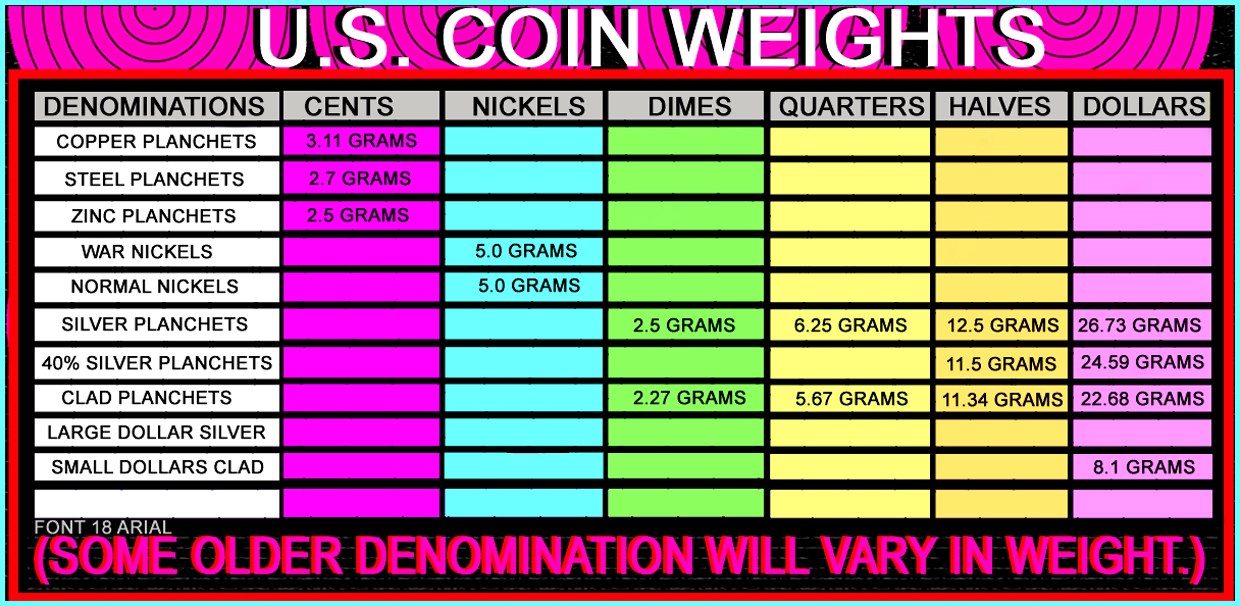 Probably normal and wish full thinking. Note the color of all 4 nickels posted above the War Nickels are more gray colored. The 1946 smacks of a browner color. A single thickness of facial tissue placed over them will show the 1946 show a darker red color: 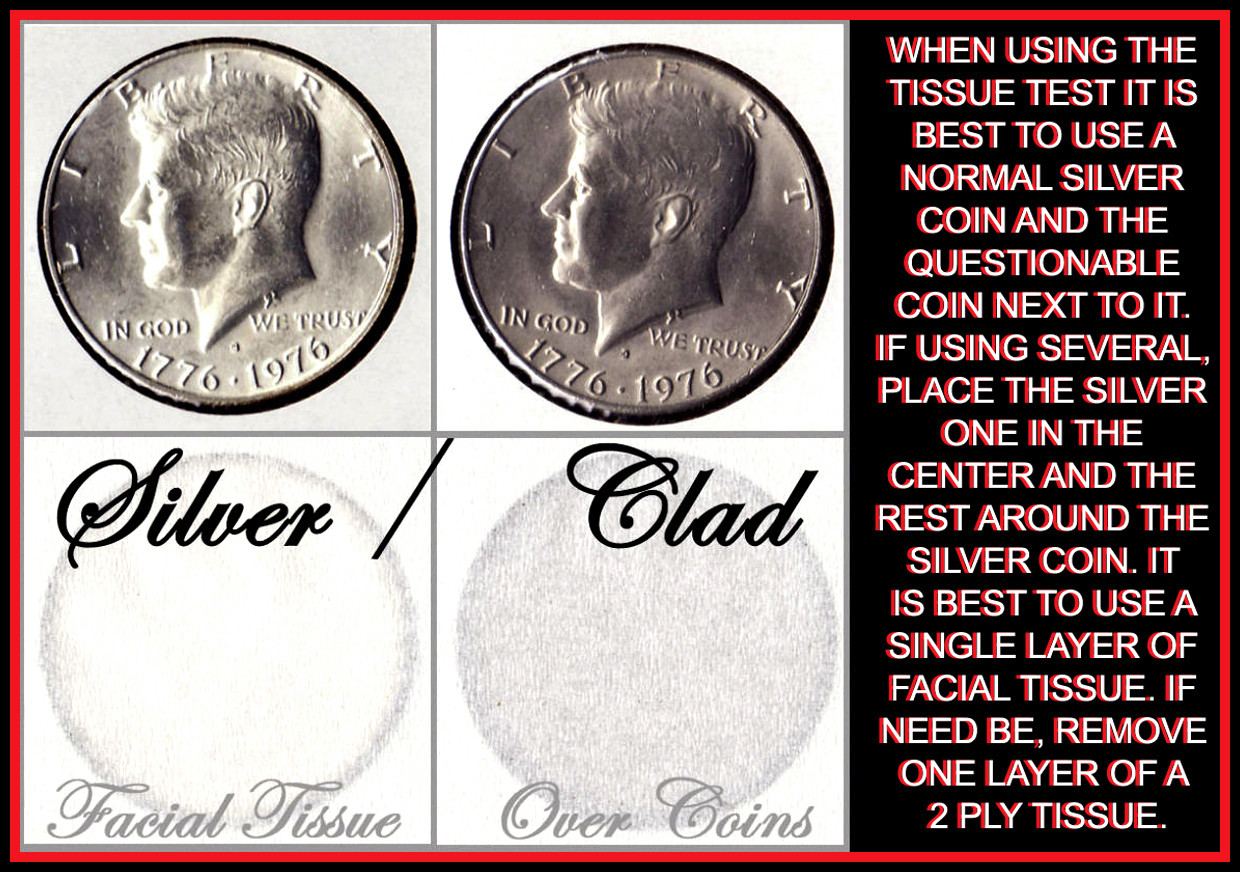 |
|
Rest in Peace
United States
18456 Posts |
Quote:
Sorry I don't have a clue. I don't even know what a 1946 transitional nickel is A 1946 transitional Nickel would be composed of 56% copper 35% silver and9% Manganese . Same as 1942-1945 War Time Nickels . |
|
Bedrock of the Community
United States
17884 Posts |
Weight won't tell you anything by itself, but it is the first step in determining the Specific gravity which WILL give you a clue. SG of a coppernickel five cent is 8.92, SG of a War Nickel is 9.25 to 9.32. The only definitive way to tell would be to shoot it with an XRF gun. |
|
Bedrock of the Community
United States
10635 Posts |
I'll say this because no one else has. Don't clean your coins as it will damage your coin's value. 99% pure isopropyl will/could remove luster or toning. I highly recommend do you do not clean your coins in any fashion.  |
|
Valued Member
 United States
84 Posts |
@coop - so weight is indeterminate wrt "normal" nickels vs wartime nickels. All are 5G. <sigh>
@conder101 - SG can be determined using the traditional water displacement vs mass, so the expense of hundreds to thousands of dollars on an XRF gun should not be required - all I need is an accurate scale and volume measurements. I don't need an accurate analysis of how much of what metal is in the alloy - I just need to know if its sg matches that of a wartime nickel vs a standard nickel... or am I wrong?
|
|
Pillar of the Community
United States
3207 Posts |
to my eye, and I've looked at lots of nickels, that 1946 looks like normal metal for the date, discolored
|
|
Valued Member
United States
84 Posts |
@merclover - 99% isopropyl and acetone do not affect most metals, especially those used in coins - unless for some odd reason reactive metals like magnesium and potassium are part of the alloy, which I have never heard of. What these solvents do do is to allow greasy residue to dissolve. I would never subject coins to acidic or alkalinic or abrasive cleaners or metal polishes that would remove any metal from the surface at all, and would not use any other cleaning materials that would abrade the surface.
An isopropyl or acetone bath is safer and less damaging of any coin surface than is soap and water
(soap is an alkalinic oxidizing agent and H2O is acidic by nature.) These solvents can remove oils and greasy residue that obscure the true surface texture and toning of a coin - or any metal for that matter.
It is non-corrosive and non-abrasive. Why rail against 99% isopropyl? The only thing 99% isopropyl could remotely do to a coin is to attract H2O to microscopic interstices that might (if an H2O reactive metal is present) cause oxidation. The chemical compound of H2O itself will not cause oxidation or corrosion or anything else that would affect the surface of any non-reactive metal, either. In other words, a water rinse has as much adverse effect as would a brief isopropyl or acetone bath.
I mention both isopropyl and acetone because they are closely related. Isopropyl can be oxidized to acetone. Both are excellent oil solvents that evaporate quickly.
I would never subject a proof or uncirculated coin to even isopropyl or acetone rinse. However, to determine hidden details of well-circulated, business-strike issues that have normal circulation-related oily/greasy residue obscuring the surface, using a non-reactive, non-abrasive solvent does not affect the metal, and is not "cleaning". It is removal of debris.
I know there are purists that don't even think non-abrasive, non-reactive solvent baths should ever be done, but there is no chemical or metallurgical reason behind that determination.
We aren't even remotely talking about removing patina - which I would not do, and which is not in the same category as oily or greasy circulation-related residue, by any stretch of the imagination. It also will remove or reduce non-greasy goo which does nothing other that obscure a coin's surface.
If you think an isopropyl or acetone bath will react with any non-reactive base metals like zinc, copper, nickel or silver, or will result in ablating any metal from the surface at all, especially mint "sheen", you need to go back to Chemistry 101. And nobody would ever be able to grade or sell any dirty well-circulated coin because they would all be so ugly nobody would want them, even for "placeholders."
Edited by ShineOn
02/18/2020 10:22 pm
|
|
Pillar of the Community
 Canada
5420 Posts |
Just to take it to the nearest jeweller , coin shop
Pay your ten bucks and get an XRF analysis.
Not rocket science!
|
|
Bedrock of the Community
United States
17884 Posts |
Quote:
@conder101 - SG can be determined using the traditional water displacement vs mass, so the expense of hundreds to thousands of dollars on an XRF gun should not be required - all I need is an accurate scale and volume measurements. I don't need an accurate analysis of how much of what metal is in the alloy - I just need to know if its sg matches that of a wartime nickel vs a standard nickel... or am I wrong?
You are correct. All you really need is a pocket scale that reads grams to two decimal places, a coat hanger, large paper clip and a glass of water. Piece of fishing line and needle nose pliers could be handy. |
|
Valued Member
United States
84 Posts |
I used dental floss and tied a crude net to hang the coins.
My first pass at SG has a 1944 P at 9.351816 and the mystery coin at 9.367816. Both weigh in at 4.891g and weigh in water about .520 give or take a few. A regular 1946 D nickel weighing in at 4.959G dry and 0.562 in water gives a SG of 8.823843.
I want to try to get it more accurate - I did the suspending by hand instead of with a stationary frame.
Anyway, if it's not a transitional, it's something that is not the standard copper/nickel alloy.
Edited by ShineOn
02/20/2020 01:42 am
|
|
Bedrock of the Community
United States
10635 Posts |
Quote:
I know there are purists that don't even think non-abrasive, non-reactive solvent baths should ever be done, but there is no chemical or metallurgical reason behind that determination. Shinny: You shouldn't clean your coins with ANYTHING, period. Not even 99% isopropyl alcohol, which has a problem: Isopropyl alcohol is full of minerals and other impurities. Want proof? Wipe some on a mirror and let it evaporate. What you are left with is a white powdery residue, a white-ish haze that will remain on the surface of the glass. The 1% can contain any number of minerals and/or impurities. Maybe that is ok with some, but for my coins, I say, "No thanks". If I am attacked for being "a purist" then sobeit. If you MUST use something, use acetone (less residue issues). |
| |
Replies: 20 / Views: 11,477 |






 Posted 02/16/2020 3:35 pm





