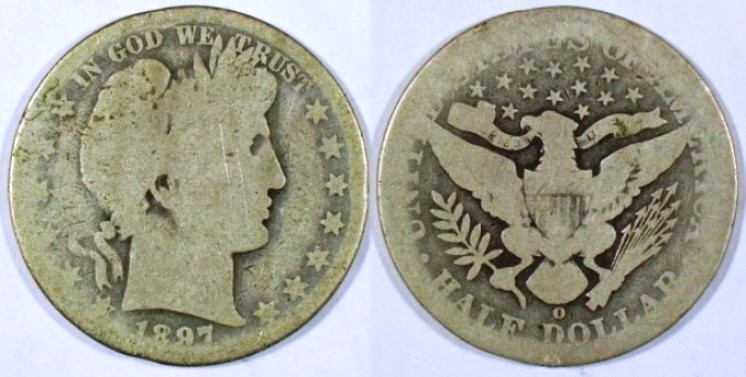
It's not so much the height of the relief that makes a given low grade coin to have lost more weight than another coin as it is the size of the fields on a coin.
Large fields mean a relatively large amount of metal is pushed up and all this metal takes longer to wear away and will mean the coin is higher grade as it is wearing away.
There are a lot of factors that will affect not only the rate at which a coin wears but the amount of metal loss per cross sectional area. Even like coins will wear far differently based on strike quality since grade is largely determined by the detail that remains visible. Technically a lousy strike '27-S
Buffalo nickel wore from unc straight to VF since they didn't have a full horn when they came off the die. It's even far worse with clads. Most of the early clad quarters didn't have separation between the tops of the periphery lettering and the rim. When they were no longer unc they were technically AG!! This means with almost no metal loss the coin passed to AG while the typical Barber coin has to lose about 4% of its weight to get to this level.
I usually figure heavily worn coins at 97% but this can vary. There have historically been coins in other countries which had to be recalled and recoined because too many had no design left.
Time don't fly, it bounds and leaps.










 Posted 12/08/2008 6:35 pm